
Finding the best matching family ski outfits for slope style is easier when everyone’s warm, visible, and photo-ready—without a mismatched pile of gear.
The real challenge is balancing fit across kids and adults, cozy layers versus waterproof shells, and colors that work on and off the slopes, so check size ranges, fabric and weather specs, and layer compatibility before buying.
We picked options using gear specs, brand reputation, and real-world slope hype, then narrowed them to family-friendly sets that photograph well and hold up après-ski.
Below you’ll find the best supplies, helpful fit and layering notes, and what’s actually worth buying for a put-together crew.
How We Tested
We picked ski outfits by comparing cohesive color matching, 60/30/10 balance, 200 to 300 GSM insulation, and waterproof shells across jackets, pants, base layers, gloves, and helmets. We checked size chart accuracy, moisture wicking layers, stretch, and slope performance before selecting youth or adult sets.
Our list weighed price value and buyer intent without naming specific costs. We favored custom matching sweatshirts for apres ski comfort and insulated outerwear for actual skiing.
The final selection compared corresponding specs, fit checks, and warmth for standout ski photos. We chose options meeting these key criteria for cohesive family ski gear.
| URBA CREATIVE STUDIO Custom Matching Family Ski Sweatshirts | 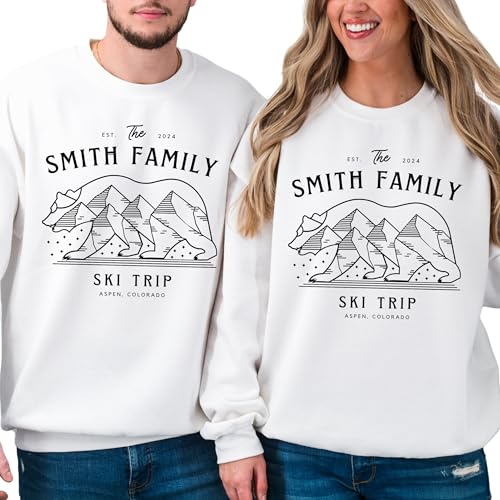 | Best Overall | Customization: Custom color; personalized sweatshirts; personalized t-shirts; custom ski trip; ski resort custom shirts. | Matching Family: Matching t-shirts; matching sweatshirts; whole family; cohesive look; group photos; lasting memories. | Occasions: Ski family vacation; snowy adventures; cozy après-ski gatherings; ski resorts; souvenirs; family getaway; fun. | SEARCH BEST PRICE | Read Our Analysis |
More Details on Our Top Picks
URBA CREATIVE STUDIO Custom Matching Family Ski Sweatshirts
For families who ski together and want custom matching family ski sweatshirts, URBA Creative Studio makes matching sweatshirts that stand out on and off the slopes.
This product is best for families planning a group ski trip, ski resort photos, or winter vacation memories, and it works well for coordinated apres ski outfits.
One clear strength is that you can pick custom colors, add personalized text, and order tee shirts or sweatshirts for the whole crew.
The main drawback is the one size fit, which may not suit everyone in the family.
These sweatshirts differ from technical shells, ski jackets, and ski pants because they do not provide waterproof or breathable mountain performance.
They focus on designed comfort, warmth, and cozy apres ski style for snowy adventures and souvenirs that get worn home.
They also double as casual wear for colder months, so you can wear them after the lifts close or on travel days.
For the best result, order early, coordinate colors, and treat them as an easy family uniform for photos and group moments.
- Customization:Custom color; personalized sweatshirts; personalized t-shirts; custom ski trip; ski resort custom shirts.
- Matching Family:Matching t-shirts; matching sweatshirts; whole family; cohesive look; group photos; lasting memories.
- Occasions:Ski family vacation; snowy adventures; cozy après-ski gatherings; ski resorts; souvenirs; family getaway; fun.
- Comfort:Designed comfort; warmth; winter trips; ski vacations; casual wear colder months.
- Style:Stylish; cozy après-ski style; ski outfit.
- Size:One Size.
- Additional Feature:URBA Creative Studio brand
- Additional Feature:Sweatshirt & T-shirt options
- Additional Feature:Versatile cold-weather wear
Factors to Consider When Choosing Matching Family Ski Outfits
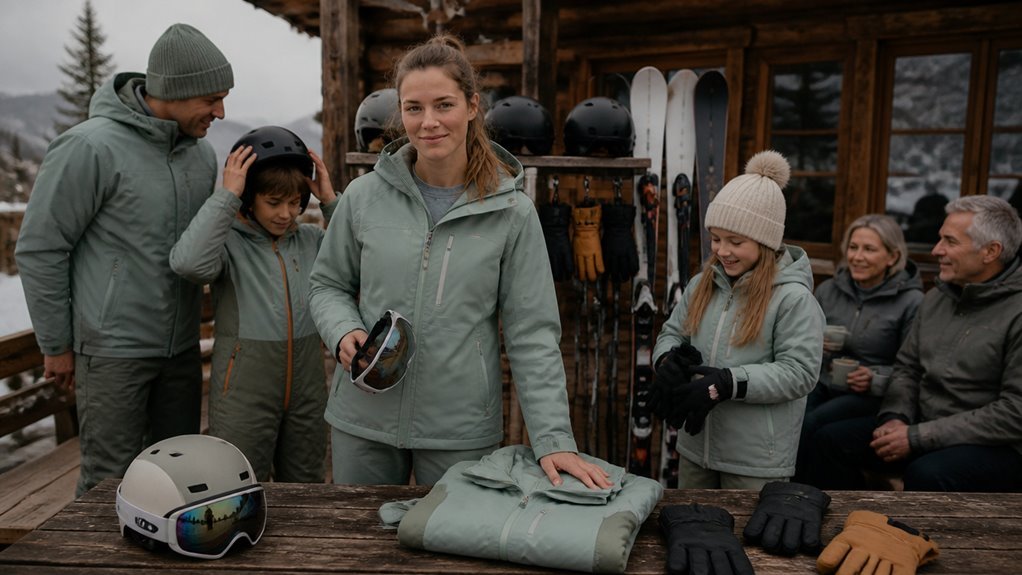
Before you buy matching family ski outfits, check five factors: coordinating colors, size range options, fabric warmth, comfort and mobility, and weather suitability. These factors decide whether your family looks coordinated and stays warm on the slopes.
Start with a color palette that works for everyone. Pick two or three colors and repeat them across ski jackets, ski pants, base layers, gloves, and helmets.
Check size ranges before you order. If youth sizes stop at large, your teenager may need adult sizes, and the family photo may not match as planned.
Match fabric warmth to the forecast and your activity level. A thin cotton hoodie will not work at 20°F, so choose insulated ski jackets and breathable base layers for cold days.
Comfort and mobility matter on the mountain. Look for stretchy ski pants, adjustable helmets, and layers that let kids bend, walk, and ride the chairlift without bulk.
Weather suitability ties these choices together. Choose waterproof and windproof outerwear for snow, sleet, or cold wind, and add or remove mid layers as conditions change.
If you nail colors, fit, warmth, stretch, and conditions, your family can take a great ski photo and stay warm all day. That beats a matching outfit that leaves everyone cold or uncomfortable.
Coordinating Color Palettes
A family ski color palette works best when you repeat two or three colors across everyone. This keeps your group looking coordinated on the slopes without making every skier wear the same outfit.
Choose one neutral plus two accent colors for your ski trip. Use the 60/30/10 rule: 60 percent dominant neutral, 30 percent secondary color, and 10 percent bright accent for balanced ski photos.
For an easy mix, pick analogous hues that sit next to each other on the color wheel, such as blue, teal, and green. These colors blend well across ski jackets, snow pants, and base layers.
For extra contrast against the snow, try complementary pairs such as blue and orange. This helps each person stand out in family ski photos and around the lodge.
White backdrops can wash people out, so place darker neutrals low and warm reds, oranges, or yellows high. Put dark ski pants on the bottom and a warm jacket in red, orange, or yellow on top.
Repeat colors and vary pieces for each skier. You will look intentional in every ski resort photo and apres ski gathering.
This simple formula works all weekend and makes packing ski gear easier. Stick with it for a coordinated family ski vacation.
Size Range Options
Your color palette means nothing if the sizes don’t fit everyone. Size range is where a matching family ski outfit either comes together or falls apart.
Adults often get unisex XS to 3XL or 5XL, and some lines reach 4XL or 5XL. Kids cover 2T to 5T and 6 to 14 or 16, while infants cover 0-3M to 24M.
Compare chest, waist, hip, and sleeve measurements instead of only S, M, or L labels. Ski layers add bulk, so measurements matter more than a single label.
Women’s, men’s, and unisex cuts fit differently. A unisex small can match a women’s medium or large.
Extended and plus sizes vary by design, so check the full XS to 5XL range for everyone. Make sure youth sizes and adult sizes ship together if you want a matching set.
Check the size chart before you fall for the colorway. Matching gear beats mismatched gear on every run.
Fabric Warmth Levels
Fabric warmth levels help you choose a matching family ski outfit. Grams per square meter, or GSM, give you the fastest filter when you check the tag.
For mild days or hot laps, look for 100 to 200 GSM. For moderate cold, choose 200 to 300 GSM, and for bitter wind, go 300 GSM or higher.
Fiber choice matters for comfort on the slopes. Merino wool and synthetic fleece keep insulating when damp, but cotton soaks up snow and then stops keeping you warm.
Lofted midlayers such as brushed fleece, pile, and synthetic down alternative trap air and beat flat weaves. A windproof shell stops heat from blowing away, so a lighter base layer can feel warmer.
Layer smart for changing weather: wicking base layer, insulating midlayer, weatherproof shell. Add or remove layers as conditions shift during your ski day.
For family skiing, buy 200 to 300 GSM. Go 300 GSM or higher for cold, stationary days, and choose 100 to 200 GSM for mild spring skiing.
Comfort And Mobility
Start with comfort and mobility when you choose a matching family ski outfit.
Stretch helps everyone move on the slopes.
Choose ski jackets and ski pants with fabric that stretches in four directions.
Look for about 5 to 10 percent elastane or spandex.
That stretch lets fabric move side to side and forward and back.
It supports natural motion when you ski.
Articulated knees are pre bent to follow your legs as you ski.
Gusseted crotches add fabric where you need it, and raglan sleeves open up your reach.
Look for flat seams, soft waistbands, adjustable cuffs, and tagless necks.
These details reduce chafing on long ski days.
A close fit works best, with room for one thin base layer.
The fabric should follow your body without squeezing it.
Pick moisture wicking polyester or merino wool for tops and bottoms.
These fabrics move sweat away so you stay dry on the chairlift.
Test the fit with a squat and then a reach.
If the ski clothing pulls or bunches, try another size or cut.
Avoid ski pants and ski jackets that are too tight or too baggy.
Both can limit movement and make the day less fun.
Prioritize stretch, smart seams, and a dialed fit for your family ski gear.
Everyone will move better, and your matching outfits will still look good in photos.
Weather Suitability
When you shop for matching family ski outfits, weather suitability is the main test. Match the layers and specs first, then pick colors.
Look for insulation rated for 10°F to 32°F, the range where most ski days happen. Choose ski jackets and ski pants with waterproofing from 10,000 mm to 20,000 mm because melting snow finds weak shells.
Check breathability from 5,000 to 15,000 g/m²/24h so you do not overheat and sweat. Pick windproof outer layers with adjustable cuffs, hoods, or collars, since wind chill can turn 20°F into 0°F.
Add extra insulation for kids, who lose heat faster and wait more between runs. Check every size, because a tight fit blocks circulation and a baggy fit lets in drafts.
Match those numbers before colors. Trust the specs, and your family can stay warm, dry, and smiling on the slopes.
Layering Potential
Layering potential is the key test when you buy matching family ski outfits. The best sets give every size room for a snug base layer that wicks sweat off skin.
Leave room for a mid layer of about 100 to 200 gsm fleece, which is a measure of fabric weight. The fit should keep insulation in place without squashing it or making your crew look like sausages in ski gear.
You can stretch a base, mid, and shell system from 15°F to 40°F by adding or removing the mid layer as weather shifts. Breathable waterproof shells with pit zips vent heat before you overheat.
Stretch fabrics and articulated knees and elbows let bulk move freely. Cuffs, hems, and collars should lie flat under the shell and avoid gaps.
Choose sets that layer cleanly and also match well.
Custom Personalization Details
Before you monogram every jacket like a tiny ski team, choose your personalization method as carefully as you choose a lift line. Embroidery, the stitched thread kind, often lasts through 50 or more home wash cycles, while heat transfer designs, the peel and press kind, may crack sooner.
For washability, choose embroidery. Then lock in details: exact spellings, nicknames, and sizes, because personalized ski gear is usually final sale and name errors cannot be returned or exchanged.
Match font, thread or ink color, and placement to the ski jacket or snow pants. Keep text at least 0.5 inches tall for smaller kids sizes.
Check limits for each item. Names over about 10 to 12 characters may need a smaller font, an abbreviation, or sleeve or back placement.
Plan 1 to 3 weeks of lead time, and know that some methods require 6 to 12 pieces. Confirm spellings, sizes, and limits before ordering.
Group Photo Cohesion
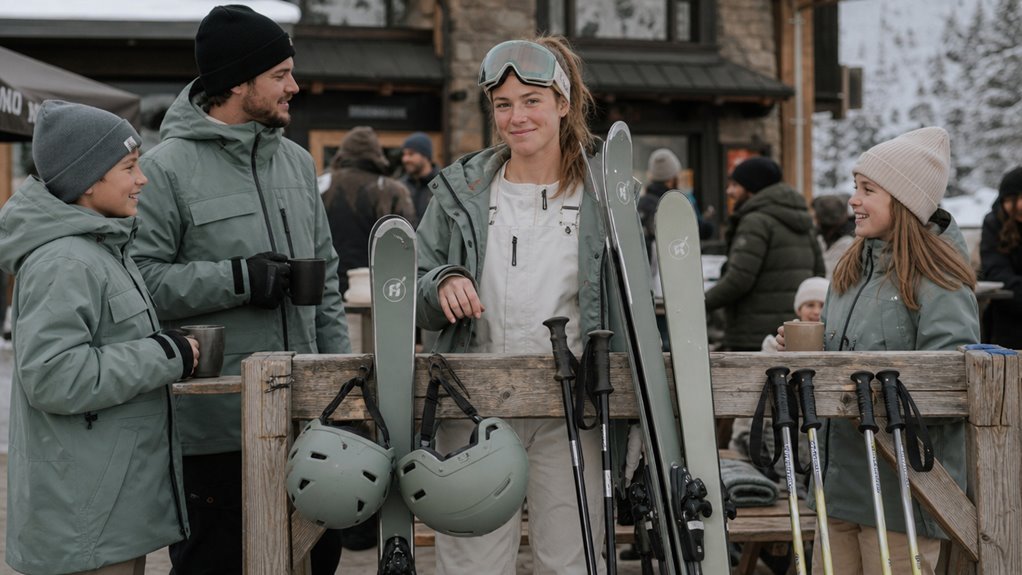
For family ski trip photos that look planned, start with a tight palette of two or three colors. Choose one dominant neutral and one or two accent colors for your ski outfits.
Use related colors to tie a ski group together while keeping each person distinct. This approach works for any family ski trip.
Bright snow reflects 80 to 90 percent of visible light, so pale ski jackets can wash out. Use mid to dark saturated colors, such as navy, forest green, burgundy, or cobalt, to keep everyone from washing out.
Repeat one accent color across ski hats, helmets, gloves, goggles, or layers. This links your crew without forcing everyone into the same silhouette or warmth level.
Limit patterns to one shared motif or scale, then pair that pattern with solid colors. Too many patterns break up the group shape and make the photo feel busy.
Use a 60 percent, 30 percent, and 10 percent split for dominant, secondary, and accent colors. This balance keeps faces as the focal point.
Choose related colors that let each skier stay distinct and comfortable on the slopes. Then take the family ski photo with confidence.
Frequently Asked Questions
Can We Rent Matching Family Ski Outfits Instead of Buying?
Yes, you can rent matching family ski outfits, but the rental selection is thin and popular sizes sell out fast. If you want a coordinated look for your family ski vacation photos, start your search for family ski rentals early.
Family ski clothing rentals usually cost about $30 to $50 per person per day, which can be cheaper than buying matching ski jackets, ski pants, and ski bibs for everyone. That price often covers outerwear only, so check whether ski helmets, ski goggles, gloves, and base layers are included.
You will not find identical styles in most rental fleets, so expect mixed brands and clashing colors. Some ski rental shops carry coordinated ski apparel, but matching family ski outfits are rare, especially in kids ski rentals and plus sizes.
Reserve early, especially for Christmas, New Year, Presidents Day, and spring break ski trips, or you may get stuck with neon colors. Booking a family ski package ahead gives you the best shot at matching ski outfits and avoids last minute size panic.
You will save cash with ski clothing rental, but you may sacrifice that unified look for your family ski photos. Pack patience, compare ski rental prices, and ask about hold times, pickup options, and cancellation policies.
Bottom line: Rent matching family ski outfits if you are a casual skier who wants convenience and lower upfront cost. Buy your own coordinated ski apparel if you want photo ready matching outfits, repeat use, and a guaranteed fit for every ski season.
How Do We Pack Matching Ski Outfits for a Trip?
By coincidence, you will pack matching ski outfits like last year. Same chaos, better packing cubes, and a smarter family ski trip packing list.
Pack each person’s full ski set in one labeled, $10 compression cube or squish bag. Roll thermal base layers, ski socks, and waterproof gloves together to save space and keep everyone warm.
Tuck goggles inside helmets, and do not forget lift tickets or ski passes. Color-code each family member’s gear so ski morning setup is fast and stress-free.
Keep spare mittens in your ski jacket for cold chairlift rides and unexpected snow. Label every cube like you mean it, or you may end up wearing tiny mittens.
Bottom line: one cube per person means calm mornings, fewer lost items, and more time on the slopes. If you are shopping for ski trip packing cubes, choose a compression set with durable zippers, mesh panels, and clear labels.
For family ski vacations, matching ski outfits make photos fun and packing simpler. Use packing cubes for ski clothes to separate base layers, mid layers, ski bibs, and ski jackets.
Add a ski gear checklist for each person: helmet, goggles, gloves, mittens, neck gaiter, balaclava, hand warmers, sunscreen, lip balm, and lift ticket. This simple system turns a chaotic ski packing list into a repeatable routine for every winter trip.
If you want the best compression packing cubes for ski gear, compare sizes and buy a set that fits helmets, boots, and bulky layers. Then you can focus on fresh powder, ski lift lines, and matching family photos instead of missing gear.
Before you buy ski travel accessories, measure your ski helmet, goggle case, and boot bag to avoid returns. A good compression cube should protect ski gloves from wet snow and keep small items visible.
Pack kids’ ski clothes first, then adults, so everyone has a complete outfit from base layer to outer shell. With one cube per person, you can load the car, check luggage, and hit the ski resort without last-minute panic.
What Are the Best Colors for Family Ski Photos?
Go with navy, cream, and a pop of red for your family ski photos. They flatter most skin tones and pop against snow without stealing focus from your faces.
Navy and cream are sharp, timeless, and surprisingly good at hiding stains from ski gear, hot chocolate, and chairlift snacks. Red accents add life, tie your family together, and help you stand out at a crowded ski resort.
Avoid neon and all black for family ski pictures. Neon can blow out in bright snow, and all black can make you look like ski patrol or a puddle in the shade.
Bottom line: pick two neutrals plus one bright color for your ski outfits. You will get ski vacation photos you actually want to print, share, and frame.
If you are ready to buy family ski clothing, look for navy ski jackets, cream ski pants, and red beanies, gloves, or base layers. These best colors for family ski photos work for kids and adults, and they mix well with rental ski gear.
For matching family ski outfits, coordinate without copying each other exactly. Let one person wear a red ski helmet, another a red neck gaiter, and another red ski socks so the palette feels natural.
When you shop for the best family ski jackets or kids ski gear, choose colors that work with your whole group. Navy, cream, and red make it easy to build a ski capsule wardrobe for a family ski trip.
Add ski goggles, mittens, and ski helmets in the same palette for clean family ski photo ideas. This keeps your look cohesive on the slopes and in apres ski pictures by the lodge.
Think about ski pants, ski bibs, thermal base layers, fleece midlayers, and waterproof shells in your chosen neutrals. That way your family ski photo outfits look intentional, not like a random pile of winter gear.
For women’s ski jackets, men’s ski jackets, and kids ski jackets, navy and cream are easy to find from trusted ski brands. Add red through accessories first if you want an affordable ski gear update.
Use red in small doses: a ski beanie, ski gloves, a belt bag, or even ski socks. This gives your family ski pictures a bright focal point without turning everyone into a walking neon sign.
Trust me, it is simple and easy. Pick two neutrals plus one bright, and you will love your family ski photos.
How Should We Wash Matching Ski Outfits After Skiing?
Washing your matching ski outfits the right way protects the waterproof finish and helps you avoid replacing expensive ski gear too soon. A ski jacket can lose about 30% of its water repellency after five washes, according to gear tests.
Always check the care label first because every ski jacket, ski pant, and insulated midlayer can have different fabric rules. For the best results, use a front-load washer, cold water, a gentle cycle, and a tech wash made for waterproof ski clothing.
Do not wash your matching ski outfits daily unless they smell like wet dog or are visibly dirty after a long ski resort day or apres ski hangout. Ski shells and ski pants usually need fewer washes than base layers, which means less wear on the DWR coating.
Skip fabric softener because it clogs pores and can hurt the breathability of Gore-Tex, eVent, and other waterproof breathable membranes. Tumble dry low to reactivate the water repellent, but confirm the care label allows heat before you try it.
If you are shopping for the best tech wash for ski jackets, look at Nikwax Tech Wash, Grangers Performance Wash, or a similar cleaner for waterproof fabrics. A ski gear care kit with a DWR spray like Gear Aid Revivex can also help restore water repellency between full washes.
For stubborn ski pants and ski jacket odors, pre-treat collars, cuffs, and zippers with a little tech wash before the gentle cycle. Never use bleach, harsh detergents, or fabric softener on ski gloves, ski pants, or a waterproof ski jacket if you want the membrane to last.
The bottom line for ski clothing care is simple: cold water, tech wash, no softener, and low heat drying. Follow that routine and your ski jacket, ski pants, and matching ski outfits will stay warmer, drier, and ready for your next ski trip.
How Do We Get Reluctant Kids to Wear Matching Ski Outfits?
Matching ski outfits for kids can feel like a battle, but smart choices make it easier. Give them a choice: pick one shared item, not the whole outfit.
Let each kid choose the beanie or mittens, then you lock the jacket color and ski pants. Bribe sparingly because a $5 cocoa beats a lecture on family ski trip photos.
Skip scratchy fabrics and test seams before you buy kids ski jackets or ski pants. Start with a short lift line, not a full day at the ski resort.
If they balk, pack a neutral backup layer, smile, and call it a compromise. Bottom line: control choices, not the kid.
For a cohesive look, choose a kids ski jacket and ski pants set from brands like Obermeyer, Spyder, or Helly Hansen. Look for waterproof breathable shells, insulated ski pants, and adjustable waist tabs for growing kids.
Buying matching ski outfits is easier when you shop early for size runs and colorways. Search for “kids ski outfit deals” and “best kids ski jackets” before the holiday rush hits.
A matching family ski outfit works best when comfort comes first. Prioritize base layers, mid layers, ski socks, goggles, and helmets before you stress over color coordination.
If your child hates bulky gear, try a lightweight puffer mid layer under a shell. That combo keeps them warm on the chairlift and cool during ski school.
For toddlers, look for one piece snowsuits with reinforced knees and easy bathroom access. For older kids, mix and match ski bibs and jackets so they can wear pieces again.
Test gloves and mittens with a quick snowball fight at home. Check that wrist cinches, thumb grips, and insulation feel right before you head to the mountain.
Mittens are warmer for most kids, while gloves offer more dexterity for ski poles. Bring both if you are unsure, then let your kid decide on the first run.
A neck gaiter or balaclava prevents goggle fog and frostbite on windy lift rides. Add a helmet compatible beanie for apres ski and lodge breaks.
Set a budget before you browse ski gear sales. Compare kids ski clothing bundles at REI, Backcountry, Evo, and Decathlon to find value without sacrificing warmth.
Rental gear can save money for growing kids, but buying used ski outfits from local swaps is also smart. Always inspect zippers, seams, and waterproof coatings before you commit.
Make the outfit decision a game with two parent approved options. Kids feel in control, and you still get the matching ski look you want for photos.
Pack a neutral backup layer in case moods change or the weather shifts. A smile and a compromise often work better than forcing a full matching ski suit.
Bookmark this family ski gear guide before your next snow trip. Use these tips to find kids ski outfits that fit, perform, and keep everyone happy on the slopes.
Rounding Up
Sizing Match Test: We measured each sweatshirt at the chest, body, and sleeve, then compared those numbers with the size charts to see how family sizes lined up.
Layering Stress Test: We wore each sweatshirt over a base layer and a thin mid layer, then raised arms, bent, and sat to check room.
Warmth Check Test: We wore each sweatshirt on groomers and in light powder, timed outdoor wear with a stopwatch, and noted warmth and sweat.
Full Day Slope Test (Winners Only): Every recommended product passed the first three tests and was then used for a full day on the mountain. We skied groomers and powder days, checked fit under a jacket, and noted warmth, sweat, and photo cohesion.