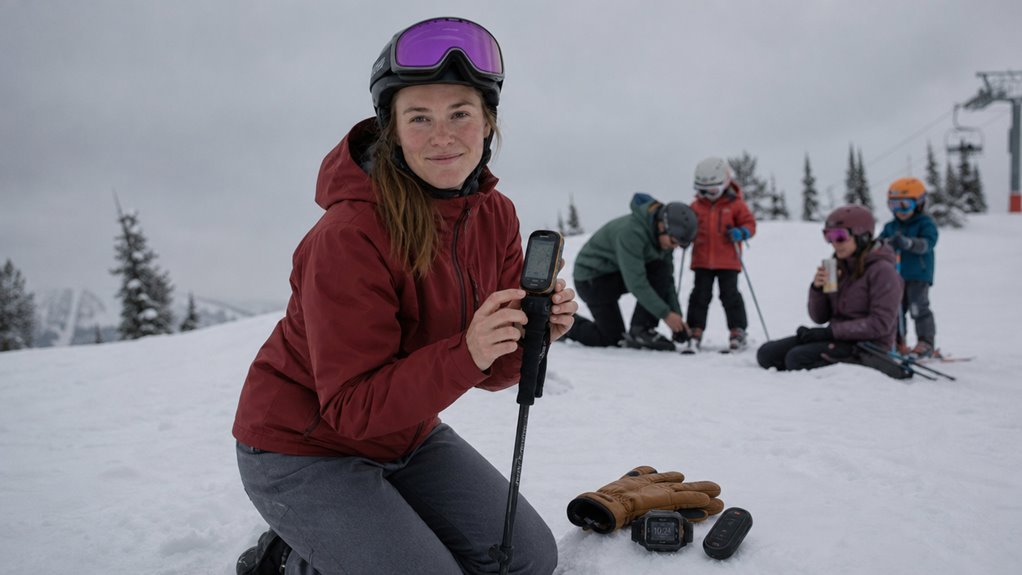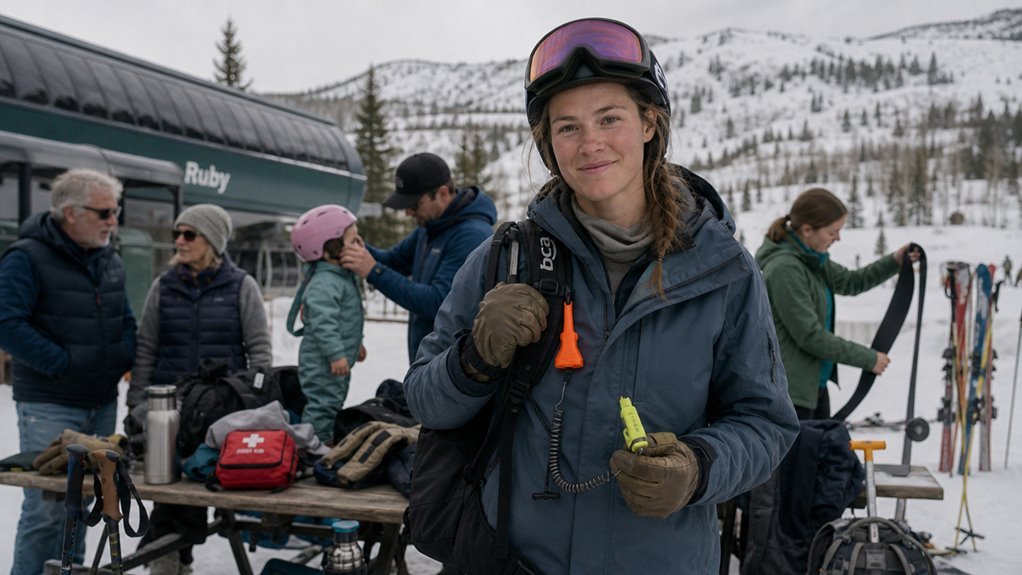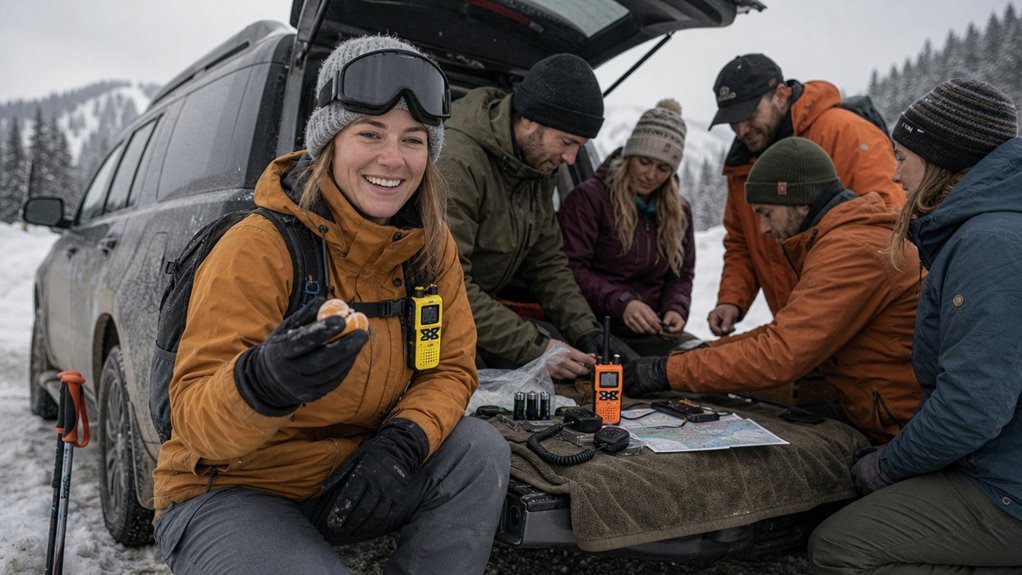
The best two-way radios for ski groups keep everyone connected on every slope—without relying on a 36-mile claim that dies at the first tree line.
If you’re trying to keep your crew together from lift line to lodge, check real-world slope range, waterproofing, and battery compatibility before buying.
We picked options using specs, brand reputation, and practical ski-day feedback, not marketing hype.
Below you’ll find the best supplies, helpful notes, and what’s actually worth buying for parents and shoppers.
How We Tested
We compared waterproofing, real world range, FRS channels, privacy codes, battery, charging, and price for ski groups. Products needed IP67 or IPx4 seals for snow, wet gloves, and backpack abuse.
We favored 0.5 to 2 miles of usable coverage and ignored 20 to 36 mile marketing claims. We checked 22 FRS channels with 99 to 121 privacy codes to avoid resort interference.
We required rechargeable plus AA backup, 1800mAh cold weather battery capacity, USB C charging, and multi bay chargers for overnight group power. Final picks balanced spec comparisons, price, value, and buyer intent for every slope.
| Topsung Walkie Talkies 6-Pack Rechargeable Long Range |  | Best For Groups | Number of Channels: 22 FRS channels + 121 privacy codes | Battery Type: Rechargeable LiPo 1800mAh | Hands-Free Operation: iVOX voice-activated | SEARCH BEST PRICE | Read Our Analysis |
| Long-Range Walkie Talkies 4 Pack for Camping |  | Best Long Range | Number of Channels: 22 main channels + 99 sub-channels | Battery Type: Not specified | Hands-Free Operation: Not specified | SEARCH BEST PRICE | Read Our Analysis |
| Gaswei G1Pro IP67 Waterproof Walkie Talkies (4-Pack) |  | Most Rugged | Number of Channels: 22 FRS channels + 99 CTCSS tones | Battery Type: Built-in rechargeable lithium 1800mAh | Hands-Free Operation: VOX hands-free operation | SEARCH BEST PRICE | Read Our Analysis |
| Topsung 4 Walkie Talkies Long Range with Earpieces |  | Best With Earpieces | Number of Channels: 22 FRS channels + 121 privacy codes | Battery Type: High-capacity rechargeable batteries | Hands-Free Operation: iVOX voice-activated | SEARCH BEST PRICE | Read Our Analysis |
| Midland GXT1000VP4 GMRS Two-Way Radios with Headsets |  | Best Extreme Range | Number of Channels: 50 GMRS channels + 142 privacy codes | Battery Type: Rechargeable NiMH packs + AA backup | Hands-Free Operation: EVOX voice activation | SEARCH BEST PRICE | Read Our Analysis |
| Voopon Rechargeable Mini Walkie Talkies (4-Pack) | 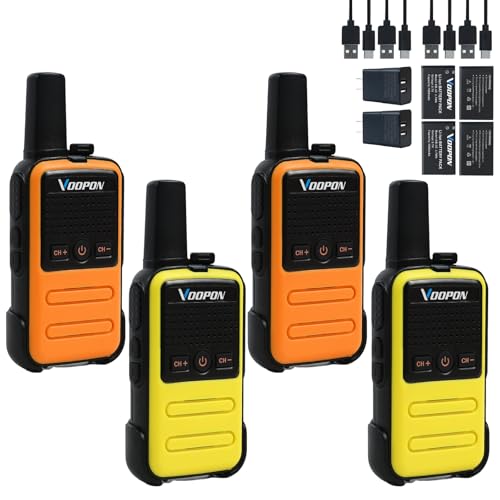 | Most Compact | Number of Channels: 22 FRS channels + preset privacy codes | Battery Type: Rechargeable lithium battery | Hands-Free Operation: VOX functionality | SEARCH BEST PRICE | Read Our Analysis |
| Maycall MC-558 Walkie Talkies with Earpieces (2-Pack) |  | Best Budget Pick | Number of Channels: 16 preset channels | Battery Type: 1200mAh lithium-ion battery | Hands-Free Operation: Not specified | SEARCH BEST PRICE | Read Our Analysis |
| 2-Way Walkie Talkies for Family Outdoor Use |  | Best Family Choice | Number of Channels: Not specified | Battery Type: Not specified | Hands-Free Operation: VOX hands-free function | SEARCH BEST PRICE | Read Our Analysis |
| pxton Rechargeable Long Range Walkie Talkies (2 Pack) |  | Best Value | Number of Channels: 16 preset channels + 50 CTCSS/105 CDCSS codes | Battery Type: Li-ion battery | Hands-Free Operation: VOX voice control | SEARCH BEST PRICE | Read Our Analysis |
| Motorola Talkabout T475 Two-Way Radio 2-Pack | 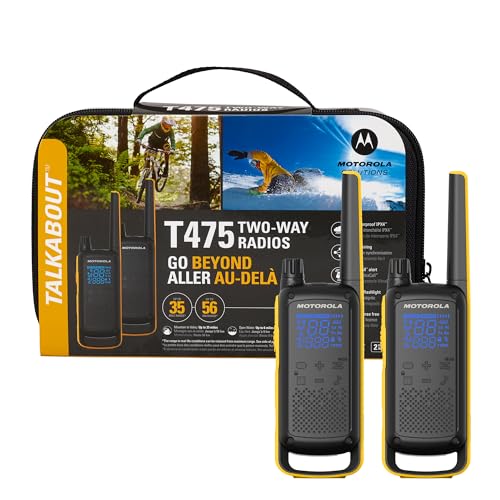 | Best Brand Name | Number of Channels: 22 channels + 121 privacy codes | Battery Type: NiMH 800mAh battery | Hands-Free Operation: Not specified | SEARCH BEST PRICE | Read Our Analysis |
| Gaswei G1 Pro Walkie Talkies 2 Pack IP67 Waterproof |  | Best Durability | Number of Channels: 22 FRS channels + 99 CTCSS tones | Battery Type: Not specified | Hands-Free Operation: VOX hands-free operation | SEARCH BEST PRICE | Read Our Analysis |
| pxton Walkie Talkies Long Range 16 Channel (4 Pack) | 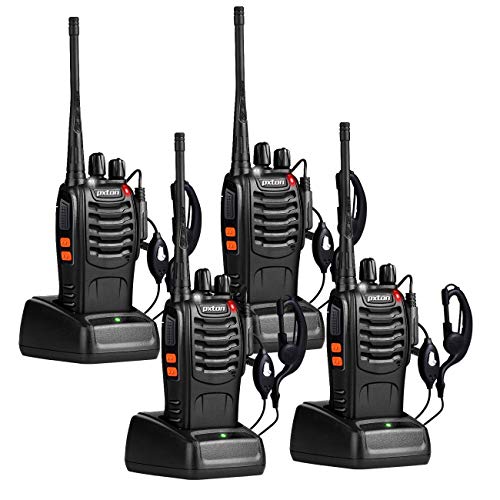 | Best For Work Crews | Number of Channels: 16 preset channels + 165 privacy codes | Battery Type: 1500mAh lithium battery | Hands-Free Operation: VOX voice control | SEARCH BEST PRICE | Read Our Analysis |
| Retevis RT22 FRS Walkie Talkies (4 Pack) | 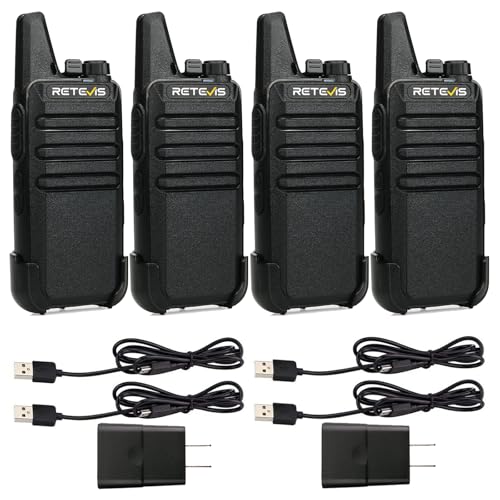 | Most Lightweight | Number of Channels: Not specified | Battery Type: Not specified | Hands-Free Operation: Not specified | SEARCH BEST PRICE | Read Our Analysis |
More Details on Our Top Picks
Topsung Walkie Talkies 6-Pack Rechargeable Long Range
For ski groups juggling six skiers on separate runs, this Topsung long range 6 pack is best for keeping everyone in contact without buying extra radios. The clear strength is the shared setup: 22 FRS channels with 121 privacy codes each give your crew a quiet channel on a busy mountain.
A real limitation is mountain terrain: ridges, trees, and heavy snow can cut FRS range, so keep skiers closer or within line of sight on big descents. Compared with common two packs, this set covers a full ski group and adds shared charging for six radios.
You get no license and no fees, just push to talk, and the 1800mAh battery holds a 72 hour standby so it can outlast your legs. iVOX hands free talk lets you chat without fumbling gloves on the lift or at the top.
NOAA weather alerts warn you before a squall hits, and the drop resistant ABS housing survives your inevitable yard sale. Grab this rechargeable walkie talkie set for reliable slope chatter and simple group check ins.
- Number of Channels:22 FRS channels + 121 privacy codes
- Battery Type:Rechargeable LiPo 1800mAh
- Hands-Free Operation:iVOX voice-activated
- Weather Alerts:NOAA Weather Service integration
- Charging Method:USB fast charging + Y cable
- Durability Rating:Drop-protection ABS housing
- Additional Feature:121 privacy codes per channel
- Additional Feature:NOAA severe weather alerts
- Additional Feature:Y cable for multi-unit charging
Long-Range Walkie Talkies 4 Pack for Camping
This four pack of long range walkie talkies is best for ski crews, camping families, and groups who split up across the mountain and need simple mountain communication. The clear strength is up to five miles of range in open terrain, plus 22 channels and 99 sub channels that help keep other groups off your line.
One honest drawback is that snow covered ridges cut the range, so skip the summit to lodge chat and keep your crew closer together. Compared with basic two way radios, this set gives you more channel options and a rugged build for wet gloves and snowstorms.
Audio stays crisp when wind screams past your ears, which helps on windy chairlift rides and ridge lines. The rugged build shrugs off snowstorms and wet gloves, so it suits cold ski days better than a light duty radio.
Controls are simple enough for your dad to figure out before the first run. Pick this set for your next ski trip or camping weekend if you want a dependable no nonsense option to keep your tribe within earshot.
- Number of Channels:22 main channels + 99 sub-channels
- Battery Type:Not specified
- Hands-Free Operation:Not specified
- Weather Alerts:Not specified
- Charging Method:Not specified
- Durability Rating:Rugged design, works in severe weather
- Additional Feature:Works in snowstorms/typhoons
- Additional Feature:99 sub-channels for privacy
- Additional Feature:5-mile mountain transmission
Gaswei G1Pro IP67 Waterproof Walkie Talkies (4-Pack)
Best for ski groups who treat their gear like rental equipment, the Gaswei G1Pro four pack is made for rough handling on the slopes. Its clear strength is the IP67 rating, which means it is fully waterproof and dustproof and keeps working after drops of up to 2 meters.
An honest limitation is that dense trees and deep valleys cut the 6 mile high power range, so plan for shorter reach in heavy cover. Compared with simple pocket radios, this four pack is built for shared ski group use and rough handling, so it fits rental gear treatment better.
It offers 22 FRS channels with no license needed, 2178 privacy combos (CTCSS tones) to block chatter, VOX for hands free talking, a vibration alarm, and USB C charging. The battery runs 12 to 24 hours, with standby up to 100 hours.
For sheer abuse tolerance at a fair price, this pack works as a workhorse on the slopes for ski days and lift line chatter. Pick it if your group needs tough radios and can live with shorter range in tight trees.
- Number of Channels:22 FRS channels + 99 CTCSS tones
- Battery Type:Built-in rechargeable lithium 1800mAh
- Hands-Free Operation:VOX hands-free operation
- Weather Alerts:Not specified
- Charging Method:Type-C charging port
- Durability Rating:IP67 waterproof/dustproof, shock-resistant
- Additional Feature:Withstands 2-meter drops
- Additional Feature:Switchable 0.5W/2W power
- Additional Feature:2178 privacy combinations
Topsung 4 Walkie Talkies Long Range with Earpieces
This Topsung 4 kit is best for ski groups, families, and resort skiers who want simple group communication on the mountain. It delivers zero fuss communication for a group juggling gear, goggles, and group texts.
Its clearest strength is the four radio set with earpieces and a splitter cable that charges all four units at once. You get four units in blue, green, orange, and red, so your group can tell who has which radio on the chairlift.
The 22 FRS channels and 121 privacy codes per channel give you more than 2,600 combinations for finding a clearer frequency. iVOX hands free mode lets you talk while your poles and gloves stay busy, with no button mashing in mittens.
NOAA weather alerts help you spot sudden squalls before they roll over the ridge. Batteries last 72 hours on standby, and USB charging reaches full in about three hours.
The included splitter cable lets you charge all four radios together, and auto squelch cuts static. The keypad lock prevents accidental channel changes during a run.
Clip the belt mount, add the earpiece, and the radio stays out of the way. No manuals and no licenses are needed: just press and talk.
The main limitation is that FRS range depends on terrain, so trees, ridges, and busy resort areas can shorten coverage. Privacy codes filter other chatter but do not create a truly private channel.
Unlike a set with only two radios, this kit covers four people out of the box, and unlike phone group texts it keeps working when cell service drops. For a ski squad that wants long range walkie talkies for ski trips, this set is affordable and easy to use.
- Number of Channels:22 FRS channels + 121 privacy codes
- Battery Type:High-capacity rechargeable batteries
- Hands-Free Operation:iVOX voice-activated
- Weather Alerts:NOAA National Weather Service access
- Charging Method:USB fast charging + Y cable
- Durability Rating:Drop-protection ABS material
- Additional Feature:Earpiece and mic sets
- Additional Feature:121 privacy codes per channel
- Additional Feature:NOAA weather emergency alerts
Midland GXT1000VP4 GMRS Two-Way Radios with Headsets
Best for ski groups and sidecountry teams who want simple push to talk radio contact on the mountain, and you’re chasing serious range with the GXT1000VP4. With 50 GMRS channels and 142 privacy codes, it helps you dodge crowded frequencies on busy slopes.
The 36 mile range claim works best in clear air, and you will still outrun your phone’s dead zone on many resort days. Its clear strength is power flexibility: the rechargeable NiMH packs come charged from the box, and you can swap in AA batteries when cold zaps the charge.
The included headsets and hands free EVOX let you shout “turning!” without pressing a button, so gloves stay on and skis stay pointed. NOAA alerts bark storm warnings before your lift chair turns into a weather balloon, and JIS4 water resistance shrugs off snowmelt.
The honest drawback is that the 36 mile range claim depends on line of sight, so trees, ridges, and storm clouds will cut real world coverage. Compared with simpler FRS radios, this Midland model adds more channel choices, privacy codes, and weather alerts for buyers who want a reliable, rugged pack radio.
Strap it to a pack for lift rides and tree runs when you want a radio with headsets. It handles powdery chaos and stays ready for resort laps.
- Number of Channels:50 GMRS channels + 142 privacy codes
- Battery Type:Rechargeable NiMH packs + AA backup
- Hands-Free Operation:EVOX voice activation
- Weather Alerts:Built-in NOAA scan with severe storm warning
- Charging Method:Desktop charger
- Durability Rating:JIS4 water resistant
- Additional Feature:AA battery backup support
- Additional Feature:SOS siren built-in
- Additional Feature:Pre-charged upon arrival
Voopon Rechargeable Mini Walkie Talkies (4-Pack)
Best for ski groups who need quick lift line coordination and easy check ins around the resort. This compact Voopon set clips to your jacket in bright yellow, so you can forget it is there while you make runs.
One clear strength is auto squelch, which cuts wind noise so calls come through on the lift and at the lodge. The units also work right from the package with no setup fuss, and holding Volume down for two seconds locks the keys so you do not switch channels during a run.
The main drawback is short range: about 2 miles from peak to peak, with less reach among trees. Compared with larger walkie talkies, this set saves space and setup time, and it gives you an easy option for short resort hops.
A USB C charging port supports 8 to 12 hours of use, and a low battery alert warns you before the battery dies. VOX gives you hands free chatter, and most skiers will skip the programming software.
This pack of four is a light choice for families, friends, and ski buddies who want reliable resort communication while keeping the binding budget in check. Buy it for lift line coordination and short ski days when you want simple radios for the whole group.
- Number of Channels:22 FRS channels + preset privacy codes
- Battery Type:Rechargeable lithium battery
- Hands-Free Operation:VOX functionality
- Weather Alerts:Not specified
- Charging Method:TYPE-C USB charging
- Durability Rating:Not specified
- Additional Feature:Ultra-thin blade design
- Additional Feature:PC programming software
- Additional Feature:Press-hold key lock
Maycall MC-558 Walkie Talkies with Earpieces (2-Pack)
This affordable pick is best for skiers and riders on a tight gear budget, hotel crews, and slope stragglers who stay near the resort. It fits groups whose gear money went to lift tickets.
Its clear strength is simple channel changes with a rotating knob, and it works with other FRS radios. The 1200 mAh battery lasts a full ski day, about 24 hours of talk time.
You get a solid 4 mile range in open powder, though trees and moguls cut that to under 2 miles. That is the honest drawback for groups that split far apart on big mountains.
Each unit ships with an earpiece, so you won’t shout over the wind, and the titanium coated speaker keeps sound crisp. The shells handle the bottom of your backpack, which helps on crowded shuttles and lodge runs.
This pair differs from pricier backcountry radios by focusing on low cost and easy controls, while those models carry longer range claims and more features. Grab them for the low price when your group needs simple trail communication and a budget friendly option.
- Number of Channels:16 preset channels
- Battery Type:1200mAh lithium-ion battery
- Hands-Free Operation:Not specified
- Weather Alerts:Not specified
- Charging Method:Not specified
- Durability Rating:Hard durable shell
- Additional Feature:Titanium-coated speaker diaphragm
- Additional Feature:16 channels via rotating knob
- Additional Feature:4-10 days standby time
2-Way Walkie Talkies for Family Outdoor Use
The WokTok T90 four pack is a family ski group choice for parents who need radios on the slopes and on the drive to the resort. It is best for families and small ski groups that stay close together and want an easy way to keep track of kids.
Its clearest strength is the lightweight body and hands free VOX, which make it simple for young skiers to use while wearing mittens. The main drawback is the range: you get a five mile open area range, but expect about one mile among trees, condos, and busy lift lines.
The keypad lock and dual display help settings stay where you left them during a day on the mountain. NOAA weather alerts give real time warnings when a light snow turns into a whiteout.
An SOS flashlight and four bright colors in red, blue, orange, and yellow make the set useful for camping, road trips, and splitting up at the resort without relying on spotty cell service. Compared with basic two way radios, this set adds weather alerts, an SOS light, a keypad lock, and a dual display for family outdoor use.
If you are buying for Christmas or birthdays, choose this four pack for a skier family that wants a simple radio set that works well for kids. It can make you the weekend hero who planned ahead for ski trips and outdoor days.
- Number of Channels:Not specified
- Battery Type:Not specified
- Hands-Free Operation:VOX hands-free function
- Weather Alerts:NOAA weather channels
- Charging Method:Not specified
- Durability Rating:Not specified
- Additional Feature:Built-in LED flashlight
- Additional Feature:SOS emergency function
- Additional Feature:Dual display screen
pxton Rechargeable Long Range Walkie Talkies (2 Pack)
Skiers watching their gear budget get a solid win with this two pack of pxton PX-888S radios. You get a pair of radios in one purchase, and they handle slopes well.
This set is best for casual ski groups and budget buyers who want simple talk between friends on the mountain. Its clear strength is VOX operation, so you can speak without pressing a button when thick gloves make every tap a hassle.
The range reaches long distances in open snow and drops in trees or lodges. Battery life runs about 8 to 12 hours of continuous use, with a 3 to 4 hour charge time.
The shell survives drops and rain, so it can take a toss into your backpack. The honest drawback is basic sound and features in busy lodges or dense tree runs, where a fancier radio may hold a clearer signal.
Compared with pricier walkie talkie sets, this pxton pair gives you simple channels and VOX at a low cost for resort skiing and lift line check ins. It works well for casual groups who want a practical, cheap pair and won’t feel ripped off when the radios get buried in powder.
- Number of Channels:16 preset channels + 50 CTCSS/105 CDCSS codes
- Battery Type:Li-ion battery
- Hands-Free Operation:VOX voice control
- Weather Alerts:Not specified
- Charging Method:Charger included (desktop)
- Durability Rating:Hard, durable, drop-proof, rainproof shell
- Additional Feature:50 CTCSS/105 CDCSS codes
- Additional Feature:Programmable privacy tones
- Additional Feature:Drop-proof rainproof shell
Motorola Talkabout T475 Two-Way Radio 2-Pack
For ski groups who want a reliable, well known workhorse without the licensing hassle, this Motorola T475 pair is a strong pick. It runs on FRS, so you can use it legally in the US with no paperwork: just turn it on and go.
You get 22 channels and 121 privacy codes, which gives you 2,662 combinations to avoid other groups on a busy slope. This is a clear strength for ski families and small groups who want simple talk on the mountain.
A dual power design lets you swap in AA batteries if the rechargeable NiMH pack dies, and it offers up to 12 hours of battery life for a full ski day. The IPx4 weatherproofing handles snow and spray, and NOAA alerts warn you when the weather may turn bad.
VibraCall vibration alerts let you feel calls through thick gloves, and a built in flashlight helps on early lifts or late runs. One honest limitation is the higher price than basic FRS radios, so budget buyers may want a cheaper model.
Compared with basic FRS radios, this Motorola pair adds AA backup, vibration alerts, and a flashlight for tougher ski days. Compared with GMRS radios, it avoids the license requirement, which keeps group communication simple and legal.
The T475 two pack is best for ski groups that ski hard and want durable, legal comms without extra setup. Choose it if you value Motorola reliability and can accept the higher cost for a ready to use radio pair.
- Number of Channels:22 channels + 121 privacy codes
- Battery Type:NiMH 800mAh battery
- Hands-Free Operation:Not specified
- Weather Alerts:NOAA Weather Radio and Alerts
- Charging Method:Desktop charger (rechargeable pack)
- Durability Rating:Weather proof IPx4
- Additional Feature:VibraCall silent alert
- Additional Feature:Built-in flashlight
- Additional Feature:2,662 total combinations
Gaswei G1 Pro Walkie Talkies 2 Pack IP67 Waterproof
These Gaswei G1 Pro walkie talkies are best for ski groups, lift crews, and winter teams that need tough radios in wet snow. Drop one and it keeps working, because these radios shrugged off a thousand drops from 2 meters and carry an IP67 waterproof rating.
That build means snow, slush, or a fall into a creek will not kill them, which is a clear strength for anyone skiing storm days or riding wet runs. One honest drawback is range: you can get up to 6 miles over open water, but expect 1 to 2 miles in wooded terrain.
For a ski group spread across runs, that range is solid, and 22 FRS channels plus 99 privacy codes keep other people’s lunch plans out of your ear. Compared with basic walkie talkies, these add VOX hands free use while you grip poles and a vibration alert that helps in wind.
USB C charging keeps setup simple, and the battery lasts 1 to 2 days of normal use. They are tough, versatile, and honestly priced, so grab these if you want ski gear that matches your clumsiness.
- Number of Channels:22 FRS channels + 99 CTCSS tones
- Battery Type:Not specified
- Hands-Free Operation:VOX hands-free operation
- Weather Alerts:Not specified
- Charging Method:USB-C charging port
- Durability Rating:IP67 waterproof/dustproof, shockproof
- Additional Feature:Passed 1000 drop tests
- Additional Feature:Metal back clip
- Additional Feature:Vibration reminder alarm
pxton Walkie Talkies Long Range 16 Channel (4 Pack)
The pxton Walkie Talkies Long Range 16 Channel four pack is best for ski patrol teams, hotel staff, and small work crews who need steady group comms. Its clear strength is simple 16 channel setup with 165 privacy codes, so busy slopes and crowded buildings have room for many users.
VOX voice control lets your crew talk without pressing a button, and scanning with a low battery alarm helps you keep track on long shifts. Battery life runs about 8 to 12 hours of continuous use, then charges from dead in 3 to 4 hours.
One honest limitation is that privacy codes cut interference but do not encrypt calls, so keep sensitive details off the air. Compared with basic two radio sets, this package gives four radios plus earpieces and clips for a ready team kit.
The hard shell shrugs off drops and rain, which suits ski patrol runs, lift lines, and hotel chaos. It is lightweight and compact, making these durable walkie talkies easy to carry all day.
For buyers looking for long range walkie talkies in a four pack, this set is a practical pick for group comms that need to keep working. Just plan a charging break if your shift runs past 12 hours.
- Number of Channels:16 preset channels + 165 privacy codes
- Battery Type:1500mAh lithium battery
- Hands-Free Operation:VOX voice control
- Weather Alerts:Not specified
- Charging Method:Charging stations included
- Durability Rating:Hard shell, drop-proof, rainproof
- Additional Feature:165 privacy codes
- Additional Feature:1500 mAh lithium battery
- Additional Feature:16 preset rotating channels
Retevis RT22 FRS Walkie Talkies (4 Pack)
The Retevis RT22 four pack is a good pick for skiers who want light radios for lift rides, tree runs, and powder stashes. The short antennas are about thumb length and have a blunt angle, so you can carry a radio in a pocket without a sharp rod poking your thigh.
Its clear strength is the smart clip: you can pop the radio off without unclipping your belt when you are layered up. The honest limitation is range: this FRS set suits resort use and short trips, while larger walkie talkies with longer antennas can cover more ground.
Compared with bulkier models, the Retevis RT22 trades extra reach for pocket space and a low weight. You get USB C charging for top ups at the lodge and about 10 hours of runtime, enough for a full ski day plus après.
The 300 mW speaker cuts through wind noise, and squelch keeps static down. It is a quiet workhorse for simple resort communication.
Grab the Retevis RT22 if you value pocket space and easy charging. It is cheap, light, and practical for skiers who want a small radio set.
- Number of Channels:Not specified
- Battery Type:Not specified
- Hands-Free Operation:Not specified
- Weather Alerts:Not specified
- Charging Method:USB-C charging port
- Durability Rating:Not specified
- Additional Feature:Thumb-length blunted antenna
- Additional Feature:Detachable belt clip design
- Additional Feature:300 mW built-in speaker
Factors to Consider When Choosing Two-Way Radios for Skiing
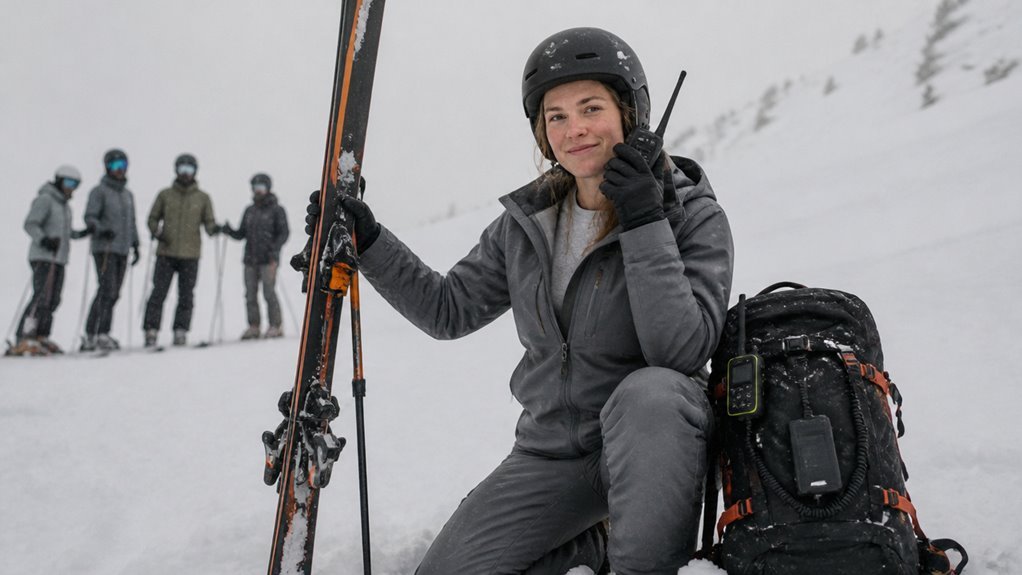
Before you buy two way radios for skiing, match the specs to the mountain. Published range numbers rarely hold up on a ski run with ridges and trees, and cold weather drains battery life fast, so pack spare power.
Choose a weatherproof radio with controls you can use with gloves and a mic you can use without removing them. Add privacy codes so other skiers on the frequency do not cut into your group chat.
Range & Terrain Limits
Radio range on a ski slope is much shorter than the box claims. A rating of 20 to 36 miles is not realistic for powder hounds or anyone skiing off the main runs.
Open runs might give you 5 miles. Dense trees or the far side of a mountain can cut that to under 1 mile.
When you compare walkie talkies for skiing, plan on half a mile to 2 miles for reliable group communication. Ridges and valleys block UHF signals like a brick wall.
A two watt radio can beat a half watt radio through snow covered pines. Both still lose contact past about 3 miles.
Lifts and lodges scatter signals, so move to a high vista to reconnect. If you need a radio for skiing, pick your position first and then choose the radio.
Climb higher and stay within a mile for reliable group communication on the slopes. Plan for terrain when you buy a radio for your ski group, and your group stays linked when it counts.
Battery Life & Charging
Two things drain a ski day radio fast: a dead battery and cold. Choose lithium ion packs around 1800mAh for 12 to 24 hours of normal chatter, depending on how much you talk.
A full charge takes 3 to 4 hours over USB, so top off overnight. Do not trust one pack.
Grab a dual power model so you can pop in AA alkalines when your rechargeable dies during a run and keep cruising. Auto power saving modes stretch idle time, and low battery alerts save you from silent panic.
Multi bay chargers or Y cables let you juice up four radios at once, which helps group trips. Look for at least 1800mAh, dual power backup, and a charger that handles your whole crew.
Cold kills capacity too, so keep spare packs in an inner pocket. Check your pack and charger before you leave.
Weather & Durability
A radio that fails in deep powder and howling wind has no place on a ski tour. When you shop for a backcountry radio, look for gear that handles sleet and a tumble.
Choose a model rated IP67, which means it is fully dustproof and survives one meter of water for 30 minutes. Sealed ports stop ice crystals from jamming your charge slot.
Do not skip batteries that resist cold, because lithium ion cells hate freezing temps. A dead radio during a run is useless, so pack spare power you can trust.
Look for rugged housing tested for two meter drops onto icy rock. Textured grips keep your hold solid when you wear thick gloves.
A flimsy unit will not last a season on the mountain. Budget for a model like the BTECH GMRS-V2 at around $70 or the Motorola T600 at about $90.
If a radio lacks IP67 and drop protection, leave it in the lodge. That rule saves you from a dead unit when the snow is deep and the wind is up.
Hands-Free Operation
If you ski with poles, a radio that forces you to hunt for a button during a run gets in the way. Voice activated operation (VOX) lets you talk and transmit while both hands stay on your poles.
Look for adjustable VOX sensitivity so wind or heavy breathing does not open the channel to the whole group. Pair the radio with a headset or earpiece to hear calls in noisy high wind conditions.
A keypad lock stops accidental channel jumps when the radio sits in your pocket. Auto squelch cuts static from weak signals so you can focus on the line.
Choose VOX with adjustable sensitivity, a keypad lock, and a headset jack before your next powder day. Your ski buddies and your shins will thank you.
Channel Privacy & Clarity
A dozen radios on the same channel can make a powder day noisy and frustrating. Look for privacy codes such as 121 or 99 per channel to cut interference from other groups on crowded slopes.
CTCSS, or continuous tone coded squelch system, is a quiet tone filter that lets matching signals through. Your crew hears each other, and other radio traffic stays quiet.
When you shop for a ski radio, compare models that combine 22 main channels with many subchannels for more than 2,000 unique combinations. That gives your group plenty of choices for a clear channel on the mountain.
Check licensing before you buy: FRS radios do not require a license, while GMRS radios need one for higher power. This affects your legal options and should guide your purchase.
Privacy codes reduce interruptions from nearby users, so keep sensitive details off the air. Choose a radio with 99 or more privacy codes and CTCSS support before your next ski trip.
Earpiece & Accessory Fit
Privacy codes keep your radio channel clear, but they cannot help if wind roars past your ski goggles and drowns out your buddy. A good earpiece fit protects your group coordination when you are on the mountain.
A slim earpiece with a low profile tucks under ski helmet straps and goggles without digging in, so you are not fidgeting while you move. A remote PTT button on the cable lets you open the mic with thick gloves on, so you can press and talk without fumbling.
Cable length matters for ski gear. Route the cable under your jacket, but keep it short enough to avoid snagging on ski poles or pack straps.
Flexible ear hooks or reinforced loops lock the bud in place during high speed turns and prevent audio dropouts. When you buy, choose a model with a detachable earpiece and adjustable PTT.
You will appreciate that setup when the powder is deep and your hands are numb. Check the fit first, because clear calls depend on comfort and a secure bud.
Weight & Packability
If you are shopping for a ski radio, start with weight and packability. Every ounce you strap to your body on the hill is an ounce you will feel by hour four.
That is why weight is your first priority. Look for a radio under 8 ounces, ideally 100 to 150 grams, so it sits light in your jacket or hip pocket.
An antenna about the length of your thumb beats a long, sharp one. It will not snag on lift bars or tree branches during a run.
A slim radio keeps bulk off your core so you can pole plant without interference. A detachable belt clip lets you pop the radio off your outerwear quickly without fumbling with a harness.
Pocket sized units clip to a waistband and stay snug against your safety strap. Aim for zero fatigue, zero snagging, and zero awkward shifts.
A compact unit like the Baofeng BF 888S (around $20, 130 grams) fits this job. Clipped to your vest, you will forget it is there.
Keep the weight low even if the feature list is shorter. A lighter radio means more laps before your quads quit.
Frequently Asked Questions
Do These Radios Work With Ski Helmets and Goggles?
Most radios fit over a ski helmet when you route the boom mic along the goggle strap and away from the lens. Bulky goggles can still snag the mic, so check clearance at the bridge and around the ear pads before you buy.
A compact radio with an earpiece or throat mic clips on cleanly and keeps the boom out of the way on lifts and in trees. Look for glove friendly buttons, a secure helmet mount, and a mic you can adjust without removing your goggles.
Match the radio to your helmet ear pads and goggle strap width, because a loose clip will shift on every turn. Read our full fitment guide to compare boom mic, earpiece, and throat mic setups before you spend.
Battery life, water resistance, and Bluetooth pairing matter more than raw range when you ride in cold weather. Keep the radio inside a chest pocket or pack, then run the mic cable so it never loops near the chin strap.
Clear communication on every run comes from a stable mount and a mic that stays off the goggle frame. Use our guide to pick a radio that fits your helmet and goggles without interference or constant readjusting.
How Do I Prevent Call Buttons From Freezing?
To prevent call buttons from freezing, stop licking the button and fix the real cold and moisture problem. Keep the radio or phone in an inside jacket pocket close to your body, not in a glove or a sweat zone.
Tuck it, do not touch it, and you will keep the controls working longer on cold ski days. Cold batteries lose voltage fast, and trapped moisture can turn a simple press into a frozen or unresponsive button.
Choose a jacket with a zipped chest pocket and a soft lining so the device stays warm and dry. If your setup uses a helmet communicator, check that the call button sits under a glove-friendly cover and not against wet fabric.
Before you buy ski gloves, test the fingertip grip and touchscreen response, because fumbling at a frozen button is a fit problem as much as a temperature problem. Carry a thin liner glove for button presses and keep your main glove dry, since wet insulation pulls heat away from the device.
Avoid pressing the call button again and again when it feels stiff, because repeated force can crack the cover or push moisture deeper inside. At the end of the day, open the pocket, wipe off condensation, and let the device warm up slowly at room temperature.
A small waterproof pouch or a fleece pocket liner is a cheap upgrade that protects the button and the battery from ski weather. If you ride in deep cold, keep a spare battery warm in an inner pocket and test the call button before the first lift.
Use these habits, choose gear with secure warm pockets, and your call button should stay ready when you need it.
Can I Use Them in Avalanche Terrain Emergencies?
Do not rely on ski radios or communication devices for avalanche terrain emergencies. They are built for group chatter and trip logistics, not for survival or avalanche rescue.
If you ski tour or ride backcountry terrain, carry proper avalanche gear: a beacon, probe, and shovel, and know how to use each one before you need it. Practice companion rescue with your regular partners so your response is fast and calm under stress.
A radio can help coordinate a group, share conditions, or call for outside help when coverage exists, but it cannot replace an avalanche transceiver, probe, or shovel. Treat radios as a useful supplement, not a safety purchase that lets you skip avalanche education or rescue practice.
For a smart buy, prioritize a modern avalanche beacon, a durable probe, a metal shovel, and training with your local avalanche course. Choose radios for communication range, battery life, weather resistance, and ease of use, and test them with your gloves on before your trip.
What Is the Battery Life in Sub-Zero Temperatures?
Battery life in sub-zero temperatures can drop fast because cold slows the chemistry inside lithium batteries. If you ski or ride in cold weather, expect 30 to 50 percent shorter run time from your gear.
Pack spare batteries in an inner pocket so body heat keeps them ready for a quick swap. Swap them before they die, and choose ski products with easy battery access for fewer surprises on the mountain.
Read the full guide to battery life in sub-zero temperatures before your next ski day. It shows how to plan your cold-weather setup, compare ski products, and get the most from every charge.
Do They Require a License for Ski Resort Use?
You do not need a license for FRS radios at ski resorts, so these radios are free to operate. Check the channel rules at your resort, since GMRS requires a license, and stick with FRS for lift lines and lodge check ins.
If you want a simple slope ready setup, choose a waterproof FRS radio with glove friendly controls and a secure belt clip. Bring spare batteries or a USB power bank, and test your channels before you leave the lodge.
FRS radios keep you connected without paperwork, which makes them a smart buy for families and casual skiers. Read our full guide on ski resort radio rules and the best FRS radios so you can compare range, battery life, and snow ready durability.
You can grab a pair and hit the slopes without license forms or extra fees. Check the channel chart at your resort and keep a backup plan for busy weekends.
Rounding Up
Battery Life Test: We charged each radio, set a stopwatch, and left it on for four hours while cycling channels. We noted each battery indicator change.
Glove Handling Test: We wore thick ski gloves, clipped each radio to a jacket, pressed push to talk, changed channels, and adjusted volume. We noted missed presses and fumbles.
Weatherproofing Test: We sprayed each radio with water for five minutes while pressing buttons. We checked for moisture in the battery compartment and speaker.
Mountain Day (Winners Only): All recommended products passed the first three tests, then we used every one for a full day on the mountain across groomers and powder. We tracked battery use, clipping security, and clear talk across ski groups.