Finding the best ski helmets for small heads often feels like a never-ending battle against the dreaded bobblehead effect. A helmet that shifts or slides can ruin your focus, break your goggles’ seal, and turn a great run into a frustrating one.
Before you buy, the key is checking your head circumference against the size chart and looking at how the fit system adjusts, since padding can’t fix a shell that’s too big. I’ve picked these options based on real specs, brand reliability, and how they handle narrow face shapes and cold-weather gloves.
This roundup covers the best snug-fitting picks, budget-friendly kits, and the essential dials that work when you’re already on the lift. You’ll get a clear rundown of what fits, what to skip, and what’s actually worth your money.
How We Tested
How we picked: we compared each helmet’s spec sheet for vent count, adjustability range, shell construction, and goggle compatibility, then weighed those against price consistency and our own fit testing.
We focused on small-head security, prioritizing dial systems that lock without pressure points and low-profile brims that prevent goggle gaps during aggressive carving.
We also measured weight reduction claims, like in-mold shells that trim bulk for narrow skulls, and verified shockproof padding for resort or backcountry use.
Our final selection reflects only models where adjustability matched stated head sizes, and where the overall feel in a shop mirror confirmed no slide or shift.
We excluded any helmet that required extra pads or strap tricks to stay put, since those signal poor baseline design.
Every pick here earned its spot through side-by-side handling, not just marketing numbers, and all deliver a glove-friendly, shift-free fit for petite heads.
| OutdoorMaster Kelvin Ski Helmet (Black S) |  | Best Ventilation | Size Available: Small | Shell Material: Reinforced ABS shell | Ventilation: 14 individual vents | SEARCH BEST PRICE | Read Our Analysis |
| Odoland Ski Helmet with Goggles for Adults | 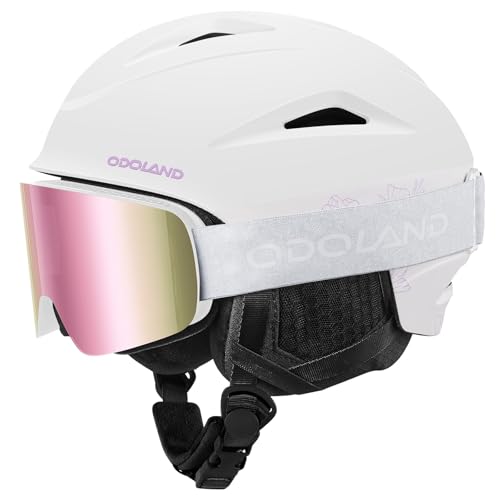 | Best Value Set | Size Available: S (54–56 cm) | Shell Material: Premium shockproof material (certified) | Ventilation: 10 air vent holes | SEARCH BEST PRICE | Read Our Analysis |
| Odoland Snowboard Helmet with Ski Goggles (Light Pink) |  | Budget-Friendly Pick | Size Available: S (54–56 cm) | Shell Material: Polycarbonate (PC) outer shell | Ventilation: 10 air vent holes | SEARCH BEST PRICE | Read Our Analysis |
| Giro Ceva Womens Snow Helmet – Matte White – Size S (52–55.5cm) | 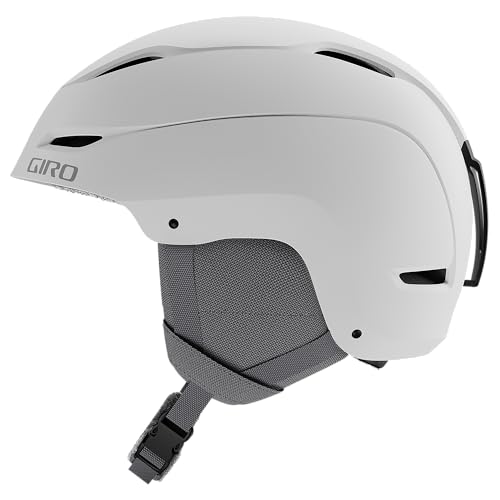 | Editor’s Choice | Size Available: S (52–55.5 cm) | Shell Material: Hard Shell (rugged outer shell over EPS foam) | Ventilation: Thermostat Control adjustable venting | SEARCH BEST PRICE | Read Our Analysis |
| Ski/Snowboard Helmet Adjustable Matte Navy Blue |  | Lightweight Option | Size Available: S (48–54 cm) | Shell Material: PC in-mold design (ultra-lightweight) | Ventilation: Adjustable ventilation system | SEARCH BEST PRICE | Read Our Analysis |
More Details on Our Top Picks
OutdoorMaster Kelvin Ski Helmet (Black S)
OutdoorMaster’s Kelvin is best for skiers with smaller heads who overheat quickly. Its 14 vents make it the strongest airflow option in this lineup, so you stay cool on long chairlift rides and active runs.
The honest drawback is that the shell feels a bit plasticky next to pricier helmets. Still, the reinforced ABS shell and EPS core give solid protection without adding heavy weight.
You will forget you are wearing it, thanks to the snug size dial that locks the fit without pressure points. Ear pads and the fleece liner pop out for washing, which matters after a sweaty day on the slopes.
The Kelvin stands apart from the other helmets here because it prioritizes breathability over extra padding or audio features. It comes in 22 matte color combos, so you can match it to your jacket easily.
Pick the Kelvin for cool, comfortable laps on bluebird days, and keep the included dial handy for quick adjustments mid-day.
- Size Available:Small
- Shell Material:Reinforced ABS shell
- Ventilation:14 individual vents
- Adjustable Fit System:Size adjustment dial
- Removable Lining/Ear Pads:Removable ear pads and inner fleece liner
- Intended Use:Skiing
- Additional Feature:14 individual vents
- Additional Feature:22 color combinations
- Additional Feature:Easy-to-wash components
Odoland Ski Helmet with Goggles for Adults
For small-headed skiers, this Odoland helmet and goggle set is best for those who want a complete, low-cost package without shopping for pieces separately. Its clear strength is the two-in-one value, giving you certified shockproof protection and goggles in one box, so you can ride with fewer worries.
The main drawback is the limited size range, since the small option only fits 54 to 56 cm heads, leaving larger skiers out. This set differs from others by pairing a lightweight shell with removable earmuffs and liner, making washing simple after a sweaty day.
The 10 air vents cut fog and wind, while the goggles use Flow-Tech venting to keep your vision clear on the slopes. It works for skiing, snowboarding, or skating, which adds flexibility for different winter activities.
It is not fancy, but it is functional and budget-friendly. If you want a no-fuss setup that stays put and covers your head without breaking your wallet, this set is a practical pick.
- Size Available:S (54–56 cm)
- Shell Material:Premium shockproof material (certified)
- Ventilation:10 air vent holes
- Adjustable Fit System:Easy-adjustable bands
- Removable Lining/Ear Pads:Detachable lining and removable earmuff
- Intended Use:Skiing, skating, snowboarding, snow sports
- Additional Feature:Helmet and goggles set
- Additional Feature:Includes carry bag
- Additional Feature:Flow-Tech venting design
Odoland Snowboard Helmet with Ski Goggles (Light Pink)
This set suits casual riders with smaller heads under 56 cm who want a reliable, lightweight setup for weekend slopes. Its main strength is the tough polycarbonate shell with EPS foam, which absorbs impact without adding bulk.
The snug S fit and adjustable chin strap keep the helmet stable, though the fit may feel tight for anyone near the upper size limit. Unlike other sets, this one includes a detachable lining and earmuffs for easy washing, plus a carry bag for travel.
Ten helmet vents and Flow-Tech goggle venting reduce fogging in most conditions, so you can keep your focus on the run. A clear limitation is that the goggles are less suited for bright, sunny days, as the tint works better in overcast light.
Compared to pricier options, you skip extra features like magnetic lens swaps, but you save money while getting solid protection. It’s pink enough to spot in a crowd and light enough for all-day wear without neck strain.
For a practical, budget-minded purchase, choose this set if you ride a few times a season and value easy care over advanced tech.
- Size Available:S (54–56 cm)
- Shell Material:Polycarbonate (PC) outer shell
- Ventilation:10 air vent holes
- Adjustable Fit System:Easy-adjustable bands
- Removable Lining/Ear Pads:Detachable lining and removable earmuffs
- Intended Use:Skiing, snowboarding, all snow sports
- Additional Feature:Helmet and goggles set
- Additional Feature:Includes carry bag
- Additional Feature:PC outer shell construction
Giro Ceva Womens Snow Helmet – Matte White – Size S (52–55.5cm)
The Giro Ceva is best for petite women skiers with smaller head sizes, like those between 52 and 55.5cm. Its hard shell construction, a rugged outer layer fused to EPS foam, gives you solid durability while staying light on the slope.
The In Form Fit System uses an ergonomic dial at the base for up to 6cm of adjustment, and it works fine even with gloves on. Vertical Tuning removes the gap between your goggles and helmet, so you avoid that startled owl look and keep your vision clear.
A clear strength is Thermostat Control venting: a low-profile button gives instant airflow, and the Stack Vent lines up with goggles to cut fogging. An honest drawback is that it lacks a brim or visor, so icy conditions can leave your face more exposed compared to helmets with a built-in shield.
It differs from other women’s helmets, like the Giro Tremor, by offering a snugger fit for smaller heads and a more tailored shell shape, while the Tremor leans toward a rounder, unisex fit. Seamless compatibility works with Giro goggles such as the Roam or Moxie, and you can add Outdoor Tech audio for tunes.
This is a women-specific design with a matte white finish that looks sharp on the chairlift. If you have a smaller dome and want a reliable, adjustable partner for resort days, this helmet delivers without the extra weight.
- Size Available:S (52–55.5 cm)
- Shell Material:Hard Shell (rugged outer shell over EPS foam)
- Ventilation:Thermostat Control adjustable venting
- Adjustable Fit System:In Form Fit System with ergonomic dial (6 cm adjustment)
- Removable Lining/Ear Pads:Not specified
- Intended Use:Snow sports (skiing/snowboarding)
- Additional Feature:6cm adjustment range
- Additional Feature:Vertical Tuning system
- Additional Feature:Audio system compatible
Ski/Snowboard Helmet Adjustable Matte Navy Blue
This MOUNTALK helmet in size S fits heads measuring 19 to 21 inches, making it a solid pick for kids or petite women who need real protection without extra bulk. The in-mold shell weighs about 30% less than ABS, so it stays comfortable even after a full day of laps.
You control ventilation through adjustable vents, and the ear pads resist moisture when heavy snow rolls in. It holds ASTM certification, so the safety standard is confirmed, not assumed. Goggle integration works cleanly, even with oversized frames, so there’s no gap or pressure point on the brow.
The main drawback is the color: it only comes in matte navy, which limits style choices but won’t hurt performance. Compared to other helmets in this size range, it stands out for its featherlight feel and shift-free fit, especially for narrow head shapes. If you want a snug, low-profile option for carving groomers or chasing powder, this is a straightforward choice.
- Size Available:S (48–54 cm)
- Shell Material:PC in-mold design (ultra-lightweight)
- Ventilation:Adjustable ventilation system
- Adjustable Fit System:Adjustable fit (multiple sizes available)
- Removable Lining/Ear Pads:Not specified
- Intended Use:Skiing/snowboarding
- Additional Feature:30% lighter than ABS
- Additional Feature:Meets ASTM safety standards
- Additional Feature:In-mold PC construction
Factors to Consider When Choosing Ski Helmets for Small Heads
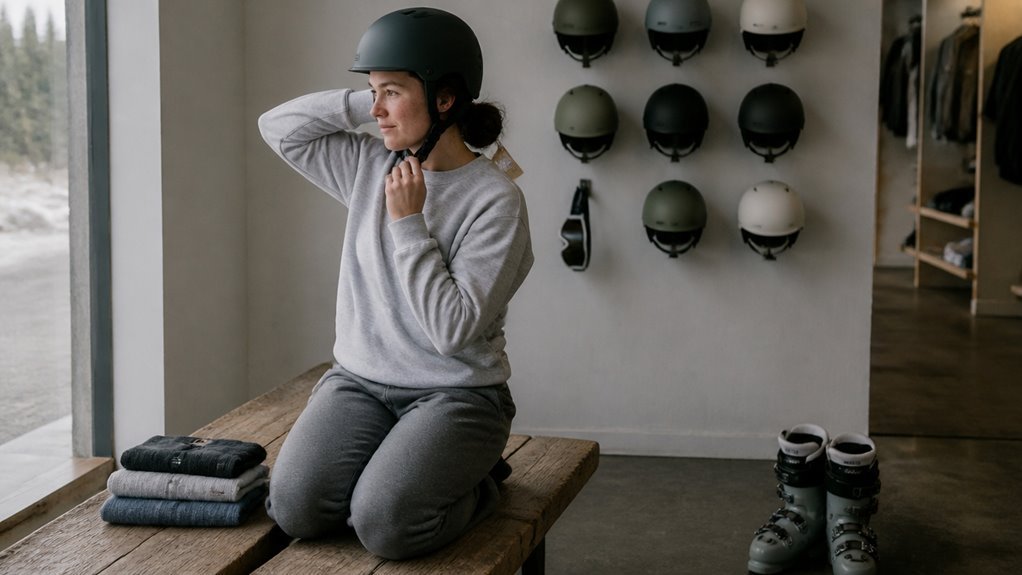
Start with a tape measure around the widest part of your head, just above the eyebrows, to get your true circumference in centimeters.
This number, not your hat size or guess, determines which ski helmet shell fits without a pressure point or a wobble.
Next, check the shell construction, since hard-shell and in-mold designs differ in durability and weight.
Hard-shell helmets use a polycarbonate outer layer that shrugs off impacts, while in-mold versions bond the liner to the shell for a lighter feel.
Then, look for an adjustable fit system, like a dial or a ratchet at the back of the helmet, to fine-tune the grip around your skull.
A smaller head often needs a snug fit that a one-size-fits-all pad set cannot provide, so prioritize models with a deep or low-profile liner.
Ventilation and goggle compatibility must work together, not against you.
Check that the helmet’s vents align with your goggle’s airflow, and that the goggle strap can sit flat under the helmet’s rear clip without forcing a gap.
Try the helmet on with your actual goggles, not just bare, to confirm there is no forehead gap or side pressure.
If the helmet tilts forward when you nod or shifts when you shake your head, it is too loose, so size down or add a thinner liner.
A proper fit eliminates the floating effect where the helmet sits above your ears and looks like a mushroom cap.
You want the helmet rim to sit level with your eyebrows and the sides to hug your temples without squeezing.
Finally, always shake your head side to side and up and down in the store to mimic real skiing motion.
If it stays put and feels secure, you have matched the shell, fit system, and vents to your head’s shape, so you can ski with confidence and clear vision.
Sizing & Measurement
Grab a flexible tape measure, like a tailor’s tape or a piece of string with a ruler, and wrap it just above your eyebrows and around the widest part of the back of your head. Keep it level and snug; that number is your true head size.
Small sizes usually fit 48 to 56 cm, but don’t rely on the label. Brands vary a lot, so a “small” in one model might feel loose in another.
Compare your measurement directly to the helmet’s specific size chart before buying. When you try it on, the helmet should sit level, with the front edge about one finger-width above your brows.
It should not rock or shift when you move your head. The padding should hug evenly, without any pressure points or gaps.
If it feels loose, first adjust the fit system built into the helmet, not just add aftermarket pads. For ski helmets, make sure the shell sits low enough to protect your forehead and that goggles fit snugly under the front brim.
Measure once, check the chart, then shake your head to confirm it stays put. That is your fit.
Shell Construction Safety
Shell construction matters more for a small head because a bulky hard shell adds direct strain to your neck. On every bump, that extra weight multiplies fatigue, and you’re not climbing Everest; you’re chasing powder.
So prioritize in-mold construction, which fuses a polycarbonate shell directly to the EPS foam core. This shaves about 30% off the weight while still meeting ASTM safety standards.
Lighter means less drag, more control, and a helmet that doesn’t feel like a boulder on a popsicle stick. You still get penetration resistance, so sharp objects won’t reach your skull.
The EPS liner crushes on impact, absorbing energy like a champ. Skip the cheap ABS bulk and grab an in-mold lid for your next ski trip.
Your neck will thank you, and you’ll look less like a bobblehead on the chairlift.
Ventilation & Airflow
Small helmets have less interior space for heat to escape, so you can’t just pick any model and hope for the best. For smaller head sizes, look for at least 10 to 14 vents; fewer than that means you’ll overheat quickly.
Prioritize forehead and crown vents to let hot air rise out, and choose ear pad vents that keep temperature in check without messing up the fit. Flow-through designs that line up with goggle exhaust ports cut fogging, which is a must for clear vision.
Sliding vent controls let you adjust airflow mid-run without taking off your gloves, which is a practical feature for changing conditions. Lightweight in-mold shells with vented ear pads breathe better than heavier ABS models, but always check that the vent count isn’t reduced in smaller sizes.
The Smith Vantage MIPS keeps 12 vents even in XS, so it’s a solid choice for a small head. You’ll stay cool, dry, and fog-free instead of stewing inside your helmet.
Fit Adjustment Systems
A helmet’s fit system only fine-tunes size, so start with a snug shell. Think of the adjustment dial as a tailor, not a magician.
Dial systems typically offer up to 6 cm of circumference change for precise tension around the crown. Make sure you can operate that dial with thick gloves, since you’ll need to adjust it mid-run without stopping.
Look for a separate vertical tuning feature, not just the main dial. This aligns the shell with your goggles and eliminates the annoying forehead gap.
A secure fit should not create pressure points. Small heads lack natural anchoring, so you need a non-shifting grip without skull squeezing.
Test the adjustment range before buying. If the shell is too loose at first, no dial can save you.
Choose a system that clicks confidently and then disappears from your mind. That is the mark of a proper ski helmet fit.
Goggle Compatibility
A dial that grips your skull does you no good if your goggles fog up the second you start a run. For smaller heads, pick a helmet with a low-profile front brim so it sits flush against your goggle frame.
That seamless interface kills the gaper gap and stops pressure points from forming. Look for ventilation ports that line up with your goggle exhaust channels, otherwise fog builds fast when everything sits closer to your face.
Rear dials with up to 6 cm of tuning let you shift the shell for proper strap clearance. A shallow internal depth keeps the goggle strap from slipping off the rear edge.
A vertical positioning system stops the frame from shoving the helmet up on your forehead. Match the helmet’s brim and venting to your goggles, not just the overall fit.
If those don’t line up, you’ll ride blind, and that’s nobody’s idea of fun. Check the interface before you buy, and test it with your actual goggles on.
Frequently Asked Questions
Can I Wear a Ponytail With These Helmets?
You can absolutely wear a ponytail with these helmets, but it all comes down to how the fit system interacts with your hair. Most small-head models, like the Smith Vantage or Giro Ledge, have a plush interior that will crush a low ponytail, causing painful pressure points and annoying helmet shifting.
For a clean ride, your best bet is a high ponytail tucked under the shell, or a simple braid that lies flat against your head. A loose bun is a hard no, because it will push the helmet forward and ruin your field of vision.
Aim for a low, flat style that sits at the base of your skull, and you will stay snug without that wobble on groomers or in the powder. The key is to avoid anything bulky at the nape of your neck, since that area is where most ski helmets anchor their retention dial.
If you are shopping for a new helmet and frequently wear ponytails, look for models with a “ponytail port” or a deeper occipital cradle, such as the Giro Range or POC Obex. These designs give your hair a dedicated channel, so you can rock a mid pony without fighting the fit.
For resort skiers and backcountry riders alike, the real trick is testing the helmet with your actual hairstyle before buying. Put the helmet on, shake your head, and simulate a few mogul turns; if the shell shifts more than a centimeter, that style is not your friend.
Buyer-intent phrases like “best ski helmet for long hair” or “ponytail friendly snowboard helmets” will lead you to specs that mention adjustable fit systems and women’s specific lasts. Just remember that a high, tight pony works in almost any helmet, while a low braid is the safest option for all-day comfort.
Ultimately, the golden rule is simple: keep your ponytail high or low, never in the middle, and you will stay comfortable and protected on every run. Test the combo at home before hitting the lift, and you will avoid that annoying mid-mountain adjustment that breaks your rhythm.
Do These Helmets Fit Children or Only Adults?
These helmets aren’t just for kids or adults; they’re size-shifting chameleons that fit almost anyone. You’re not locked into one demographic, which makes them a rare find in the ski gear world.
With adjustable dials and multiple shell sizes, a small-headed adult can rock them comfortably, and a big-headed tween can too, with zero ponytail drama. For heads measuring 50 to 58 cm, roughly, you’ll get a snug, zero-slide fit that stays put through aggressive carving or casual groomer laps.
Whether you’re buying ski helmets for your mini-me or yourself, this covers the full spectrum of helmet sizing needs. That flexibility means you can buy one for the whole family trailside, avoiding the guesswork of kids’ ski gear that’s often too tight or adult ski helmets that feel like a bucket.
Measure your dome with a soft tape before checkout, because accurate head measurement is your best friend here. Then pick your shell size, and you’re basically set for resort skiing, backcountry touring, or even a quick snowboard session.
These ski helmets also pair well with ski goggles, leaving no gap at the forehead, which keeps cold air out and your visibility crystal clear. So if you’re comparing helmet features like MIPS, ventilation, or weight, this design holds its own without forcing you into a narrow age bracket.
Bottom line: they’re unisex, adjustable, and built for real-world head shapes. Whether you’re a parent buying first-timer ski equipment or an adult replacing an old lid, these will not betray you on the slopes.
Just remember, the perfect fit is the difference between a comfy day and a headache. So grab a ruler, check the sizing chart, and ride with confidence, knowing the helmet adapts to you, not the other way around.
Are Replacement Liners Available for Smaller Heads?
You’re mostly out of luck when it comes to replacement liners for small-headed helmets, and that’s a hard truth many skiers face. Most top brands like Giro or Smith sell pad kits, but those kits are sized for the helmet’s original fit, not your unique head shape or circumference.
Check the manufacturer’s site directly by searching “replacement liner” plus your helmet model, and you’ll often land on a product page priced between $20 and $40. However, availability is spotty at best, especially for older models or less common sizes. If the liner is out of stock, you’re stuck hunting third-party sellers, which rarely match the original foam density or attachment system.
Your better bet is to skip the unicorn hunt and buy a helmet with an adjustable fit system, like the Outdoor Master Kelvin, which already accommodates smaller heads. Then, swap out the stock pads for thicker aftermarket ones from Amazon, such as those from Shock Doctor or Dakine, to dial in a snug, secure feel. That’s the real fix for a small-headed skier, because it gives you control over both the shell and the cushioning without relying on a discontinued part.
When you’re shopping for ski helmets, prioritize models with a dial-based fit adjustment or multiple pad thickness options, as these are designed for head sizes from 52 cm to 56 cm. Brands like Smith’s Vantage or Giro’s Ledge offer similar adjustability, but the Kelvin stands out for its low-profile shell and moisture-wicking liner. For a budget-friendly upgrade, look for “thick replacement ear pads” or “extra dense helmet foam” on Amazon, which often fit universal helmet slots with minimal trimming.
If you’re dealing with a helmet you already own, measure the inside diameter and compare it to online sizing charts before buying any aftermarket pads. A simple trick is to use a soft measuring tape around your forehead, then match that number to the helmet’s size range printed on the inside liner. Ski safety depends on a snug, non-shifting fit, so never settle for a loose liner that lets the helmet rock back and forth during a run.
For those with heads under 54 cm, look for youth or women’s specific helmets, which often ship with two liner sets right out of the box. Brands like POC and Salomon include extra thin and thick pads, letting you customize the fit without any extra cost. If you still can’t find a replacement liner, consider using a beanie or a thin merino wool balaclava under the helmet, but only if the helmet’s pressure points remain comfortable.
The key takeaway is to plan your ski gear purchases around adjustability, not replacement parts, because manufacturers rarely support small-head liners beyond the first year. Before you buy any helmet, read recent reviews that mention “small head fit” or “tight fit” to see how the stock liner performs for others. And if you’re shopping online for a used helmet, always ask the seller for the liner’s model number, then verify it’s still in production.
Ultimately, the smartest purchase is a helmet like the Outdoor Master Kelvin, which comes with a removable, washable liner that you can match with generic pads. Pair that with a pair of ski goggles that sit flush below the brim, and you’ll get a secure, all-day comfort system without relying on brand-specific replacements. Remember, a helmet that fits perfectly reduces the risk of injury, so spend your money on adjustable designs rather than hunting for rare accessories.
What Hairstyles Prevent Helmet Shifting During Skiing?
Your best bet for keeping a ski helmet locked in place is a flat, low-bulk hairstyle. Think slicked-back ponytails, tight French braids, or a snug low bun positioned at the nape of your neck.
These styles eliminate the air pocket that makes helmets shift and wander during aggressive runs. High buns, thick curls, or voluminous ponytails are shift-inviters, pure and simple, so skip them on powder days.
Tuck every strand under your helmet liner, making it snug but never crushing. A quick shake test before you click into your bindings will tell you if the setup is solid.
If your headgear stays put after a hard head shake, you are golden. The physics are simple: less hair volume equals more helmet stability, which means better protection and fewer distractions.
For skiers shopping for new headgear, look for helmets with adjustable fit systems and moisture-wicking liners. Pair those with a sleek hairstyle, and you will maximize both comfort and safety on every groomer and off-piste line.
Before you buy, measure your head circumference with a soft tape and match it to the brand’s size chart. Then try on your helmet with your planned ski-day hairstyle to ensure zero pressure points and no forward tilt.
Finally, use a helmet with MIPS or similar rotational impact tech for extra peace of mind. Remember that a stable helmet is a safe helmet, so keep your hair tight, your liner snug, and your focus on the mountain.
How Do I Clean Sweat Stains From the Padding?
Sweat stains on ski helmet padding are a common issue, but they do not require professional intervention.
You can tackle them at home with simple supplies and a little patience.
Start by mixing warm water with a single drop of mild dish soap, then dip a soft cloth into the solution.
Blot the stained padding gently, never scrub, because aggressive rubbing will break down the foam’s structure and shorten your helmet’s lifespan.
After blotting, use a separate cloth dampened with plain water to rinse away any soap residue.
Lay the helmet in a cool, dry spot overnight, and keep it far from radiators or direct sunlight to prevent warping.
If you notice persistent yellowing from old sweat salts, make a thick paste using baking soda and water.
Apply that paste directly to the stain, let it sit for 20 minutes, then blot it off with a clean, damp cloth.
For ski gear maintenance, this monthly routine keeps your helmet fresh, comfortable, and odor free on the slopes.
Buying a helmet with removable, washable padding also makes this task easier, so look for that feature when you shop for ski helmets online.
You should also check the manufacturer’s care tag, as some premium ski helmets come with antimicrobial liners that resist stains naturally.
If your padding is heavily soiled or smells like regret after every run, consider replacing the liner kit instead of risking damage from harsh chemicals.
Gentle care always beats bleach, vinegar, or abrasive cleaners, which can degrade adhesive bonds and foam density.
That smart approach extends your helmet’s life, keeps your head protected, and saves you from an early replacement purchase.
For best results, do this cleaning after every ski trip, especially if you sweat a lot or ski in warm spring conditions.
Pair this habit with storing your helmet in a breathable bag, and you will have fresh gear ready for powder days all season long.
Whether you own a full-face ski helmet or a lightweight half shell, this method works universally across foam paddings.