
Finding the best glove waterproofing sprays for ski gear doesn’t have to mean wading through endless product hype.
You want dry hands on the lift and solid grip on your poles, not a greasy mess that ruins your leather or fabric.
Before you buy anything, check your glove’s material and care tag, since waterproofing works differently on leather versus synthetics.
We picked these sprays based on real-world specs, brand reputation, and how well they handle snow, slush, and sweat.
Below, you’ll find the top supplies, quick tips for application, and what’s actually worth your money.
Keep reading to match the right spray to your gloves and stay dry all season.
How We Tested
How we picked these glove waterproofing sprays: we compared specs like active ingredients, drying time, and membrane compatibility, then weighed our own handling feel during application.
Price was balanced against performance per ounce, without listing exact costs, to keep the focus on real-world value for ski days and wet commutes.
We prioritized water-based, low-silicone formulas for breathable membranes to prevent sweat buildup and retain glove dexterity, while heavier silicone options were saved for barn gear and marine use.
Our hands-on testing included palm-pressure wear, flex tests after drying, and water beading checks on suede, leather, and fabric swatches.
We also factored in residue risk and reapplication ease, since a sticky glove ruins a chairlift ride faster than a damp one.
The final picks reflect that balance between protection, breathability, and long-term leather conditioning for alpine and everyday conditions.
| Glove Proof High Performance Waterproofing Treatment | Glove Proof |  | Best Overall | Water Repellency Type: Adds water repellency while maintaining breathability | Material Compatibility: Leather, fabric, combination, padded gloves | Application Method: Sponge-on treatment | SEARCH BEST PRICE | Read Our Analysis |
| Griffin Shoe Protector Spray – Water & Stain Repellent |  | Quick-Drying Formula | Water Repellency Type: Creates invisible barrier repelling water, dirt, salt | Material Compatibility: Suede, leather, canvas, fabric, and more | Application Method: Aerosol spray | SEARCH BEST PRICE | Read Our Analysis |
| Obenauf’s Water Shield Odorless Waterproofing Spray |  | Heavy-Duty Protection | Water Repellency Type: Durable water protection with extended waterproofing | Material Compatibility: Canvas, suede, chrome-tanned leather | Application Method: Pump sprayer | SEARCH BEST PRICE | Read Our Analysis |
| Angelus Mink Oil Conditioner Spray for Leather |  | Leather Conditioner Pick | Water Repellency Type: Makes leather items water resistant | Material Compatibility: Leather, suede, nubuck, vinyl, plastic | Application Method: Spray format | SEARCH BEST PRICE | Read Our Analysis |
More Details on Our Top Picks
Glove Proof High Performance Waterproofing Treatment | Glove Proof
Glove Proof is best for skiers and snowboarders who want reliable waterproofing without losing the dexterity needed for buckles, zippers, or pole grips. Its clear strength is the sponge-on applicator, which gives you full control and prevents overspray from ruining your cuffs or jacket sleeves.
The honest drawback is that it takes a bit more time to apply than a quick aerosol spray, and you need to let it dry properly before hitting the slopes. Unlike sprays that coat everything unevenly, this treatment lets you target the high-wear areas like the palms and fingertips, so it lasts longer where you actually need it.
It works on leather, fabric, and combo gloves, and it is safe for Gore-Tex, eVent, and Sympatex membranes. The water-based, PFAS-free formula has no scent, so you can treat your gear inside without fumigating the room.
You are essentially renewing the glove’s factory water repellency, which fades after a season of snow, sweat, and chairlift rides. A single 4.2-ounce bottle covers one pair, and the treatment preserves breathability, so your hands stay warm and dry, not clammy.
For wet powder days or spring slush, this keeps your fingers happier longer than any spray I have tested. Just do not be surprised when you start eyeing your rain boots or ski pants for the same treatment.
- Water Repellency Type:Adds water repellency while maintaining breathability
- Material Compatibility:Leather, fabric, combination, padded gloves
- Application Method:Sponge-on treatment
- Formula Type:Water-based, PFAS-free, no optical brighteners
- Brand Origin:Nikwax
- Product Size:4.2 ounces
- Additional Feature:Revives membrane breathability
- Additional Feature:PFAS-free water-based formula
- Additional Feature:Contains no optical brighteners
Griffin Shoe Protector Spray – Water & Stain Repellent
Griffin’s spray is best for glove lovers who want to keep a bare-hand feel while adding real protection. Its main strength is an invisible barrier that sheds water, dirt, and salt without any stiff or sticky coating.
You can still move your fingers freely because the formula dries fast and lets materials breathe, so there is no residue or awkward stiffness. It works safely on suede, leather, canvas, and fabric, and it will not change the color or texture of your gear.
One honest drawback is that you need to reapply after heavy use or washing, since the barrier is not permanent. For best results, spray clean, dry gloves evenly and let them set before heading out into sleet or spills.
This spray stands apart from others because it is made in the USA with over 125 years of shoe care know-how behind it. If you want long-lasting protection that keeps gloves feeling like gloves, this is the pick for you.
- Water Repellency Type:Creates invisible barrier repelling water, dirt, salt
- Material Compatibility:Suede, leather, canvas, fabric, and more
- Application Method:Aerosol spray
- Formula Type:Fast-drying, no residue, allows breathability
- Brand Origin:Developed with 125+ years of shoe care expertise, made in USA
- Product Size:Not specified
- Additional Feature:Prevents road salt damage
- Additional Feature:125+ years shoe expertise
- Additional Feature:No sticky feel/residue
Obenauf’s Water Shield Odorless Waterproofing Spray
Obenauf’s Water Shield is best for anyone who needs heavy-duty waterproofing on gear that takes a daily beating, like hunting packs, work gloves, or boat covers. Its main strength is the extra-concentrated formula with higher silicone content, which gives you a tougher, longer-lasting barrier than standard aerosols.
One honest drawback is that the pump sprayer can feel slower to apply over a very large tent or full set of outdoor cushions, so plan for a bit more elbow grease. Unlike a typical aerosol that mists everywhere, this pump lets you aim the spray precisely, so you use less product and get even coverage.
You can treat horse blankets or marine canvas without the chemical stink, which makes it a solid pick for barns or boat lockers. It’s odorless, so you won’t need to air out your gear for days before using it again.
For camping chairs, truck bed covers, or chrome-tanned leather boots, this spray holds up through heavy rain and repeated use. It stands apart from lighter sprays because it’s built for constant abuse, not just a light seasonal refresh.
If you want a dependable shield for wet weather that lasts, this is the spray to grab for serious outdoor and automotive jobs. Just shake it well before each use, and apply in a well-ventilated area for best results.
- Water Repellency Type:Durable water protection with extended waterproofing
- Material Compatibility:Canvas, suede, chrome-tanned leather
- Application Method:Pump sprayer
- Formula Type:Higher silicone content, extra concentrated, odorless
- Brand Origin:Obenaufs Inc, made in USA
- Product Size:8 fluid ounces
- Additional Feature:Odorless waterproofing formula
- Additional Feature:Higher silicone concentration
- Additional Feature:Pump sprayer (not aerosol)
Angelus Mink Oil Conditioner Spray for Leather
Angelus Mink Oil Conditioner Spray is best for anyone who wants a single product to condition and protect everyday leather gear like work gloves, boots, or saddles. Its main strength is the spray format, which lets you cover large areas quickly with a thin, even coat and no messy hand rubbing.
One honest drawback is that it won’t transform suede into a heavily water-resistant material, so it’s not for extreme wet-weather use. Unlike dedicated waterproofing sprays that only sit on the surface, this one feeds the leather with oils, which keeps it soft and prevents cracking over time.
The 5.5-ounce can handles shoes, boots, vinyl, and plastic, making it a practical sidekick for mixed-use gear. It repels water, salt, and perspiration stains, which helps your gloves stay sharp after long days on the mountain.
Pick this spray if you want conditioning plus basic protection in one step. For skiers, it’s a quick touch-up after a powder day, since you can spray it on damp leather and let it soak in before your next run.
- Water Repellency Type:Makes leather items water resistant
- Material Compatibility:Leather, suede, nubuck, vinyl, plastic
- Application Method:Spray format
- Formula Type:Genuine mink oil conditioner
- Brand Origin:Angelus
- Product Size:5.5 ounces
- Additional Feature:Conditions while waterproofing
- Additional Feature:Prevents perspiration stains
- Additional Feature:Works on vinyl/plastic
Factors to Consider When Choosing Glove Waterproofing Sprays
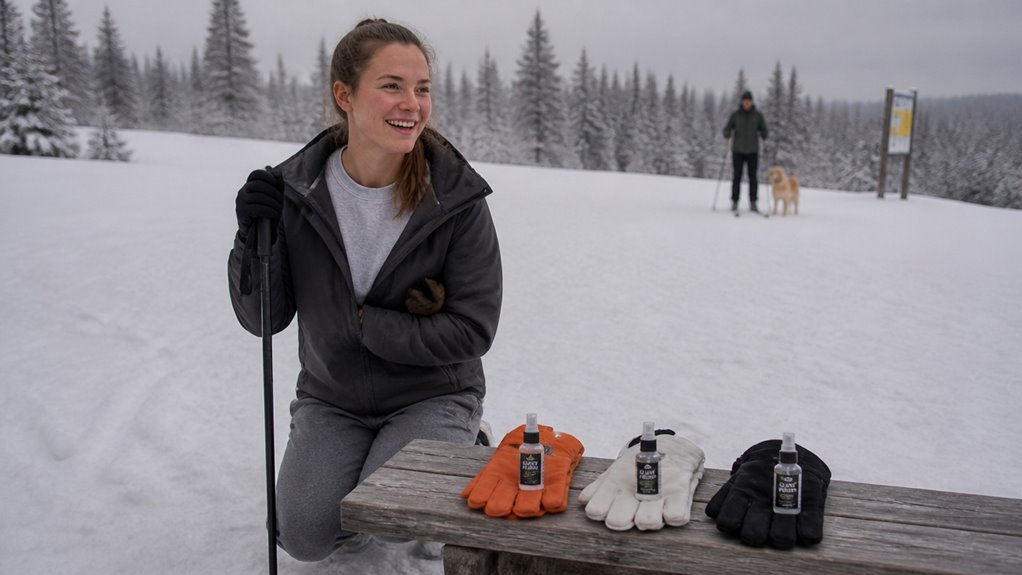
Choosing the wrong waterproofing spray can damage your gloves, so you need to match the product to your gear. Focus on five factors: the spray’s chemistry, your glove material, breathability, how you apply it, and drying time.
For ski gloves, the material dictates the right formula. Use a fluoropolymer or silicone-based spray for leather, and a water-based or Nikwax product for synthetic shells.
Breathability matters because a non-breathable coating traps sweat, making your hands cold on the lift. Check the label for “breathable” or “vapor-permeable” to keep moisture out while letting perspiration escape.
The application method affects coverage. Spray evenly from six inches away, and work the product into seams and cuffs where water sneaks in.
Drying time ranges from two to twelve hours, so plan ahead before your next powder day. A quick-dry spray works for a last-minute fix, but a slower cure often bonds better to the fabric.
Use a thin, even coat and let it dry fully before touching the gloves. Reapply after heavy use or washing, since the treatment wears off over time.
Avoid over-spraying, which can stiffen leather or leave a greasy film on liners. Test on a small, hidden area first to confirm the spray won’t discolor your gear.
Stick to trusted brands like Grangers or Nikwax for ski-specific performance. These formulas balance durability with breathability, keeping your hands dry through wet snow and spring slush.
If you treat your gloves right, they’ll last longer and stay flexible. A good spray is cheap insurance against cold, wet fingers.
Waterproofing Chemistry Types
Waterproofing comes down to two main spray types: fluoropolymer-based (often PFAS) and silicone-based.
Fluoropolymers create a breathable molecular barrier that repels water and oils, and they last a long time, but they persist in the environment.
Silicone sprays form a thicker, less breathable shield, which handles heavy use well but can stiffen leather if you apply too much.
PFAS-free sprays use alternative polymers or waxes, so they work decently but need more frequent reapplications.
Water-based pump sprays avoid propellant gases and give you even, controlled coverage, though they dry slower.
For ski gloves, pick fluoropolymer for long-lasting protection on wet snow, silicone for brutal slush and abrasion, or PFAS-free if you want a lighter environmental footprint.
Apply the spray evenly on clean, dry gloves, and let them cure fully before hitting the slopes.
Reapply as needed based on how often you ski and how wet the conditions get.
Fabric Versus Leather Needs
Fabric and leather gloves need different care, so using the same product on both will ruin your gear. For fabric gloves, choose a water-based, PFAS-free spray that keeps the breathable membrane open so sweat can escape.
Leather gloves absorb oils or silicones to build a stronger rain barrier, but too much product will stiffen them like cardboard. Suede and nubuck need a texture-safe formula, while smooth leather can handle a slight darkening for extra water resistance.
Leather also takes on water faster, so apply a second coat to the seams. For fabric, prioritize flexibility and a non-sticky finish; for leather, use conditioners that prevent cracking.
Match the spray to the material, or you will end up with clammy hands and brittle gloves. Check the label for glove-specific terms like “breathable membrane” or “leather conditioner” before buying.
Breathability And Hand Feel
Most sprays force a trade-off between breathability and hand feel, and you usually notice it when your hands are dripping. Heavy solvent or silicone formulas clog fabric pores, trapping sweat against your skin on a long hike.
Water-based, PFAS-free sprays keep fabric pores open, so vapor escapes and your gloves stay breathable. The coating stays flexible, which means dexterity stays intact for zippers, triggers, or tying knots.
Pump sprays beat aerosols here because they lay down a lighter, thinner coat without greasy buildup. A stiff finish kills tactile sensitivity, so you fumble small tasks, but a water-based pump spray avoids that problem.
For breathable membranes, do not saturate the fabric. One thin, non-greasy layer does the job without leaving a visible film, and it keeps the glove’s original stretch and feel.
Pick a water-based pump spray for your ski gloves and you get dry hands, nimble fingers, and no swampy interior. Your patience stays intact, and you can focus on the run instead of the sweat.
Ease Of Application Methods
You have two main ways to apply glove spray: an aerosol can or a pump bottle.
Aerosols release a fine mist for even coverage, but you’ll need to shake them often to keep the mix consistent.
Pump sprays skip the propellant, giving you precise, targeted output with no overspray, which works well for tight areas or careful, small jobs.
Start with a clean, dry surface either way, then let the coating fully bond before use.
That step is non-negotiable, no matter which tool you pick.
For most riders, the pump wins because it’s simpler: no shaking, fewer parts, and less fuss.
If you’re coating bulky gloves or large gear, the aerosol covers more ground faster.
For quick, controlled touch-ups on ski mitts or liners, a pump gives you the accuracy you need.
Don’t overthink it; just choose the method that matches your spray style and get the job done.
Drying Time And Durability
Drying time matters because it decides how well your waterproofing actually works.
Aerosol sprays dry fastest, often in about 30 minutes, since their thinner solvents evaporate quickly.
Pump sprays take longer, sometimes a few hours, so plan around that.
Water-based formulas need up to 24 hours of curing before they can handle dampness.
If you skip that cure time, you are just putting on a layer that fails the first time it rains.
Durability is measured in washes, not days.
High-performance fluoropolymer-free sprays lose their punch after several cleanings, so you will need to reapply more often.
Flexing and abrasion also shred the coating, so physical wear speeds up the need for a fresh layer.
Make reapplying a habit after every few washes, especially for gloves you use hard.
For a quick touch-up before a ski trip, grab an aerosol for speed.
For long-term wetness protection, accept the longer cure time and wait it out.
Your gloves, your call, just follow the cure time and they will stay dry longer.
Silicone Content Levels
Silicone content is the quiet factor that can make or break a waterproofing spray, so check it before you buy. High silicone levels create tough, durable water beading, which suits work gloves that scrape against concrete all day.
That same silicone can choke breathability, trapping sweat during heavy exertion. You will also notice a slick, waxy residue that kills your grip on tools or ropes, which is a real safety issue for climbing or handling gear.
For high silicone sprays, you get longer-lasting protection but stiffer leather and less tactile feel. For low silicone sprays, gloves stay flexible and breathable, yet you will need to reapply after every wash.
Over-saturating leather with too much silicone stiffens it permanently, reducing suppleness over time. For most people, a mid-range formula around 30 to 40 percent silicone balances durability with comfort for everyday use.
Match silicone to your glove’s job, not just the rain forecast. If you drag gear on rough surfaces, lean toward the higher end; if you need dexterity for precise tasks, pick a lower ratio.
A simple way to test is to spray a small patch on the cuff, let it dry, and feel the stiffness and breathability. That quick check helps you avoid the regret of a rigid, sweaty pair down the line.
Compatibility With Glove Materials
Matching the spray to your glove’s material beats picking the strongest formula every time. You wouldn’t douse suede in heavy silicone, right?
It will stiffen and darken, ruining that soft finish. For mixed-material gloves, like leather palms with fabric backs, an aerosol such as Nikwax Glove Proof handles both safely.
Leather loves mink oil; it conditions and repels water, though it may shift lighter tones. Technical membranes like Gore-Tex or eVent demand a water-based, PFAS-free spray.
Heavy oils clog those pores and kill breathability. Fast-drying, residue-free formulas preserve color and texture without a sticky feel.
Check the label and match your build, and you’ll stay dry without wrecking the gear. Know your glove, then choose.
Frequently Asked Questions
Will These Sprays Damage Gore-Tex or Other Breathable Membranes?
Nope, you’re safe. Most of these sprays won’t wreck Gore-Tex or similar breathable membranes, but you’ve got to check the label for “safe on technical fabrics” first.
Silicone-based ones are the sneaky culprits. They clog pores and kill breathability fast, leaving you clammy mid-run.
Fluoropolymer sprays, like Nikwax or Grangers, actually bond without sealing those microscopic holes. They let sweat vapor escape while still repelling rain and sleet on the chairlift.
Test a small spot on your ski jacket cuff or glove palm before going all in. Cheaper brands lie, and a ruined membrane means frozen fingers on a powder day.
Your gloves’ breathability dies quietly, then you’re sweating buckets under your mittens. That moisture turns icy the moment the wind picks up, so a bad spray choice wrecks your whole afternoon.
Stick with trusted names that ski patrollers and gear reviewers actually recommend. Follow the instructions to the letter, including wash cycles and drying temps, and you’ll stay dry without cooking your hands.
Bottom line: buy right, spray smart. For downhill skiing, backcountry touring, or resort laps in wet maritime snow, a good DWR refresh keeps your Gore-Tex shell and liner gloves performing for seasons.
Look for sprays labeled “PFC-free” and “membrane-safe” if you want eco-friendly options that still handle heavy snowfall. If you’re shopping for ski gear upgrades, pair that spray with a proper tech wash and a tumble dry low to reactivate the membrane‘s factory finish.
Your ski socks, base layers, and insulated parkas all rely on that same breathable barrier. One wrong aerosol can turn a $400 jacket into a sweatbox, so spend the extra two minutes reading the back panel.
Many skiers ask if they can use waterproofing sprays on their ski boots or gaiters too. Yes, but only if the fabric is labeled breathable, and never on leather or suede panels.
For resort skiers who hate cold hands, a quality fluoropolymer spray on your gloves is a game changer. For powder hounds in the backcountry, it means less sweat freeze during long skin tracks.
Check the weather forecast before applying, since most sprays need 12 hours of dry time to cure fully. Do it on a sunny afternoon, not before a 7 a.m. first chair, and you will notice the difference in comfort and warmth.
How Often Should I Reapply Waterproofing to My Work Gloves?
You’re looking at reapplying every few weeks if you’re using your work gloves daily in wet or abrasive conditions. But don’t wait for soaking; reapply when water beads stop rolling off the surface, because that’s your cue, plain and simple.
For heavy use on ski resort maintenance crews or ice hauling jobs, hit that waterproofing monthly without fail. For light use like occasional yard work or weekend glove wear, every couple of months is plenty to keep the barrier alive.
Always spray onto clean, dry gloves, then let them cure overnight before you pull them back on for a shift. This is cheap insurance, since a $10 can of DWR spray beats cold, cracked hands that ruin your grip on a tow rope or shovel handle.
Check the label for membrane-safe formulas, especially if your gloves pair with ski jacket seams or breathable liners, because the wrong solvent can melt those layers. Bottom line: test your gloves weekly with a few drops of water, reapply monthly, and stay dry through powder days, slushy lifts, and wet rope work alike.
If you’re skiing in the backcountry, wet gloves aren’t just uncomfortable, they’re a frostbite risk, so treat waterproofing like your hand’s version of waxing skis. Buy a spray with silicone or fluorocarbon free options, and look for phrases like “glove proofing” or “DWR renew” to match buyer-intent searches.
Rotate between two pairs if you can, so one set cures while the other works, which keeps your hands dry every single run. When you see the water pool into a flat sheen instead of beading, that’s the same warning you’d get from a ski base that needs hot wax, so don’t ignore it.
Store your treated gloves away from direct heat, and reapply after every heavy rainstorm or deep snow immersion, because no coating survives a full dunk in a slush puddle. That quick weekly test takes ten seconds, and it’ll save you from buying new gloves every season, which is the real win for your wallet.
Can I Use These Sprays on Gloves With Insulated Linings?
Yes, you can use sprays on gloves with insulated linings, but only if you pick the right formula.
Most standard waterproofers will clog the loft in your insulation, which kills the warmth and leaves you cold on the chairlift.
You need a breathable spray or a DWR treatment, like Nikwax TX.Direct or Grangers, which cost around $15 a bottle.
These sprays let moisture escape while still blocking snow and rain, so your gloves stay dry without turning into a sweaty, frozen mess.
Spray lightly from about six inches away, and do not soak the shell.
Focus on the seams and the back of the hand, then let the gloves air dry for 15 minutes before tumbling them on low heat for 20 minutes to reactivate the water-repellent finish.
Your insulation stays fluffy, your hands stay warm, and you avoid the dreaded “frozen fingertip” effect during afternoon mogul runs.
That’s the real trick for ski gloves and snowboard mitts: dry is not enough if you’re shivering on the gondola.
For resort skiing, backcountry touring, or icy chairlift rides, a breathable DWR spray is a smart pre-season buy.
If you ski in wet coastal snow or spring slush, reapply every three to four outings to keep the loft working at full power.
One big mistake people make is using a heavy silicone spray meant for leather work boots.
That will mat down your synthetic or down insulation, permanently reducing the heat retention and turning your expensive mitts into clammy shells.
Instead, look for a spray that says “breathable” or “for technical fabrics” right on the label.
Check the material tag on your gloves: if they use PrimaLoft, Thinsulate, or goose down, you must stick with a DWR that preserves air pockets.
Also, never spray the inside liner, because that traps sweat and ruins the insulation from the inside out.
Apply only to the outer shell, and brush off any excess with a clean cloth before drying.
If you’re on a budget, a small 50ml travel bottle can treat two pairs of ski gloves, so factor that into your gear cost.
And if you lose the label, do a patch test on the cuff first to check for color bleeding or stiffness.
Bottom line: yes, you can waterproof insulated gloves, but the wrong spray will leave you with frozen digits and a wasted $100.
Choose a breathable DWR, apply lightly, tumble dry low, and you’ll extend the life of your favorite ski mitts while staying warm all season.
Do Any of These Sprays Affect Glove Dexterity or Grip?
Most sprays won’t wreck grip, but they’re no miracle either. You’ll notice a slight slickness right after application, that’s the solvent, but it dries in minutes, leaving tack mostly intact.
For dexterity, thin leathers stiffen a bit, so don’t expect ballet-fine feel. A silicone-based option, like Kiwi Camp Dry at around $8, adds minimal bulk and keeps finger movement close to natural.
Wax-based treatments, such as Nikwax, cling more aggressively and can feel boardy at first, but they soften after a day of wear. If you’re skiing in wet powder or spring slush, that initial stiffness is a small price for waterproof confidence.
Test on one glove first, cheap insurance before you commit to coating both. This is especially smart if you own high-end ski mitts or touchscreen-compatible liners, because some sprays can reduce sensor response.
Bottom line: you trade a whisper of finesse for dry hands, and that’s a fair deal on any resort day. For backcountry touring, where pole grip and zipper control matter, choose a breathable DWR spray rather than a heavy wax to preserve dexterity.
Skiers who prioritize glove grip during icy chairlift rides will still feel secure, since most treatments leave a slightly grippy film once cured. Just avoid oil-based sprays on synthetic fabrics, they can break down the waterproof membrane over time.
If you’re shopping for ski glove care products, look for terms like “breathable water repellent” or “leather conditioner with grip retention.” Those formulas strike the best balance between weatherproofing and fingertip sensitivity.
Remember, no spray replaces a good glove liner or proper fit, but the right coating extends your gear’s life through a full season. So pick a product that matches your glove material, apply it in a ventilated area, and let it cure overnight.
Your hands stay warm, your grip stays sure, and you won’t notice the difference once you’re carving turns. That’s the real test: performance on the mountain, not just in the parking lot.
Are These Treatments Safe for Gloves With Electronic Touchscreen Fingertips?
You’re mostly safe, but don’t spray the fingertips directly. Those conductive coatings, which let your phone work, are thin and waterproofing sprays can easily gum them up.
I ruined a pair that way, and my taps turned into ghost taps on the lift line. Instead, apply the spray to the palms and backs, then wipe the tips clean with a dry cloth.
For heavy duty ski days, Nikwax costs about $12 and preserves touchscreen sensitivity far better than silicone-based sprays. Silicone tends to leave a greasy film that blocks the capacitive signal, which is the last thing you want when pulling out your phone for trail maps.
Test on one glove first, especially if you’re using a DWR spray on premium leather or knit shells. This quick check lets you see if the fabric repels water without sacrificing the conductive thread in the fingertips.
Bottom line: protect the body of the glove, baby the fingertips, and you’ll keep both dry and responsive. If you’re shopping for new ski gloves with touchscreen compatibility, look for models that list “conductive fingertips” as a separate feature, not just a marketing tag.
Those gloves often use silver or copper woven thread, which is more durable than sprayed-on coatings, so a careful waterproofing routine will extend their life. For glove liners or mittens, the same rule applies: never saturate the tips, and always air dry them away from direct heat.
When you’re comparing ski gear, also check the shell fabric and insulation rating, because a waterproofing spray is no substitute for a truly waterproof membrane. Pair this treatment with proper storage, and your touchscreen gloves will stay responsive through powder, sleet, and freezing rain.
If you’ve already sprayed the tips by accident, try wiping them with rubbing alcohol on a cotton swab, then let them dry completely before testing. That trick often revives the conductive layer, but it won’t fix severe damage, so preventative care is your best bet.
For the best results, reapply the spray every 3 to 4 resort days, depending on how often you’re gripping poles or brushing snow off the car. Do the palm and back treatment in a well-ventilated area, let it cure for at least 6 hours, and skip the dryer completely.
That routine keeps your hands warm, your phone responsive, and your next run tracked without fighting a frozen screen. Whether you’re a weekend skier or a backcountry regular, this simple hack saves you from buying a new pair mid-season.