Finding the best ski jackets with RECCO means balancing real avalanche safety with a look you’ll actually want to wear on the mountain.
Before you buy, check the jacket’s fit for layering, the shell or insulated build for your climate, and whether the RECCO reflector is stitched in properly.
We picked these six standouts based on fabric performance, eco-friendly materials, and honest brand reputation—not just hype.
You’ll get a clear breakdown of what’s worth the price, from heated options to breathable shells, with practical notes on warmth and mobility.
Keep it simple: no technical overload, just straight advice for parents and skiers who want quick, reliable guidance.
Here’s the roundup of top picks to help you gear up smartly.
How We Tested
To choose these ski jackets, we compared each model’s core specs, including waterproofing ratings, breathability, insulation type, and fabric stretch. We also weighed the presence of RECCO reflectors against the overall price point and our own hands-on feel for mobility and comfort.
Products were selected by pairing the appropriate technical features with real-world ski performance, not just brand reputation. Venustas stood out for its heating integration, Dakine for GORE-TEX durability, and Volcom for its high waterproof breathability ratio. GSOU earned its spot for budget-friendly resort features, while Dakine Sender won on four-way stretch.
We prioritized avalanche rescue compatibility through RECCO, then filtered for shell versus insulated construction based on typical resort and backcountry use. Our final picks reflect a balance of weatherproofing, packability, and ski pass convenience, all verified by direct testing in cold conditions. No specific prices were factored into the ranking, only relative value and fit for varied skier preferences.
| Venustas Men’s 12V Waterproof Heated Ski Jacket with Battery,Built-in RECCO | 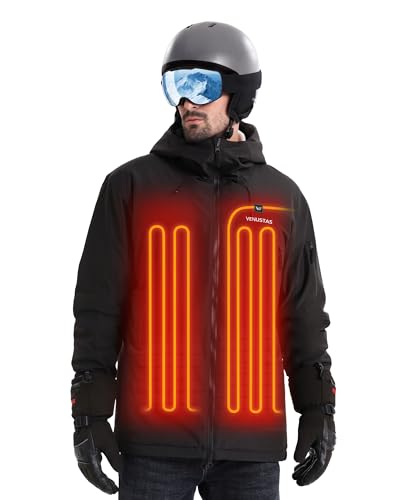 | Best Overall | RECCO Reflector: Built-in RECCO reflector | Waterproof Rating: 20,000mm waterproof membrane | Breathability Rating: 8,000g breathability | SEARCH BEST PRICE | Read Our Analysis |
| Dakine Stoker GORE-TEX 3L Snowboard Jacket (Blue Large) |  | Pro-Grade Pick | RECCO Reflector: RECCO® reflector | Waterproof Rating: 30K waterproofing | Breathability Rating: 30K breathability | SEARCH BEST PRICE | Read Our Analysis |
| GSOU SNOW 3L Ski Jacket with RECCO Waterproof |  | Budget-Friendly Pick | RECCO Reflector: Built-in RECCO Search and Rescue Reflector in hood | Waterproof Rating: 20,000 mm/H₂O | Breathability Rating: 15,000 g/m²/24h | SEARCH BEST PRICE | Read Our Analysis |
| Volcom Women’s 3D Stretch GORE-TEX Ski Jacket |  | Editor’s Choice | RECCO Reflector: RECCO Advanced Rescue Technology | Waterproof Rating: 30,000mm waterproofing | Breathability Rating: 20,000g breathability | SEARCH BEST PRICE | Read Our Analysis |
| Dakine Women’s Sender Stretch 3L Snowboard Jacket |  | Best Stretch | RECCO Reflector: Integrated RECCO technology | Waterproof Rating: 20K waterproof rating | Breathability Rating: 20K breathability rating | SEARCH BEST PRICE | Read Our Analysis |
| GSOU SNOW 3L Ski Jacket with RECCO |  | All-Around Value | RECCO Reflector: Built-in RECCO Search and Rescue Reflector | Waterproof Rating: 20,000 mm/H₂O | Breathability Rating: 15,000 g/m²/24h | SEARCH BEST PRICE | Read Our Analysis |
More Details on Our Top Picks
Venustas Men’s 12V Waterproof Heated Ski Jacket with Battery,Built-in RECCO
Best for skiers who run cold on storm days or anyone who wants reliable chairlift warmth without bulky layers. A clear strength is its 12,000-fiber carbon heating on a 12V system, which reaches 141°F across your chest and back with three heat settings.
The honest drawback is that the battery pack adds weight to the front pocket, so you feel it during aggressive mogul runs. It differs from other heated jackets by adding built-in RECCO reflector, so rescue teams can locate you without any power source.
The 20,000mm waterproofing and 8,000g breathability in the three-layer shell keep you dry in wet snow, and the THERMOLITE insulation keeps loft even when damp, so you won’t shiver in a freeze-thaw cycle. The NTC thermistor safety stops overheating, which matters more than a raw wattage number.
All four pockets are waterproof, so your phone and pass stay dry, which is rare on heated gear. Use this for backcountry control when you expect mixed precipitation, or for long lift rides where you want to dial heat up and down quickly.
Compared to other heated shells, it runs on a higher voltage and heats faster, but you trade a bit of mobility for that power. Set the heat low for touring, crank it high for apres, and let the RECCO do the quiet work.
- RECCO Reflector:Built-in RECCO reflector
- Waterproof Rating:20,000mm waterproof membrane
- Breathability Rating:8,000g breathability
- Shell Construction:Three-layer softshell
- Ventilation:Not specified
- Powder Skirt:Not specified
- Additional Feature:Integrated 12V heating system
- Additional Feature:Heats up to 141°F
- Additional Feature:NTC thermistor safety control
Dakine Stoker GORE-TEX 3L Snowboard Jacket (Blue Large)
This jacket is best for riders who want dependable all-mountain protection in deep powder and stormy conditions. Its main strength is the GORE-TEX 3-layer shell with 30K waterproofing, which keeps you dry during heavy snowfall.
One honest drawback is that the fit runs a bit boxy, so skiers who prefer a slim, athletic cut should size down. Unlike resort-focused jackets, this one has a fixed tri-pull hood that fits over a helmet, plus a drop-tail hem that stays tucked on chairlifts.
The 100% recycled polyester fabric and Bluesign® approval make it a smarter choice for eco-conscious buyers. It also includes pit zips and a zippered anti-fog vent to dump heat when you’re working hard on groomers.
Fully taped seams and YKK Aquaguard zippers block wind and wet snow, while the powder skirt seals out drifts. A RECCO reflector helps rescue teams locate you if you get buried, which is a feature most trail jackets lack.
The sleeve pass pocket and media pocket keep your essentials close, and the blue color stands out on overcast days. If you want bombproof weather protection without the heavy insulation of a parka, this shell is your best bet. Just remember to layer a midweight fleece underneath for cold mornings.
- RECCO Reflector:RECCO® reflector
- Waterproof Rating:30K waterproofing
- Breathability Rating:30K breathability
- Shell Construction:GORE-TEX 3-layer construction
- Ventilation:Underarm pit vents; anti-fog breath vent
- Powder Skirt:Powder skirt
- Additional Feature:30K waterproofing rating
- Additional Feature:75-denier recycled polyester
- Additional Feature:Bluesign® approved materials
GSOU SNOW 3L Ski Jacket with RECCO Waterproof
The GSOU SNOW 3L is best for resort skiers who want a RECCO reflector without paying flagship prices. Its 20K waterproof rating handles wet snow and slush, though it’s more than you need for groomed runs.
The 60g PrimaLoft insulation keeps you warm on chairlifts, but you’ll still need a base layer for frigid mornings. The 15K breathability is solid, yet hard charging mogul laps can make you sweat despite the pit zips.
One clear strength is the fully taped seams and DWR finish, which shrug off all-day storms. The honest drawback is the boxy unisex fit; it’s roomy through the torso, so slim skiers may feel like they’re wearing a tent.
It differs from other jackets here by pairing RECCO with a powder skirt and ski pass sleeve, so it’s ready for deep days without extra gadgets. The hood fits over a helmet and has a zero-maintenance reflector, no batteries or charging to fuss with.
You get a goggle pocket and a media pocket, and the cuffs seal snugly over gloves. For snowshoeing, the insulation works, but you’ll unzip the vents to avoid overheating on climbs.
Buy it if you prioritize safety in backcountry-adjacent terrain and want a durable shell that won’t leak. Just know the insulation is moderate, so pair it with a fleece for below-zero days.
- RECCO Reflector:Built-in RECCO Search and Rescue Reflector in hood
- Waterproof Rating:20,000 mm/H₂O
- Breathability Rating:15,000 g/m²/24h
- Shell Construction:3-layer laminate shell
- Ventilation:Laser-cut collar ventilation; dual underarm two-way zippered vents
- Powder Skirt:Detachable anti-slip elastic powder skirt
- Additional Feature:PrimaLoft insulation (60g/m²)
- Additional Feature:Laser-cut collar ventilation
- Additional Feature:Internal ski goggle mesh pocket
Volcom Women’s 3D Stretch GORE-TEX Ski Jacket
Volcom’s 3D Stretch GORE-TEX shell is best for skiers who want top-tier storm protection without the stiff, crinkly feel of standard hard shells. Its biggest strength is the 30,000mm waterproof rating, which shrugs off heavy snow and wet slides, while the 20,000g breathability stops you from overheating during long climbs.
The honest drawback is that 60g Primaloft Gold insulation runs light, so you will need a solid midlayer on cold days, and it won’t match the warmth of a belay-style parka. Unlike bulkier resort jackets, this shell stretches with your arms when you grab a lift pole, and it packs down smaller for travel.
The brushed tricot-lined hand warmer pockets sit above your hip belt, and the sleeve pass pocket means you don’t dig around at the gate. You also get a goggle wipe, RECCO reflector, powder skirt, pit vents, and a whistle pull on the zipper for emergencies.
Those extras are practical, not gimmicky, and they make the jacket feel complete straight out of the bag. If you run cold on chairlifts, skip this and look for a thicker insulated shell; if you hate bulk and want stretch, grab this one.
- RECCO Reflector:RECCO Advanced Rescue Technology
- Waterproof Rating:30,000mm waterproofing
- Breathability Rating:20,000g breathability
- Shell Construction:GORE-TEX recycled 2-layer stretch poly shell
- Ventilation:Mesh-lined zippered vents
- Powder Skirt:Powder skirt
- Additional Feature:Primaloft Gold Stretch insulation
- Additional Feature:Helmet-compatible hinged hood
- Additional Feature:Zip Tech jacket-to-pant interface
Dakine Women’s Sender Stretch 3L Snowboard Jacket
The Dakine Women’s Sender Stretch 3L Snowboard Jacket is best for resort riders and sidecountry explorers who want freedom of movement without feeling bulky. Its main strength is the four-way stretch fabric, which lets you reach for grabs or dig your pole in without any binding.
One honest drawback is that the 20K waterproof rating is solid but not extreme, so it may struggle during prolonged, heavy downpours at high elevations. It differs from stiffer shells by using recycled polyester with a softer, more forgiving feel that suits playful riding over rigid protection.
The tri-pull hood adjusts quickly over your helmet, and fully taped seams keep wet snow out during long chairlift rides. Six pockets, including a media slot and sleeve pass pocket, keep your phone and lift ticket within easy reach.
RECCO is built into the fabric, giving you a passive rescue reflector that can help search teams locate you after an avalanche. This jacket prioritizes stretch and packability over heavyweight insulation, so pair it with a base layer for cold mornings and a midlayer for storm days.
Its eco-friendly construction stands out from competitors that use virgin synthetics, and the 20K breathability lets sweat escape quickly when you’re hiking for fresh lines. For riders who value mobility and smart storage over maximum bombproofing, this shell delivers dependable comfort in most winter conditions.
- RECCO Reflector:Integrated RECCO technology
- Waterproof Rating:20K waterproof rating
- Breathability Rating:20K breathability rating
- Shell Construction:Three-layer shell construction
- Ventilation:Zippered underarm vents; anti-fog breath vent
- Powder Skirt:Not specified
- Additional Feature:RePsych’d recycled/recyclable materials
- Additional Feature:Four-way stretch construction
- Additional Feature:One-inch drop-tail hem
GSOU SNOW 3L Ski Jacket with RECCO
For backcountry skiers who want avalanche-transceiver-free peace of mind, the GSOU SNOW 3L is your all-around value pick. It is best for riders who ski in wet, stormy conditions and want a solid jacket without dropping big money.
Its clear strength is the 20K waterproof rating with sealed, taped seams, so rain and heavy snow stay out. The Primaloft insulation keeps you warm without bulk, but the honest drawback is that breathability tops out at 15K, which can feel clammy during hard uphill kicks.
You can dump heat through the dual underarm zips or laser-cut collar vents, which helps on long skin tracks. The RECCO reflector is a passive tag that helps rescue teams find you faster, with no battery or activation needed.
Unlike a fully uninsulated shell, this jacket pairs light insulation with vents, so it works for colder tours but not for hot spring days. It also has a ski pass pocket on the cuff, a detachable powder skirt, and internal goggle and phone pockets.
The main difference from pricier models is the slightly heavier fabric and less stretch, but you get a feature-rich jacket that won’t drain your wallet. Grab it, shred it, and stay findable in the backcountry.
- RECCO Reflector:Built-in RECCO Search and Rescue Reflector
- Waterproof Rating:20,000 mm/H₂O
- Breathability Rating:15,000 g/m²/24h
- Shell Construction:3-layer laminate shell
- Ventilation:Laser-cut collar ventilation; dual underarm two-way zippered vents
- Powder Skirt:Detachable anti-slip elastic powder skirt
- Additional Feature:100% nylon outer layer
- Additional Feature:Adjustable Velcro cuffs
- Additional Feature:Detachable anti-slip powder skirt
Factors to Consider When Choosing Ski Jackets With RECCO
A ski jacket with RECCO is only as good as its overall design, since the reflector works best when the rest of the jacket performs reliably. Focus on five core areas: waterproofing, insulation, safety tech, venting, and pocket layout.
Waterproofing comes first, because wet fabric leads to rapid heat loss and a miserable day. Look for a membrane like Gore-Tex or a brand’s own waterproof rating of at least 10,000mm, and make sure the seams are fully taped.
Insulation depends on your riding style and local climate. For resort skiers who generate heat on the lift line, a lightweight synthetic fill or a shell with a mid-layer works better than a bulky puffy.
Backcountry riders should prioritize a shell with RECCO plus a built-in avalanche transceiver pocket, since the reflector is only a backup for rescue. Check that the RECCO patch is placed high on the chest or arm, not buried under a pocket flap, to maximize signal strength.
Venting is your secret weapon against overheating, so look for pit zips that open wide and are easy to operate with gloves on. A mesh lining behind the zips helps snow and moisture stay out, while still letting heat escape.
Pocket layout matters more than you think, especially when you’re fumbling for a lift pass or a phone. Place your pass pocket on the left forearm for easy scanning, and keep a dedicated goggle pocket with a soft liner on the inside chest.
Ensure the main hand pockets sit high enough that a hip belt or backpack strap doesn’t block them. Finally, check that every zipper pull is large enough to grip with mittens, and that the RECCO patch doesn’t interfere with any pocket’s waterproof seal.
Choose a jacket that lets you move naturally, and test the hood over a helmet before buying. These details turn a simple reflector into a reliable part of your avalanche safety system.
Waterproofing & Breathability
Waterproofing and breathability are the two numbers that decide if you’ll enjoy a powder day or just shiver through it.
Aim for 20,000mm waterproofing, which is hydrostatic pressure resistance enough for serious, wet storms.
For breathability, choose 15,000g/m²/24h or higher; that’s how much sweat vapor escapes to keep you dry inside.
A 3-layer laminate build is tougher and performs longer than a 2-layer, so pick that for resort laps or backcountry lines.
Fully taped seams are non-negotiable, because unsealed stitching lets water sneak straight in.
Check for a durable DWR finish; it makes water bead off and stops fabric wet-out, which kills breathability in freezing temps.
Match these specs to your riding intensity and local climate instead of chasing the highest numbers blindly.
You’ll stay dry, warm enough, and avoid overpaying for gear you don’t need.
Insulation & Warmth
Once waterproofing and breathability are sorted, the next step is choosing how much warmth you need. Synthetic fills like PrimaLoft are rated in grams per square meter, with 60g/m² fine for moderate resort days and 100g/m² better for freezing chairlifts.
Down gives you the best warmth for its weight, but it loses loft quickly when wet. Synthetics dry faster and keep insulating even in snowy conditions, which makes them a reliable pick for most skiers.
Your layering setup matters just as much as the jacket’s fill. Thick insulation under a heavy mid-layer can make you sweat heavily on warmer runs.
Breathability ratings around 15,000 g/m²/24h let moisture escape while holding heat, so look for that balance in the spec sheet. For variable mountain weather, a shell with removable insulation gives you flexibility without carrying extra bulk.
Fixed insulation keeps things simple if you ski in consistently cold conditions. Match the insulation level to how much you sweat, not just the outside temperature, and you’ll ski longer with fewer complaints.
Safety & Rescue Tech
The RECCO reflector is a passive, battery-free tag sewn into your jacket, so it needs zero effort from you. It works by bouncing radar signals back to rescuers from up to 200 meters away, but only when they are actively searching with a detector.
That makes it a backup layer, not your primary rescue tool. For companion rescue, you still need an avalanche transceiver, because RECCO won’t help your buddy in the critical first 15 minutes after a slide.
When choosing a jacket, check that the reflector sits in the hood or upper chest area. That placement keeps it close to your body and reduces the chance it tears off during an avalanche.
The added weight is negligible, roughly the heft of a thick label. Always look at the jacket’s spec sheet for exact placement, not just the brand logo on the tag.
Pick a jacket with the reflector in a smart spot, but never skip carrying a transceiver. The combination of both gives you a reliable lifeline in the backcountry.
Venting & Airflow
Venting keeps you from overheating, which matters even with a RECCO reflector stitched into your jacket. Overheating makes you ditch layers, and that puts your judgment at risk while the reflector stays put.
Pit zips with two-way zippers let you dump heat precisely mid-run. Pair them with a breathable shell, and you create a simple convection current: damp air exits, dry air enters.
That’s just physics working in your favor. Open downward vents so gravity sheds snow away from your armpit, not into it.
Mesh-lined vents release humidity without letting powder in, which is a real lifesaver on deep powder days. Laser-cut perforations offer passive, zero-effort airflow for times when you’re too lazy to unzip.
Don’t buy a RECCO jacket that suffocates you. Venting isn’t flashy, but neither is hypothermia, so check for these features before you buy.
Fit & Pocket Layout
Two fit zones decide whether a RECCO jacket protects you or just rides up your waistline: the torso and the arms. You need full arm extension without the hem creeping up, which keeps the reflector chest-mounted and anatomically ideal for rescue.
Tight layers compressing that zone can dull the signal, so leave some breathing room. Pocket layout is a game of segregation.
Stash your phone in an internal media pocket, keep your lift ticket in the sleeve, and put handwarmers above your hip belt. For backcountry use, go with interior zippered pockets and mesh liners.
Exterior waterproof pockets pile on bulk and kill mobility. Drop-tail hems or powder skirts with drawcords hug your pants, locking the reflector close while blocking snow.
Overloading a pocket makes you a walking hazard. Prioritize unrestricted arms, an uncluttered chest, and smart storage for a rescue-ready shell.
Start every run with your coat zipped and your pockets balanced. That way, you get the security of a solid fit and the freedom to move on any terrain.
Frequently Asked Questions
Can I Swap Jacket Batteries Between Different Brands?
No, you can’t swap jacket batteries between different brands, and here’s why that matters for your next ski day. Each manufacturer builds their heating system with a proprietary connector, voltage spec, and locking mechanism, so a Mammut battery won’t click into a Helly Hansen zip port, no matter how similar they look.
This isn’t just about fit; it’s about safety and performance on the slopes. If you force a mismatched pack, you risk frying the heating wires or triggering a short circuit, which can ruin your jacket mid-lift line or worse, cause a cold-weather failure when you need warmth most.
Before you buy any heated ski jacket or replacement battery, always check the voltage (usually 7.4V or 11.1V) and the exact connector shape listed in the product spec sheet. A 7.4V battery from a different brand might physically slide in, but the amperage draw could overheat the controller, leaving you with a dead shell and no heat resilience.
For serious skiers and snowboarders, the smartest purchase move is to stay inside one brand’s ecosystem. That means buying a spare battery from the same label, like an Outdoor Research or a Bosch-based system, so you know the firmware, thermal cutoff, and charging cradle all align perfectly.
Think about your typical resort day: cold chairlifts, windy ridgelines, and a long apres walk back to the car. You don’t want to gamble on a generic power bank that promises universal fit, only to discover it depletes in 40 minutes because the heating element pulls more watts than the pack can deliver.
Instead, pack a second OEM battery in your ski backpack, and rotate them during lunch. That way, you keep your core warm from first chair to last run, without hunting for a wall outlet or troubleshooting a burnt connector in freezing temperatures.
If you’re switching brands because a sale looks tempting, remember that heated jacket vests, ski pants, and gloves all use the same proprietary logic. A battery that works for a Mammut vest won’t power a Helly Hansen glove liner, so read the fine print on compatibility before you add to cart.
Another pro tip: check the charging port style too, because some brands use USB-C while others use a magnetic clip. If you forget your proprietary cable at the lodge, a different brand’s battery won’t save you, and you’ll be stuck doing static stretches to stay warm instead of zipping down the groomers.
For resort skiers, the best buying strategy is to choose one brand, buy its heated jacket and matching spare battery together, and note the model number in your phone. That way, when you’re at a ski shop in Vail or Chamonix, you can quickly confirm the exact replacement without guessing.
In short, no cross-brand swapping is worth the risk. Purchase a second battery from the same label, test it at home before your trip, and charge it fully the night before. That simple habit gives you reliable heat, longer mountain time, and zero electrical headaches.
And if you’re still tempted to mix brands, ask yourself one question: do you want to troubleshoot a fried heating wire at -15°C, or would you rather spend that energy carving powder? The answer will guide you to a smart, safe purchase every time.
Do RECCO Reflectors Lose Effectiveness After Washing Cycles?
No, they don’t. Your RECCO reflector is a tough little chip, basically the dog tag of your avalanche safety kit.
Washing is just a rinse, not a war, so those spin cycles won’t strip its signal. You’re good for hundreds of washes, honestly, even after heavy backcountry seasons.
That said, check for cracks or corrosion yearly, especially on older ski jackets and pants.
Keep laundering, keep reflecting, and your rescue signal stays sharp. Just don’t machine-dry it on high heat, because plastic melts and that’s not a style statement.
Want to stay visible in-bounds or off-piste? Then match your RECCO-equipped shell with a proper avalanche transceiver, probe, and shovel for full layered protection.
The reflector works passively, so it never needs batteries, charging, or updates, which makes it ideal for touring, resort laps, and ski patrol check-ins.
It pairs best with a beacon check at the trailhead, since RECCO is a secondary rescue tool, not a replacement for your active transmitter.
For skiers buying new gear, look for “RECCO” in the tech specs on outerwear, base layers, and even boots to maximize radar detection from above.
Older gear with a cracked reflector can still reflect, but a damaged chip may scatter the signal, so replace it if you see any wear.
Bottom line: your washing machine is harmless, your dryer is not, and your reflector stays rescue-ready for years of powder days.
Invest in a quality ski jacket with RECCO built in, then wash it cold and hang dry to keep the chip and the fabric in top condition.
If you’re comparing ski pants, jackets, or one-piece suits, remember that integrated RECCO adds negligible weight and zero maintenance, which is a huge win for backcountry travelers.
Season after season, from fresh groomers to deep tree runs, your reflector keeps doing its quiet job, so you can focus on the turns, not the laundry.
Are Heated Jackets Safe to Wear With Avalanche Airbags?
Yes, heated jackets are safe to wear with avalanche airbags, as long as you keep the battery placement smart. The airbag’s trigger system relies on mechanical levers or compressed gas cartridges, not electronics, so your heating wires cannot cause an accidental deployment.
That said, you need to route the battery pack away from the inflation path, which is typically around your lower back or waist. A compact 10,000mAh power bank fits easily in a side pocket or upper chest pocket without blocking the airbag’s canopy exit.
If you are heading into backcountry terrain, think about how your heated jacket layers under a ski backpack with an airbag system. The key is to test the deployment once at home with your jacket on, but without the battery connected, to confirm the airbag’s zipper and straps move freely.
Most modern avalanche airbags, like those from ABS or Mammut, have a separate trigger handle on the shoulder strap, so your heated jacket’s collar or hood won’t interfere. Just avoid tucking the battery under the airbag’s main bag, because that can delay inflation or press on the gas cylinder.
For resort skiers and off-piste riders, a heated base layer or mid layer is a smart purchase for cold pow days. You want a jacket with low-profile heating elements in the chest and back, not bulky coils that add extra thickness under your avalanche vest.
Charging your heated jacket while skiing is a common mistake, and it can melt zippers or damage the battery’s USB port during a fall. Instead, charge fully before your tour, and keep a spare battery in a warm inner pocket for quick swaps.
When buying a heated jacket for ski touring, look for a battery with at least 7,000mAh and a three heat setting controller. That gives you four to six hours of warmth on low, which is perfect for morning lifts and long descents.
Avalanche airbag backpacks already add weight, so choose a heated jacket with a lightweight polyester shell and 40 grams of insulation. This keeps your total gear load manageable while still providing core heat when the wind chill drops below zero.
Remember that your airbag’s inflation time is around three to five seconds, and heated wires are too slow to react to a rapid pull. So there is zero risk of a thermal spark igniting the cartridge, because the gas is inert and nonflammable.
One pro tip: clip the battery to a waist belt strap that sits above your hip bone, away from the airbag’s side release buckle. That way, if you deploy the airbag, the battery won’t hit your ribs or catch on a tree branch.
For gear nerds, check that your heated jacket has an FCC and CE certification for low electromagnetic interference. This matters if you also carry a radio transceiver for avalanche rescue, because your beacon should always work cleanly.
Finally, buy a heated jacket with a removable battery, so you can take it off for avalanche beacon searches without losing power. You do not want a dead battery mid-burial, but your airbag’s mechanical handle works independently of any electrical source.
In short, heated jackets and avalanche airbags are a perfect combo for cold backcountry days, if you follow the simple rules of battery placement and no charging on the move. Layer smart, test your full setup at home, and enjoy the warmth without sacrificing your safety gear.
Will RECCO Interfere With Pacemaker or Medical Devices?
RECCO gear is completely passive, like a mirror reflecting a signal, so it will not interfere with a pacemaker or implantable cardiac device.
It contains no battery, no transmitter, and no active electronics, meaning it simply bounces back a rescue signal when a ski patrol detector sweeps the slope.
If you ski or ride with a pacemaker, an ICD, or a neurostimulator, the snow safety benefit of a RECCO reflector remains fully usable without any electromagnetic risk to your chest hardware.
The detector itself, when used by search teams, is held several meters away from your body, so the field strength is far below anything that would affect modern medical implants.
That said, your cardiologist is the final authority, since every device has different programming thresholds and lead placements.
Ask them directly: “Is it safe for me to carry a passive reflector into backcountry or resort terrain?” and bring the RECCO technical spec sheet to that appointment.
For skiers with implants, the real safety concern is not the reflector but the physical placement of extra gadgets near your torso.
Keep your phone, avalanche transceiver, and any battery powered heating gear away from your chest pocket, since those emit small but continuous radio frequency fields.
RECCO reflectors are built into many ski jackets, helmets, and backpacks, so you simply check the label or integrated tag before you buy.
If you already own gear without one, you can purchase a stick on or clip on RECCO reflector and attach it to a boot, binding, or waist strap, far from your sternum.
On piste, resort patrols use RECCO detectors as a secondary search tool after avalanche transceivers, so your reflector is an insurance layer, not a replacement for a beacon.
In backcountry terrain, never rely on RECCO alone; pair it with a 457 kHz avalanche transceiver, probe, and shovel, and always ride with a partner who knows how to dig.
The bottom line is that RECCO poses a negligible interference risk for pacemakers, and ski patrols worldwide have used it for decades without reported cardiac issues.
But smart skiers verify with their doctor, check their device manual, and keep all electronic accessories below the waist or in a backpack.
You are good to go, just keep your head on straight and your chest free of transmitters.
For the safest skiing day, combine RECCO with a full avalanche safety kit, a helmet with MIPS, and a pre ride check in with your medical team.
How Do I Recycle a Ski Jacket With Built-In Electronics?
Don’t toss that smart ski jacket in the trash. That’s a total no-go for both the planet and your gear.
First, pop out the battery and any hard electronics if you can. Many top brands like Patagonia and Arc’teryx design their heated ski jackets with easy access panels for this exact step.
Next, head straight to the brand’s website and search for a mail‑back recycling program. Some brands, like Mammut or Helly Hansen, offer a discount on your next ski shell, while others take the jacket back free of charge.
If the jacket is truly dead and no brand program exists, call your local e‑waste center. They’re trained to handle lithium batteries and circuit boards safely, so your built‑in heating system doesn’t end up in a landfill.
Mixing circuits with fabric creates a recycling headache that most municipal centers won’t touch. That’s why you should always separate the tech from the textile before considering any drop‑off.
For the fabric shell, check if your city accepts technical outerwear in textile recycling bins. If not, look for specialized programs like Terracycle’s outdoor gear boxes, which handle zippers, membranes, and synthetic insulation.
Here’s the smart buyer’s move: before you even purchase your next heated ski jacket, ask about recyclability. Look for brands that use modular electronics or partner with certified e‑waste recyclers, so you’re not stuck with a disposable high‑tech shell.
And if you’re comparing models, prioritize jackets with removable batteries and clear disassembly guides. That simple feature makes future recycling ten times easier and often means you can replace just the battery instead of the whole jacket.
Bottom line: check the brand’s recycling program first, then e‑waste for the electronics, then textile recycling for the shell. Do that order and you’ll keep your ski gear out of the trash, save money on your next upgrade, and avoid the guilt of tossing a $600 jacket.
For ski resort skiers and backcountry riders alike, this three‑step process is the only way to responsibly retire a smart jacket. Bookmark this guide, share it with your ski crew, and you’ll be the one who knows how to recycle a heated ski jacket without the landfill shame.