The 4 best avalanche safety kits that could save a life when it matters most aren’t the flashiest—they’re the ones you’ll actually carry and practice with.
If you’re stepping beyond the resort ropes, you need dependable transceiver, probe, and shovel coverage, so check pack fit, probe length, shovel size/material, and whether a transceiver is included before buying.
We compared specs, real-world feedback, and brand reputation to narrow down the best supplies, helpful buying notes, and what’s worth buying for your ski style.
Keep reading for the product roundup below.
How We Tested
We compared matching specs, price value, probe length, shovel durability, and rescue readiness across beginner, budget, and premium avalanche kits. The shortlist includes BCA Tracker S Package, TerraWest Core Kit, SnowBigDeal Bundle, and BCA T4 Turbo Kit.
BCA Tracker S Package suits beginners with simple controls, 270cm probe, and Dozer shovel. TerraWest Core Kit lacks a transceiver, so pair it with a beacon.
The SnowBigDeal Bundle offers budget complete gear with Tracker S, 260cm probe, and extendable shovel. The BCA T4 Turbo Kit gives premium gear with 300cm probe and hoe mode shovel; 300cm probes beat 240cm for deep burials.
| BCA Tracker S Avalanche Beacon Rescue Package |  | Best Overall | Beacon Included: BCA Tracker S digital transceiver | Probe Length: 270 cm aluminum | Shovel Included: BCA Dozer 1T lightweight aluminum | SEARCH BEST PRICE | Read Our Analysis |
| TerraWest Core Avalanche Kit Ski Backpack Black |  | Most Versatile | Beacon Included: No beacon included (Recco Reflector instead) | Probe Length: 240 cm quick-deploy | Shovel Included: Lightweight aluminum with telescopic shaft | SEARCH BEST PRICE | Read Our Analysis |
| SnowBigDeal Avalanche Rescue Bundle with BCA Tracker S | 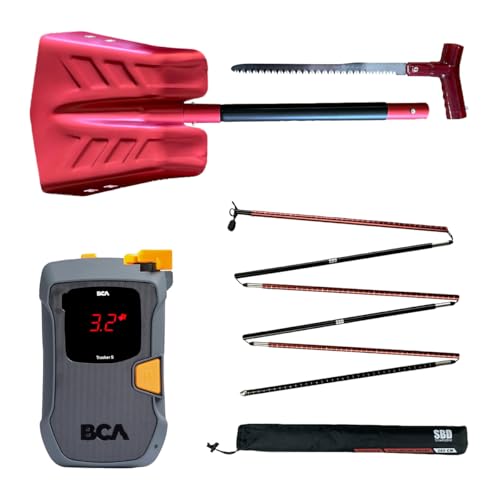 | Best Value | Beacon Included: BCA Tracker S digital transceiver | Probe Length: 260 cm aluminum | Shovel Included: Rescue shovel with extendable handle and saw | SEARCH BEST PRICE | Read Our Analysis |
| BCA T4 Turbo Avalanche Beacon Rescue Kit |  | Professional Grade | Beacon Included: BCA Tracker 4 transceiver with batteries and harness | Probe Length: 300 cm aluminum | Shovel Included: BCA Dozer 2H-S with saw, converts to hoe mode | SEARCH BEST PRICE | Read Our Analysis |
More Details on Our Top Picks
BCA Tracker S Avalanche Beacon Rescue Package
For most backcountry travelers, this kit is the complete package. It bundles the BCA Tracker S transceiver, Stealth 270 probe, and Dozer 1T shovel for ski tourers, splitboarders, and snowmobile riders who want rescue gear that works together.
1) Transceiver: This unit suits new or occasional backcountry skiers who want a fast search without a steep learning curve; its clear controls make signal search easier when adrenaline is high. The honest limitation is fewer advanced settings than top tier models, and its role is to find the signal first while the probe confirms the spot and the shovel clears snow.
2) Probe: This tool suits rescue partners who need to confirm burial depth after a signal; the Stealth 270 gives 270 centimeters of aluminum reach and packs down small in a ski pack. The limitation is that assembly takes practice and it cannot search on its own, so its job is to pinpoint the burial after the search and it does not move snow like the shovel.
3) Shovel: This tool suits digging partners who need to move snow fast; the Dozer 1T is light but tough and built for real digging on deep burials. The drawback is that it needs assembly and solid technique, and its separate task is to clear the snow after the probe strike, so every person in your group should carry one for avalanche rescue.
Pack this kit for ski tours, sidecountry laps, and snowmobile days when you and your partners want one clear rescue method. You hope to never use it, and you will be glad it is there if a slide happens.
- Beacon Included:BCA Tracker S digital transceiver
- Probe Length:270 cm aluminum
- Shovel Included:BCA Dozer 1T lightweight aluminum
- Brand:BCA Backcountry Access
- Intended Activities:Backcountry adventures
- Size/Capacity:One Size
- Additional Feature:270cm aluminum probe
- Additional Feature:Lightweight aluminum shovel
- Additional Feature:Simple transceiver design
TerraWest Core Avalanche Kit Ski Backpack Black
The TerraWest Core Avalanche Kit Ski Backpack Black suits the weekend ski tourer who wants one ski backpack for gear and safety tools. Its clear strength is the complete avalanche kit in a 22 litre pack, so you can pack fast for a day on the mountain.
If you want a practical setup for weekend ski trips, this pack combines an integrated Recco Reflector, a removable SAS TEC back protector, a lightweight aluminium shovel, and a 240 cm probe that opens in seconds. The Recco Reflector helps rescuers find you by radar when you are buried, and the probe matters when time is everything.
The pack also has a 2 litre hydration bladder, a laptop compartment, and enough room for commuting or skiing without carrying five different bags. Compared with other ski packs that focus on one job, this model differs by bundling the safety gear and daily carry features into one versatile pack.
The honest limitation is that it includes no transceiver, so you must add that key avalanche safety device before backcountry travel. Style is plain, and this single pack setup gives weekend skiers a dependable safety net for buyers who want one bag.
- Beacon Included:No beacon included (Recco Reflector instead)
- Probe Length:240 cm quick-deploy
- Shovel Included:Lightweight aluminum with telescopic shaft
- Brand:TerraWest
- Intended Activities:Skiing, snowboarding, hiking, cycling, commuting
- Size/Capacity:22 litres
- Additional Feature:Removable back protector
- Additional Feature:2-litre hydration bladder
- Additional Feature:Recco reflector integrated
SnowBigDeal Avalanche Rescue Bundle with BCA Tracker S
The SnowBigDeal Avalanche Rescue Bundle with the BCA Tracker S is a budget friendly avalanche rescue kit for backcountry skiers and splitboarders who want one purchase for core snow safety gear. Its strength is the complete trio of a BCA Tracker S transceiver, a 260cm aluminum probe, and a shovel with an extendable handle and saw, while its limitation is that it may not suit riders who already own some gear or want top tier components, and it differs from separate purchases by bundling the core tools for less than many standalone transceivers.
The BCA Tracker S is best for ski touring and splitboarding riders who want simple signal processing in stressful rescues, and its clear strength is fast signal processing that keeps search steps simple when your brain is frozen. Its honest limitation is fewer advanced features than top priced transceivers, and it differs from the probe and shovel because it handles signal search and location while those tools help with pinpointing and digging.
The 260cm aluminum probe is best for riders who travel in deeper snow and want more reach for fine search and pinpointing. Its strength is the long 260cm length for checking a buried rider in deep snow, while its limitation is added weight and packed length compared with shorter probes, and it differs from the transceiver and shovel because it confirms location after the signal search and marks the burial spot for digging.
The shovel with an extendable handle and saw is best for backcountry skiers and splitboarders who build snow pits, clear debris, and dig out partners. Its strength is the extendable handle and hoe mode for moving snow faster in a cramped rescue hole, while its limitation is extra parts and setup steps compared with a simple fixed shovel, and it differs from the transceiver and probe because it handles digging and snow removal after a burial is located.
For budget minded avalanche rescue kit shoppers, this SnowBigDeal bundle covers the full gear set and keeps cost low. Compare it with standalone transceiver prices and with lighter custom kits, then choose if the complete trio fits your backcountry risk and tour length.
- Beacon Included:BCA Tracker S digital transceiver
- Probe Length:260 cm aluminum
- Shovel Included:Rescue shovel with extendable handle and saw
- Brand:SnowBigDeal
- Intended Activities:Snowmobiling, ski touring, splitboarding, freeride skiing
- Size/Capacity:One Size
- Additional Feature:Shovel converts to hoe
- Additional Feature:Integrated saw on shovel
- Additional Feature:260cm aluminum probe
BCA T4 Turbo Avalanche Beacon Rescue Kit
The BCA T4 Turbo Avalanche Beacon Rescue Kit is best for backcountry skiers, snowmobile riders, and snowboarders who want a complete avalanche rescue setup in one purchase, and its main advantage is the Tracker4 transceiver, 300 cm Stealth probe, and Dozer shovel together with no add ons needed. The honest limitation is the premium price compared with a budget beacon setup, and it sets itself apart from that basic choice by adding a longer probe and a shovel with hoe mode for moving serious snow.
The Tracker4 transceiver suits riders who want a simple to use beacon for ski touring and backcountry travel, and its key plus is dead simple operation at 7.6 oz with batteries included. The downside is that it still needs regular avalanche rescue practice to use well, and it stands apart from more advanced transceivers by keeping clear controls and the feature set small.
The 300 cm Stealth probe works well for riders who travel in deeper snowpacks and want more reach in a burial search, and its strong point is the extra length for snowpack probing. The tradeoff is that a longer probe can feel less compact on tight ski tours, and it differs from shorter probes by giving you more reach in avalanche debris.
The Dozer shovel fits riders who expect to move serious snow fast while building a snow pit or digging out a buried rider, and its clear benefit is hoe mode for a second digging position. The weak point is that it weighs under 2 lbs, so weight conscious uphill travelers may notice it, and it separates itself from a basic snow shovel by offering hoe mode for more digging options.
If you want one kit for backcountry skiing, sledding, or snowboarding and you plan to carry rescue gear every day, choose the BCA T4 Turbo kit. Buy it when you want a complete rescue kit with a simple beacon, a long probe, and a shovel that can switch to hoe mode.
- Beacon Included:BCA Tracker 4 transceiver with batteries and harness
- Probe Length:300 cm aluminum
- Shovel Included:BCA Dozer 2H-S with saw, converts to hoe mode
- Brand:BCA Backcountry Access
- Intended Activities:All backcountry riding activities
- Size/Capacity:One Size
- Additional Feature:300cm probe length
- Additional Feature:Shovel with saw
- Additional Feature:Converts to hoe mode
Factors to Consider When Choosing Avalanche Safety Kits
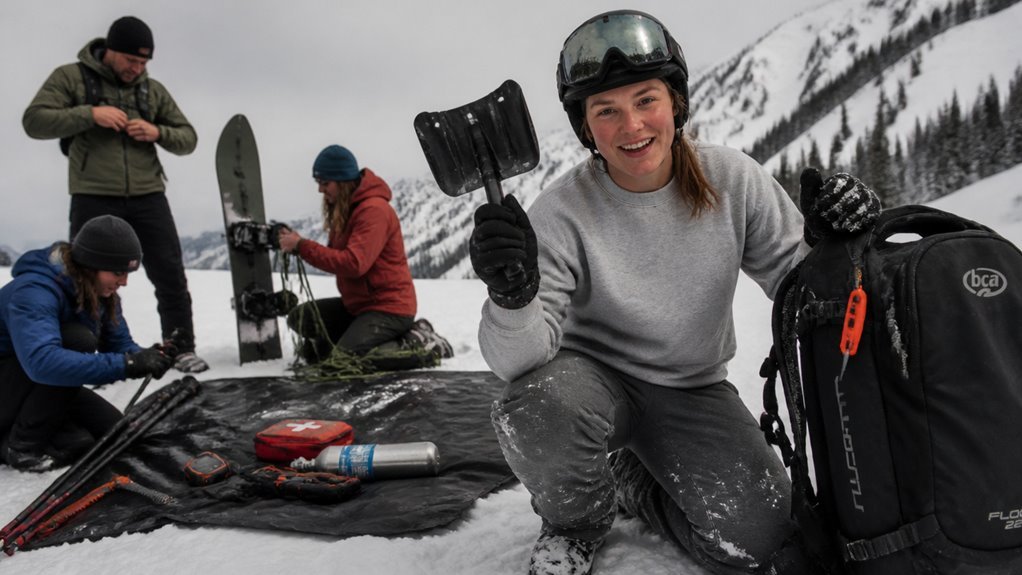
When choosing an avalanche safety kit, check four critical pieces: transceiver search range, probe length, shovel blade strength, and how the kit carries. A transceiver range of 70 meters can look good on paper, but 40 meters of practical range matters most when you are digging someone out.
Avoid a flimsy harness and a short probe, because a real avalanche rescue demands gear that works fast. Buy an avalanche kit that balances weight, durability, and ease of use so you do not regret it on the skin track.
Essential Gear Checklist
For avalanche rescue, every backcountry skier needs three items: an avalanche transceiver, a probe, and a shovel. Each person in your group carries all three on every ski touring day, with no exceptions.
Keep your transceiver on your body and switch it to transmit before you enter avalanche terrain. Set it to 457 kHz so it works with every other beacon in your group, and choose a standard model when you shop for the best avalanche transceiver.
Your probe should extend to at least 240 centimeters and use lightweight aluminum for fast deployment. A simple aluminum probe helps you pinpoint a buried skier without fumbling in the snowpack.
Choose a shovel with a metal blade and a sturdy handle so you can move packed debris. A strong metal shovel blade gives you the leverage to clear a path during an avalanche rescue.
Check batteries before every trip and replace transceiver batteries at the start of the season. Treat this gear checklist like a safety routine, because dead batteries can leave your rescue gear useless.
Buy the three essentials as a set, test them before each trip, and replace worn gear. When you buy an avalanche rescue kit, confirm it includes a transceiver, probe, and shovel that meet these standards.
Beacon Search Range
A beacon’s real search range in snow is shorter than the range on the box.
A 40 to 70 meter claim may not hold up once ice and terrain absorb the signal.
You will often pick up a buried partner closer than you expect.
That gap matters when you plan a signal search on a ski tour.
Your transceiver range depends on the antenna setup.
A model with two or three antennas reduces dead zones where the signal drops out.
In a systematic search, space transect lines 20 to 40 meters apart.
Rely on overlap between lines so you do not miss a buried partner.
Antenna angles on both transceivers also change how far away you first acquire the signal.
Keep your beacon orientation in mind as you move through the search.
If you are shopping for an avalanche beacon for ski touring, compare range claims and antenna count before you buy.
For most backcountry skiers, a transceiver with three antennas and a stated range near 70 meters gives useful margin.
Practice with your partner so you know how your avalanche beacon behaves in real snow.
A strong stated range helps, and your search habits decide how quickly you find a buried friend.
Probe Length Matters
Probe length is the least exciting part of your avalanche kit, but it is where you can most easily get caught short. Shorter 240cm probes feel nimble, but they can fail you in deep snow or on a slope where your insertion angle cuts vertical reach.
That leaves you short when it counts, especially in a deep burial. You want at least 300cm, and most probes run from 240cm to 300cm, so choose the 300cm model for extra margin and more ground per strike.
Longer probes are bulkier and slower to assemble, but that tradeoff gives you more certainty in deep snowpacks. Check your terrain: if your zone sees snowpacks over 200cm, a 240cm probe is a poor choice.
Pick a 300cm probe unless you only patrol groomed resorts. The extra length costs a few seconds now and can save a life later.
Shovel Blade Strength
A shovel that folds under pressure will not clear a buried ski partner. Compacted avalanche debris can fight back like wet concrete, so blade strength matters in every rescue.
Choose a stiff blade when you shop for a snow shovel. Aluminum blades balance weight and toughness for most backcountry skiers, but check gauge thickness before you buy.
Thin metal bends too easily, and a bent scoop slows a rescue. Look for curvature or structural ribs to add rigidity without making your ski pack feel heavy.
A flat edge with reinforced corners can break through an ice crust without chipping. Weak blades waste energy when seconds count, and a flimsy scoop will frustrate you mid dig.
Test the flex in the shop by pressing the blade hard, then move on if it gives. Pick a blade that shrugs off punishment, and you will dig with confidence.
Harness And Carrying
A shovel that digs fast will not help if your avalanche transceiver bounces loose on your belt. For backcountry skiers, choose a dedicated transceiver harness that sits snug against your torso.
A stable harness keeps the signal steady and reduces distortion from your body mass, so you search accurately. This is core avalanche safety gear for ski touring and sidecountry days.
To carry a probe and shovel, buy a ski touring backpack with external quick access straps. Digging through interior compartments wastes time during an avalanche rescue, so keep rescue tools easy to reach.
The best avalanche rescue pack hugs the load, usually 2 to 3 kg, close to your spine and helps you stay balanced on the descent. A close fit stops the pack from shifting as you ski.
Choose quick release buckles that break away if you get caught. Breakaway systems reduce entanglement and can help reduce burial depth.
Gear that shifts can fail when you need it. Pick a harness that locks tight and a pack that releases smartly, then test the fit before your next powder day.
Battery Management Tips
Many avalanche transceivers fail at the worst possible moment because of poor battery habits. Treat your beacon as critical avalanche safety gear and check it before every ski touring day.
Cold weather drains batteries fast. Store spare batteries in the fridge to slow self discharge, and buy cold weather batteries for your avalanche transceiver.
Swap spare batteries every 4 to 6 months, even if the indicator shows a full charge. Use fresh alkaline or lithium cells rated for cold, and leave rechargeables for warm weather.
Dirt on the contacts kills conductivity, so wipe them with a dry cloth. In the off season, pull the batteries out because corrosion can wreck the circuitry.
Replace your beacon batteries before your next powder day, and pack a spare set for backcountry skiing. Clean the contacts and store spares properly so your avalanche safety gear works when you need it.
Practice Drills Frequency
When you are choosing a backcountry ski kit, plan to test it in the snow with practice drills. Backcountry skiers should run one full session each season because muscle memory fades quickly.
Time your transceiver, probe, and shovel sequence, and aim to complete a single burial rescue in under 10 minutes. Treat that time limit as your critical survival window during avalanche rescue practice.
Practice in low visibility and with gloves on, because real rescues happen in bad weather. Do not rely on sunny, calm days for your ski touring drills.
Drill with two or more buried transceivers to learn how to prioritize multiple signals. Prioritizing multiple signals is a separate rescue skill that buyers of avalanche safety kits should practice.
Rehearse probe line formation and shovel techniques as part of each session. Inefficient digging eats the most time during a rescue.
Schedule one full session each season, and consider a second session if time allows. Treat each drill like a fire drill so your future self is ready on a real ski day.
Terrain Risk Assessment
A mellow slope can look safe under a bluebird sky while a weak layer waits in the snowpack. A ski cut can wake that layer, so read the slope before you trust it.
When you choose a backcountry ski kit, start with slope angle as your first filter. Keep your route off slopes from 30 to 45 degrees, the main danger zone for avalanches.
North faces hold colder snow longer, and that snow can stay stubborn. South faces melt and freeze into snow that is easier to predict.
Watch for terrain traps such as gullies and cliffs, because they can turn a small slide into a burial. Do not camp below start zones, since more exposure time raises your risk.
Match your travel elevation to where the weak layer sits, since instability often changes with altitude. Use a transceiver, probe, and shovel as part of a complete avalanche safety kit.
A good avalanche safety kit works with careful route choices to reduce risk. Plan your route around the day’s snowpack so you can ski safer.
Frequently Asked Questions
Can I Use a Beacon With Expired Batteries in an Emergency?
If you are asking can I use a beacon with expired batteries in an emergency, treat that as a clear no. Expired cells can drop voltage fast in cold weather, so your avalanche transceiver may send a weak or inconsistent signal exactly when rescue matters most.
Do not gamble on seconds when you are buried. Replace beacon batteries on the manufacturer’s schedule, test the unit before every tour, and carry fresh spares in your pack.
For backcountry skiers, battery choice is part of smart purchase planning. Check your beacon model’s approved battery type, avoid mixing old and new cells, and keep spare batteries warm instead of loose in a cold pack.
A locator is only as good as its power, so swap expired batteries now and verify the battery indicator before you leave the trailhead. If you want reliable search performance, read the full guide on beacon battery replacement and emergency readiness before your next ski day.
How Often Should I Replace the Lanyard on My Probe?
Replace your probe lanyard yearly, and treat it like the lifeline it is: a frayed cord can turn a fast rescue into a failed rescue. Don’t gamble your partner’s survival on a tired thread.
Swap it before winter’s first snow so you never doubt its grip. Inspect the lanyard before every ski tour, because cold, UV light, abrasion, and repeated packing can weaken cord and stitching.
Replace it immediately if you see cuts, fuzz, stiffness, damaged stitching, a sticky buckle, or any wear that makes you hesitate. Carry a spare probe lanyard in your repair kit so a damaged one never ends a backcountry day.
Choose a replacement lanyard from a trusted avalanche gear brand and match it to your probe model for a secure fit. If you are asking how often to replace the lanyard on your probe, use this simple rule: yearly, plus anytime inspection finds doubt.
A fresh lanyard is cheap insurance for your avalanche rescue system, and a spare makes smart sense for ski touring and backcountry travel. Check your probe and lanyard together, then replace the lanyard yearly or at the first sign of wear.
Does the Shovel Blade Flex Dangerously in Hard Snow?
You will notice some flex in hard snow, but it should not feel dangerous or uncontrolled. Hard snow rewards a stiff shovel blade, and a blade that bends too much steals digging power exactly when you need it.
Trust how the shovel feels in your grip and through a real test pit, not the aluminum marketing claim alone. If the flex slows your snow safety routine or makes you fight the tool, upgrade to a stiffer backcountry shovel before your next tour.
Look for a blade with a predictable flex pattern, a solid connection at the shaft, and enough stiffness for firm avalanche debris. A shovel that flexes dangerously is a purchase mistake you can avoid by matching blade stiffness to your snow conditions and hand strength.
Are These Kits Compatible With Non-Bca Transceivers?
Yes, these kits work with non-BCA avalanche transceivers, so you are not locked into one brand. They are built for broad compatibility, and that makes them a smart choice if you already own a transceiver from another maker.
Just confirm your transceiver uses the standard 457 kHz frequency and check the kit’s fit and carry setup before you buy. That quick check keeps your avalanche safety gear compatible, practical, and ready for the backcountry.
If you want a simple answer, these kits are compatible with non-BCA transceivers as long as the frequency and fit match. Read the full compatibility details before you purchase so you can ride with confidence.
Can a Snowmobile’s Engine Interference Disrupt Beacon Signals?
Yes. A running snowmobile engine can interfere with avalanche transceiver signals during a search, and that interference often appears as erratic distance readings or false spikes.
Shut down every snowmobile near the search area and have all riders switch their transceivers to search mode before anyone starts probing.
Engine noise and electrical systems can mask a weak beacon signal, so treat any nearby idling sled as a search hazard. If you are shopping for a backcountry setup, choose a modern digital transceiver with strong interference rejection and practice a full beacon search with engines off.
Keep your transceiver in transmit mode while riding and switch to search mode only when you are ready to lead a search. Do not risk a missed burial because someone left a sled running.
A clean search starts with engines off and everyone on search mode.
Rounding Up
Kit Inventory Check: We opened every avalanche safety kit considered for the guide, confirmed it had a transceiver, probe, and shovel, and timed how quickly we found each item by touch.
Harness Fit Check: We wore each harness over a base layer and jacket, checked strap security, and noted movement during arm raises and a short run.
Probe Assembly Race: We timed each probe from packed to fully assembled, then applied a filled load to stress the tension system and noted sticking or loose sections.
Mountain Day (Winners Only): All recommended products passed the first three tests, and we then used each for a full day on the mountain. We tested shovel and probe access, performed a deliberate stress test in powder days and all mountain terrain, and noted hands on handling.