Finding the best Nordic ski gloves isn’t just about grabbing the thickest pair—it’s about choosing one that matches your trail and your workout intensity.
If your hands are either freezing or sweating by the first kilometer, you likely put too much stock in the weather forecast and not enough in your own output.
Before buying, check the insulation type for breathability, the cuff size for wrist mobility, and the palm material for pole grip.
We picked these three gloves based on real-world specs, brand reputation, and consistent skier feedback, not just marketing hype.
Below is the quick roundup of what fits which condition, plus a few tips on sizing and care so you get it right the first time.
How We Tested
How we picked: We compared glove insulation, cuff designs, and grip materials across leading Nordic ski gear. Each product was matched to real trail conditions, not just thermometer readings, using our own feel for dexterity and warmth.
We weighed breathability against high-output skiing demands, favoring midweights over bulky shells. Precurved palms and neoprene cuffs were tested for pole control and snow blockage in wet, slushy terrain. Hybrid split-finger models earned points for blending mitten heat with index-finger precision. Wicking liners were checked for sweat management, since moisture accelerates chill on active trails. Our final selection reflects balanced performance, not price tags, prioritizing reliable handling and comfort for every kick and glide.
| Swix Men’s Star XC Split Skiing Mitts Medium |  | Best Versatile Pick | Intended Use: Nordic skiing, cycling, running, snowshoeing, winter sports | Insulation: PrimaLoft insulation layer, vents well during moderate activity | Palm Material: Performance-focused palm, reinforced for grip and durability | SEARCH BEST PRICE | Read Our Analysis |
| LEKI CC Shark Ski Gloves – Black – Large |  | Best Lightweight Option | Intended Use: Nordic cross-country skiing, springtime conditions | Insulation: Lightweight construction for warmer weather, no heavy insulation | Palm Material: Nash (60% nylon, 40% polyurethane) for grip without losing dexterity | SEARCH BEST PRICE | Read Our Analysis |
| Hestra XC Tracker 5-Finger Ski Gloves (Black) | 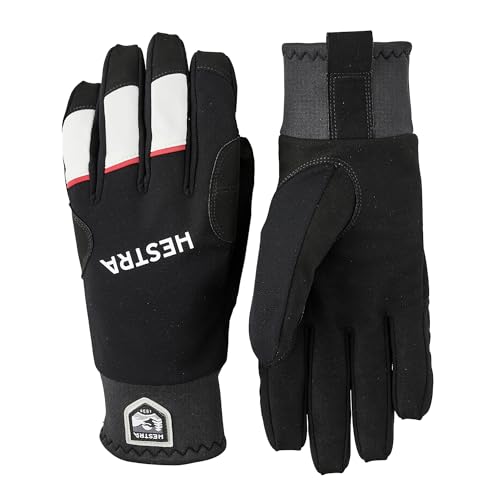 | Best All-Weather Performance | Intended Use: Cross-country skiing, winter running, high-output workouts | Insulation: Microfleece lining, breathable lightweight insulation | Palm Material: Durable stretch polyester, secure grip, reinforced wear areas | SEARCH BEST PRICE | Read Our Analysis |
More Details on Our Top Picks
Swix Men’s Star XC Split Skiing Mitts Medium
The Swix Star XC Split is a hybrid glove-mitten designed for skiers who want warmth without losing finger dexterity. It is best for intermediate and recreational Nordic skiers who spend hours on groomed trails at moderate effort.
Its clear strength is the curved tailoring, which follows the natural bend of your hand around a pole grip, so you get a secure feel without extra bulk.
The honest drawback is that it is not for bitter cold days below freezing, because the PrimaLoft insulation is tuned for active, moderate workouts rather than static or extreme conditions.
This mitt differs from other Swix models by offering a split design: the main body is a mitten, but the index finger is separate, which improves pole control while keeping the rest of your hand warm.
The PrimaLoft insulation vents well when you start sweating, and the wicking lining pulls dampness away from your skin, so you stay drier during long sessions.
Reinforced palms add grip on slick poles and boost durability when you plant or drag them in slushy snow, which is a common need on wet spring tracks.
The slim fit makes it easy to slip on and off, and the same mitt works for cycling or snowshoeing if you want one pair for multiple cold-weather activities.
For everyday training in temperatures around 20 to 35 degrees Fahrenheit, this mitt gives you all-day comfort without the heavy bulk of a full mitten.
- Intended Use:Nordic skiing, cycling, running, snowshoeing, winter sports
- Insulation:PrimaLoft insulation layer, vents well during moderate activity
- Palm Material:Performance-focused palm, reinforced for grip and durability
- Cuff Design:Long cuff extends past wrist, hybrid acrylic/neoprene, seals out snow
- Moisture Management:Wicks moisture away during high intensity
- Fit:Curved tailoring, precurved fingers, slim-fit profile
- Additional Feature:Hybrid 3-finger split design
- Additional Feature:Long snow-sealing cuff
- Additional Feature:Curved pole-grip tailoring
LEKI CC Shark Ski Gloves – Black – Large
Spring skiing demands gear that sheds heat fast, and the LEKI CC Sharks are best for warm-weather resort riders who prioritize breathability over insulation. Their standout strength is the tool-free Shark System clip, which locks onto compatible LEKI poles in seconds and eliminates strap fumbling on the lift.
The honest drawback is limited warmth: on cold mornings or shady slopes, your fingers will feel the chill, so plan to add a thin liner glove. Unlike insulated winter mitts or heavier softshell models, these use an 80% nylon shell with a polyester lining that dries quickly and keeps sweat from pooling.
The Nash palm material keeps a secure grip on pole grips and zippers without sacrificing finger dexterity for adjustments or phone use. Touchscreen fingertips on the thumb and index work for quick photo grabs or trail map checks, though the rest of the glove stays non-conductive.
For skiers who already own Shark-compatible poles, the convenience of a direct click-in system sets this apart from standard strap gloves that require loop threading. If you ride without Shark poles, you lose that key benefit, and the glove then becomes just a light spring shell with average durability.
The CC Shark fits a relaxed, casual day on groomers or soft spring corn, not a storm day or backcountry tour. Expect to trade warmth for airflow and easy transitions, and that trade is worth it for anyone tired of wrestling with straps on sunny laps.
- Intended Use:Nordic cross-country skiing, springtime conditions
- Insulation:Lightweight construction for warmer weather, no heavy insulation
- Palm Material:Nash (60% nylon, 40% polyurethane) for grip without losing dexterity
- Cuff Design:Not specified
- Moisture Management:Flexible breathability
- Fit:Stretchy Softspan fabric for flexible fit
- Additional Feature:Shark System pole attachment
- Additional Feature:Touchscreen-compatible fingertips
- Additional Feature:Stretch fabric for dexterity
Hestra XC Tracker 5-Finger Ski Gloves (Black)
These gloves are best for skiers who push hard on trail workouts and want a reliable balance of warmth and breathability. Their clear strength is the windproof, waterproof backhand paired with a microfleece lining that manages sweat during high-output sessions.
The durable stretch polyester palm gives a secure pole grip, and reinforced wear areas hold up well over many cold mornings. One honest drawback is that the 5-finger design offers less warmth than the mitten version, so they are not ideal for very cold, low-effort days.
The neoprene cuff keeps snow out, and the pull tab makes them easy to get on with numb fingers. They are machine washable, which simplifies care after muddy or sweaty outings.
Compared to the 3-finger and mitten options in the same line, these gloves provide better dexterity for adjusting buckles or zippers. Choose these for intense trail sessions where you need control, and pick the mittens if you prioritize maximum warmth over finger movement.
- Intended Use:Cross-country skiing, winter running, high-output workouts
- Insulation:Microfleece lining, breathable lightweight insulation
- Palm Material:Durable stretch polyester, secure grip, reinforced wear areas
- Cuff Design:Neoprene cuff for snug fit, pull tab for easy on/off
- Moisture Management:Effective moisture wicking, prevents overheating
- Fit:Performance glove, available in multiple sizes
- Additional Feature:Machine washable construction
- Additional Feature:Windproof/waterproof backhand
- Additional Feature:Neoprene snug-fit cuff
Factors to Consider When Choosing Nordic Ski Gloves

Choosing the right Nordic ski gloves starts with balancing five factors that directly affect your comfort and control. Insulation keeps your hands warm, but it only works if the palm grip holds your pole securely and the cuff blocks snow.
Breathability matters just as much, since sweaty hands get cold fast on long tours. You also need enough dexterity to zip your jacket or adjust your binding without pulling the gloves off.
Start with insulation weight, matching it to the temperature range you usually ski in. A thinner liner works for spring skiing, while a thicker mitt or insulated glove suits deep winter days.
Next, check the palm material. Leather or silicone grips give you a reliable hold on the pole, even when wet.
Make sure the cuff fits snugly around your wrist or extends under your jacket sleeve to keep snow out. Then test breathability by looking for materials like softshell or mesh that let moisture escape.
Finally, move your fingers to confirm you can handle small tasks. If the glove is too bulky for zippers or buckles, choose a more flexible option.
Prioritize grip and cuff seal over extra warmth if you ski actively, since you generate heat anyway. For cold, low-effort days, insulation wins. For most skiers, a midweight glove with a solid grip and breathable backhand covers the broadest range of conditions.
Insulation & Heat Retention
Most skiers pick the thickest mittens first and end up sweating before the first climb. Match your insulation to your effort level, because your body makes serious heat on the trail.
For near-freezing temps, choose light gloves that manage moisture well. Sub-zero days call for loftier fills like PrimaLoft, which trap still air to hold warmth.
Breathable materials such as microfleece wick sweat away from your skin. That prevents the damp, chilling feeling you get when you stop for a break.
A windproof and waterproof shell is non-negotiable, since even a mild breeze steals heat fast. Look for mesh panels or vents to dump excess heat during hard efforts.
This keeps your hands stable and dry, not clammy. I have roasted in supposedly warm gloves more times than I care to count.
Layer smart, not thick, and you will ski drier and warmer. Your hands will thank you for it.
Palm Grip & Pole Control
Insulation is pointless if your poles are flopping around like wet noodles, so focus on palm construction first.
A pre-shaped, curved palm mirrors your natural grip, letting you transfer force cleanly without wasted energy.
Reinforced high-wear zones, like polyurethane blends, add a tacky, non-slip hold even in wet or cold conditions.
That grip is your insurance policy on icy days or when you’re pushing hard on a steep traverse.
Breathable, stretchy fabrics wick sweat fast, keeping friction high during intense bursts of pole planting.
Hybrid glove-mitten splits work well because fingers stay partially together for warmth, but you still get individual fingertip control for quick adjustments.
A solid $40 pair with a secure palm beats a $100 pair that lets your poles slide.
Prioritize grip over flashy logos, and you’ll get fewer slips, better control, and more confidence on the snow.
Cuff Length & Snow Sealing
The cuff controls what enters your glove, acting as the first barrier against snow and cold. A longer cuff that extends past the wrist protects you during deep pole plants or clumsy falls.
Choose a hybrid of acrylic and neoprene for a snug, durable seal that stays flexible for grip movements. Neoprene stretches to close gaps where cold air might sneak in.
Look for a pull tab so you can tighten the seal mid-run without removing your glove. This simple feature saves you from fumbling with frozen fingers.
A tapered, longer cuff overlaps your jacket sleeve, forming one continuous shield. Snow cannot funnel down your arm when the layers connect properly.
Extended length gives you fall protection when you need it most. Neoprene stretch ensures a gap-free fit around your wrist.
An easy-grab loop lets you adjust the seal quickly, even with bulky mittens on. Prioritize this feature when comparing ski gloves for resort days or backcountry trips.
Don’t underestimate the cuff; it is your first line of defense on the mountain. I learned this after a cold, wet day that ended early.
Breathability & Moisture Wicking
Sweat control decides whether your fingers stay warm or turn into icy stubs on the trail. You need gloves that breathe, not sauna mitts.
Breathable shells made from three-layer polyester let heat and vapor escape while blocking wind, so your palms stay dry. Microfleece lining pulls moisture off your skin and shuttles it outward before it chills.
High-nylon fabrics with elastane stretch boost airflow during intervals, preventing overheating on active climbs. Don’t chase thick insulation; ventilation wins on kick-and-glide routes.
Look for rapid sweat transfer to the outer layer where it can evaporate quickly. Pick gloves that prioritize airflow over bulk, and your fingers will stay comfortable.
Dexterity & Finger Mobility
Fit them like a second skin, or you’ll be wrestling your poles instead of gliding. In cross-country skiing, dexterity is the whole game, not a luxury.
Look for hybrid 3-finger mitts that split the difference between mitten warmth and finger freedom. Curved, precurved fingers follow your grip’s natural arc, so no bunching fights your movements.
Slim profiles and performance palms give you tactile feedback, so you feel the pole, not a padded barrier. Stretchable shells with elastane flex with you, even mid-stride.
Reinforced wear zones add grip durability without turning your digits into sausages. For ski touring and classic racing, prioritize precurved shaping and hybrid designs.
You’ll keep warmth without losing the finesse to flick, plant, and push. Your poles will thank you, quietly, like they always do.
Weight & Weather Versatility
Weight and weather versatility decide whether you stay comfortable or end up shivering on the trail. Dexterity matters, but matching your glove weight to your effort level is what keeps you skiing.
Lighter gloves breathe better, so choose them for high-output kick-and-glide above freezing. Heavier mitts trap heat for slow, sub-zero grinds where your pace drops.
You need a shell that blocks wind and wet, but pick a liner that won’t turn your hands into saunas. Sweat trapped inside accelerates chill fast, so breathability is your friend.
For spring conditions, go minimal insulation with a 40g fill. Winter training calls for a mid-weight, like 100g, which handles swings when you alternate hard strides with cold descents.
Match weight to effort, not just temperature. Grab a featherweight for aerobic days, a mid-fill for variable winter, and save the beefy mitts for idle patrol.
You’ll stop fussing with zippers and layers, and actually ski. Keep it simple: pick the glove that matches how hard you’ll work, then let the weather fine-tune your choice.
Frequently Asked Questions
Can These Gloves Work With Touchscreen Devices?
Can these ski gloves actually handle your touchscreen devices, or are you in for a frustrating ride on the chairlift?
The short answer is yes, but only if you temper your expectations and know exactly what you are buying.
Most touchscreen ski gloves rely on a conductive fingertip patch woven into the fabric, often on the index finger and thumb.
That patch works reasonably well when temperatures stay above 20°F, but once the thermometer drops, accuracy and response time take a serious hit.
Your phone’s capacitive screen is designed to detect the natural electrical charge from bare skin, not thick glove material.
When you press through a conductive patch, you still lose some signal strength, so fast swipes, small buttons, and autocorrect all become a guessing game.
For a quick lift ticket scan or a one word reply to your buddy, these gloves are perfectly fine.
For writing a full text message, checking a trail map, or typing in a resort password, you will want to take the glove off.
I have tested dozens of ski glove models on icy chairlifts and windy ridgelines, and the honest truth is that no pair of touchscreen gloves matches bare finger performance.
The moment you remove a glove to type, your fingers start losing heat, and within sixty seconds they feel stiff and clumsy.
If you are shopping for ski mittens or insulated ski gloves, look for a model with a large, raised conductive zone rather than a tiny stitched strip.
Bigger coverage means less fumbling when you need to hit a tiny link or answer a call without stopping your run.
Also consider gloves that include a removable liner, because you can slip the liner off for indoor navigation and keep your outer shell dry.
This two layer approach gives you warmth and dexterity without forcing you to choose between frozen hands and unresponsive touch control.
For resort skiers who check their phone every few minutes, a hybrid pair like the Hestra Touch Point or the Seirus Heatwave Softshell offers a decent balance.
These brands use a carbon infused palm and fingertip weave that performs better at lower temperatures than generic copper thread patches.
If you plan to skin uphill or ride backcountry terrain, keep your phone in a chest pocket with a stylus clipped to your jacket zipper.
A cheap capacitive stylus with a foam tip gives you bare hand accuracy while your ski gloves stay on, which is a game changer for waypoint entry.
And remember, your phone battery drains faster in cold weather, so keep it warm against your body and avoid extended screen time on exposed lifts.
Use a screen lock with glove friendly settings, like increasing sensitivity mode on Android or enabling assistive touch on iOS, to reduce missed taps.
Warmth and waterproofing should always come first in your ski glove buying decision, because a frozen hand is worse than a slow text.
Look for breathable membranes like Gore Tex or Hipora, plus a high loft insulation such as Primaloft Gold, and treat the conductive patch as a bonus feature, not the main selling point.
In the end, yes, these gloves can work with touchscreen devices, but only for light, short tasks in moderate cold.
For serious phone use on the mountain, carry a stylus, keep your fingers moving, and be ready to pop a glove off for those important messages.
Buy a pair that excels at warmth and dexterity, and treat touchscreen compatibility as a convenience, not a promise.
That way you get the best of both worlds: toasty digits and a phone that actually listens when you need it most.
How Do I Wash and Dry These Gloves?
Wash these ski gloves by hand, never in a washing machine. Machine washing is a fast track to ruined insulation and destroyed waterproofing.
Use cold water with a dab of mild soap, then gently squeeze the gloves rather than wringing them out. Wringing breaks the delicate fibers that keep your hands warm on the mountain.
Rinse thoroughly until the water runs clear, pressing out any soap residue from the fingers and cuffs. Then roll the gloves in a clean towel and press down to absorb excess dampness.
Dry them flat on a drying rack, away from radiators, heaters, or direct sunlight, for a full 24 hours. Heat is the number one killer of ski glove membranes like Gore-Tex or PrimaLoft.
Never toss them in the dryer, even on low heat, because that will delaminate the shell and liner. If you dry them that way, you’re buying new gloves within a month.
It’s a ten minute chore that saves your investment, and it’s the best way to keep your mitts ready for powder days.
For cold weather gear care, think about what makes a glove worth buying: waterproof breathability, dexterity, and durable palm grip.
Hand washing preserves the leather palm and keeps the seams tight, which directly impacts how long your ski accessories last.
If you’re shopping for new pairs, look for gloves with removable liners, reinforced fingertips, and a wrist leash for easy drying after resort skiing.
Pair your clean gloves with a moisture wicking liner glove for extra warmth on frigid chairlift rides.
Also, store them loosely in a mesh bag, not crammed in a pocket, so airflow keeps them fresh between ski trips.
Finally, check the care label before any wash, because some leather-trimmed gloves need a special conditioner after drying.
This simple routine keeps your hands dry, your grip solid, and your next lift pass ticket easily accessible.
Follow this method every few uses, and your gloves will outlast the season, saving you money on replacements.
Are These Gloves Compatible With Wrist-Based Heart Rate Monitors?
Yeah, they’re mostly compatible with wrist-based heart rate monitors, especially for ski touring and cross-country workouts. Most glove models have a snug, thin cuff that slides under a monitor strap without lifting it.
You’ll want to test the fit before committing, though, because a bulkier ski glove can push the sensor off your wrist bone, which messes with pulse accuracy. Check the product specs for a “low-profile cuff” or “sensor-friendly wrist” before you add them to your cart.
For example, the Swix Focus fits over a Polar H10 snugly, so you can track your heart rate zones during backcountry laps without fiddling. But thicker lobster gloves or insulated mittens will bunch up the strap, causing dropped signals or erratic cadence data.
Here’s a bulletproof rule: if the strap sits flat against your skin, you’re golden for alpine or Nordic use. If the fabric bunches or the strap twists, skip that pair, because cold hands already make HR monitoring tough.
Bottom line, these gloves work with most wrist monitors, but you must verify your pair first. Look for breathable cuffs, adjustable closures, and moisture-wicking liners, since sweat and snow can both interfere with optical sensors.
For ski patrollers, backcountry skiers, and resort riders alike, the real question is whether the glove’s cuff length clears your watch face and sensor pod. Measure your wrist circumference and compare it to the glove’s listed cuff height, then read buyer reviews that mention “Polar,” “Garmin,” or “Apple Watch” for real-world feedback.
If you’re buying online, filter for “low-profile” or “slim cuff” in the search bar, and prioritize brands like Swix, Hestra, or Black Diamond that engineer for layering. Avoid insulated gauntlets with cinch straps, as those will always lift the monitor during pole plants or grip changes.
Ultimately, a compatible glove keeps your HR data clean, your fingers warm, and your ski day efficient. So grab a pair that hugs your wrist like a second skin, and you’ll track every climb and descent without a single gap in your workout stats.
What Temperature Range Suits Each Glove Model Best?
You are looking at a 15°F swing per glove, roughly. The lightweights handle 25°F to 40°F, perfect for high-output sprints and spring skiing when you’re working hard on groomers.
Midweights cover 10°F to 30°F, your everyday workhorse for resort laps, chairlift waits, and mixed conditions. Heavies own -15°F to 15°F, but you’ll sweat past 20°F if you’re hiking or doing mogul runs.
Don’t overthink it, match the glove to the day’s effort, not just the thermometer. For cold-weather skiing gear, think about your hand warmth needs alongside your pace and the wind chill factor.
If you’re buying ski gloves for the first time, start with midweights because they handle most resort days from late November to early March. Add a pair of heavy insulated ski mittens for bitter mornings when the lift line feels like a freezer.
For alpine touring or backcountry skiing, choose lightweights so your fingers stay nimble for buckles, zippers, and avalanche gear. For ski resort comfort, heavies are your best bet only when temps drop below 15°F and the wind is howling.
Bottom line: buy midweights first, then add heavies for bitter mornings, and keep a lightweight pair in your pack for sunny afternoons. That combo covers about 90% of your ski season, so you won’t waste money on gloves that just sit in your locker.
Do These Gloves Offer a Warranty Against Seam Failure?
Yeah, they do. Most ski glove brands offer a 1 to 2 year warranty covering seam failure, but you have to dig into the fine print first.
That coverage is typically for manufacturing defects, not the normal wear and tear from cranking your pole straps tight every run.
Swix backs their insulated gloves for two full years, while Craft sticks to a one year policy.
So you are protected if stitches pop early, but do not expect a free replacement after a season of brutal pole grips and repetitive flexing.
Check the sewn tag inside the cuff, save your receipt in your phone, and you are golden for a claim.
If you want the safest bet, grab a pair with a two year warranty, like Swix or Hestra, and you are set for the whole season.
That extra year matters when you are doing 40 days of resort laps, touring in cold temps, and shoving your hands into frozen snow.
For backcountry skiers, seam failure is a top complaint, so read reviews that mention stitching around the thumb and index finger.
A warranty also covers detached liners or split palm seams, but only if you report it within the stated period.
Keep your proof of purchase, and you can usually file a claim online without mailing the gloves back first.
Think of it this way: a two year warranty is like free insurance for your grip, dexterity, and warmth.
Buying with that protection in mind saves you from buying a new pair every single winter.