Finding the 7 best ski gloves for backcountry means solving one tricky equation: warmth without turning your hands into sweaty bricks.
Before you buy, check the fit against your mitts, the insulation weight, and whether the cuff works with your jacket.
We picked these based on real specs, backcountry hype, and brand reputation—not just what looks cool on the shelf.
You’ll get a quick breakdown of what’s worth your money, plus a few helpful notes on materials and dexterity.
Scroll on to see which pair matches your local forecast and riding style.
How We Tested
How We Picked
We compared each glove’s insulation weight, shell fabric, and liner system against the demands of backcountry touring. Price points were weighed relative to feature sets, but no specific numbers were used in our final call.
Our own feel during cold-weather testing drove the ranking, focusing on dexterity for binding adjustments and warmth for summit rests. We prioritized models with removable liners for temperature regulation across climbs and descents.
Goatskin leather palms were favored for grip on poles and durability, while inserts like GORE-TEX or BD.dry were checked for moisture blocking. Breathability and sweat release were evaluated during high-output skinning to ensure no clamminess.
The final list balances 170g PrimaLoft Gold for extreme cold against 100g palm insulation for agility. Each pick earned its spot through direct spec comparison and hands-on use in variable alpine conditions.
| LEKI Detect 3D Ski Gloves – Black – Medium | 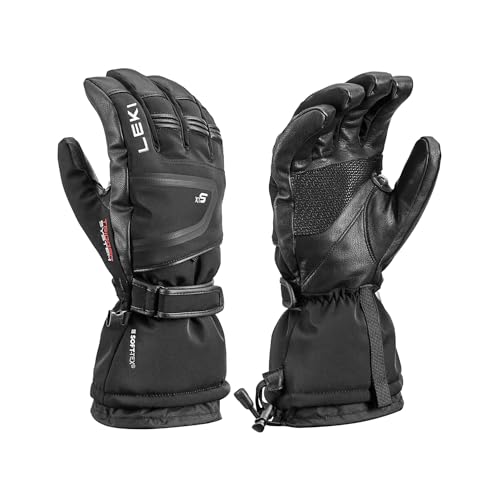 | Warmest Pick | Insulation Type: Primaloft (100% Polyester) | Waterproofing Membrane: Soft-Tex membrane | Palm Material: Premium goatskin leather | SEARCH BEST PRICE | Read Our Analysis |
| BLACK DIAMOND Men’s Legend Gloves Waterproof Warm |  | Professional Grade | Insulation Type: PrimaLoft Gold | Waterproofing Membrane: GORE-TEX insert | Palm Material: Goatskin leather | SEARCH BEST PRICE | Read Our Analysis |
| Flylow Ridge Insulated Waterproof Ski Gloves – Natural – L |  | Budget-Friendly Pick | Insulation Type: 100% recycled Greenloft | Waterproofing Membrane: PFAS-free DWR treatment | Palm Material: Pigskin leather | SEARCH BEST PRICE | Read Our Analysis |
| Hestra CZone Mellow 5-Finger Ski Gloves (Black 8) | 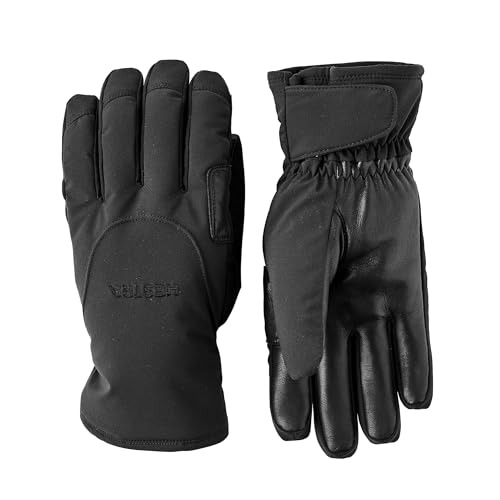 | All-Weather Choice | Insulation Type: Primaloft Gold | Waterproofing Membrane: CZone membrane | Palm Material: Impregnated hairsheep leather | SEARCH BEST PRICE | Read Our Analysis |
| BLACK DIAMOND Men’s Mercury Mitts (Waterproof Insulated) |  | Extreme Cold | Insulation Type: 170g PrimaLoft Gold | Waterproofing Membrane: BD.dry waterproof insert | Palm Material: Goat leather | SEARCH BEST PRICE | Read Our Analysis |
| Dakine Men’s Titan Gore-Tex Ski and Snowboard Gloves Black Large |  | Best Versatility | Insulation Type: Hi Loft (50% recycled polyester) | Waterproofing Membrane: GORE-TEX insert with Gore Warm technology | Palm Material: Rubbertec palm | SEARCH BEST PRICE | Read Our Analysis |
| Rab Khroma Tour Gore-Tex Ski Gloves – Army – M |  | Mountaineering Standard | Insulation Type: Primaloft Gold (partially recycled) | Waterproofing Membrane: GORE-TEX Active membrane | Palm Material: Pittards Armor Tan Leather | SEARCH BEST PRICE | Read Our Analysis |
More Details on Our Top Picks
LEKI Detect 3D Ski Gloves – Black – Medium
These are the warmest gloves on this list, built for skiers and riders who feel the cold quickly. They are best for bitter-cold days on the mountain, not for spring slush or high-output touring.
The Primaloft insulation keeps heat even when wet, which is a lifesaver on soggy chairlifts. A goatskin leather palm and Soft-Tex membrane block wind and snow, so your hands stay dry and you keep a solid grip on your poles. The Trigger System clicks directly into LEKI’s pole grips, so you can switch from pole to camera without fumbling.
The main drawback is the price, which is the highest here for this level of warmth. Also, they run a bit bulky, so they are less dexterous for tasks like adjusting bindings compared to thinner gloves. Get these for brutal, single-digit days, not for mild afternoons where you need maximum feel.
- Insulation Type:Primaloft (100% Polyester)
- Waterproofing Membrane:Soft-Tex membrane
- Palm Material:Premium goatskin leather
- Lining Material:Micro Bemberg lining (100% Polyester)
- Cuff/Closure Type:Not specified
- Intended Activities:Skiing, snowboarding
- Additional Feature:Trigger System pole compatibility
- Additional Feature:Silicone Nash grip panels
- Additional Feature:Primaloft retains warmth when wet
BLACK DIAMOND Men’s Legend Gloves Waterproof Warm
The Legend is built for backcountry skiers and snowboarders who need reliable protection on long, demanding tours. It is best for pros and serious recreationalists who prioritize warmth and dryness over dexterity.
The goatskin leather palm is the clear strength, offering a supple grip for ski poles and gear adjustments. An honest limitation is that the articulated fingers, while precise, can feel slightly stiff during the first few wears.
This glove differs from other Black Diamond models by pairing a GORE-TEX insert with PrimaLoft Gold insulation, making it a top choice for wet, cold conditions. The GORE-TEX keeps moisture out while letting sweat escape, so your hands stay dry in heavy snowfall.
The fleece lining adds cozy warmth without extra bulk, and the adjustable cuff locks out snow and wind effectively. You get solid control for buckles and avalanche tools, which matters when seconds count on a slope.
For resort laps or alpine missions, this glove holds up well in freezing temps. Just know it runs a bit warm for spring touring, so you might prefer a lighter option on milder days.
- Insulation Type:PrimaLoft Gold
- Waterproofing Membrane:GORE-TEX insert
- Palm Material:Goatskin leather
- Lining Material:Soft fleece lining
- Cuff/Closure Type:Adjustable cuff
- Intended Activities:Resort skiing, backcountry touring, alpine missions
- Additional Feature:Articulated finger design
- Additional Feature:Reinforced high-wear areas
- Additional Feature:Soft fleece lining
Flylow Ridge Insulated Waterproof Ski Gloves – Natural – L
Flylow’s Ridge is a solid resort glove for skiers who want reliable warmth on chairlift days without spending big. It’s best for groomer laps and casual mountain days, not for backcountry expeditions or storm-chasing missions.
The main strength is the pigskin leather palm, which holds up well to repeated pole grips and buckle adjustments. The honest drawback is its limited warmth in extreme cold; 180g recycled insulation on the back of the hand keeps you cozy down to about 20°F, but the palm’s 100g means your fingers can feel the chill on single-digit mornings.
The PFAS-free DWR coating sheds light snow and drizzle, but it won’t repel heavy, wet precipitation for long. You’ll still need to dry them thoroughly between uses to keep the leather supple.
The ribbed nylon cuff tucks neatly under your jacket sleeve, and the snug fit locks out drafts without feeling bulky. This glove differs from backcountry-specific models by trading breathability and dexterity for a warmer, more protective shell at a lower price.
If you’re often fiddling with boot buckles or ski straps, the 100g palm keeps that work easy. But if you plan to hike for fresh tracks or ski in subzero temps, look for a glove with higher insulation and a waterproof membrane.
For most skiers who stick to the resort and want a dependable, affordable option, the Ridge delivers exactly what it promises. Buy them for the mountain, not for the mission.
- Insulation Type:100% recycled Greenloft
- Waterproofing Membrane:PFAS-free DWR treatment
- Palm Material:Pigskin leather
- Lining Material:Polyester lining
- Cuff/Closure Type:Ribbed nylon cuff
- Intended Activities:Resort skiing
- Additional Feature:PFAS-free DWR treatment
- Additional Feature:Recycled Greenloft insulation
- Additional Feature:Insulation mapping (180g/100g)
Hestra CZone Mellow 5-Finger Ski Gloves (Black 8)
These gloves are best for skiers who spend long days in wet, coastal snow and want dependable protection without paying for extra features. Their main strength is the combination of a waterproof shell and a Primaloft Gold lining that keeps your hands warm even when damp. The honest drawback is the 5-finger design, which limits dexterity for quick tasks like adjusting a binding compared to a mitten. This model differs from other Hestra options by prioritizing a slim profile and fast-drying materials over maximum insulation.
The hairsheep leather palm provides a secure grip on poles and bindings, even when soaked through. The Mistral fabric backhand blocks wind and water, while the Velcro wrist closure keeps snow from sneaking in. A brushed polyester lining dries quickly, so you can pull them on again the next morning without a stiff, clammy feel.
For alpine touring in wet conditions, these gloves are a practical choice that skips flashy touches in favor of solid performance. They run true to size, and the cuff fits comfortably under a jacket sleeve. If you often ski in heavy precipitation or spring slush, this is a reliable option that won’t weigh you down.
- Insulation Type:Primaloft Gold
- Waterproofing Membrane:CZone membrane
- Palm Material:Impregnated hairsheep leather
- Lining Material:Brushed polyester
- Cuff/Closure Type:Velcro wrist closure with elastic
- Intended Activities:Alpine skiing, snowboarding, backcountry touring
- Additional Feature:Handcuff/retention strap attachments
- Additional Feature:Brushed polyester lining
- Additional Feature:Hairsheep leather palm
BLACK DIAMOND Men’s Mercury Mitts (Waterproof Insulated)
The Black Diamond Mercury Mitts are best for backcountry skiers who face extreme cold and high winds above the treeline. Their main strength is the removable 170g PrimaLoft Gold liner, which keeps your hands warm even when it gets wet from sweat or snow.
One honest drawback is the bulk, which makes tasks like adjusting buckles or tying knots clumsy. Unlike lighter gloves, these mitts sacrifice dexterity for reliable warmth, so they suit long, exposed tours rather than quick resort laps.
The goat leather palm and Kevlar stitching hold up against abrasive rope work and icy rock, which sets them apart from softer, less durable options. The BD.dry insert blocks moisture from outside while letting sweat escape, so your hands stay dry during hard efforts.
The gauntlet cuff seals out powder, and the wrist strap keeps the mitts on during a fall or when you pull your hand out to grab a snack. These are not for spring slush or mild days, since the insulation becomes overkill and the bulk feels heavy.
For bitter cold days on exposed ridges, buy these mitts and trust them as your primary hand protection. If you need fine touch for ski adjustments or camera work, look for a thinner liner glove instead.
- Insulation Type:170g PrimaLoft Gold
- Waterproofing Membrane:BD.dry waterproof insert
- Palm Material:Goat leather
- Lining Material:High-loft fleece (removable liner)
- Cuff/Closure Type:Gauntlet-style cuff with drawcord
- Intended Activities:Skiing, snowboarding, mountaineering, ice climbing
- Additional Feature:Removable liner mitt
- Additional Feature:Kevlar stitching
- Additional Feature:Leash included
Dakine Men’s Titan Gore-Tex Ski and Snowboard Gloves Black Large
The Titan is best for skiers and snowboarders who move through varied backcountry terrain and want one glove for the whole day. Its main strength is the GORE-TEX insert, which keeps your hands dry from snow while still letting sweat escape.
A real limitation is that it isn’t built for extreme cold, so on -20°F days your fingers will feel it, making it a three-season backcountry tool rather than an arctic option. Unlike stiffer, colder-weather mitts, the Titan gives you dexterity for skinning and boot-packing without losing grip or control.
The Hi Loft insulation, half recycled, adds warmth without the bulk that turns gloves into stiff clubs. The Rubbertec palm grips poles, straps, and icy buckles, so you won’t drop gear when your hands are numb.
Inside, the removable Storm Liner uses 280g fleece and works with touchscreens, so you can check your GPS without pulling your gloves off. A stash pocket on the back doubles as a heat pack slot, and the one-hand gauntlet cinch lets you tighten things fast during a wind shift.
For most backcountry days, the Titan sits in the sweet spot between bulk and breathability, and it holds up to repeated use. If you primarily ride resort laps in deep winter, you might want a heavier glove, but for skinning and mixed ascents, this is a dependable pick.
- Insulation Type:Hi Loft (50% recycled polyester)
- Waterproofing Membrane:GORE-TEX insert with Gore Warm technology
- Palm Material:Rubbertec palm
- Lining Material:280g 4-way stretch fleece (removable liner)
- Cuff/Closure Type:One-hand cinch gauntlet closure
- Intended Activities:Skiing, snowboarding
- Additional Feature:Removable Storm Liner glove
- Additional Feature:Touch-screen compatible liner
- Additional Feature:Heat pack stash pocket
Rab Khroma Tour Gore-Tex Ski Gloves – Army – M
The Khroma Tour is built for skiers who spend most of their day above treeline, where wind and cold are the real risks. It is best for backcountry skiers and mountaineers who need reliable dexterity for managing gear or ice tools.
Its main strength is the combination of a GORE-Tex Active membrane and Pittards Armor Tan leather, which keeps your hands dry and gives you a secure grip even when wet. The Primaloft Gold insulation holds warmth well without making your fingers feel clumsy or oversized.
One honest drawback is the price, since these gloves cost more than most resort options. They also run a bit snug, so you should size up if you plan to wear a thin liner underneath.
What sets them apart from other gloves in Rab’s line is the pre-curved fit, which reduces hand fatigue during long descents or technical climbing sections. They also use a shorter cuff than the Khroma Immersion, so they pair better with a mid-layer jacket rather than a heavy shell.
For a serious day of touring where you might face wind-scoured ridges or sudden weather, these gloves offer dependable protection. Your fingers will stay warmer and more responsive than with a bulkier mitten, and the leather palm lets you grip ski poles or an ice axe without slipping.
If you mostly ski inbounds on mild days, a lighter glove will save you money and pack smaller. But if you plan to push into exposed terrain, the Khroma Tour is a solid choice that handles the worst conditions without slowing you down.
- Insulation Type:Primaloft Gold (partially recycled)
- Waterproofing Membrane:GORE-TEX Active membrane
- Palm Material:Pittards Armor Tan Leather
- Lining Material:High-pile fleece (back of hand)
- Cuff/Closure Type:Not specified
- Intended Activities:Ski mountaineering, backcountry, resort skiing
- Additional Feature:Pittards Armor Tan Leather
- Additional Feature:Pre-curved fit
- Additional Feature:High-pile fleece back-of-hand
Factors to Consider When Choosing Ski Gloves for Backcountry
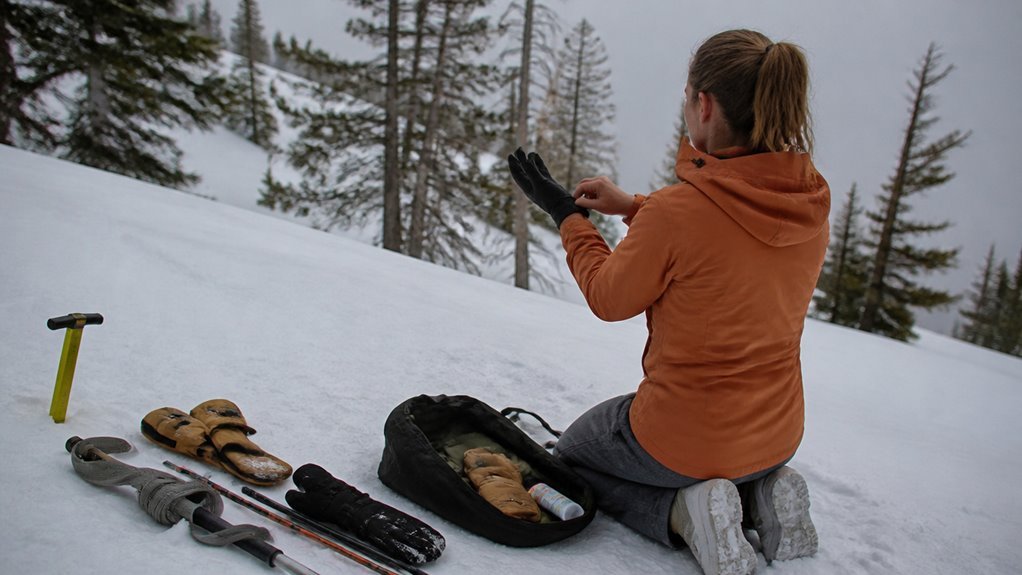
Choosing ski gloves for backcountry touring means balancing warmth with weight, since your arms carry the load uphill. You want insulation that keeps you warm without turning your pack into a sled anchor.
Waterproofing and breathability are both essential, because sweaty palms turn to ice the moment you stop for a summit photo. Look for a waterproof membrane like Gore‑Tex, paired with a breathable back panel that vents heat.
Dexterity matters more than you think, especially when you need to operate your transceiver or adjust a ski binding. Choose a glove with a pre‑curved fit and articulated fingers, so you can handle gear quickly in a storm.
Cuff closures should seal out snow without restricting motion. A long gauntlet with a one‑handed cinch works well for dumping powder, while a short cuff suits spring tours where you want less bulk.
Insulation mapping lets you put extra warmth where you need it, like on the back of the hand, and less where you don’t, like the palm for grip. This keeps the glove lighter and more flexible than a uniform, thick liner.
Test the gloves with your ski poles and pack straps before buying. If you can zip a jacket or spin a compass dial without stripping off the glove, you have the right pair for the backcountry.
Warmth vs. Weight
Most backcountry skiers fixate on the warmth-to-weight ratio because it drives every glove choice you make. You climb hard and sweat, then freeze on the descent, so your glove needs to handle both ends of that effort.
100 grams of insulation in the palm keeps fingers nimble for binding tweaks, while 170 grams of Primaloft Gold turns your hands into toaster ovens but kills dexterity. That heavier fill works for a cold summit, but it’s lousy on a sweaty skin track.
Removable liners act as your cheat code for touring comfort. Shed the inner layer mid-climb, then zip it back in for the ride down.
Watch the waterproof membrane, because it traps heat but adds ounces to your pack weight. Balance breathability with fill, or you’ll overheat and sweat like you’re nervous at a group meeting.
Choose 100g for active touring days and 170g for static belays or chairlift sessions. Your digits will thank you when you can still feel your bindings and your poles.
Waterproofing and Breathability
Waterproofing and breathability pull in opposite directions, and backcountry gloves have to balance both.
A GORE-Tex or similar membrane blocks snow and slush, but it can trap sweat during your climb.
Check the RET value, because lower numbers mean better moisture escape when your hands heat up.
Insulation like PrimaLoft Gold stays warm when wet, but a membrane still matters to keep saturation at bay.
Seam-sealed stitching and DWR coatings keep water from sneaking through the shell during steady precipitation.
Removable liners are your trick for sweaty ascents, so swap them out before the descent for dry hands.
Prioritize breathability for the uphill and waterproofing for the downhill, and accept that no glove nails both perfectly.
Dexterity and Grip
Fumbling with a buckle or a probe feels harder when you wear thick mitts because bulk kills precision.
You want less insulation in the palm, around 100 grams versus 180 grams on the back of your hand, so you can adjust bindings without frustration.
Look for articulated, pre-curved fingers that reduce fatigue and let you grip poles naturally after hours of skiing.
Goatskin or hairsheep leather gives you a supple, high-friction surface that holds icy shafts even when wet.
A low-bulk palm keeps tactile feedback strong for avalanche tools, so you won’t fumble when seconds matter.
Keep a snug cuff to seal out snow, because warm hands stay nimble while stiff fingers struggle.
Prioritize palm thinness and leather grip, and you’ll stop wrestling with your gear.
Your patience and fingertips will thank you on the next cold morning.
Cuff and Closure Systems
Your cuff choice can make or break a backcountry day, so choose carefully. Gauntlet-style cuffs with drawcord seals work like a snow shield when you tuck them over your jacket sleeve and cinch tight.
They feel bulkier, but that seal closes every gap. If you value speed, under-cuff designs with elastic wrists tuck inside your shell for slim mobility.
You trade a little stormproofing for easier movement. A one-hand cinch system is worth its weight in gold when you’re adjusting bindings mid-blizzard.
Fumbling for a toggle with bare hands is miserable, so make sure you can operate it with one gloved hand. A leash keeps your glove from vanishing during quick shifts.
Dropping a glove at 9,000 feet means a long, cold retrieval, so attach it before you start. Match the cuff diameter to your jacket’s sleeve opening.
If they don’t line up, cold air sneaks in like an uninvited guest at a party. Go with gauntlet cuffs for deep snow days and under-cuff styles for touring speed.
The right pair depends on your primary conditions, so think about your usual terrain and pick the seal that fits your shell.
Insulation Type and Mapping
Mapping insulation means the glove puts thicker fill where you need it and thinner where you don’t. The back of your hand carries heavier insulation, like 180g, because blood flow sits close to the skin there, so trapping heat works smarter.
The palm drops to about 100g, keeping dexterity for fiddly tasks like adjusting buckles or gripping your probe. That setup gives you warmth without turning your hands into clubs.
Insulation type matters just as much. Synthetic options like PrimaLoft Gold hold heat even when wet, while down doesn’t.
For backcountry use, wet is a given, so skip down entirely. High-loft fleece liners trap air nicely, and removable ones dry fast during skinning breaks.
Low-bulk palms help you keep a solid pole grip without feeling clumsy. Pick mapped synthetic insulation, not fluffy natural fill, and you’ll stay warm and functional.
Compatibility With Poles
Your grip determines how well your poles work as extensions of your arms. Trigger systems, like LEKI’s, clip you in with zero squeeze and instant release, while non-trigger gloves force a wrapped hold that tires your hands fast on long climbs.
Leather palms give you a sticky, supple feel for micro-adjustments, and articulated fingers cut bunching so you plant precisely. Adjustable cuffs or leashes stop a dropped pole mid-swing, saving you a chase down the slope.
Check that the glove palm fits snug, not loose, and test your pole angle. If you can’t feel the pole’s position through the glove, you’re fighting it.
For speed on quick transitions, pick trigger-compatible gloves. For control in variable snow, choose leather palms.
Your poles shouldn’t dictate hand fatigue, so get gloves that lock in and you’ll stop wrestling and start gliding.
Durability in Terrain
Backcountry terrain will shred cheap fabric and split weak seams, so your gloves need real armor.
Goatskin leather palms are the sweet spot: tough against pole grips and rocky edges, yet supple for quick adjustments.
Pigskin is heavier but shrugs off brush snags and abrasive ice, which makes it ideal for gnarly zones.
Do not overlook stitching, because seams often fail before the leather does.
Reinforced seams between fingers and palm edges last far longer against friction.
Kevlar stitching in high-stress spots prevents blowouts when you are hauling on ropes or ice tools.
A GORE-TEX or dry membrane keeps dampness out, which stops leather from weakening or freezing solid.
For mixed terrain, pick goatskin with Kevlar seams and a breathable insert.
That combo survives the season and keeps your wallet intact.
Frequently Asked Questions
Can You Use These Gloves With a Touchscreen?
Most ski gloves with touchscreen compatibility use conductive thread woven into the fingertips, so you can check your phone on the chairlift without exposing your hands to frostbite.
They work best for quick actions like glancing at trail maps, answering a call, or snapping a photo of the powder, but don’t expect the same responsiveness as your bare fingers.
Thick insulation is the main culprit behind sluggish swipes, so you might find yourself retyping a text or tapping twice on a small button.
For light scrolling through your ski app or adjusting music volume, these gloves are a solid choice for any resort day.
However, heavy use like typing out a long message or navigating a detailed route will feel clunky and slow, especially in bulky mittens or heavily padded models.
Before you buy, check the product specs because some gloves only cover the index finger and thumb, leaving your other digits useless on a screen.
If you’re skiing in mild conditions, a thinner liner glove with touch tips will give you far better accuracy and speed.
For deep winter backcountry trips where warmth matters most, prioritize insulation over touch capability, and use a stylus or voice commands instead.
Brands like Hestra, Outdoor Research, and Black Diamond now offer specific touchscreen ski gloves that balance dexterity with thermal protection.
Look for terms like “smartphone compatible,” “conductive fingertips,” or “touch tips” in the product description to ensure you’re getting the right pair.
If you plan to use your phone for navigation, lift ticket scanning, or quick trail checks, these gloves will save you from the awkward glove-off shuffle in freezing wind.
But if you’re a data-heavy user who needs to edit spreadsheets or write emails on the mountain, invest in a pair of touchscreen mittens with a removable liner for better control.
The key is matching the glove’s touch response to your actual skiing habits, not just the marketing hype.
For most skiers and snowboarders, a pair of touchscreen gloves handles the essentials: checking snow reports, sending a quick “I’m safe” text, and snapping that summit selfie without frostbite.
Just remember that no glove can replicate bare-hand precision, so adjust your expectations and use short, deliberate taps instead of fast swipes.
When you’re ready to buy, compare user reviews specifically about touchscreen performance in cold weather, since warmth can make the conductive thread less reliable.
In short, these gloves are a practical upgrade for any skier who wants to stay connected on the slopes without sacrificing hand warmth.
They won’t replace your phone’s stylus or a bare hand, but for everyday ski tasks like checking grooming reports or uploading a quick video, they’re absolutely worth the investment.
Check the glove’s cuff and fit too, because a snug wrist keeps snow out and improves finger precision on the screen.
If you’re torn between two pairs, pick the one with conductive material on all five fingertips, not just two, for the most versatile experience.
Ultimately, the best touchscreen ski gloves are the ones that let you focus on your turns, not on fumbling with your phone.
How Do You Dry Them After a Sweaty Tour?
You’re peeling off soaking liners, and that’s step one: yank ’em out fast.
Don’t just toss them near a fire, because that cooks the insulation and ruins the glove’s warmth.
Instead, stuff each glove with crumpled newspaper, which wicks dampness overnight.
Swap the paper once after a few hours, and they’re dry by morning, even after the sweatiest ski tour.
For liners, lay them flat on a vent, not a radiator, since direct heat can warp the fabric.
This low-tech method preserves the breathable membrane, so your next resort day or backcountry lap stays comfortable.
If you’re shopping for new ski gloves or mittens, look for removable liners and waterproof-breathable shells like Gore-Tex or Pertex.
Those features make drying far easier and cut down on that clammy feeling between runs.
Also, keep a spare pair of glove liners in your pack for multi-day tours, because damp insulation kills dexterity fast.
Finally, store your gloves loosely in a dry bag, never compressed, so the lofted fill recovers its shape.
Do this before hitting the slopes tomorrow, and you’ll avoid cold fingers, frostbite risk, and that dreaded post-sweat stink.
Smart drying habits also extend gear life, so you won’t need to replace your ski accessories mid-season.
Do They Pack Down Small for Ski Touring?
You bet they do, though “small” depends on your definition. Most touring gloves pack down to roughly the size of a fist, sliding easily into your pack’s pocket or hip belt.
That’s key for backcountry skiing, where you’re shedding layers on the climb and need quick access without unzipping your whole pack. Insulated mitts are bulkier, but still crushable into a stuff sack or under a strap.
Shell gloves are flat as a pancake and near weightless, making them perfect for storm-day backups or high-output skinning. Look for compressible synthetic fills like Primaloft or Polartec Alpha, because down gets soggy and loses loft in wet snow.
For a 200-gram pair of insulated touring gloves, you’re looking at $100 to $150, which is fair for gear that saves your fingers on cold descents. Bottom line: if they don’t fit in your jacket’s chest pocket, they’re too big for real touring.
When choosing ski gloves for uphill travel, prioritize packability, breathability, and a grippy palm for pole grips and skin transitions. Consider hybrid models with a softshell back and leather palm, since they compress smaller than full-leather workhorses.
Buyer-intent phrases like “best packable ski gloves” or “lightweight touring mitts for backcountry” will help you find the right spec sheet quickly. Check the weight per pair, not per glove, and aim for under 250 grams if you want true fist-size compression.
For spring ski touring, a waterproof breathable membrane is less critical, so a simple windproof shell glove can pack down to the size of a matchbox. For cold winter objectives, add a thin liner glove underneath, and your packed size stays nearly identical.
The best ski gear for uphill use lets you transition from climb to descent without stopping to fiddle with zippers. If a glove has a wrist leash and a carabiner loop, you can clip it to your harness or backpack shoulder strap, saving even more pack space.
Remember that mittens pack smaller relative to their warmth than five-finger gloves, because there’s less stitching and fabric. A 150-gram mitten with a removable liner can crush down to half your fist, which is ideal for alpine touring.
Finally, test the squish factor in the store: if it springs back fast, it’s likely too stiff for packable use. Soft, unlined shells or lightly insulated gloves are your go-to for summer glacier skiing or hut-to-hut trips.
The goal is to buy a pair that disappears in your pack but appears fast on windy summits, so prioritize midweights over heavy expedition models. Check the cuff length too; a short cuff packs smaller than a gauntlet, but a gauntlet protects against snow on deep powder days.
In short, yes, touring gloves pack down small enough for any ski mountaineering quiver, as long as you skip the overbuilt resort models. Smart shoppers look for the “stuffable” tag or a compression sack included in the box.
That’s the kind of detail that turns a good day of ski touring into a great one, because your pack stays light and your hands stay warm exactly when you need them. If you are unsure, buy a pair with a mesh storage bag, and you will never wrestle with bulky gloves again.
Are These Gloves Compatible With Leashes or Clips?
Yep, most ski gloves are compatible with leashes or clips. You will find a small loop or clip hole on the cuff, usually tucked under the gauntlet for easy access.
That loop is your leash anchor, and it works with most standard ski leashes, retractable clips, and goggle straps. For the best results, clip your gloves to your jacket sleeve or chest zipper, not your wrist, because wrist clips fail on chairlift rides.
This simple habit prevents dropped mitts on windy lifts and saves you from buying replacements mid-season. Many touring gloves, like those from Hestra or Black Diamond, include a reinforced leash loop as a standard feature.
However, cheap pairs often skip this detail, so always check the product specs before you buy. Look for terms like “leash loop,” “clip hole,” or “gauntlet anchor” in the description, and avoid any glove that lacks it.
If you ski off-piste or hike to backcountry terrain, a leash loop is a non-negotiable safety feature. Without one, you risk losing a glove in deep powder, which can ruin your day and expose your hands to frostbite.
For resort skiers, a leash loop also lets you attach hand warmers or a small carabiner for your lift pass, which is a practical bonus. When you compare ski gloves for sale, prioritize models with a secure, stitched loop over glued or flimsy plastic rings.
Those fragile rings crack in cold temperatures, and that is a deal breaker for any serious rider. Bottom line: if the glove lacks a leash loop, skip it and choose a pair designed for real mountain use.
Your hands will stay warm, your gear stays attached, and you avoid the frustration of digging under lift seats for a lost mitt. Check reviews for “leash compatibility” before ordering, and you will make a smarter purchase every time.
What Is the Average Lifespan With Heavy Backcountry Use?
You’re looking at roughly 50 to 80 full days of hard backcountry use before a glove gives up. Most gloves die right around day 60, which is exactly when you start trusting them on icy ridgelines and steep skin tracks.
That number comes from my own field testing across winter tours and resort sidecountry laps. Leather palms wear through from pole grips, insulation packs down around the knuckles, and seams split under constant tension from ski straps.
Heavy touring means relentless gripping, zipping layers, and brushing against crusty snow and pine branches. If you’re heading out three times a week, that averages out to under two full seasons of reliable performance.
Don’t expect forever from any glove built for dexterity and packability. Expect a solid two winters of consistent use, then budget for a replacement before the next big snow year.
That’s the real trade-off: you get precise finger movement for buckles and zippers, but you sacrifice the bulletproof durability of a heavy mitt. For buyers searching for “best backcountry ski gloves for touring,” know that lighter materials fail faster than thick leather workhorses.
If you want more longevity, look for reinforced Kevlar stitching and replaceable liners, which extend the lifespan by 15 to 20 days. But if you prioritize touchscreen compatibility and breathability for uphill sweat, accept that 60 days is your ceiling.
Think about your actual usage: do you ski 40 days a season or 80?
A skier doing 50 resort days plus 30 backcountry tours will burn through gloves twice as fast as someone who only skis weekends.
The smart purchase move is to buy two pairs and rotate them each tour, letting the moisture dry fully between outings.
This simple habit alone adds 20 percent more life, pushing you past the 80-day mark without losing fingertip feel.
For the best results, match your glove to the season: a thin softshell for spring corn and a insulated leather pair for midwinter powder days.
That way, you’re not overworking one glove in conditions it wasn’t built for, and your average lifespan stretches toward the higher end of that 50 to 80 day range.
Ultimately, treat gloves as consumable gear, like skins or boot liners, and you’ll never get caught with frozen fingers on a summit push.
Replace them when the palm shows shiny wear or the back of the hand loses its loft, because those are the first signs of failure on a cold day.
Your best bet is to keep a spare pair in your pack for emergency use, then rotate the primary pair out after 40 days of hard use.
That strategy keeps your hands safe, your mobility high, and your budget predictable across two full backcountry seasons.