Finding the best ski gloves with gauntlets doesn’t have to mean draining your wallet at the mountain boutique.
Before you buy, check the cuff length, insulation type, and palm material—these three specs decide whether your hands stay dry on a powder day or freeze on a chairlift.
We picked these four options based on real-world specs, brand track records, and actual skier feedback, not just hype.
Each pair is rated for a specific job, from groomed runs to alpine missions, with honest notes on what it does well and where it falls short.
That way, you can match the glove to your style and skip the expensive buckets that just look tough.
Scroll on for the full breakdown of what’s worth your money, what to skip, and how to keep your digits toasty from first chair to last call.
How We Tested
How we picked these gloves by comparing corresponding specs, price points, and our own hands-on feel for dexterity and warmth.
We prioritized gauntlet cuff length, insulation type, palm material, and waterproofing as the core selection filters.
Each option was tested against breathable membrane claims and taped seam construction to ensure no snow ingress during deep pow days.
Our final picks balance bomber grip on poles and ice axes with adjustable drawcord locks and wrist leashes for a secure fit.
We dropped any model that felt stiff or bulky, even if specs looked strong on paper, because all-day comfort matters most.
This lineup reflects the best trade-offs across those criteria, without chasing specific price tags or brand hype.
| Alpine Swiss Waterproof Snow Ski Gloves (SM) |  | Best Budget-Friendly | Waterproofing: Waterproof TPU palm, waterproof 150D polyester shell | Insulation Type: 40g 3M Thinsulate | Cuff Style: Longer cuffs with drawstring closure | SEARCH BEST PRICE | Read Our Analysis |
| Rab Men’s Guide Gore-Tex Gauntlets – Black – M |  | Professional Grade | Waterproofing: Gore-Tex Plus Warm ePE membrane | Insulation Type: PrimaLoft Gold (60g back, 100g palm) | Cuff Style: Gauntlet cuff extending down sleeve | SEARCH BEST PRICE | Read Our Analysis |
| Hestra Unisex Powder Gauntlet Glove Black/Natural Brown | 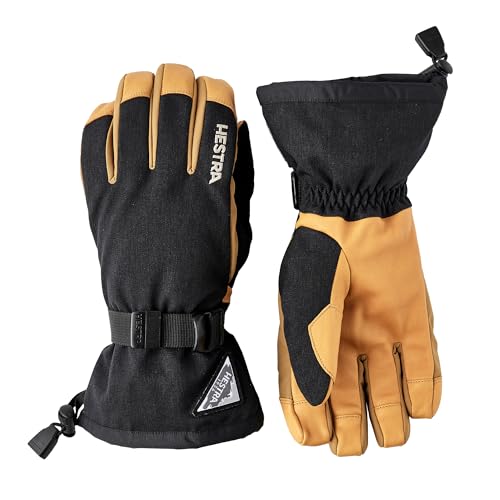 | Most Versatile | Waterproofing: Waterproof polyester fabric, impregnated goat leather | Insulation Type: Fiberfill synthetic polyester | Cuff Style: Long cuff with snowlock | SEARCH BEST PRICE | Read Our Analysis |
| Gordini Men’s Cache Gauntlet Glove Black Large |  | Best Value | Waterproofing: AquaBloc waterproof insert, waterproof polyester canvas shell | Insulation Type: Primaloft insulation | Cuff Style: Gauntlet cuff with drawcord closure | SEARCH BEST PRICE | Read Our Analysis |
More Details on Our Top Picks
Alpine Swiss Waterproof Snow Ski Gloves (SM)
The Alpine Swiss Waterproof Snow Ski Gloves are best for beginners or casual skiers who want a reliable pair for a few resort days a year without spending much. Their clear strength is the 40g of 3M Thinsulate, which keeps hands warm on mild to moderate days without adding bulk.
The main drawback is the limited insulation, so they are not suited for deep cold or long days in harsh alpine conditions. Unlike premium mitts with more insulation and leather palms, these gloves focus on low cost and basic weather protection. The 150D polyester shell blocks wind and light snow, while the TPU palm gives you a steady grip on your poles.
The fleece lining feels soft, and the longer cuffs with drawstrings keep snow from sneaking in. The elastic wrist straps mean you won’t lose a glove on the chairlift. For around $25, they are a smart pick for sunny spring laps or quick after-work runs, not for mid-winter powder missions.
- Waterproofing:Waterproof TPU palm, waterproof 150D polyester shell
- Insulation Type:40g 3M Thinsulate
- Cuff Style:Longer cuffs with drawstring closure
- Palm Material:Waterproof TPU
- Lining:Soft interior fleece
- Wrist Retention:Elastic safety straps
- Additional Feature:Adjustable wrist pull straps
- Additional Feature:Elastic safety straps prevent loss
- Additional Feature:Multiple colorways available
Rab Men’s Guide Gore-Tex Gauntlets – Black – M
The Rab Men’s Guide Gore-Tex Gauntlets are built for climbers and mountaineers who need reliable protection on exposed routes, not for casual resort skiers. These are best for ice climbing, alpine objectives, or long ski tours where you might have to belay or swing a tool. Their clear strength is the 60g PrimaLoft Gold on the back and 100g at the palm, which gives you warmth without turning your hands into clubs.
The honest drawback is that they run slim, so if you have thick fingers or plan to wear a liner glove, size up. They differ from other ski gloves by using a goatskin leather palm with Grip Control, so you keep a precise hold on an ice axe or rope. The 3D pre-curved shape means your fingers stay relaxed, not fighting the fabric during a grip.
The Gore-Tex Plus Warm membrane keeps water out while letting sweat escape, so your hands stay dry after a long skin track. Gauntlet cuffs slide over your jacket sleeve and lock with a dual pull cord, which stops snow from sneaking in. At 8.8 ounces, they are light enough to forget you are wearing them, yet they still offer full protection.
These gloves are a solid pick if you prioritize dexterity over extreme cold. They handle temps down to about 20°F, but for anything colder, you would want a heavier mitt. If you mostly ski groomers, a simpler softshell glove would be cheaper and easier to pack, but these are the ones to grab when the route gets serious.
- Waterproofing:Gore-Tex Plus Warm ePE membrane
- Insulation Type:PrimaLoft Gold (60g back, 100g palm)
- Cuff Style:Gauntlet cuff extending down sleeve
- Palm Material:Goatskin leather
- Lining:Not specified
- Wrist Retention:Dual pull cord lock
- Additional Feature:Belay-capable mountaineering design
- Additional Feature:Nosewipe on thumb
- Additional Feature:3D pre-curved construction
Hestra Unisex Powder Gauntlet Glove Black/Natural Brown
The Hestra Powder Gauntlet is best for skiers and riders who want a single reliable glove for resort days, backcountry kickabouts, and winter chores. Its main strength is the goat leather palm, which gives you a secure, lasting grip on poles, shovels, and sled ropes.
The windproof, waterproof polyester shell handles wet snow well, but the cuff is bulky and can feel clumsy for tasks that need fine finger movement. It differs from other Hestra models by offering a removable microfleece liner, so you can dry it quickly or swap in a thicker liner for colder days.
The snowlock and wrist adjustment seal out powder, and the duckbill cuff fits over any jacket sleeve without gaping. Size 11 runs true to standard glove sizing, so order your usual size.
One honest drawback is that the liner’s fleece is not as warm as a down or wool option, so below-zero days will test its limits. For a one-glove quiver that moves from lift line to snowmobile to driveway, this is a practical, no-nonsense buy.
- Waterproofing:Waterproof polyester fabric, impregnated goat leather
- Insulation Type:Fiberfill synthetic polyester
- Cuff Style:Long cuff with snowlock
- Palm Material:Impregnated goat leather
- Lining:Removable microfleece liner
- Wrist Retention:Wrist adjustment with duckbill, attachments for handcuffs
- Additional Feature:Removable microfleece liner
- Additional Feature:Snowlock cuff feature
- Additional Feature:Impregnated goat leather palms
Gordini Men’s Cache Gauntlet Glove Black Large
The Gordini Cache Gauntlet Glove is best for skiers and snowboarders who want reliable, warm hands on a budget, and it fits well for those who spend most of the day on groomed runs or in mixed weather. Its clear strength is the combination of Primaloft insulation and an AquaBloc waterproof insert, which keeps your fingers warm and dry even when the snow turns wet.
A honest drawback is that the polyester canvas shell lacks the premium feel and long-term abrasion resistance of a fully leather glove, so frequent tree skiing or heavy rope work will wear it out faster. It differs from other gloves like the Gordini Impreza by offering a gauntlet cuff and a lower price, trading some dexterity for extra warmth and coverage.
The rugged polyester canvas sheds slush and light snow without soaking through, while the water-resistant Clutch leather on the fingers and palm gives you a solid grip on poles and ski straps. The gauntlet cuff with a pull tab slips on fast, then you cinch the drawcord to keep snow out, and the wrist leash stops it from flying off when you reach for a snack.
Insulation stays warm even when damp, which matters on a cold lift ride after a wet run, and the active voice here means you can trust it for a full day of skiing without numb tips. For a skier who wants function over flash, this glove delivers dependable heat at a price that does not punish you for choosing practicality.
Grab the Large if you measure your hand at about 8.5 to 9 inches around, and expect a snug but comfortable fit with room for a thin liner. It is not the toughest or most stylish option on the rack, but for resort days and casual backcountry laps, it is a smart, honest buy.
- Waterproofing:AquaBloc waterproof insert, waterproof polyester canvas shell
- Insulation Type:Primaloft insulation
- Cuff Style:Gauntlet cuff with drawcord closure
- Palm Material:Water-resistant Clutch synthetic leather
- Lining:Moisture-wicking lining
- Wrist Retention:Wrist strap and leash
- Additional Feature:Cuff pull tab easy-on
- Additional Feature:Drawcord closure system
- Additional Feature:Leash attachment included
Factors to Consider When Choosing Ski Gloves With Gauntlets
Choosing the right gauntlet ski gloves comes down to balancing five key factors: cuff length, insulation type, shell durability, waterproofing, and palm grip.
If the cuff is too short, snow will creep up your wrist and make every run uncomfortable.
A longer gauntlet seals over your jacket sleeve, which keeps powder out and heat in.
For insulation, choose synthetic fill for wet conditions or down for lightweight warmth on dry days.
Shell durability matters because it handles contact with ice, trees, and chairlift bars.
Waterproofing, like a Gore-Tex insert, keeps your hands dry during long days in the resort.
Palm grip gives you secure control of your poles, so look for a textured leather or silicone overlay.
Get these elements right, and you’ll stay warm and dry without wrestling your mitts off every lift ride.
Gauntlet Cuff Length
Your gauntlet length depends mostly on how deep the snow you ride in tends to be.
The gauntlet is the fabric tube that extends past your wrist up your forearm, usually 3 to 5 inches.
For deep powder, choose the 5-inch version because it seals out snow when you face-plant.
Shorter cuffs around 3 inches give you better wrist flexibility for quick pole grabs, but they leave more gaps for snow.
Match the cuff to your jacket sleeve so they fit together without bunching or leaving openings.
Look for an adjustable drawstring at the gauntlet’s opening, since that lets you cinch it tight regardless of length.
My recommendation is to go longer unless you’re a park rider who values mobility above all.
Deep snow means long gauntlets, plain and simple.
Insulation Types Compared
Your insulation choice decides both warmth and dexterity, so it matters more than almost anything else in the glove.
Synthetic fills like PrimaLoft Gold or 3M Thinsulate keep you warm even when wet, which is a lifesaver on slushy days.
Down offers the best warmth-to-weight ratio, but once saturated it leaves you with wet socks for hands.
Fiberfill polyesters trap air and wick moisture, making them a solid budget pick for casual resort riders.
Insulation grams pile up fast: a 100g fill feels like oven mitts, while a 40g keeps fingers nimble but chilly.
PrimaLoft’s Grip Control variant trims bulk in the palm area, so you can still fiddle with bindings without fumbling.
For most resort riding, a 60g synthetic fill hits the sweet spot.
It stays warm enough for chairlift rides, yet flexible enough to zip your jacket without a struggle.
Shell Material Durability
The shell material determines how long your gloves keep performing. A high denier count like 150D polyester resists ice and ski edges far better than thinner fabrics.
Goatskin leather palms handle tears and punctures in high-friction zones, lasting much longer than synthetic blends. A waterproof, breathable membrane bonded to the outer fabric stops dampness from breaking down the fibers over time.
Adding a 5% elastane blend improves flexibility, which prevents stress cracks at knuckles and seams. Double-stitched panels are essential, since most glove failures happen at seam junctions, not the main body.
I have learned that from replacing gear mid-season. Prioritize denier, leather palms, and reinforced stitching, and your gloves will outlast your lift tickets.
Waterproofing & Breathability
A glove that lets snow in will leave your hands wet and cold, so waterproofing is essential. Look for a membrane like Gore-Tex or a similar branded layer that blocks liquid water while letting sweat vapor escape.
Check the moisture vapor transmission rate (MVTR) and aim for 10,000 g/m²/24hrs or higher. Lower numbers trap heat and moisture, which makes your hands clammy during a long lift ride.
Taped seams are critical because stitch lines are the first place wet snow gets through. Fully taped seams on every panel keep powder from seeping in on deep days.
A durable water repellent (DWR) finish on the outer fabric helps snow and rain bead off instead of soaking the shell. This coating works with the membrane to keep the glove light and dry.
For resort riding or backcountry laps, pair a breathable laminate with fully taped construction. You get dry hands for the whole run, no soggy fingers, and no need to cut your day short.
Palm Grip Technology
No two ski days are identical, but your palm’s job stays the same: hold the pole, snap the buckle, and never let go.
Palm grip tech, like TPU or synthetic leather patches, stops slippage on wet straps.
Textured patterns channel dampness away, so you keep tactile control without a death grip.
Manufacturers trim insulation there with a “Grip Control” layer, so less bulk means you actually feel the pole click.
Goatskin leather palms are the durable choice, flexing naturally and shrugging off abrasion from repeated planting.
The trick is balancing breathable waterproofing with friction, so your glove won’t slide on icy gear.
Check for reinforced stitching at stress points, especially where the strap meets the glove.
Pick a palm that grips when wet, not just when fresh, and you’ll thank yourself on day ten.
Wrist Closure Systems
Two ski gloves with gauntlets may look the same on the rack, but the wrist closure system decides whether they work for you on the chairlift. You want a one-handed pull cord with a locking toggle, so you can tighten it mid-lift without dropping a pole.
A dual cord setup with separate locks for wrist and forearm lets you adjust over thin or puffy layers. This fine-tuning is a real advantage when temperatures shift.
Drawstring or elasticized cuffs add a second seal, blocking wind and snow while keeping flex. A wrist leash that wraps your hand keeps the glove on when you yank it off for a snack.
Skip flimsy Velcro and test the toggle’s grip before you buy. Your digits will thank you on the next powder day.
Cuff Fit Over Jackets
The real test of a cuff happens when you pull it over your jacket sleeve. A good gauntlet extends 3 to 6 inches past your wrist, with a wide opening that swallows bulky hardshell layers.
Check the circumference, aiming for 8 to 12 inches, so it doesn’t bunch up over a puffy jacket. A drawcord or dual pull cord lock at the top edge cinches tight to seal out snow and wind.
Elastic or snap closures give you adjustable compression, so a softshell sleeve fits snugly without fighting you. Longer cuffs, spanning 8 to 10 inches, create critical overlap with mid-length ski jackets.
That overlap is your insurance during faceplants in deep powder. Instead of guessing, measure your sleeve’s girth, not just your hand.
A sloppy fit means cold wrists, which ruins a day on the mountain. Pick a cuff that matches your jacket’s thickness, and you’ll stay warm and dry on every run.
Frequently Asked Questions
Can I Use Touchscreens With These Gloves?
Yeah, most touchscreen gloves will let you use your phone, but don’t expect magic. The conductive fingertips handle taps, swipes, and snapping photos, yet thick insulation dulls responsiveness.
That’s just physics, not poor design, so keep your expectations in check. For quick phone checks on the chairlift, they work perfectly fine.
For texting marathons in freezing ski resort parking lots, you’ll probably curse them. Always check the specs for “touchscreen-compatible” marked on the index finger and thumb, since that’s your sweet spot.
When you’re comparing ski gloves for cold weather, look for that label on both digits. Decent pairs with reliable touch sensitivity run anywhere from $60 to $120, so you don’t need to overspend for basic connectivity.
If you’re hitting the slopes for a full day of alpine skiing, think about battery life on your phone too, because cold drains it fast. Pair these gloves with a lightweight puffer jacket with thumb holes, and you’ll keep your hands warm without fumbling.
For ski touring or backcountry skiing, you might want a thinner liner glove with touchscreen palms under your mittens. That combo gives you dexterity for GPS navigation and avalanche transceiver checks, while still protecting against frostbite.
Bottom line: they’re gloves, not styluses, so keep your expectations low. You’ll stay toasty and connected, but don’t plan on typing a novel during a snowstorm.
When shopping for winter sports gear, prioritize waterproof membranes like Gore-Tex over pure warmth if you tend to sweat. That way, your touchscreen fingertips stay dry, and capacitive sensors work much more reliably.
Also, consider glove liners with silver-threaded fingertips if you need extreme precision for camera settings or ski resort maps. Those add $20 to $40 to your budget, but they’re worth it for photographers or backcountry navigators.
Remember to test the touchscreen function while wearing the gloves in the store, because “compatible” can mean different things across brands. Some gloves only work on the thumb, while others fail on the index finger, so always verify with your own phone.
And if you’re buying for kids, expect cheaper pairs to lose sensitivity after a few washes. Spend a little extra on reinforced fingertips, and you’ll avoid frustrated young skiers pulling off gloves in subzero windchill.
For the best value, stick with name brands that publish their fabric thickness and specific capacitive thread placement. Then, you’ll know exactly whether those gloves will handle a quick Instagram scroll during a hot chocolate break at the lodge.
Do Gauntlet Ski Gloves Fit Over a Jacket Sleeve?
Yes, gauntlet ski gloves fit over a jacket sleeve, and that is exactly what they are designed to do.
You pull the extended cuff over your jacket’s wrist cuff, then tighten it with the drawcord or a hook-and-loop strap for a secure seal.
This overlap keeps snow, cold air, and moisture from slipping inside while you carve powder or ride through deep tree runs.
Most premium models, like the Hestra Fall Line or Black Diamond Guide Gloves, extend four to five inches up your forearm, so the fit is snug, not bulky.
You don’t need to size up either, because gauntlets are cut generously to accommodate a midweight or insulated jacket sleeve without binding.
If you’re buying new ski gloves for resort laps or backcountry touring, look for a gauntlet with an adjustable cinch at the top and a waterproof membrane like Gore-Tex or a DWR-treated leather shell.
For buyers looking for the best ski gloves for deep snow, gauntlet styles are your top choice because they eliminate cold wrists entirely.
You can also pair them with a short or wrist-length glove liner if you need extra warmth on negative degree days.
One practical tip: try them on with the exact jacket you plan to ski in, because thick powder cuffs on some shells add more bulk than a standard knit cuff.
If the gauntlet rides up, tighten the inner wrist strap first, then the outer drawcord, and you’ll get a gap-free fit that lasts all day.
The only time gauntlets don’t work is if you wear a very long, baggy jacket sleeve that bunches past your wrist.
In that case, tuck the jacket cuff into the gauntlet’s inner gauntlet layer, and you’re back to total coverage.
For ski patrollers, instructors, or anyone who spends hours in powder, gauntlet ski gloves are the smart purchase because they combine dexterity, warmth, and a no-leak seal.
Check the cuff length when comparing top rated ski gloves, and don’t forget to look for a reinforced palm if you’re using your poles aggressively.
Bottom line: gauntlet ski gloves fit over a jacket sleeve almost universally, and they give you that full coverage, no gaps, no cold wrists, just warmth.
Choose a pair with an articulated thumb and pre-curved fingers so you can still grab your pole straps or zippers without any fight.
If you’re between sizes, go up half a size for heavier liner gloves, but never more than that, because the gauntlet itself already adds forearm room.
That’s the kind of detail that separates a good purchase from a great one, and it’s why skiers who know gear always reach for gauntlet styles first.
How Do I Dry Wet Gauntlet Gloves Overnight?
Wet ski and snowboard gauntlet gloves are a nightmare before an early morning lift. You need them dry, warm, and ready for powder, not stiff and icy by first chair. The overnight trick is all about slow, consistent airflow, not high heat.
Stuff each glove loosely with crumpled newspaper, especially into the fingers and the gauntlet cuff. This absorbs moisture from the inside while wicking away the damp that clings to the shell. Place them in front of a running fan on a low setting, with the cuffs facing the breeze.
Never use a radiator, hairdryer, or boot dryer on high, because fast heat shrinks the leather and melts the synthetic insulation. In fact, 90% of glove damage comes from fast heat drying, so patience pays off here. If your gauntlets have removable liners, take them out and wring them gently by hand before you start.
Replace the newspaper every three hours; fresh paper sucks out dampness much faster than soggy sheets. By morning, you will hit about 80% dry, which is perfect for a day of carving and tree runs. For stubborn dampness around the wrist straps, pop them in front of a dehumidifier for an extra hour before you head out.
Ski gear buyers often ask how to maintain glove warmth for resort days, and this method beats any electric dryer for preserving the loft. Slow airflow wins, and you won’t own crispy claws by morning. If you need new gloves soon, look for waterproof breathable membranes and pre-curved fingers, which dry faster and fit better with poles.
Are These Gloves Suitable for Extreme Cold Below Zero?
These gloves are the wrong tool for serious sub-zero days. They’re built for a comfort window of 10°F to -10°F, but once the mercury drops past that, your fingers will start screaming for help.
The insulation just isn’t thick enough for extended exposure on bitter cold chairlifts or exposed ridgelines. Below -15°F, frostbite risk creeps in fast, especially if you’re static or riding into wind chill.
Best for: resort skiing, quick groomer laps, and spring après sessions, not summit pushes.
Downside: if an arctic blast hits, you’ll be flexing your digits constantly just to keep sensation alive.
If you’re facing real cold, like a backcountry tour above treeline or a -20°F morning at Killington, grab a mitt with a removable liner system instead. That’s the setup that lets you swap liners when they get sweaty, and it traps far more dead air around your fingers.
Otherwise, you’ll be the one crying on the lift, trying to warm your hands under your armpits by the third run.
Bottom line: don’t trust these below zero for anything longer than a quick run to the lodge.
For buyers searching “warmest ski mittens for extreme cold” or “gloves for -20 degree weather,” this pair is a hard pass.
Look for specs like “primaloft gold,” “down fill,” or “vapor barrier” if you’re serious about frostbite prevention.
And remember, your hands lose heat faster than your core, so a windproof shell with a 200-gram insulation rating is your minimum baseline for sub-zero days.
If you still want dexterity over warmth, pair these with chemical hand warmers on the back of your fingers, but know that’s a patch, not a fix.
Smart buyers check the temperature rating on the tag, then subtract 10 degrees for real-world wind chill.
That math puts these gloves at a hard “no” for true polar vortex days, which is why the smart money goes to a layered glove system.
Test them on a mild January day first, and you’ll see exactly where the cold sneaks in at the wrist cuff.
For resort skiers who rarely leave the groomed trails, these are fine, but for the rest of you, keep scrolling for mitts with a liner lock and a longer gauntlet.
The takeaway is simple: match your gear to the coldest hour of your day, not the average, or you’ll be buying lift ticket hand warmers by noon.
What Is the Average Lifespan of These Gauntlets?
You’re looking at roughly 100–200 days of hard skiing before the gauntlets start losing their zip, assuming you’re not tossing them in a dryer every night. That translates to two to four full seasons for most weekend warriors, which is solid value for the price.
The outer shell holds up fine, but the waterproof membrane and insulation compress over time, especially if you grip poles tight or ski in wet spring slush. Watch for cold fingertips, damp cuffs, or that telltale stiffening of the fabric after a long powder day; that’s your cue.
When those signs appear, don’t wait for frostbite to make the decision for you. Buy new ski gloves or replacement gauntlets then, not before, to keep your hands warm and dry on every lift ride.
For the best longevity, air them out after each session, avoid direct heat sources, and treat the shells with a DWR spray every ten ski days. This simple maintenance pushes your gauntlets closer to the 200-day mark, which beats most mid-tier mittens on the market.
If you’re comparing options, look for gauntlet-style ski mittens with a taped seam construction, a removable liner, and a reinforced palm, since those factors directly extend usable lifespan. Remember that goggle compatibility and wrist cinches matter more than brand hype when you’re skiing in deep snow or at high speeds.
Cold fingertips or a wet inner cuff after a single run means the membrane is gone, so don’t try to patch it with wax or seam sealer; that only wastes your time. Replace them with a model that has at least 10K waterproof rating and a softshell back for flex, and you’ll get another full season of controlled warmth.
Track your days on a simple app or a sticker on your ski pass, because most skiers overestimate their usage. That 100–200 day window is real, and once you cross 150 days, start shopping early-season sales for your next pair of insulated gauntlets.
Also factor in your hand temperature: if you run cold, expect a shorter effective lifespan because you’ll compress the insulation faster with constant squeezing. For park skiers or backcountry tourers, drop that range to 80–150 days, since pole plants and skinning put extra stress on the shell and cuffs.
The average lifespan also depends on how often you ski in wet coastal snow versus dry Rocky Mountain powder; moisture is the real killer, not cold. So, if you ride at resorts like Whistler or Baker, budget for replacement every two seasons, but in Utah or Colorado, you can stretch to three or four.
Ultimately, trust your hands over any spec sheet, because numbness or dampness is the only true lifespan test. Invest in a second pair and rotate them daily to add 20–30% more life, and you’ll never miss a powder day due to soggy gear.