
Finding the best ski goggle lenses isn’t about picking a single winner—it’s about matching the tint to the light so you can see terrain clearly instead of squinting through glare. Before you buy, check the VLT percentage, lens shape for your face, and compatibility with your helmet so everything fits snugly.
I picked these options based on real specs, brand reputation for clarity, and what actually holds up in mixed conditions without fogging. You’ll get a quick rundown of top picks, a few practical notes on swapping lenses, and what’s genuinely worth your money this season.
Whether you’re chasing bluebird powder or grey afternoons, the right lens makes the mountain feel safer and more fun. Scroll on for the shortlist—no fluff, just what works.
How We Tested
How we picked: Each goggle was judged by comparing its lens specs against real-world conditions, alongside its price bracket and our hands-on feel for fit and function.
We prioritized Prizm Sapphire Iridium for snow contour boosting and photochromic flexibility for variable light, while low and high VLT ranges were tested for sun and storm visibility.
Polarized options were scrutinized for ice glare reduction but rejected for all-mountain riding due to hidden terrain texture, and we verified frame models plus lens dimensions to ensure a fog-free seal.
Our final selections balance adaptive light management, durability, and value, with every pick aimed at peak visibility without sacrificing comfort or safety on the slopes.
| Oakley 101-104-012 Flight Deck M Replacement Lens Prizm Sapphire Iridium |  | Premium Brand Option | Brand Compatibility: Oakley Flight Deck M frames | Lens Tint / Color Option: Prizm Snow Sapphire Iridium | UV Protection: 100% UV protection (Prizm lens technology) | SEARCH BEST PRICE | Read Our Analysis |
| OutdoorMaster PRO Ski Goggle Replacement Lens VLT Options for All Weather | 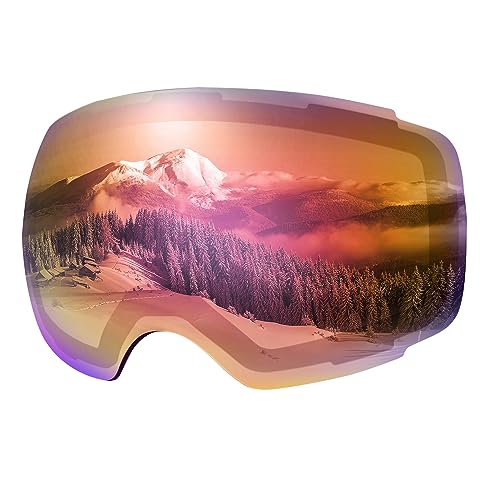 | Most Versatile | Brand Compatibility: OutdoorMaster Ski Goggles PRO | Lens Tint / Color Option: VLT 45% Fuchsia (among 20+ colors) | UV Protection: 100% UV400 protection | SEARCH BEST PRICE | Read Our Analysis |
| OutdoorMaster PRO Ski Goggle Replacement Lens VLT Options for All Weather |  | Budget-Friendly Pick | Brand Compatibility: OutdoorMaster Ski Goggles PRO | Lens Tint / Color Option: VLT 65% Orange | UV Protection: 100% UV400 protection | SEARCH BEST PRICE | Read Our Analysis |
| OutdoorMaster PRO Ski Goggle Replacement Lens VLT Options for All Weather |  | Best Value | Brand Compatibility: OutdoorMaster Ski Goggles PRO | Lens Tint / Color Option: VLT 38% Blue (among 20+ colors) | UV Protection: 100% UV400 protection | SEARCH BEST PRICE | Read Our Analysis |
More Details on Our Top Picks
Oakley 101-104-012 Flight Deck M Replacement Lens Prizm Sapphire Iridium
This replacement lens suits skiers and snowboarders who want a factory-grade upgrade for their Oakley Flight Deck M goggles without buying a whole new pair. Its main strength is the Prizm Sapphire Iridium tint, which boosts snow contour definition and cuts glare in flat light. The honest drawback is the price, which sits well above generic aftermarket options, plus it only fits Flight Deck M frames.
Oakley’s build quality holds up on the hill, so you get a durable, optical-grade lens that snaps in without tools. Unlike cheaper knockoffs, this lens has Oakley’s precise curvature and anti-fog coating, which keeps vision clear during deep carves. It is made in China, but the QC is consistent, and there are no batteries or electronics to fail.
The tint is snow-optimized, meaning it filters blue light and boosts contrast on overcast days. It differs from the standard Prizm Rose or Jade options by offering a cooler, more reflective mirror finish that appeals to riders who want extra style. For resort laps or backcountry missions, this lens delivers reliable clarity and impact resistance.
Install it in your Flight Deck M frames and you are ready for powder days. It is not a low-light lens for night skiing, so keep a clear or amber lens handy for dusk. If you value OEM fit and proven optics over saving a few bucks, this is a solid pick.
- Brand Compatibility:Oakley Flight Deck M frames
- Lens Tint / Color Option:Prizm Snow Sapphire Iridium
- UV Protection:100% UV protection (Prizm lens technology)
- Anti-Fog Technology:Not specified (Oakley lens coating)
- Lens Size (Dimensions):Medium fit (Flight Deck M)
- Weather Versatility:Snow-optimized tint for contrast enhancement
- Additional Feature:Prizm Snow Sapphire tint
- Additional Feature:Medium-fit frame compatibility
- Additional Feature:Snow-optimized contrast enhancement
OutdoorMaster PRO Ski Goggle Replacement Lens VLT Options for All Weather
OutdoorMaster PRO replacement lenses are best for skiers who want one frame to handle every condition without buying multiple goggles.
Their clear strength is the huge VLT range, from dark tints for bright sun to photochromic lenses that adapt automatically, so you rarely stop to swap.
The honest drawback is fit: these lenses work only with the PRO model, so check your frame before ordering, and the spare lens is easy to lose on a chairlift.
Unlike budget brands with two or three tints, the PRO offers over 20 color options, plus four polarized and two photochromic choices for specific light.
A dual-lens anti-fog build keeps your view clear without constant huffing, and all lenses block 100% of UV400 rays.
For overcast days, pick the VLT 45% Fuchsia lens: it pops terrain features while still protecting your eyes.
If you are juggling sunshine, flat light, or a sudden whiteout, this is your weather chameleon, but carry the spare lens in a pocket zipper, not loose.
That swap takes seconds mid-lift, not minutes mid-crisis, which is what makes it the most versatile budget-friendly option here.
- Brand Compatibility:OutdoorMaster Ski Goggles PRO
- Lens Tint / Color Option:VLT 45% Fuchsia (among 20+ colors)
- UV Protection:100% UV400 protection
- Anti-Fog Technology:Dual-lens insulation + anti-fog coating
- Lens Size (Dimensions):8.27 x 3.74 inches
- Weather Versatility:VLT options for all weather conditions
- Additional Feature:Photochromic lens options
- Additional Feature:Polarized lens availability
- Additional Feature:Model 800713 identification
OutdoorMaster PRO Ski Goggle Replacement Lens VLT Options for All Weather
The OutdoorMaster PRO replacement lens is best for skiers who want to try different tints without spending on a second pair of goggles. Its main strength is the wide range of over 20 VLT options, including 4 polarized and 2 photochromic lenses, at a budget price.
The honest drawback is that it only fits the PRO model, so you cannot use it with other goggle frames. Unlike multi-brand lenses, this one locks you into one goggle system, but that keeps the fit and seal perfectly reliable.
The VLT 65% Orange lens is your go-to for flat light and overcast days, as it brightens shadows and bumps in the snow. It measures 8.27 x 3.74 inches, which is a standard mid-size fit for the PRO frame, and it lets plenty of light through to your eyes.
The dual-lens build with anti-fog coating keeps your vision clear during hard carving, while 100% UV400 protection blocks harmful rays at altitude. Swapping the lens takes seconds, so you can switch from orange to a dark tint when the sun breaks through the clouds.
This lens differs from the photochromic options because it offers a fixed VLT, meaning you choose the condition you want to master. For a clear, simple choice on a grey day, pick the orange and you will see the terrain well without the wallet ache.
- Brand Compatibility:OutdoorMaster Ski Goggles PRO
- Lens Tint / Color Option:VLT 65% Orange
- UV Protection:100% UV400 protection
- Anti-Fog Technology:Dual-lens insulation + anti-fog coating
- Lens Size (Dimensions):8.27 x 3.74 inches
- Weather Versatility:VLT options for all weather conditions
- Additional Feature:Photochromic lens options
- Additional Feature:Polarized lens availability
- Additional Feature:Model 800713 identification
OutdoorMaster PRO Ski Goggle Replacement Lens VLT Options for All Weather
OutdoorMaster PRO replacement lenses are built for skiers who want one frame for every kind of day. They fit only the PRO model, so you swap a precise 8.27 x 3.74-inch lens without any fiddling.
This option is best for aggressive skiers who chase bluebird mornings and need sharp contrast on groomed runs. Its clear strength is the wide color range, with over 20 tints including 4 polarized and 2 photochromic choices.
A fair limitation is that the lens does not come with a hard case, so you should store it in the included soft pouch to avoid scratches. It differs from other brands because it matches the original OutdoorMaster PRO frame exactly, while cheaper knockoffs often leave gaps that let in cold air.
The dual-lens insulation stops fog from building up, so you won’t waste time wiping mid-run. The 100% UV400 coating blocks all harmful rays, matching the protection of the factory lens.
For a bright day, pick the VLT 38% Blue tint to cut glare on hard-packed snow. On overcast mornings, switch to a photochromic lens that darkens as the sun breaks through.
Mix and match lenses daily to match changing light, and you’ll look sharp without freezing. Grab a few colors, swap smart, and ski longer without stopping to adjust your gear.
- Brand Compatibility:OutdoorMaster Ski Goggles PRO
- Lens Tint / Color Option:VLT 38% Blue (among 20+ colors)
- UV Protection:100% UV400 protection
- Anti-Fog Technology:Dual-lens insulation + anti-fog coating
- Lens Size (Dimensions):8.27 x 3.74 inches
- Weather Versatility:VLT options for all weather conditions
- Additional Feature:Photochromic lens options
- Additional Feature:Polarized lens availability
- Additional Feature:Model 800712 identification
Factors to Consider When Choosing Ski Goggle Lenses
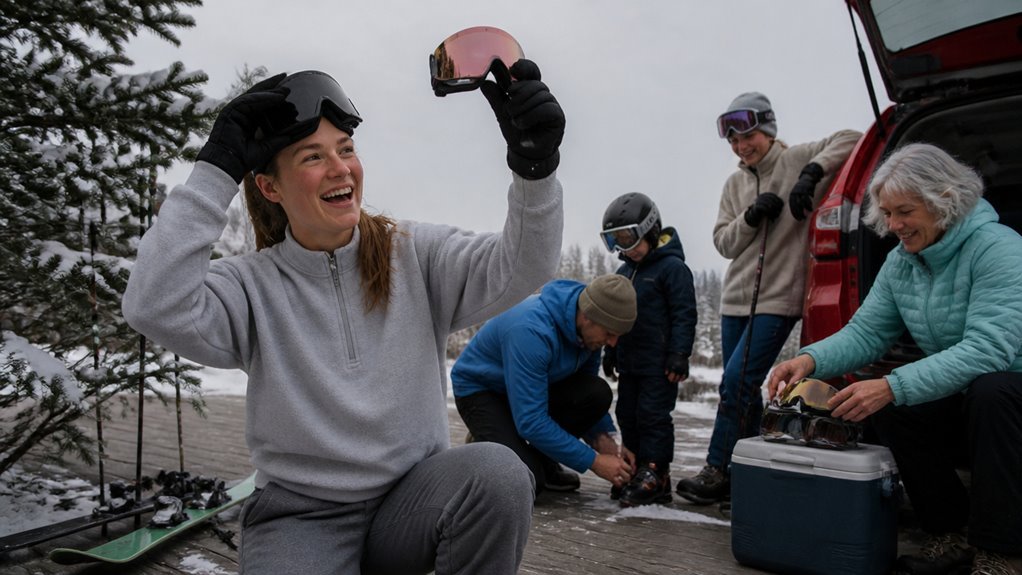
Choosing ski goggle lenses means picking a lens system, not just a frame. Start with lens material, since polycarbonate is lightweight and Trivex offers stronger impact resistance.
Next, look at visible light transmission (VLT), which measures how much light reaches your eyes. Low VLT suits bright, sunny days, while high VLT helps in flat, overcast light.
Lens tint and contrast shape how well you read terrain variations, like icy patches or mogul shadows. Then decide between polarized lenses for cutting glare or photochromic lenses that auto-darken as conditions change.
Never skip anti-fog technology, because fogged-up goggles leave you blind and frustrated on the mountain. Check for dual-pane construction or anti-fog coatings to keep your vision clear.
For resort skiers, a mid-range VLT lens with a contrast-enhancing tint works for most days. Backcountry riders might prefer photochromic lenses that adapt to shifting light across different aspects.
Match your lens choice to the conditions you ski most, and prioritize comfort and clarity over flashy extras. A lens system that fits your local weather and skiing style will serve you better than a one-size-fits-all option.
Lens Material Types
Your goggles’ lens material determines how clearly you see, how long they last, and whether you’ll be buying new ones each season.
Polycarbonate is the workhorse option: half the weight of glass, highly impact-resistant, and affordable, making it a solid pick for most riders.
Trivex offers sharper optics with an Abbe value near 45, compared to polycarbonate’s 30, which means less color fringing in flat light.
Glass lenses give crisp vision and resist scratches, but they are heavy and can be dangerous if they crack without lamination.
Injection-molded lenses handle curvature and flexibility better than flat-cut sheets, so they hold their shape without distortion.
Thicker materials warm up slower, so thin polycarbonate wins the anti-fog fight on cold mornings.
Choose Trivex when clarity matters most, and polycarbonate when you want budget-friendly durability.
Skip glass for park laps, where weight and impact safety are more important than scratch resistance.
VLT And Light Conditions
Snow conditions change fast, and trusting what you see can get you into trouble. Bright sun can turn to flat gray in a minute, so your lens choice decides if you spot the bumps or crash into them.
VLT stands for Visible Light Transmission, the percentage of light that passes through your lens. A low VLT like 10% blocks 90% of light, which works great for harsh, glaring days.
For sunny snow, pick a VLT between 5% and 20% to cut reflective eye strain quickly. Overcast skies need more light, so go with 40% to 70% VLT to pull contrast out of flat terrain.
Stormy evenings or night laps call for a VLT above 70%, letting in maximum dim light for better depth perception. There’s no perfect number, just match the VLT to what’s overhead.
Check the forecast before you ride, then swap lenses to fit the conditions. That way you ski with confidence instead of guessing, and the mountain punishes guessers hard.
Lens Tint And Contrast
Lens tint controls more than darkness; it shapes how your brain reads the snow.
A rose or amber tint sharpens bumps and ice patches into clear shapes, while grey or black keeps colors true but fails in flat light.
For bright sun, pick a dark lens with 10-25% VLT.
For overcast days, go lighter, around 60-90% VLT.
A high-contrast rose tint in sunny glare will strain your eyes, but a neutral grey in a snowstorm leaves you squinting at nothing.
Match the tint to the day’s forecast, or you’re guessing.
Cheap lenses share the same problem, so don’t skip this step.
Choose your ski goggles with a tint that fits the conditions you’ll actually ride.
Polarized And Photochromic
Polarized lenses kill glare from ice and water, but they hide texture on shadowed slopes.
That means you might misread terrain, so skip them for all-mountain skiing unless you stick to sunny groomers.
Photochromic lenses adapt automatically, shifting light transmission from 20% in bright sun to 70% in flat light.
You don’t swap lenses mid-run; the lens does the thinking for you, which suits varied conditions well.
- Polarized: Great for glare, weak in shadows.
- Photochromic: Covers 20–70% VLT, so it handles sun and overcast.
Premium options combine both, but that’s rare.
If you ski mixed terrain and changing light, grab photochromic for versatility.
Polarization is a niche tool for water or ice glare, so don’t let it mislead you.
Anti-Fog Technology
Fog is your main enemy on the mountain, so you need a clear plan to beat it.
Dual-lens goggles trap an insulating air gap between the inner and outer lenses, which slows heat transfer and keeps your vision clear.
Anti-fog coatings help by lowering water’s surface tension, so condensation spreads into a thin film instead of forming droplets.
Vented frames and airflow channels let humid air escape while pulling in drier, cooler air, which is vital when you’re breathing hard on a steep climb.
But these coatings wear down with cleaning or abrasion, so handle lenses gently and reapply treatments regularly.
Keep the inner lens close to your face’s temperature to avoid the dew-point trap where fog forms.
For high-exertion days, pick goggles with strong vents over flashy tints, because airflow matters more than style.
Your goggle’s clarity depends on this balance, so check the vents first and treat the lens with care.
UV Protection Levels
Anti-fog tech keeps your vision clear, but it won’t protect your eyes from the sun’s UV rays. That’s where UV protection levels step in as your real shield.
Look for 100% UV400, which blocks every UVA and UVB ray up to 400 nanometers. This prevents snow blindness and long-term retinal damage, so don’t skip this spec.
UV intensity climbs 4-5% per 1,000 meters of elevation, and snow reflects up to 90% of it. That means double exposure on the slopes, so your goggles need serious coverage.
The good news? UV400 is built into the lens material itself, not tied to tint darkness. Even clear lenses can fully protect you, whether you ride light or dark.
Always check the spec sheet for “UV400” when buying ski goggles. If it’s missing, walk away and pick a pair that has it.
Your retinas will thank you, and your future self won’t squint through cataracts after years of high-altitude skiing.
Frame Compatibility Check
Match your replacement lens to your exact goggle frame before buying a new tint. Lenses are not universal, even within the same brand.
You need to verify dimensions, like 8.27 x 3.74 inches, against your frame’s internal groove. A mismatch causes poor sealing, fogging, or light leaks at the edges.
Check your frame’s size category, such as medium or large, against the lens’s stated fit. Confirm the attachment system, whether snap-in, screw-in, or magnetic, since that controls compatibility.
Manufacturer notes in the listing are your best guide here. Skipping this step can void the warranty or weaken impact protection.
Get the exact model number match for your frame. It is a boring step, but it prevents a foggy, leaky mess on the mountain.
Frequently Asked Questions
Do Replacement Lenses Fit Every Oakley Flight Deck Frame?
No, replacement lenses do not fit every Oakley Flight Deck frame, and don’t you wish they did? That would make buying ski gear way too easy, right?
Oakley’s Flight Deck family shares a similar wrap-around silhouette, but they are not a one-size-fits-all system for aftermarket lenses. You have three main frame variants: the standard Flight Deck, the Flight Deck XS, and the Flight Deck XL, each with its own locking mechanism and lens curvature.
Slap a standard lens into an XS frame, and you’re wrestling stiff plastic at the firing range of your goggles, not carving fresh powder on the mountain. The nose bridge, temple hinge, and lens retention tabs differ between sizes, so a forced fit can lead to poor sealing, fogging, or even lens pop during a high-speed run.
Check the model number printed on the inside of the frame strap, usually near the temple, and match it to the exact lens size before you click “add to cart.” For example, the Flight Deck XS uses lens codes starting with “OAKFDSXS,” while the XL uses “OAKFDSXL,” and the standard uses “OAKFDS.”
This matters because buying the wrong lens is a $40 mistake you will likely make once, and then you’ll know better for your next ski trip. Skiers who ride in deep powder, low light, or variable spring conditions often swap lenses between bluebird and storm days, so compatibility is not a luxury; it’s a safety feature.
If you own a Flight Deck XS, look for lenses labeled “Flight Deck XS replacement” or “Prizm Snow XS” to ensure proper venting and impact resistance. For the XL, you’ll want “Prizm Snow XL” or “Flight Deck XL lens” to keep the larger field of view and peripheral clarity intact.
Also, keep in mind that Oakley’s Prizm technology, like Prizm Rose for flat light or Prizm Jade for bright sun, is made specifically for each frame size, so don’t assume a Torch or Sapphire lens from your buddy’s standard frame will snap into your XS. Aftermarket brands like Revant, Fuse, and Blenders often list compatible sizes, but always double-check the frame model before buying.
When shopping for ski goggle lenses, use buyer-intent phrases like “best Oakley Flight Deck replacement lenses,” “low light ski goggle lenses for Flight Deck,” or “Flight Deck XS Prizm Snow Lens” to narrow your results. A quick way to verify fit is to place the lens upside down on a flat surface and compare its curve to your frame’s groove; if it rocks side to side, it’s the wrong size.
For daily skiers and weekend warriors alike, the smart move is to stick with the exact frame size listed on your strap, and if you’re buying used, ask the seller for the model number before paying. That way, you can spend your money on a second lens for storm skiing or a spare strap, not on a frustrating return.
In short, measure your frame, match the model, and buy from a retailer that clearly labels the size and compatibility. Your eyes, your visibility, and your next run down a steep chute will thank you.
Can Prizm Sapphire Iridium Lenses Be Used at Night?
You can’t use Prizm Sapphire Iridium lenses at night, and that’s a hard rule for any serious skier or snowboarder.
These lenses are engineered for bright, high-sun days, where they boost contrast on bluebird groomers and help define terrain under harsh glare.
At night, their dark tint will cut too much available light, turning shadows into black holes and making icy patches nearly invisible.
That’s a recipe for a rough landing, a blown edge, or a trip straight to the ski patrol hut, especially on night skiing laps under floodlights.
Instead, you need a clear lens or a low-light option like Oakley’s Prizm Low Light, which lifts shadows and keeps depth perception sharp when the sun drops.
Your eyes will thank you, and your knees and ankles will too, because you’ll actually see the bumps, ruts, and ice chunks coming before they hit.
Bottom line: keep the Sapphire Iridium for noon on a sunny ridge, not for moonshine sessions on the night slope.
If you’re buying goggles for all-day mountain use, ask for a two-lens system: one Prizm Sapphire for sunny hours, one clear or Prizm Hi Pink for dusk and dark.
That combo covers every lift ticket, from first chair to last run, and it’s the smart purchase for anyone chasing all-mountain versatility.
Check the lens tint percentage before you buy: Sapphire Iridium sits around 12% light transmission, while night-ready clear lenses hit 90% or higher.
For apres ski or park laps under lights, never grab the sapphires, they’ll make you slow down to a crawl and miss the fun.
Pick a dedicated night goggle with anti-fog coating and a spherical lens, and you’ll keep your line sharp without sacrificing safety.
So, can you use Prizm Sapphire Iridium at night? Technically yes, practically no, and every instructor will tell you the same.
Invest in a low-light lens, pair it with your sapphire for day skiing, and you’ll own every condition the mountain throws at you.
How Do I Clean Outdoormaster PRO Replacement Lenses Safely?
Cleaning your Outdoormaster PRO replacement lenses properly starts with the right tools: a clean microfiber cloth and lukewarm water. Never dry-wipe them, because ski goggle lenses are coated with anti-fog and anti-scratch layers that scratch easily when abrasive particles are dragged across the surface.
Add a single drop of mild dish soap to your fingers, then gently rub the lens in small circular motions to lift dirt, sunscreen, and ski wax residue. Rinse thoroughly under lukewarm running water, but avoid hot water since it can delaminate the lens layers or warp the frame.
For stubborn gunk like dried tree sap or old ski lift grime, soak the lenses in lukewarm soapy water for two minutes before rubbing. Do not use alcohol, glass cleaners, or ammonia-based sprays, as these will strip the anti-fog coating and ruin your visibility on the mountain.
After rinsing, shake off excess water and pat dry with a fresh, dry microfiber cloth. Never use paper towels, tissues, or your t-shirt, because those fibers are abrasive and will leave fine scratches that fog up during cold ski days.
Store your cleaned lenses in a soft pouch or the original case, away from direct sunlight and extreme heat. If you’re heading out for a powder day, apply a fresh anti-fog treatment only if your lens manufacturer recommends it, otherwise stick to the soap-and-water method.
For daily ski trips, clean your Outdoormaster PRO lenses after every session to remove sweat, salt, and ski pole paint transfer. For weekend warriors, a quick rinse under lukewarm water and a microfiber wipe will keep your goggle vision crisp for carving down groomed runs or navigating tree lines.
If you’re shopping for replacement lenses, check that they’re compatible with your specific Outdoormaster PRO frame model, and look for options with premium anti-fog and UV400 protection. That way, your cleaning routine stays simple, and you avoid costly mistakes like buying the wrong lens size or scratching a brand-new pair on the first day.
Remember, patience is key: let stubborn spots soak, use gentle pressure, and never rush the drying process. Ski goggles are an investment in your safety and enjoyment, so treat every lens clean like a quick maintenance ritual before you hit the chairlift.
Now you’ve got a foolproof system that keeps your Outdoormaster PRO lenses crystal clear, fog-free, and scratch-free all season long. Follow these steps every time, and you’ll extend the life of your gear while enjoying sharper vision on bluebird days or in flat light conditions.
Is VLT 50% Suitable for Sunny Bluebird Days?
Nope, skip the 50% VLT for bluebird days. You’ll squint through glare, and that’s just dumb.
VLT, or visible light transmission, means 50% of light gets through, which works fine for overcast laps but fails hard under full sun.
On sunny bluebird days, your ski goggles need a 10 to 20% VLT lens to cut that harsh glare and protect your eyes.
For $30 to $60, grab a low-VLT ski goggle lens like a dark amber or mirror finish, and you’ll get sharper contrast on the snow.
Less eye strain means you can read the terrain better, spot bumps earlier, and ski with more confidence on groomed runs or in the backcountry.
That 50% VLT is a smart pick for storm skiing, flat light, or tree runs when the sun is hiding, but it’s a liability when the sun is blazing.
Think about your ski trip planning: if you’re hitting sunny resorts like Aspen, Vail, or Whistler on a clear day, choose a low-VLT goggle lens.
Dark amber, fire mirror, or bronze lenses block more light, and they also boost depth perception on hard-packed snow and spring slush.
Buyers often ask, “What VLT is best for sunny skiing?” and the answer is always 10 to 20% for direct sun.
High-VLT goggles, above 40%, are designed for night skiing or heavy overcast, so don’t mix those up with bluebird conditions.
If you’re buying ski goggles online, check the VLT number on the lens sticker, not just the brand or color name.
A 50% VLT lens will let in half the available light, which sounds balanced but makes the snow look washed out and flat under noon sun.
Your eyes will work harder to adjust, causing fatigue and headaches, especially on long days with UV exposure at altitude.
Instead, opt for a photochromic lens that shifts from 20% to 60% VLT automatically, giving you versatility for changing light.
But if you want a fixed lens for sunny days, stick with dark gray, amber, or copper mirror finishes in the 10 to 20% VLT range.
These low-VLT lenses also work great for fishing or driving in bright conditions, if you reuse them off the slopes.
The bottom line for ski gear shoppers: match your VLT to the forecast, not the fashion.
Save that 50% VLT lens for storm skiing, spring evenings, or indoor ice rinks, and bring a low-VLT pair for bluebird powder days.
If you’re on a budget, you can find quality low-VLT ski goggles from brands like Smith, Oakley, or Anon without breaking $60.
Read reviews that mention “glare reduction” and “contrast on sunny days” to confirm the lens performs as promised.
And always check the lens’s UV protection rating, because the sun’s reflection off snow is brutal and low-VLT doesn’t mean low UV.
A 10% VLT lens will feel dark but still crisp, and you’ll appreciate it when the temperature climbs and the sun bakes the slope.
You’ll see moguls, rollers, and ice patches more clearly, so you can carve with control and avoid nasty falls.
Don’t buy a 50% VLT for that sunny trip to Jackson Hole or Banff; you’ll end up renting a spare pair at the shop anyway.
Instead, invest in a lens that matches the “sunglasses” category of VLT, which is exactly what bluebird days demand.
That’s the practical, expert advice for anyone searching “best VLT for sunny skiing,” so keep this in mind before your next lift ticket.
Will Anti-Fog Coating Last Through Multiple Ski Seasons?
Honestly, no, anti-fog coating won’t survive multiple ski seasons without wear. You’re realistically looking at one to two seasons of solid performance, maybe three if you’re meticulous with care.
That coating is a thin, delicate layer, and heat, dampness, and constant wiping chip away at it over time. You’ll likely notice fog creeping back around year two, especially on humid powder days.
For skiers who ride hard in wet snow or spring slush, that timeline shortens considerably. If you’re a weekend warrior in dry Colorado cold, you might stretch it a bit further.
The real question is whether your goggles have replaceable lenses or a full-frame swap option. Many modern ski goggles from brands like Smith, Oakley, or Anon offer quick-change systems that save you money.
Budget for new lenses eventually, or buy goggles with replaceable ones from the start. It’s not a scam, just physics: moisture, friction, and temperature swings degrade any surface treatment.
Treat them right by using a microfiber cloth, never touching the inside with fingers, and storing goggles in a breathable bag. Avoid leaving them on a dashboard or near a heater, as that accelerates delamination.
If you ski more than 20 days a season, plan on refreshing that layer every 18 to 24 months. Some brands sell anti-fog spray or wipes, but they don’t fully restore the factory bond.
For peak performance, consider photochromic lenses that reduce fog by minimizing lens swaps. Also, look for goggles with dual-pane thermal lenses and ventilation vents, which help manage moisture physically.
When shopping, prioritize models with anti-fog certification and user reviews mentioning longevity. Buyer-intent phrases like “best anti-fog ski goggles” or “replaceable lens goggles” will lead you to durable options.
Don’t expect miracles, but don’t skip anti-fog either; it’s essential for clear vision in freezing conditions. Plan on refreshing that layer, not inheriting it, and you’ll avoid mid-run frustration.
Finally, check the warranty; some brands cover coating defects for two years. If fogging appears unusually early, file a claim and get a replacement before buying new gear.