
The 4 Best Ski Phone Pouches That Keep Your Phone Safe on the Slopes aren’t just about warmth—fit and durability matter too.
If you’re tired of a cold, foggy, or dead phone after a run, check size, material, touchscreen compatibility, and leash or clip options before you buy.
We compared specs, rider feedback, and brand reputation to find options that balance warmth, durability, and price.
Below are the best supplies, helpful notes on seams and signal, and what’s worth buying for casual laps or extreme days.
How We Tested
We compared thermal insulation, waterproofing, drop protection, RF transparency, and secure fit across ski phone pouches. Products were chosen by comparing corresponding specs and appropriate price.
Chromium barriers limit battery drain in subzero temperatures, while sealed seams block snow, slush, and condensation. MIL STD 810 drop certification supports six foot falls on ice, and RF transparent materials keep cellular, GPS, and Bluetooth signals active.
For buyer intent, choose size by phone dimensions, case thickness, and closure fit for lift rides and backcountry laps. This comparison keeps your device safe on the slopes without overspending.
| Lyreh Thermal Phone Pouch with Carabiner (Grey) |  | Budget-Friendly Pick | Thermal Protection Range: Protects from cold and heat (unspecified range) | Drop/Impact Protection: Protects from minor bumps | Signal Connectivity: Not specified | SEARCH BEST PRICE | Read Our Analysis |
| PHOOZY Apollo Thermal Phone Case (Medium Silver) | 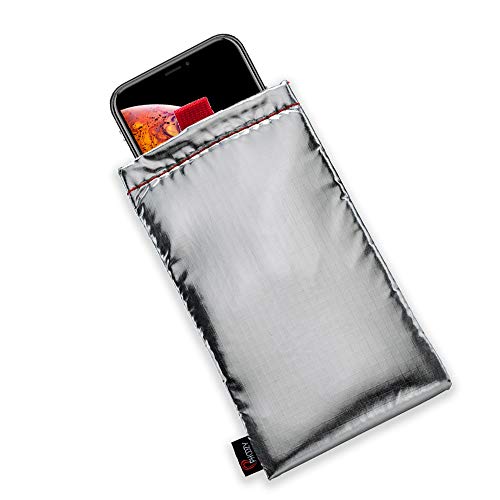 | Premium Durability | Thermal Protection Range: Maintains safe operating temperatures in direct sun | Drop/Impact Protection: Military-grade, up to 6 feet, exceeds military drop-test standards | Signal Connectivity: Zero interference with cellular, Wi-Fi, or Bluetooth | SEARCH BEST PRICE | Read Our Analysis |
| PHOOZY Orion Thermal Phone Pouch NASA Insulation |  | Best Overall | Thermal Protection Range: -40°F to 140°F | Drop/Impact Protection: Exceeds Military Standard 810 516.6 | Signal Connectivity: Full cellular, WiFi, and Bluetooth connectivity | SEARCH BEST PRICE | Read Our Analysis |
| PHOOZY Orion Thermal Phone Pouch (Black Camo) |  | All-Weather Workhorse | Thermal Protection Range: -40°F to 140°F | Drop/Impact Protection: Exceeds Military Standard 810 516.6 | Signal Connectivity: Full cellular, WiFi, and Bluetooth connectivity | SEARCH BEST PRICE | Read Our Analysis |
More Details on Our Top Picks
Lyreh Thermal Phone Pouch with Carabiner (Grey)
The Lyreh Thermal Phone Pouch with Carabiner (Grey) is best for budget conscious skiers who want cold weather protection without spending much beyond their lift pass. You get a no frills safeguard here, with a clear focus on keeping your phone useful on the slopes.
It weighs almost nothing and measures 18x11cm, so this compact sleeve slips into any pocket. The down cotton material does the main work by helping block the freeze and the heat, which can keep your battery from dying during a run.
It also shrugs off scratches, dust, and small bumps from the carabiner swinging around. The carabiner included lets you clip it to your pack for quick access on the chairlift.
The main limitation is that this basic sleeve has less padding than insulated phone cases, so a hard fall could still test your phone. It differs from pricier insulated cases by skipping extra padding and features to keep the price low.
Universal fit means most phones slide right in, and the design suits casual ski days when you want pure function. Choose this pouch if you want a simple phone sleeve for skiing and plan to spend your cash on apres ski after the slopes close.
- Thermal Protection Range:Protects from cold and heat (unspecified range)
- Drop/Impact Protection:Protects from minor bumps
- Signal Connectivity:Not specified
- Water Resistance:Not specified
- Phone Size Compatibility:Universal size fits most phones (18x11cm)
- Carrying/Accessory Option:Carabiner clip included
- Additional Feature:Down cotton material
- Additional Feature:Carabiner clip included
- Additional Feature:Prevents scratches/dust
PHOOZY Apollo Thermal Phone Case (Medium Silver)
The PHOOZY Apollo Thermal Phone Case is best for skiers and snowboarders who ski in blazing sun or bounce down icy chutes and exposed runs. Its main strength is the Chromium Thermal Barrier, a NASA spacesuit material that reflects solar radiation so your phone stays cool and your GPS keeps working.
This hard case seals out snow and survives a drop from 6 feet without a scratch, and it meets military standards. The main limitation is the higher price compared with a basic fleece pouch or soft phone sock.
Compared with a soft pouch, this model uses a rigid shell, a thermal barrier, and sealed ports to block snow and creek water. It slips onto iPhones, S23s, and Pixels without a bulky case, and it keeps full bars for calls or map checks.
The anti sink feature keeps the case afloat if you lose it in a creek, which helps on deep snow days near water. If you want one case that survives ski trips from the lift line to the lodge, grab this.
- Thermal Protection Range:Maintains safe operating temperatures in direct sun
- Drop/Impact Protection:Military-grade, up to 6 feet, exceeds military drop-test standards
- Signal Connectivity:Zero interference with cellular, Wi-Fi, or Bluetooth
- Water Resistance:Water-resistant
- Phone Size Compatibility:Interior 6.0 x 3.0 x 0.4 inches; fits iPhone 17, Galaxy S23, Pixel
- Carrying/Accessory Option:Not specified
- Additional Feature:NASA spacesuit technology
- Additional Feature:Anti-Sink technology
- Additional Feature:Six-foot drop certified
PHOOZY Orion Thermal Phone Pouch NASA Insulation
Skiers, snowboarders, and anyone who has watched a phone die on a chairlift will find a strong match in the PHOOZY Orion Thermal Phone Pouch. Its NASA grade insulation uses a Chromium Thermal Barrier from spacesuit tech, so your battery can last up to 4X longer in the cold.
It handles -40°F to 140°F, which helps you snap photos on the lift instead of facing a black screen. This pouch is best for powder chasers, lift riders, and winter travelers who need their phone to keep working.
The clear strength is cold weather battery protection in a pouch you can carry all day. The honest limitation is cost, because this pouch is pricey next to a basic phone sleeve.
Compared with a simple fleece pouch or a hand warmer, it adds waterproof sail cloth, weatherproof zippers, and drop protection beyond military specs. It fits phones up to 6.9 inches, plus a key fob or passport.
It also avoids signal blocking, so calls, maps, and Bluetooth work fine. If you chase powder or ride in extreme temps, this is survival gear for your phone.
- Thermal Protection Range:-40°F to 140°F
- Drop/Impact Protection:Exceeds Military Standard 810 516.6
- Signal Connectivity:Full cellular, WiFi, and Bluetooth connectivity
- Water Resistance:Waterproof three-layer laminate sail cloth
- Phone Size Compatibility:Fits phones up to 6.9 inches (iPhone 15 Pro Max, S24 Ultra)
- Carrying/Accessory Option:Not specified
- Additional Feature:AGION hygienic lining
- Additional Feature:4X longer battery life
- Additional Feature:Fits up to 6.9-inch
PHOOZY Orion Thermal Phone Pouch (Black Camo)
The PHOOZY Orion Thermal Phone Pouch in Black Camo is best for skiers, snowboarders, and winter riders who need a phone that keeps working on cold lifts and powder days. Its main strength is thermal protection from minus 40°F to 140°F, using NASA Chromium Thermal Barrier technology from spacesuits to help battery life stretch up to 4X longer in the cold.
It fits phones up to 6.9 inches, meets Military Standard 810 for drop protection, and keeps zero signal block so calls and maps still work. One honest drawback is that it adds bulk compared with a bare phone, which matters if you want a slim pocket carry or a light setup for mild weather.
Compared with a basic waterproof pouch, the Orion adds a thermal barrier from spacesuit tech and a rated drop standard for alpine days, resort laps, and sauna use. It also handles beach days and travel, so you can keep your phone close through cold snaps, hot cars, and wet snow.
If you ski hard, ride in deep winter, or just want one pouch for rough weather, grab the PHOOZY Orion before your next trip. It is overkill for mild powder days, and that extra margin is why you can stop worrying about your battery on the mountain.
- Thermal Protection Range:-40°F to 140°F
- Drop/Impact Protection:Exceeds Military Standard 810 516.6
- Signal Connectivity:Full cellular, WiFi, and Bluetooth connectivity
- Water Resistance:Waterproof three-layer laminate sail cloth
- Phone Size Compatibility:Fits phones up to 6.9 inches (iPhone 15 Pro Max, S24 Ultra)
- Carrying/Accessory Option:Not specified
- Additional Feature:Shark Tank validated
- Additional Feature:4X battery extension
- Additional Feature:AGION hygienic lining
Factors to Consider When Choosing Ski Phone Pouches
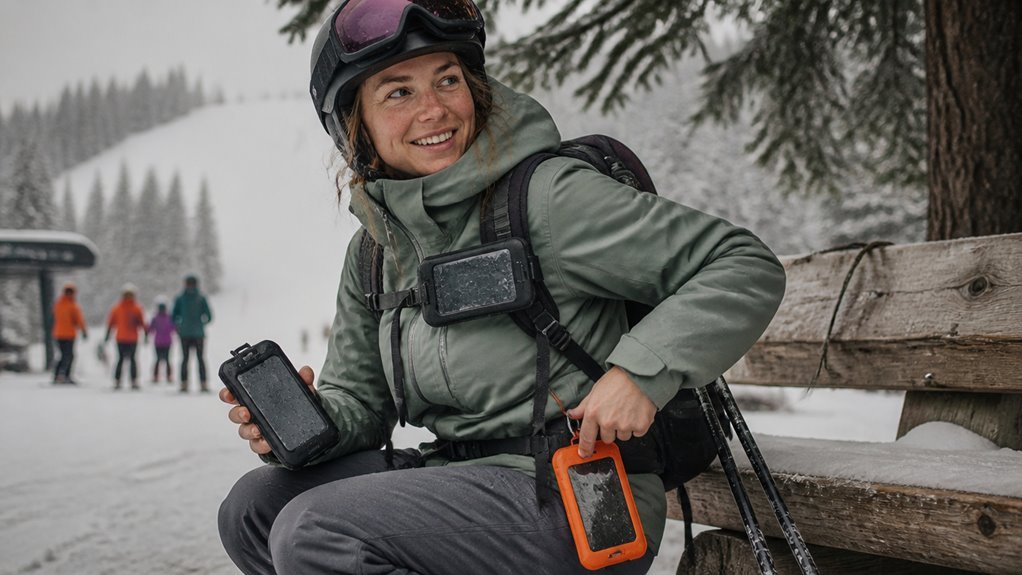
Before you buy a ski phone pouch, check five factors. They decide whether your phone works on the mountain or fails when you need it.
Thermal insulation protects your battery in cold weather. Impact standards show whether the pouch can handle a crash on the slopes.
Waterproofing keeps out wet snow and moisture. Size and fit make sure your phone stays secure and easy to reach.
Signal connectivity keeps your phone usable for calls, maps, and lift updates. Choose a ski phone pouch that covers all five points.
Then check these details against your phone model and how you ski. A good ski phone case should protect your phone and keep it ready on every run.
Thermal Insulation Technology
When you shop for thermal insulation for a ski trip, two numbers matter most: -40°F and 140°F. You will push your phone through both extremes on a powder day, from the chairlift to the summit, so choose a pouch rated for both.
Good pouches use chromium reflective layers from NASA spacesuit tech to bounce back cold and solar heat. The payoff is longer battery life, up to 4 times longer than an unprotected phone on the slope.
That extra power can be the difference between calling for a ride from the base lodge and needing help from ski patrol. When you duck into the lodge, the 140°F rating helps keep your device from overheating in a sunny window seat.
Military drop test standards mean the barrier should stay intact after a hard fall on ice near the lift line. Look for verified specs and clear temperature ratings when you compare pouches for your next ski day.
Buy a pouch rated for both extremes before you head to the mountain. Your phone’s lifeline depends on it.
Impact Resistance Standards
A ski pouch needs proven impact resistance to survive a ski trip. The standard to look for is MIL-STD-810 certification, which covers repeated drops from six feet onto concrete or ice.
Design matters for impact protection on lift days and powder runs. A rigid outer shell should work with an inner layer that absorbs shock and spreads the force before it reaches your screen.
Without that pair, a hard edge can crack your screen on a rough landing. Look for certification that covers multiple drops, because one lucky bounce does not prove real protection.
Moisture can weaken seals during impact, so check that the materials stay tight after a hit. If a pouch cannot handle a rock tossed from six feet, choose another model before your next powder day.
Pick a certified pouch and carry it with confidence for your next chairlift ride. That gives you one less thing to worry about on the mountain.
Waterproofing & Sealing
A ski phone pouch needs a strong zipper and sealed seams to keep snowmelt away from your phone. On a powder day you may fall into deep snow and then stuff the pouch into a jacket pocket, so the closure has to handle constant contact.
Look for weatherproof zippers with tight tolerances. They are your first defense against snow and ice during ski touring or lift laps.
Choose a three layer laminated sail cloth if you want better protection from mud and meltwater. A single layer fabric may wear through faster in rough use.
Check the seam sealing before you buy, especially if you expect heavy spray. A pouch that survives submersion will better protect your phone from humidity and condensation when it warms up in your pocket or pack.
Pay for a real seal. A weak zipper or open seam can turn a protected phone into a dead weight.
Size Compatibility Fit
Size compatibility decides whether your ski phone pouch works on the slopes. Measure your phone’s outside dimensions, including the case and screen protector, and compare them with the pouch’s listed interior measurements.
Ski phone pouches often fit phones up to about seven inches, but check depth too. A thick winter case or backup battery needs space without pressure points.
Universal pouches around 18 x 11 cm fit most devices, though they feel baggy for slim phones without a case. A medium pouch around 15 x 8 x 1 cm holds smaller phones snugly.
Check the closure, either zipper or fold over, and make sure it leaves zero slack. A phone that shifts during a run or while you carve is a distraction you do not need.
Match the interior size to your actual phone setup before you buy a ski phone pouch. This check helps you avoid carrying a brick you cannot use on the mountain.
Signal Connectivity Retention
Since your phone is your lifeline on the mountain for GPS, emergency calls, or syncing music to earbuds, choose a pouch that keeps it working. A pouch that blocks your phone can ruin a ski day.
Dense metallic linings in cheap insulated pouches block cellular and Bluetooth signals like a tin foil hat. Look for a thermal barrier that lets radio waves pass, such as chromium based materials.
That barrier reflects solar radiation while letting your signal pass through. Check the specs for “RF transparent” wording before you buy a ski pouch.
On the lift, RF transparent material keeps Bluetooth alive for smartwatch heart rate tracking or wireless earbuds. It also helps emergency calls and location pings work in subzero, exposed conditions.
You avoid the pouch panic of pulling your phone out every ten minutes. Read the product details and choose a pouch that says RF transparent so your phone stays connected on the mountain.

Instant warmth for pockets and mittens; lasts hours on cold chairlifts.

Use your phone without freezing; precise fingertips for photos and maps.

Attach your phone to your jacket; no drops in deep snow.
Check discounted items inSki Accessories
Frequently Asked Questions
Can I Use the Pouch’s Touchscreen With Ski Gloves On?
You cannot reliably use the pouch’s touchscreen with thick ski gloves on. Thick insulation blocks the conductive contact your phone needs, so taps and swipes may fail when you need them most.
Use touchscreen-compatible ski gloves or thin conductive liners, or remove your gloves briefly and accept cold fingers. Test your glove and phone combo before you buy or before your trip, because not all touchscreen gloves work with every screen.
For a smart purchase, look for conductive thumb and index fingertips, a snug fit, and a pouch window that sits flat against the screen. Avoid bulky mitts for on-piste screen use, and keep a stylus or nose tap as a backup for quick checks.
Do not expect full functionality mid-run, especially with sweaty or frozen fingers. If navigation matters, set your phone before you drop in and use voice cues instead of swiping.
A pouch with a clear, responsive window and a secure closure helps, but glove compatibility still decides whether the touchscreen works. Choose gear that matches how you actually ride, then practice one quick tap with gloves on before committing.
Do These Pouches Interfere With Phone GPS or Bluetooth Signals?
No, a well made ski phone pouch should not block GPS or Bluetooth. Look for fabric that lets signals pass, a nonmetal closure, and no full RFID blocking layer if you want live tracking and wireless earbuds.
If the pouch has a solid metal shell or a full RFID shield, expect weaker GPS accuracy and shorter Bluetooth range. That is a real tradeoff for security, so match the pouch to how you ski and ride.
For most skiers, a slim pouch worn close to the body keeps the phone warm and connected while protecting it from snow and moisture. Test your route tracking and earbuds before a cold day, then adjust layers or pouch position if the signal drops.
Will a Phone Over 6.7 Inches Fit in Any of These Pouches?
A phone over 6.7 inches will not fit in every ski pouch, and most pouches cap around 6.5 inches. Do not assume a large phone pouch will fit just because the product title says it is compatible.
Check the exact internal height, width, and depth, then compare those numbers with your phone measurements. Measure your phone with its case and screen protector on, because those add real bulk.
Look at the opening, zipper clearance, and touchscreen window too, since a tight fit can block buttons or trap moisture. If the specs are close, confirm the return policy before you buy.
A pouch that is too small leaves your phone loose in a jacket pocket or pack, which is risky on the slopes. Measure first, compare the exact specs, and choose a ski phone pouch that clearly lists fit for 6.7-inch and larger phones.
That simple check helps you avoid a bad purchase and find a pouch that protects your phone in cold, wet ski conditions. Check the specs carefully so you know your phone will fit before you head out.
Can I Attach the Pouch to a Backpack Strap Securely?
You can attach a pouch to a backpack strap securely, but do not trust a flimsy clip for ski days. Loop the pouch webbing through the pack strap, then buckle it tight so the load sits against your chest and does not swing.
For skiing, choose a pouch with a wide attachment loop, a metal or heavy duty plastic buckle, and a backup tether. A climber style carabiner mindset helps, but the real test is a loaded pouch that stays put through lift rides, boot packs, and fast runs.
Check the fit with your jacket, helmet, and sternum strap before you buy or head out. Keep the pouch high on the strap, clear of your hip belt and shoulder hinge, so it does not rub or block your range of motion.
Before every run, tug the buckle and confirm the strap is not twisted. If you want a smart purchase, prioritize secure hardware, easy glove friendly access, and a low profile shape that carries a phone, pass, or snack without bounce.
How Do I Clean Snow or Moisture off the Pouch Exterior?
Wipe it with a dry microfiber cloth immediately and do not let snow melt into the seams. Shake off excess dampness first, then wipe the shell from the top down.
For stubborn ice, let the pouch thaw indoors and pat it dry with a clean towel. Never use a hair dryer, radiator, or hot car vent because heat can warp the seal and damage waterproof coatings.
Brush loose snow off the zipper teeth before you open the pouch so meltwater stays outside. If the exterior is wet, dry it before packing it in a ski bag or locker.
Use only mild soap and water when the shell is dirty, then rinse and air dry fully. Skip abrasive pads, solvents, and harsh cleaners that can break down the fabric finish.
Check the sealed zipper and seams after every ski day since small ice crystals can weaken a waterproof closure over time. Store the pouch open and dry in a ventilated spot so trapped moisture does not turn into odor or mildew.
When you shop for a ski pouch, look for welded seams, a water resistant zipper, and a lining that wipes clean easily. A simple exterior wipe routine protects the seal and helps your gear last more than one season.
Carry a small microfiber cloth in your jacket pocket for quick snow removal on the lift or at the lodge. If moisture keeps appearing, inspect the zipper and seam tape before your next ski trip.
Rounding Up
Setup Time: We ran the first three tests on every pouch considered. We timed how long each took to open, attach to a ski jacket, and fit a phone.
Wet Stress: We filled a pocket with a wet glove, placed each pouch inside for 20 minutes, shook it, and checked the phone for moisture.
Glove Access: We wore each pouch through a short ski walk and lift ride simulation. We timed opening and closing it with gloves on.
Full Day (Winners Only): All recommended products passed the first three tests, so we clipped each pouch to a pack and used it for a full day on the mountain. We checked access on groomers and in powder.