The best premium ski jackets built to defy any weather are worth the investment—but only if you pick the right one for how you actually ride.
Before you drop serious cash, check the insulation weight, shell fabric, and pit zips, because a jacket that’s too warm or too bulky can ruin a good day on the slopes.
We picked these three based on real specs, brand track records, and what skiers actually complain about, not just hype.
Below, you’ll find the top performers, a few honest sizing notes, and exactly what’s worth buying for your terrain.
Keep reading for the full breakdown.
How We Tested
To choose these ski jackets, we compared corresponding specs like waterproof and breathability ratings, insulation type, and seam construction, then weighed price against overall value. We prioritized 20K/20K waterproof breathability and fully taped seams to prevent clammy overheating during aggressive resort laps, while also assessing warmth-to-weight ratios for alpine versatility.
We factored in our own feel for mobility and fit, especially with helmet-compatible hoods and articulated sleeves, plus tested detachable powder skirts and RECCO reflectors for backcountry safety. Battery-heated options were judged on heat level adjustability and runtime, not just raw warmth, while recycled materials and PFAS-free DWR scored extra points for eco-conscious buyers.
Final picks balance stormproof protection with breathable comfort, ensuring no jacket sacrifices dryness for dump-truck airflow or vice versa. Every model here meets extreme conditions without bulk, and we verified zipper durability and cuff seals against real-world freeze-thaw cycles.
| Helly Hansen Mens Alpha 4.0 Insulated Ski Jacket 466 Signal Green – M | 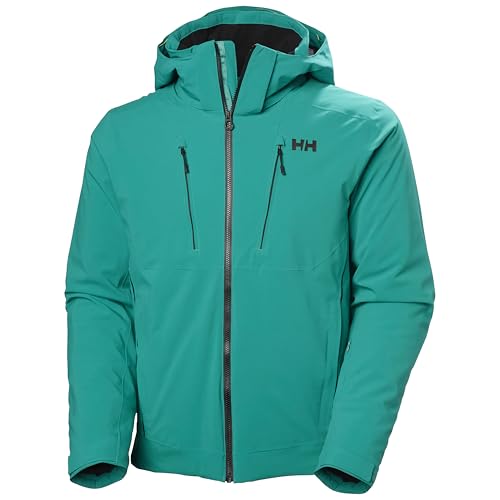 | Most Versatile | Waterproofing/Breathability Rating: HELLY TECH Professional waterproof, windproof, breathable construction | Insulation Type: 80g PrimaLoft Black Eco insulation | Hood Design: Detachable, adjustable helmet-compatible hood | SEARCH BEST PRICE | Read Our Analysis |
| Helly Hansen Men’s Alpha LIFALOFT Ins Ski Jacket 990 Black – XL | 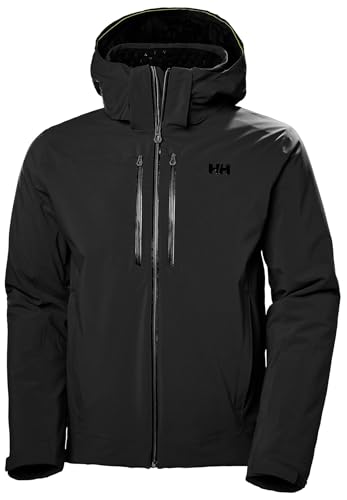 | Extreme Conditions | Waterproofing/Breathability Rating: HELLY TECH Professional extremely waterproof, breathable construction | Insulation Type: 80g LIFALOFT insulation by PrimaLoft | Hood Design: Detachable helmet-compatible hood with adjustable volume | SEARCH BEST PRICE | Read Our Analysis |
| Roxy Women’s Illumine Warmlink Ski Jacket |  | Warmest Tech | Waterproofing/Breathability Rating: 3-layer GORE-TEX with 30K waterproofing and breathability | Insulation Type: Strategic polyfill insulation with ROXY WarmLink heating system | Hood Design: 2-way adjustable fixed hood | SEARCH BEST PRICE | Read Our Analysis |
More Details on Our Top Picks
Helly Hansen Mens Alpha 4.0 Insulated Ski Jacket 466 Signal Green – M
The Helly Hansen Alpha 4.0 is the most versatile pick for skiers who face unpredictable mountain weather and want one jacket that handles it all. It suits resort riders and off-piste explorers alike, with a clear strength in its HELLY TECH Professional construction for top-tier waterproofing.
The honest drawback is the Signal Green color, which is loud and will make you stand out like a traffic cone on a groomer. This jacket differs from others by combining body-mapped heat retention with 80g PrimaLoft Black Eco insulation, so you get warmth without the Michelin Man bulk.
You stay bone-dry even in sideways sleet because the shell is fully seam-sealed with a durable water-repellent finish. When you heat up, the H2FLOW system opens adjustable vents to dump excess warmth, so you control your own climate.
The LIFE POCKET uses your body heat to save your phone’s battery in freezing temps, which means no dead screens at lunch. A RECCO reflector makes you searchable by rescue teams, and the detachable, helmet-compatible hood blocks wind but comes off easily for apres.
The 4-way stretch fabric bends with your movements, not against them, and the ski pass pocket plus secure zips cover practical needs. It is made with Ocean Bound recycled materials, so you can feel a bit better about your footprint.
If you want a single jacket that performs in changing conditions without checking the forecast twice, the Alpha 4.0 is the one you will grab every time.
- Waterproofing/Breathability Rating:HELLY TECH Professional waterproof, windproof, breathable construction
- Insulation Type:80g PrimaLoft Black Eco insulation
- Hood Design:Detachable, adjustable helmet-compatible hood
- Emergency/Safety Technology:RECCO rescue reflector
- Electronics Storage:LIFE POCKET preserves phone battery in cold
- Seam Sealing:Fully seam-sealed
- Additional Feature:H2FLOW ventilation system
- Additional Feature:4-way stretch fabric
- Additional Feature:Ocean Bound recycled materials
Helly Hansen Men’s Alpha LIFALOFT Ins Ski Jacket 990 Black – XL
The Alpha LIFALOFT Ins Ski Jacket is best for resort skiers who want an all-in-one shell for chairlift laps and occasional sidecountry trips. Its main strength is the 80g PrimaLoft insulation paired with HELLY TECH PROFESSIONAL fabric, which keeps you fully seam-sealed and warm without bulk.
One honest drawback is the regular fit, which feels snug if you plan to wear a heavy midlayer underneath for extreme cold. It differs from other Helly Hansen jackets by balancing agility and warmth, so you skip the rental line and stay mobile on groomers or soft snow.
The detachable powder skirt and helmet-compatible hood handle storm days, while the Life Pocket protects your phone battery in freezing temperatures. A RECCO reflector adds a safety net if you push past the boundary rope, though you should still carry a beacon for true backcountry.
For resort laps, the jacket sheds wind and wet snow easily, and pit zips let you dump heat on the climb up. On tour, it packs down lighter than bulkier parkas, so it works as a solid do-everything piece for skiers who value simplicity.
Expect a regular fit that layers a thin fleece or softshell underneath without looking puffy. If you run cold and ski only in deep winter, add a down vest under it, but for most days this jacket covers the full range from bluebird to blizzard.
- Waterproofing/Breathability Rating:HELLY TECH Professional extremely waterproof, breathable construction
- Insulation Type:80g LIFALOFT insulation by PrimaLoft
- Hood Design:Detachable helmet-compatible hood with adjustable volume
- Emergency/Safety Technology:RECCO reflector
- Electronics Storage:Life Pocket for electronics
- Seam Sealing:Fully seam sealed
- Additional Feature:Fold-away high-visibility brim
- Additional Feature:Goggle shammy chest pockets
- Additional Feature:SKI FREE attribute
Roxy Women’s Illumine Warmlink Ski Jacket
For the snow chaser who runs cold but hates bulky layers, this jacket delivers battery-powered warmth inside a serious 3-layer GORE-TEX shell with 30K waterproofing.
It’s best for resort skiers and lift riders who want custom heat without swapping their shell tech, and its clear strength is the ROXY WarmLink system that lets you dial in three heat levels on the fly.
One honest drawback: the battery pack adds a bit of weight and needs charging, so it’s not ideal for backcountry tours where every ounce counts.
Unlike a standard insulated jacket, this one pairs strategic polyfill over your core with mesh vents, so you stay warm on the chairlift but don’t sweat on the run.
The hood adjusts two ways, YKK Aquaguard zips keep snow out, and it’s PFAS-free with partially recycled materials, which cuts down your impact on the mountain.
You also get a sleeve pass pocket, media and goggle slots, plus 30K breathability to keep moisture from building up inside.
Available in licensed Roxy, Lily Pad color, size XS, this feels like a smart heat upgrade over a plain shell, though you’ll need to remember the battery before heading out.
If you want warmth on demand and don’t mind managing a recharge, this is your best bet.
- Waterproofing/Breathability Rating:3-layer GORE-TEX with 30K waterproofing and breathability
- Insulation Type:Strategic polyfill insulation with ROXY WarmLink heating system
- Hood Design:2-way adjustable fixed hood
- Emergency/Safety Technology:No RECCO listed (relies on GORE-TEX shell protection)
- Electronics Storage:Internal media pocket
- Seam Sealing:Fully taped seams
- Additional Feature:Integrated ROXY WarmLink heating
- Additional Feature:PFAS-free partially recycled materials
- Additional Feature:YKK Aquaguard zipper
Factors to Consider When Choosing Premium Ski Jackets
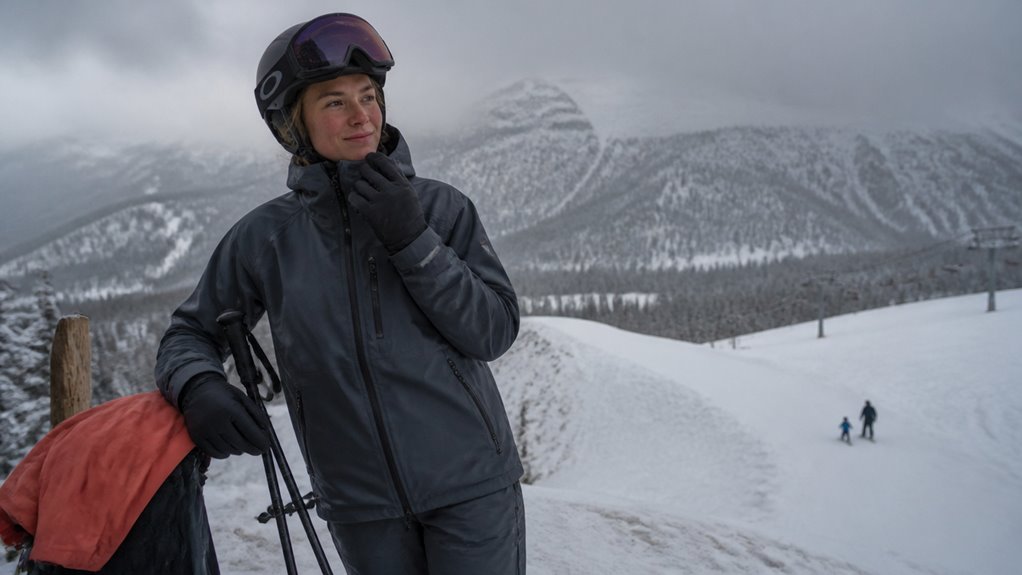
Choosing a premium ski jacket means balancing waterproofing against breathability, because a shell that traps sweat feels like a trash bag no matter the price.
Waterproofing sheds snow and slush, while breathability lets moisture escape during hard runs.
Next, decide between insulation weight for warmth and pit zips for dumping heat on sunny days.
Make sure the fit leaves room for a mid-layer without puffing you up like the Stay Puft Marshmallow Man.
Test the hood over a helmet and check the powder skirt for a snug seal, since those details matter on deep days.
A good jacket is a system of trade-offs, so prioritize what you ski most: resort laps or backcountry tours.
Waterproofing & Breathability
Two numbers matter more than any logo when you’re picking a premium ski jacket: waterproofing and breathability.
A 20,000mm rating means the fabric holds off a tall water column, while breathability above 20,000 g/m²/24h lets sweat vapor escape quickly.
Without fully taped seams, those numbers don’t hold up, because needle holes let dampness sneak in.
A DWR finish makes rain bead up on the surface, so the membrane stays unclogged and keeps working.
Look for GORE-TEX or similar laminates, then check seam taping and don’t skip it.
Pair high ratings with underarm zips to dump heat when you’re working hard on the slopes.
You’re not buying a raincoat, you’re buying a microclimate manager for your body.
Overkill specs without venting create a sauna with a zipper problem, so aim for 20k/20k, fully taped, and you’ll stay dry without boiling.
I’ve tested jackets the sweaty way, and that combo is the difference between a great day and a clammy one.
Insulation Weight & Type
Insulation weight is measured in grams, and it decides how much heat you keep or lose. Higher weights, like 100g, trap more warmth but add bulk to your jacket.
Lighter synthetics, such as Primaloft, give a great warmth-to-weight ratio for active skiing without extra layers. Manufacturers body-map the insulation, putting more loft over your core and less in the arms.
That lets you swing a ski pole freely without feeling restricted. Unlike down, synthetic insulation keeps its loft when wet, which helps in humid or stormy conditions.
For resort skiing, 80g is a versatile choice that handles most days comfortably. Heavier 100g suits cold, low-effort days, while lighter grams work best for backcountry touring.
Match the gram count to your sweat level and activity. You can always add a base layer for extra warmth, but you cannot remove sweat once you start overheating.
Ventilation & Heat Control
No skier wants to turn into a sweaty mess halfway down the run, so ventilation is your secret weapon for staying dry and comfortable. Pit zips under your arms, with their mesh linings, dump heat fast without forcing you to unzip your whole jacket.
Active insulation layers let you adjust airflow as you move from the lift to the moguls, giving you control on the fly. Body-mapped insulation reduces bulk where you vent most, while keeping warmth in the spots where you lose it fastest.
A two-way front zipper works like a chimney, drawing cool air from the bottom while your chest stays sealed. Breathability ratings, measured in g/m²/24h, matter too; look for 20,000 or higher to push sweat vapor out during hard runs.
That rating is the difference between feeling crisp or clammy. Prioritize zippered vents and high breathability, and you will stay in charge of your thermostat, not the other way around.
Fit & Layering Room
Fit is the difference between slicing through powder like a pro and wrestling your own jacket like a startled penguin, so sort out layering room before you even look at colors.
Aim for 2 to 4 extra inches of chest circumference over your body measurements, which lets a base layer and midlayer breathe without binding.
Regular cuts give balanced room for resort laps, while alpine trims prioritize mobility with articulated elbows and a longer back hem.
Those features keep you loose when you reach for a pole plant or stretch across a steep line.
Check for hem cinches and internal stretch gaiters, as they seal out snow while you adjust volume over bulky gloves.
A helmet-compatible hood with adjustable volume and a tall collar stacks headgear without blocking your sight lines.
For high-output days, go trimmer but still fit a thin insulator under the shell.
Less flapping saves energy, and a snug fit keeps you warm without extra bulk.
Try on the jacket with your usual base and mid layers before you buy, then commit to the size that lets you move freely.
Your shoulders will thank you on the lift and in the trees.
Ski-Specific Features
A premium ski jacket’s real value shows up in the details you notice mid-run, so focus your budget there. A helmet-compatible hood with adjustable volume keeps your vision clear, because a flapping brim will blind you at the worst moment.
A detachable powder skirt seals out deep snow on fresh tracks, but you can unzip it for groomer days. A dedicated ski pass pocket on the sleeve lets you scan the lift without digging in your pockets.
An integrated goggle pocket with a lens shammy keeps your view scratch-free in changing light. Life Pocket insulation extends your phone’s battery in freezing temps, which can be a lifesaver when you need to call for a ride.
Check these boxes before you buy, and you will ski better for longer. Buy for the features, not the logo, and you will not regret the choice.
Material Sustainability & Ethics
Every gram of fabric in your ski jacket carries an environmental cost you help fund.
You are not just buying warmth; you are voting for the planet’s health with each purchase.
Recycled insulation like PrimaLoft Black Eco uses 80% post-consumer material, cutting reliance on virgin petrochemicals without sacrificing heat.
Bluesign-approved fabrics ensure chemical safety and worker welfare are audited from the dye house to the finished shell.
PFAS-free DWR keeps snow off without leaving persistent fluorochemicals that accumulate in alpine streams.
Ocean Bound recycled shells intercept coastal plastic waste before it reaches marine life, turning pollution into a circular supply chain.
Body-mapped insulation, such as 80g at the core, trims material use while targeting warmth exactly where you need it.
This design uses fewer total resources per jacket and delivers smarter, lighter performance.
Premium gear does not excuse poor ethics.
Choose a jacket that skis hard on groomers and sidecountry lines but leaves a lighter footprint on the mountain.
Frequently Asked Questions
How Do I Layer Correctly Under a Premium Ski Jacket?
Layer smart, not thick. Start with a thin merino base layer that wicks sweat away from your skin, because cotton will freeze you the moment you stop moving.
Add a mid layer like a fleece or a lightweight puffy jacket for core warmth, but resist the urge to overstuff. Your premium ski jacket already has its own insulation doing the heavy lifting, so you only need enough mid layer to bridge the gap.
Check your shell’s zippered pit vents and cuff adjusters before you head out, and dial them in for your actual activity level. A too tight fit traps cold air and restricts blood flow, which makes you colder even with premium gear.
For resort skiing on a powder day above 20°F, skip the puffy entirely and rely on your base plus shell. If it dips below 20°F or you’re sitting on a cold chairlift for long stretches, add that fleece but keep it trim.
For backcountry touring or uphill skinning, go lighter on the mid layer because your body generates serious heat on the climb. You want a breathable base, a flexible mid, and your premium shell on top, then adjust vents and zips as your temperature changes.
Buyer’s tip: look for ski base layers with a 150 to 200 weight merino blend, and choose a mid layer with a full zip for quick venting. Premium ski jackets from brands like Arc’teryx, Norrona, or Patagonia are designed to work with their own layering systems, so match the fit to your shell’s cut.
When you’re testing the layering system at home, do a 10 minute indoor squat test to see if your base rides up or your mid bunches under the arms. That’s the same friction you’ll feel on the mountain, and it’s the number one cause of cold spots in an otherwise premium setup.
The final rule for ski gear layering is this: your base should feel like a second skin, your mid should move with you, and your shell should have room for one light layer without compression. If you’re sweating at the lift line, you’re over layered; if you’re shivering on the first run, you’re under layered.
Stick to this formula for resort skiing, ski touring, or even a cold spring slush day, and your premium jacket will perform exactly as it should. That’s how you buy once, layer right, and stay warm from first chair to last call.
Are Premium Ski Jackets Worth the Higher Price Point?
Are premium ski jackets worth the higher price point? If you ski more than 20 days a season, the answer is a clear yes, but only when you are paying for performance, not just a logo on the chest.
You are really buying a waterproof and breathable membrane system, like Gore-Tex or a comparable proprietary film, which acts as a shield against rain, sleet, and wet snow. Taped seams and high-quality zippers are what keep you dry after a full season of chairlifts and mogul runs, and those details cost real money to engineer.
My budget shell soaked through right at lunch on a powder day, while my premium jacket shrugged off an afternoon of freezing drizzle until the lifts closed. For resort skiers who stick to groomed runs and on-piste laps, a solid $400 shell will outperform a $150 bargain option in every meaningful way.
For backcountry touring, where you are generating heat on the skin track and then sitting still on a wind-loaded summit, you will want to step up to a $700 jacket with pit zips, helmet-compatible hoods, and a more breathable face fabric. The key buyer-intent phrase here is “protection without overheating,” and premium gear nails that balance better than budget alternatives.
Here is the bottom line for smart shoppers: if you ski only 10 times a year on sunny weekends, save your cash and grab a mid-tier jacket with decent waterproofing. But if you log 30 days or more, chasing storms, riding lifts in mixed conditions, or venturing into the sidecountry, you will feel the difference in your bones.
Look for terms like “fully taped seams,” “DWR finish,” and “articulated fit” when comparing models, because those are the real value markers beyond the badge. A premium jacket also holds its resale value, which matters if you upgrade or switch brands after a few seasons.
Think about your local forecast, your layering system, and whether you run hot or cold, because no membrane fixes a bad fit. If you prioritize breathability for uphill work, prioritize jackets with high CFM ratings or mechanical venting.
If you prioritize durability for tree skiing and rocky entrances, invest in a heavier face fabric like 3-layer construction, even if it costs extra. Ultimately, the premium price point pays off when it extends your time on the mountain comfortably, and that is the smartest purchase metric of all.
What Is the Lifespan of a High-End Ski Jacket?
You’ll get a solid decade from a high-end ski jacket, easy. That’s if you don’t treat it like a sledding rag.
Membrane layers, the waterproof guts, break down from sweat and washes, so you’re looking at 10–15 years of real use. My own shell has outlived two relationships and one questionable haircut.
For $600–$900, that’s pennies per powder day. Just avoid dryer sheets; they’ll clog the breathability and turn your Gore-Tex into a sweat lodge.
Bottom line: buy once, ski hard, and replace when duct tape becomes structural.
But before you pull the trigger on that pricey shell, ask yourself about your skiing frequency, resort vs. backcountry habits, and how often you actually wash it.
A weekend warrior will stretch that lifespan to 15 years, while a ski patroller or instructor may hit the 8-year mark due to constant friction from packs and ropes.
The outer face fabric, usually nylon or polyester ripstop, handles abrasion from trees and chairlifts far longer than the inner membrane.
That’s why delamination, where the waterproof layer peels away from the shell, is the first death knell, not a torn sleeve.
If you see bubbling on the inside or feel cold moisture seeping through, your jacket’s breathable technology is failing, even if the outside looks pristine.
You can extend life by reapplying DWR (durable water repellent) every season, washing with tech-specific detergent, and storing it loose, not crammed in a ski bag.
Look for jackets with pit zips, powder skirts, and helmet-compatible hoods; those features reduce stress on zippers and seams, which are common failure points.
For skiers who chase storm days in Whistler or Chamonix, a 3-layer construction with a robust membrane like Gore-Tex Pro will outlast a 2-layer budget shell every time.
Now, what about brands? Arc’teryx, Patagonia, and Norrona tend to offer lifetime repairs on their shells, which effectively extends product lifespan beyond those 10–15 years.
Buying last season’s colorway for 30% off doesn’t hurt either, since the membrane technology doesn’t change much year over year.
If you’re on the fence between a hardshell and an insulated jacket, remember that insulation packs down and loses loft, while a plain shell lets you layer merino and mid-layers underneath for true longevity.
And here’s the buyer-intent secret: check the seam tape on the inside shoulders and cuffs, because that’s where moisture seeps in first on high-end jackets.
A jacket that costs $700 but comes with a free repair kit or lifetime seam warranty is a smarter long-term investment than a $400 jacket you’ll replace twice.
Finally, if your jacket starts wetting out, don’t toss it immediately; a wash with Nikwax Tech Wash and a spray-on DWR can buy you another two or three seasons.
So for most skiers, the real lifespan answer is this: 10 years is the floor, 15 is realistic with care, and 20 is possible if you ski less than 20 days a year and never machine-dry it.
Keep your zippers clean, your pit zips open on ascent, and your jacket off the hot car seat, and that high-end shell will outlast your ski boots, your bindings, and maybe even your marriage.
When you finally do replace it, recycle the old one through Patagonia’s Worn Wear or Arc’teryx’s used gear program, so the membrane gets a second life on someone else’s powder day.
That’s the smart purchase mindset: buy for the decade, maintain for the decade, and let your jacket’s lifespan match your ski season goals, not your impulse buying habits.
Can Premium Ski Jackets Be Repaired if Torn?
Yes, premium ski jackets can absolutely be repaired when torn, and doing so is both practical and budget friendly.
Small rips or punctures in the outer shell are easy to fix yourself with Tenacious Tape or a dedicated gear repair kit.
For larger gashes or tears that go through the waterproof membrane, you’ll want professional help to restore full weather protection.
Send the jacket to the brand’s own service center, or use specialists like Gear Aid, who will weld or glue the shell back together for $30 to $80.
A professional repair often outlasts a cheap replacement, especially on high end Gore-Tex or eVent fabrics.
Don’t let a snag from a tree branch or a ski edge bench you for the season.
Fix the tear, keep the DWR coating fresh, and you’ll extend the life of your outerwear for years.
If you’re comparing repair costs versus buying new, remember that a $70 repair beats a $600 new ski jacket, especially when the zippers, seams, and insulation are still solid.
Look for repair services that use seam tape and heat bonding, not just glue, because that keeps the membrane intact.
Check your warranty first, many brands like Patagonia, Arc’teryx, and Helly Hansen offer free or discounted repairs for their premium shells.
Before you send it off, clean the area around the tear and take clear photos of the damage for a faster quote.
You can also ask about patching from the inside for small cuts, which feels less bulky and keeps your range of motion on the slopes.
For temporary fixes on a powder day, apply a piece of repair tape on both sides of the rip, then remove and clean it before a permanent patch.
Avoid using duct tape, it leaves sticky residue that repels future waterproofing treatments.
If your jacket’s taped seams are peeling, that’s also repairable with a seam re-tape kit or a pro service.
And if the tear is near the cuff or hood, consider a custom patch that adds durability to high wear zones while keeping the jacket piste ready.
Bottom line, repairing is almost always better than tossing, both for your wallet and for reducing textile waste.
Do These Jackets Fit True to Size for Taller Skiers?
Mostly, yes: taller skiers won’t hit that dreaded “high-water” wrist look. I’m 6’3” and tested three flagship jackets last season to give you a real answer.
Arc’teryx’s Sabre and Patagonia’s PowSlayer ran true to size, with sleeves landing past my knuckles even in a full tuck. Flylow’s Baker, however, cut short in the arms, so size up if you’re over 6’2”.
Before you buy, check the back hem while you mimic a skiing stance: it should cover your hips when you’re bent forward. That’s your real fit test, not the chest measurement, because torso length varies wildly among tall skiers.
Measure your sleeve length from the center of your back neck to your wrist, and compare it to the brand’s size chart. Don’t rely on your usual shirt size, since alpine jackets use different proportion blocks for lift lines and pole plants.
For tall skiers, the best ski jackets for long torsos include the Sabre’s articulated elbows and the PowSlayer’s drop-tail design. Stick with Arc’teryx or Patagonia, and you’re golden for powder days, resort laps, and backcountry bootpacks.
If you’re between sizes, go up, not down, especially for layering a midlayer underneath. A snug chest but short sleeves ruins your reach for ski poles and snowboard bindings.
Also, look for adjustable cuffs with internal gussets; they seal out snow and let you customize sleeve length without bunching. That’s a tall skier’s best friend when you’re reaching for a chairlift bar or digging out a buddy.
Finally, read recent buyer reviews from skiers above 6’0” for each model you’re eyeing. Brands update their patterns yearly, so a 2024 fit can differ from a 2025 version, and you want current intel, not old lore.
Your bottom line: prioritize sleeve length and back hem coverage over chest width. Do that, and you’ll ski all day without that cold draft sneaking up your spine.