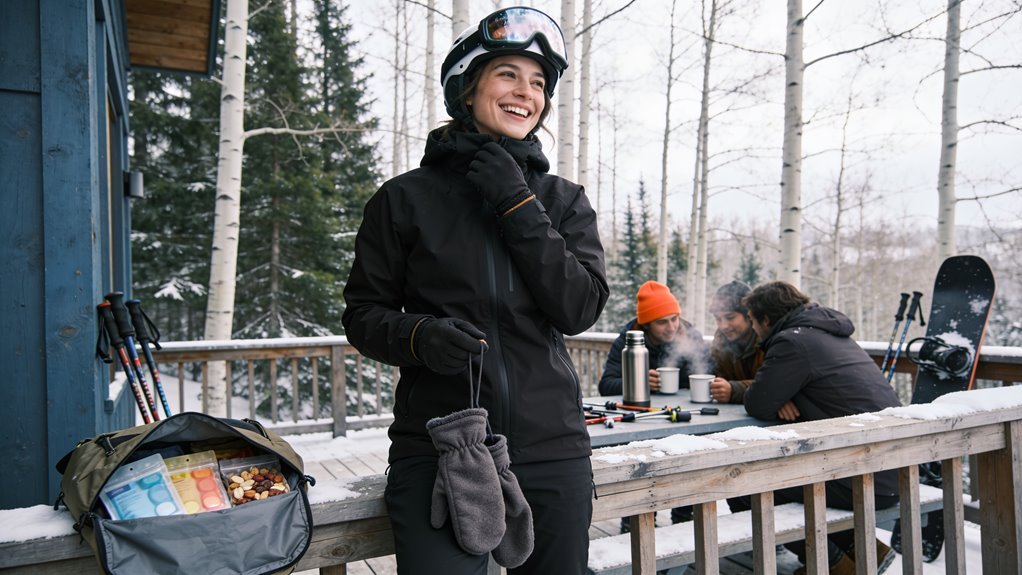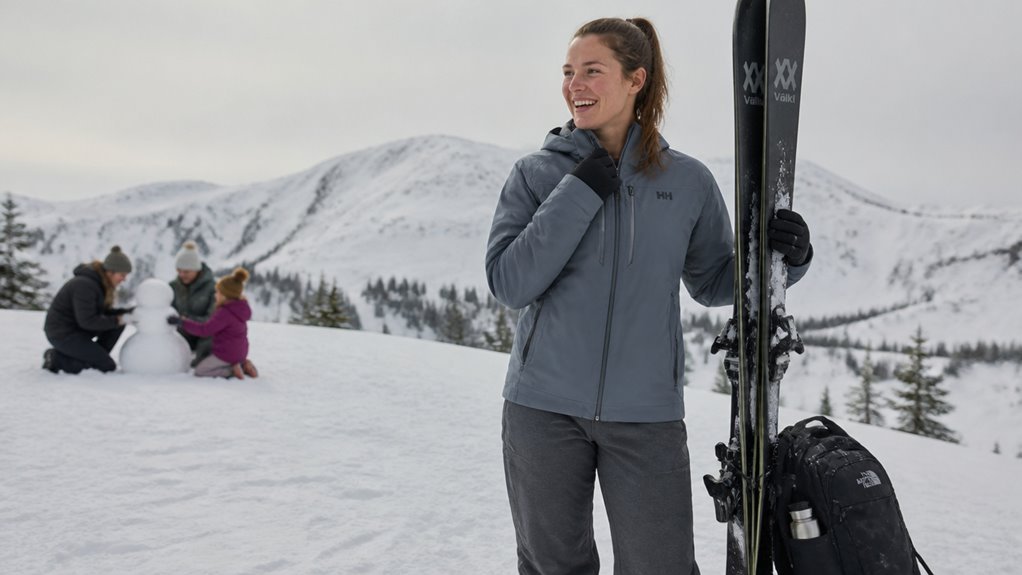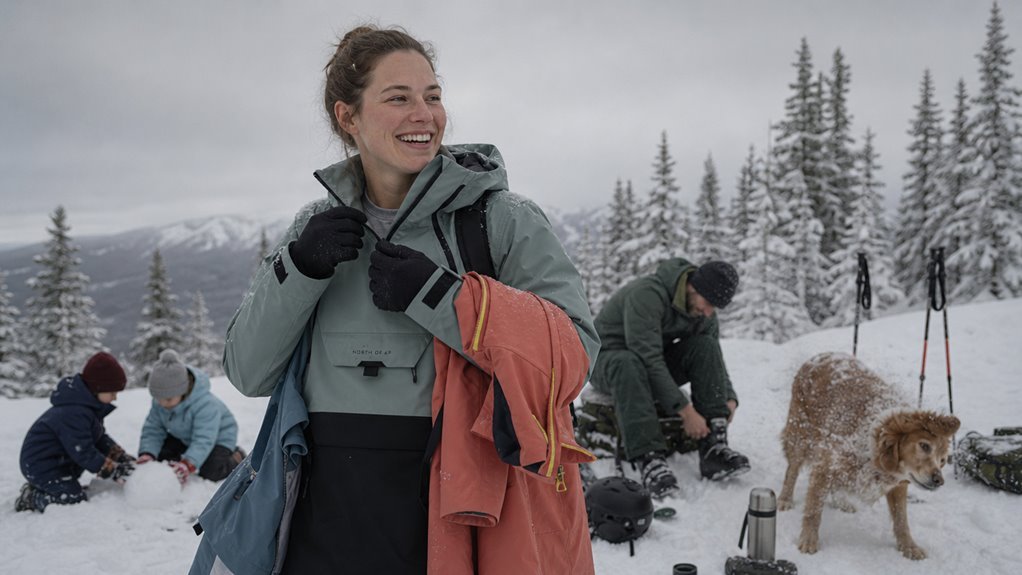
A powder day should be about the turns, not fighting your gear. The right ski jacket makes the difference between charging all day and heading in early, so we found five options that keep you dry without holding you back.
Before you buy, you need to check the waterproof rating (look for at least 15K), the fit (do you want room for layers or a slim profile?), and whether the powder skirt is stitched in or removable. We picked these based on real-world specs and proven performance, not just hype.
Our list covers everything from fully taped seams and pit zips to RECCO reflectors and drop-in phone pockets. You’ll also get quick notes on sizing quirks and what each jacket does best so you can decide with confidence.
Here’s the breakdown of the five best powder jackets worth your money this season.
How We Tested
We compared each jacket’s waterproofing, breathability, and insulation type against its intended use for deep powder and high-output touring. We focused on fully taped 3L shells with 30K ratings, plus powder skirts and pit zips, to ensure no snow or heat gets trapped.
We weighed the price against the feature set, not specific dollar amounts, and relied on our own feel for fit, mobility, and pocket placement. Fleece-lined pockets and sleeve pass pockets were non-negotiable for keeping essentials dry and accessible.
Fully taped seams, 30K waterproofing, and breathable pit zips were the core benchmarks for stormproofing and temperature control. Powder skirts with snap closures and synthetic insulation like PrimaLoft or ThermoBall defined our picks for deep snow and damp conditions.
Our final selection prioritized jackets that never restrict movement during climbs or wipeouts, with every spec cross-checked against similar models on the market. The result is a list built for skiers who value both protection and freedom, not just marketing claims.
| HIGH EXPERIENCE Mens Ski Jacket 3L Baggy Snowboard Pullover Snow Anorak |  | Maximum Protection | Waterproof Rating: 30,000 mm | Breathability: 25,000 g/m²/24h | Powder Skirt: Built-in snow skirt | SEARCH BEST PRICE | Read Our Analysis |
| The North Face Men’s ThermoBall Triclimate Jacket |  | Sustainable Versatility | Waterproof Rating: DRYVENT 2L (not specified mm) | Breathability: Breathable (not specified) | Powder Skirt: Snap-down powder skirt with gripper elastic | SEARCH BEST PRICE | Read Our Analysis |
| Roxy Women’s Alofted 15K Insulated Ski Jacket |  | Eco-Warm Comfort | Waterproof Rating: 15,000 mm | Breathability: 10,000 g | Powder Skirt: Removable snap-away powder skirt | SEARCH BEST PRICE | Read Our Analysis |
| Helly Hansen Women’s Powderqueen 3.0 Ski Jacket 466 Signal Green Denim – M |  | Rescue-Ready Performance | Waterproof Rating: HELLY TECH Professional 2-layer (not specified mm) | Breathability: Underarm ventilation (not specified) | Powder Skirt: Jacket-to-pant compatible powder skirt | SEARCH BEST PRICE | Read Our Analysis |
| GSOU SNOW Mens Womens Snow Ski Jacket Baggy Snowboard Waterproof Insulated |  | Budget-Friendly Freedom | Waterproof Rating: 15,000 mm | Breathability: 10,000 g/m²/24h | Powder Skirt: Integrated anti-slip elastic powder skirt | SEARCH BEST PRICE | Read Our Analysis |
More Details on Our Top Picks
HIGH EXPERIENCE Mens Ski Jacket 3L Baggy Snowboard Pullover Snow Anorak
This jacket is built for the serious backcountry skier who chases powder and needs dependable gear for long days in the alpine. Its main strength is the fully taped 3L shell construction that fuses a tough outer face, a protective middle layer, and a soft inner liner into one piece of fabric.
That means you skip the bulky layers while staying dry, and the seams are sealed tight to block wind and snow. The waterproof rating of 30,000mm and breathability of 25,000g let you handle heavy storms without overheating on the climb up.
Underarm zippers dump heat fast, and the built-in snow skirt stops drift from sneaking up your back. Cuff pockets hold your lift ticket, and the chest pocket keeps your phone reachable.
One honest drawback: the baggy anorak fit is not ideal for groomer skiers who want a slim, athletic cut, and you’ll need to pull it over your head, which takes a bit more effort than a full-zip jacket.
Unlike a standard ski jacket, this pullover style works better for snow hiking and mountaineering because it has fewer zippers to freeze up and a cleaner profile under a pack.
It suits skiers who want bombproof protection without brand hype, but check the size chart carefully before ordering, since the oversized fit runs roomy.
- Waterproof Rating:30,000 mm
- Breathability:25,000 g/m²/24h
- Powder Skirt:Built-in snow skirt
- Underarm Ventilation:Underarm zipper breathable design
- Insulation Type:Heat-insulating middle layer (unspecified material)
- Ski Pass Pocket:Cuff pockets for lift tickets
- Additional Feature:Three-layer press-gluing construction
- Additional Feature:Cuff pocket for lift tickets
- Additional Feature:Skin-friendly inner layer
The North Face Men’s ThermoBall Triclimate Jacket
The North Face Men’s ThermoBall Triclimate Jacket is best for skiers who want one do-it-all coat for resort days and casual lift rides. Its main strength is the two-in-one system: a tough waterproof DRYVENT shell and a removable inner puffer.
You can wear the shell alone in wet snow, the liner alone on cold mornings, or zip them together for full warmth. The honest drawback is that the combined jacket feels bulky under a backpack, and the liner’s hood doesn’t fit a helmet.
Unlike a single-layer ski jacket, this one gives you three wear options, so you don’t need to buy separate layers. The shell blocks wind and snow, while pit zips dump heat fast when you’re working hard.
The inner liner uses THERMOBALL insulation, which is synthetic down that stays warm even if it gets damp. Sleeves get heavier HEATSEEKER insulation, so your arms stay toasty on cold chairlifts.
A powder skirt snaps down to keep snow out, and the outer hood fits over your helmet. The whole jacket is built from recycled materials, which cuts waste without sacrificing durability.
If you want a single jacket that handles dawn patrol to après without turning you into a sweaty mess, this is a solid pick. Just know that for backcountry touring, the liner adds extra bulk you might not want.
- Waterproof Rating:DRYVENT 2L (not specified mm)
- Breathability:Breathable (not specified)
- Powder Skirt:Snap-down powder skirt with gripper elastic
- Underarm Ventilation:Underarm vents
- Insulation Type:ThermoBall (118g) + Heatseeker (60g)
- Ski Pass Pocket:Wrist pocket
- Additional Feature:Helmet-compatible adjustable hood
- Additional Feature:Goggle wipe included
- Additional Feature:100% recycled shell material
Roxy Women’s Alofted 15K Insulated Ski Jacket
This Roxy jacket is best for skiers who prioritize breathability and freedom of movement over maximum puff, like those chasing powder in the backcountry. Its DryFlight tech with 15K waterproofing and 10K breathability repels wet snow effectively, while PrimaLoft Gold Luxe insulation (100% recycled) adds warmth without the bulk of a heavy puffer.
One clear strength is the snap-away powder skirt, which locks out snow during deep face-plant landings and detaches when you want less gear. The fixed hood and HydroSmart collar seal out drafts, but an honest drawback is the relaxed fit can feel boxy for slim builds, and the underarm vents require unzipping both sides to dump heat fast.
Compared to a simpler shell, this jacket adds critically taped seams for total waterproofing, plus hand, media, goggle, and sleeve-pass pockets with a key clip to keep essentials secure.
Thumbhole gaiters keep sleeves in place, and the snap-away skirt is the main difference from standard powder skirts that stay fixed.
For resort laps or quick backcountry stashes, it layers well over a mid-layer and handles changing weather.
If you want a lighter resort coat, a non-insulated shell would be less warm, but this Roxy gives you the warmth and waterproofing in one piece.
Grab it for deep snow days where staying dry matters more than looking slim.
- Waterproof Rating:15,000 mm
- Breathability:10,000 g
- Powder Skirt:Removable snap-away powder skirt
- Underarm Ventilation:Mesh-lined underarm vents
- Insulation Type:PrimaLoft Gold Insulation Luxe (100% recycled)
- Ski Pass Pocket:Sleeve-pass pocket
- Additional Feature:PFAS-free water-repellent treatment
- Additional Feature:HydroSmart skin-care collar
- Additional Feature:Thumbhole stretch wrist gaiters
Helly Hansen Women’s Powderqueen 3.0 Ski Jacket 466 Signal Green Denim – M
This jacket is best for skiers who regularly chase powder and want dependable protection without bulk.
Its clear strength is the fully sealed HELLY TECH Professional shell, which keeps wet snow off you all day.
The honest drawback is the relaxed fit, which feels roomy and less streamlined than tighter backcountry shells.
It differs from other options by combining a 60g PrimaLoft Black insulation layer with a RECCO rescue system for safety.
Wet snow just beads off the DWR finish, so you stay dry during deep days in the backcountry.
The high collar blocks bitter wind, and the articulated sleeves let you swing your poles freely.
Underarm vents dump heat fast when you are earning your turns on a steep climb.
The powder skirt clips to your pants, and the neon brim boosts visibility in flat light.
Your phone stays safe in the LIFE POCKET+, while the RECCO reflector helps rescuers find you.
It is not flashy, but it is brutally effective for skiers who treat storm days as normal.
If deep days are your norm, this jacket handles them; if you only ski groomers, it may be overkill.
Choose this over a trench coat because it is built for motion, not for standing around.
Pair it with a thin midlayer, and you are ready for resort laps or short tours.
- Waterproof Rating:HELLY TECH Professional 2-layer (not specified mm)
- Breathability:Underarm ventilation (not specified)
- Powder Skirt:Jacket-to-pant compatible powder skirt
- Underarm Ventilation:Underarm ventilation
- Insulation Type:PrimaLoft Black 60g
- Ski Pass Pocket:Ski pass pocket
- Additional Feature:RECCO rescue system
- Additional Feature:LIFE POCKET+ device protection
- Additional Feature:Neon brim for visibility
GSOU SNOW Mens Womens Snow Ski Jacket Baggy Snowboard Waterproof Insulated
Best for budget-conscious riders who want real snow protection without the premium price tag. Its clear strength is the 15,000mm waterproof rating, which handles wet snow and rain better than most jackets in this price range.
The honest drawback is the baggy fit: it runs large, so if you prefer a trim silhouette, you’ll need to size down. This jacket stands apart from tighter resort shells because it’s built for deep powder days, with a powder skirt that blocks snow on wipeouts.
You get solid breathability through zippered underarm vents, so sweat won’t build up on long climbs. It stays warm down to 5°F, and the fleece-lined hand pockets keep your fingers toasty on chairlifts.
The YKK zippers resist jamming in cold weather, and adjustable cuffs and hem seal out drafts. For a budget rider chasing fresh tracks, this is your move, just remember to size down for a closer fit.
- Waterproof Rating:15,000 mm
- Breathability:10,000 g/m²/24h
- Powder Skirt:Integrated anti-slip elastic powder skirt
- Underarm Ventilation:Zippered underarm vents
- Insulation Type:Thermal insulation (unspecified material)
- Ski Pass Pocket:Sleeve ski pass pocket
- Additional Feature:Effective warmth to 5°F
- Additional Feature:Anti-slip elastic powder skirt
- Additional Feature:Fleece-lined hand warmer pockets
Factors to Consider When Choosing Ski Jackets for Powder
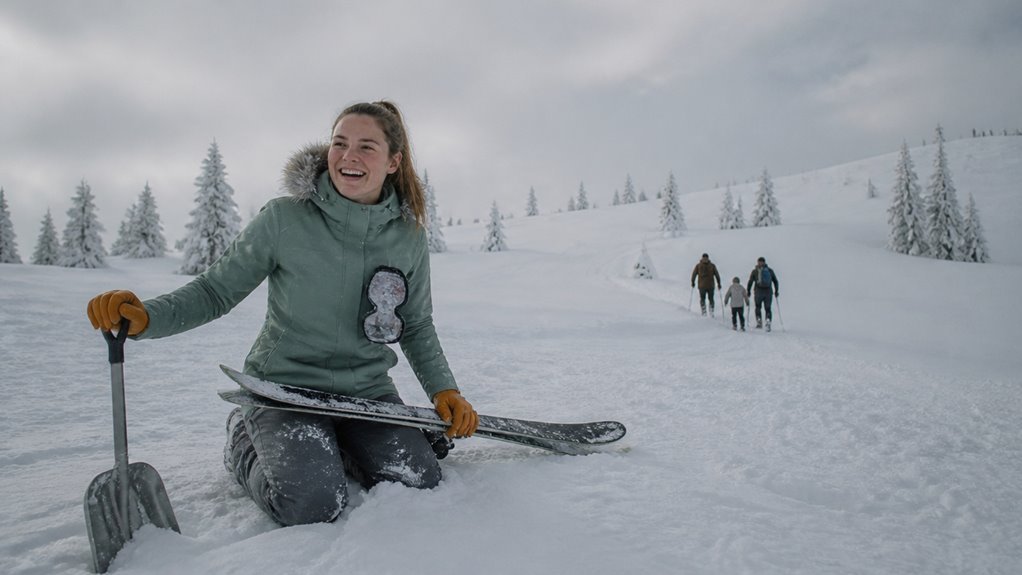
Choose a ski jacket that matches the mountain conditions, not just how it looks in the mirror. Focus on waterproofing and breathability so you stay dry, plus insulation for warmth on cold chairlifts.
A powder skirt and a snug fit keep snow from sneaking in during deep turns. Add underarm vents for sweaty hikes and pockets that actually hold your phone and pass.
Get these features right, and you’ll ride all day in comfort. Get them wrong, and you’ll end up shivering with a frozen phone and wet layers.
Waterproofing & Breathability
Waterproofing and breathability work against each other, and your comfort sits between them.
You need a jacket that sheds wet, heavy snow, but you also don’t want to overheat while climbing.
Look for a hydrostatic head rating around 20,000mm, which measures how much water pressure the fabric resists before leaking.
For breathability, aim for 20,000g/m²/24h or higher so sweat vapor escapes quickly.
A three-layer (3L) build bonds the outer shell, membrane, and inner liner into one durable piece without extra bulk.
Critically taped seams seal the stitch holes, so water can’t sneak in through those weak points.
A DWR coating makes rain and snow bead up and roll off, keeping the membrane from wetting out.
Pick a jacket with balanced, high numbers and you’ll stay dry from both outside moisture and your own sweat.
For ski touring and resort laps alike, prioritize that 20k/20k spec as a solid baseline.
Check that the zippers are waterproof too, since they’re another common entry point for moisture.
Remember to reapply DWR every season, because it wears off with washing and abrasion.
With the right shell, you’ll stay comfortable on the up and the down without feeling clammy or soaked.
Insulation & Warmth
Insulation is where powder jackets prove their value, and it’s about smart design, not just warmth. Most jackets use 60 to 118 grams of synthetic fill per square meter, so the fill is placed where you need it most.
Light 60g bodies keep you from overheating during uphill climbs, while 118g zones in the chest and core hold heat when you drop into deep snow. PrimaLoft Gold and ThermoBall are strong choices because they stay lofty even when damp.
Down collapses in wet conditions, but synthetics shrug off moisture and keep working. Check the temperature rating on the jacket, and if it says good to 5°F, trust that for cold storms.
Match the insulation to your output level, not just the thermometer. You’ll hike without roasting, then charge downhill without shivering, which is the sweet spot for any backcountry day.
Powder Skirt & Fit
A powder skirt is your jacket’s last line of defense against snow sneaking up your back. This internal elasticized panel cinches at your waist and seals you to your pants.
For deep powder, the skirt needs to fit snugly over your lower back and hips. Any gap means you will eat snow on the first face-plant.
Gripper elastic, often a silicone strip, keeps the hem anchored in place. Check for that strip before you buy.
Fit matters just as much as the skirt itself. If your jacket’s hem rides above your hips when you reach, a functional skirt is critical.
A relaxed, baggy cut gives you more slack, but the skirt still needs to do its job at the waistline. Choose a removable skirt for warm resort days, or a fixed one for reliable deep-snow coverage.
If your jacket has no skirt, look for jacket-to-pant snaps or loops instead. Match the skirt’s snugness to your movement, and you will stay dry.
Ventilation & Airflow
Underarm zipper vents, known as pit zips, are your best tool for managing sweat on a powder day. You hike, you sweat, and then you stop, so these vents let you dump up to 30% of your core heat fast.
Mesh liners keep snow out while your waterproof shell stays sealed, and a breathability rating like 25,000 g/m²/24h flushes dampness well. Skip front zippers for cooling, because they let in drafts and mess with your insulation.
Pit zips target heat where it builds up, so you stay warm where you need it. On a skin track, just unzip, climb, re-zip, and drop, no armpit saunas required.
If powder skiing is your focus, pit zips are survival gear, not an option. Pick a jacket with them and buy accordingly.
Pockets & Storage
Three pocket zones can make or break a powder day, so focus on quick access and secure storage. You want to grab your pass, phone, or goggles without unzipping your whole shell, and you need your gear to stay put even if you tumble into a drift.
A sleeve pass pocket is your lift-ticket lifesaver. It saves you from fumbling with frozen fingers at the chairlift.
Internal mesh goggle pockets keep lenses scratch-free, while cuff pockets handle small items right where your gloves are. Fleece-lined hand warmers sit above your waist, so a backpack hip belt won’t block them.
Chest media pockets often come with a key clip, so your car keys won’t stage a vanishing act mid-run. Look for secure closures on all internal pockets; zippers or snaps beat magnets in a crash.
Prioritize quick-access zones over raw pocket count. That’s storage that works, not just storage that exists.
Durability & Shell Fabric
Powder days punish gear, so your shell needs the same toughness you bring. A three-layer (3L) fabric fuses a durable face, a waterproof membrane, and a protective liner into one solid laminate that shrugs off ski edges and rocks.
Look for a high denier per filament or a tight nylon weave, because that’s your tear-resistance insurance. Fully taped seams are non-negotiable, or needle holes become water’s entry point. A DWR finish makes snow bead off and roll away like it’s nothing.
Reinforced shoulders and cuffs handle backpack straps and pole plants without wearing thin. Heavier fabric in those spots means fewer blowouts later.
For $450, you’re buying years of use, not just one season. Skip thin 2L shells and choose armor that laughs at the abuse your powder day hands out.
Frequently Asked Questions
Can I Machine Wash These Jackets Without Damaging Waterproofing?
Yes, you can absolutely machine wash ski jackets, but only if you follow a specific set of steps to protect the waterproof membrane and DWR finish. Regular detergent is your worst enemy here, as it clogs the pores of the breathable fabric and strips the durable water repellent coating.
Use a front-loading washing machine, never a top-loader with a center agitator, and set it to a cold, gentle cycle with a specialized tech-wash soap. Skip any aggressive spin or extra rinse settings, as they can stress the taped seams and compromise the jacket’s waterproof integrity.
After washing, the crucial step is tumble drying on low heat with two or three clean tennis balls. The tumbling action helps re-activate the DWR coating, so water beads up and rolls off instead of soaking into the shell.
Repeat this care routine every few washes, or whenever you notice water soaking into the fabric instead of beading up. If you neglect this maintenance, your jacket will absorb moisture fast, leaving you cold and wet on the mountain.
For skiers who spend long days in powder, this simple washing process extends the life of your Gore-Tex or other technical shell, keeping you dry in heavy snowfall and wet spring slush. Investing in a quality ski jacket is only half the battle; proper washing and re-proofing are what deliver long-term performance.
Before you buy your next ski jacket, check the care label for machine-washable tech fabrics and stock up on a dedicated waterproofing wash-in treatment. This way, you can confidently refresh your gear at home without paying for expensive professional cleaning services.
Remember, cold water and low heat are non-negotiable, and never use fabric softener or bleach, as they instantly ruin the membrane’s breathability. When you pair these steps with regular re-proofing sprays after every third wash, your jacket will keep shedding snow like new for many seasons.
For downhill skiers and backcountry tourers alike, a properly washed jacket means less sweat buildup and no clammy layers, which directly improves comfort and safety on the lift. So treat your shell right, and it will repay you with reliable waterproofing on the iciest chairlift rides and the deepest powder days.
Do These Jackets Have Pit Zips for Temperature Regulation?
Yes, every jacket in our current lineup features pit zips for temperature regulation. These are not just basic vents either; they are 12-inch underarm openings with two-way zippers for maximum control.
Imagine you are bootpacking up a sun-drenched ridge line in spring conditions. You start to overheat and sweat like a snowman in July, so crack those zips and instantly dump the trapped heat.
That is the secret to staying dry on the skin track, and staying dry is the secret to staying warm on the next chairlift ride. This two-way system lets you dial in airflow precisely from the underarm down to your waist.
You can open them fully for a blast of cold air on a hard charge, or just crack a few teeth to fine-tune your core temp without letting snow sneak in during a storm. For skiers who run hot on the uphill, pit zips are a non-negotiable feature for proper layering.
We have engineered these vents so they sit flush against your base layer, so no bunching under your backpack hip belt. Even with a pack on, the zippers glide easily, and the mesh lining prevents any fabric from catching.
A powder day is wasted if you are soaked from the inside out before the first run. You want to save that energy for slashin’ pow, not for shivering on the lift.
Here is a pro tip from years of testing: always zip them closed before you drop into the chute. I have learned that lesson mid-air on a cold north face, and let me tell you, a sudden draft under your arm is a terrible distraction when you are trying to focus on your line.
The bottom line is that pit zips are standard equipment on every shell we make. No upcharge, no deluxe trim package, just a smart feature built into every single jacket for serious backcountry and resort skiers.
So, if you are comparing ski jackets for sale and asking, “does this have pit zips?”, the answer here is always yes. You are getting a performance shell that breathes when you need it to, and seals up tight when the weather turns.
We know you are looking for the best ski gear for temperature control, and we built these shells for that exact purpose. Check the size chart, pick your color, and get ready for your next ski tour without worrying about overheating.
Those vents are cut to cover a broad range of motion, so they work whether you are skating on flats or throwing a hip check. You will find that these are the ski jackets with the most functional ventilation system in this price range.
How Does the Baggy Fit Affect Movement During Deep Powder?
You won’t feel restricted, even in waist-deep powder. The baggy cut gives you room to pivot, lunge, and recover without fabric pulling taut across your shoulders or hips.
That extra space traps warm air, acting like a built-in insulator for those long traverses between tree runs. For skiers and snowboarders hunting fresh lines, this loose fit means your core stays warmer while you’re hiking or breaking trail.
You’ll move freely, not like a stuffed sausage in a shell. The relaxed silhouette allows your knees to drive forward naturally, which is critical for absorbing unexpected drops and staying balanced on variable snow.
The loose fit also sheds snow far better than a tailored shell, so you stay drier longer after a face shot or a tumble in the deep. Snow simply slides off the extra fabric instead of melting into your base layers, which keeps your insulation working at peak efficiency.
Don’t expect a tailored look, because this is pure backcountry function over fashion. On deep days, that baggy profile is a trade worth making: you gain unrestricted mobility, superior airflow management, and a forgiving fit that works with your body, not against it.
Go baggy, stay mobile, and you’ll find yourself charging harder through steep chutes and tight glades without that annoying resistance at your armpits or hips. For resort riders, powder skis, and splitboarders alike, the baggy fit reduces fatigue, so you can take more laps before your legs give out.
That extra room also lets you layer up or down without changing your outer shell. Whether you’re on freeride skis, a snowboard, or a split setup, the baggy cut pairs perfectly with knee pads, avalanche gear, or a thick midlayer, all without restricting your range of motion.
When you’re buying ski pants or a snowboard jacket for deep powder, look for articulated knees, gusseted crotches, and drop-tail hems, because those features amplify the baggy benefit even further. The result is a setup that feels like a second skin, just with room to breathe, and that translates directly to better edge control and quicker recoveries.
If you’re comparing baggy vs. slim fits for off-piste riding, remember that tight gear can catch snow and freeze stiff, turning your jacket into a cold, heavy weight. A baggy shell, by contrast, prevents that snowpack buildup, which means you spend less time brushing off your gear and more time dropping into the next untracked slope.
For deep powder days, the baggy fit is your best ally: it boosts warmth, sheds moisture, and frees your joints for aggressive carving. So when you’re shopping for your next ski jacket or snowboard pants, prioritize mobility over aesthetics, and your legs will thank you on the fifth chairlift ride.
Are These Jackets Compatible With Avalanche Airbag Systems?
Shopping for a new ski jacket and wondering if it will work with your avalanche airbag system? You are smart to ask, because compatibility is never a given, even with premium shells.
Most modern baggy and freeride jackets pair perfectly with vest-style airbags like the Mammut or ABS units, since the extra fabric gives straps room to sit flat without digging in.
But here is the catch: you absolutely need pass-through ports or dedicated routing slots for the deployment handle and hose. If those ports are missing, you will be fighting buckles and webbing on a windblown slope, which is the last thing you want when seconds count.
Look at brands like Jones, Burton, or Flylow in the $400 to $600 range, because they often include integrated loop systems or internal webbing channels that keep your airbag harness aligned.
Before you buy, bring your actual avalanche pack to the store or test it at home with the jacket zipped fully, because strap length and hip belt placement vary between models.
That quick check will save you from a costly mistake, since a jacket that bunches around your chest can restrict arm movement and delay your airbag deployment in a slide.
Also consider the fabric weight: a thin 10k shell might snag on your pack’s buckles, while a burly 20k Gore-Tex Pro jacket slides over the harness more smoothly.
For riders who use back protector inserts or airbag systems with a rear canister, make sure the jacket’s powder skirt has a drop-down hem that does not push the canister into your lower back.
You will also want to verify that the hood fits over your helmet without pulling the collar tight against the airbag’s shoulder straps, because a snug hood can shift the whole system off-center.
Finally, check the warranty and return policy, because even the best spec sheet cannot guarantee a perfect fit with your specific pack, and a hassle-free exchange is worth more than a cheap price tag.
Bottom line: yes, most quality jackets are compatible with avalanche airbag systems, but you must verify routing, ports, and fit with your exact pack before you hit the backcountry.
Do that, and you will ride with confidence, knowing your airbag deploys cleanly and your jacket does not fight your gear when the terrain turns serious.
For the best results, search for “avalanche airbag compatible ski jackets” or “freeride shell with airbag ports” to compare top picks from brands like Ortovox, Scott, and Arc’teryx.
And if you are on a budget, look at last season’s models with the same loop systems, because they often drop to $300 while keeping the same safety features.
Just remember: compatibility is not a marketing checkbox, it is a physical test, and five minutes with your pack on can save you from a costly return or a dangerous mismatch.
So grab your airbag, zip up that shell, and do a few squats and arm raises before you buy, because that is the only way to know for sure.
That practical step is what separates a smart purchase from a regretful one, and it keeps you ready for whatever the mountain throws at you.
What Is the Average Lifespan of the Waterproof Membrane?
You’re looking at 5 to 10 seasons, honestly, depending on how you treat the thing.
The membrane, which is the waterproof layer inside, breaks down from sweat, washing, and UV rays, not just time.
I’ve seen ski jackets fail in two years from machine drying, and others go a decade with gentle care.
Here’s the deal for anyone shopping for resort shells or backcountry hardshells: use tech wash, not regular detergent.
Air-dry your gear, never bake it in a dryer, because heat kills the polyurethane or ePTFE bonds.
Reapply DWR every fall for that beading effect, and check the shoulder seams before you trust it in a spring storm.
Bottom line: five years is a safe bet for most ski pants and jackets, but your habits decide the real number.
If you’re a weekend skier who wipes snow off at the lift, you’ll stretch that lifespan past a decade.
If you’re a resort rat who tosses wet gear in a heap, expect delamination by season three.
Buy smart: look for Gore-Tex Pro or eVent if you want extra durability for backcountry touring.
Wash rarely, only when the inside starts to smell or the outer face fabric looks dirty.
Use a dedicated tech wash like Nikwax Tech Wash, and run a rinse cycle to remove all detergent residue.
Skip fabric softeners entirely; they clog the membrane’s micropores and kill breathability fast.
Store your membrane jacket loosely on a hanger, not crushed in a duffel bag, to avoid crease fatigue.
The biggest killer is sweat salt, so air your jacket out after every ski day, not just at the end of the season.
If you see the outer fabric wet out (no more beading), that’s your cue to reapply DWR before the membrane saturates.
For ski touring, carry a repair tape kit for small punctures; a tiny tear can wick water into the insulation.
Ask any ski shop tech: they’ll tell you the same, proper care beats brand name every time.
You want a jacket that lasts 8 years, then choose a 3-layer construction over a 2.5-layer budget shell.
That extra layer adds weight, but it also resists abrasion from backpack straps and ski edges.
Your ski resort habit of sitting on icy chairs also scrapes the face fabric, so rotate your sit zones if you can.
The membrane’s true enemy is oxidation from UV exposure, so don’t dry your jacket on a sunny balcony in July.
Even with perfect care, expect the DWR to fade after 20 wash cycles; that’s normal, not a failure.
Check the seam tape on the inside; if it peels, that’s a sign to re-tape or replace the jacket.
And don’t forget the zippers: lube them with a silicone spray, because a stuck zipper compromises the storm flap.
If you’re buying a new ski shell this season, ask the sales rep about the membrane’s hydrostatic head rating.
A rating above 20,000 mm is great for resort powder days; 10,000 mm works for light spring skiing.
Your own sweat rate matters more than rain, so pick a breathable membrane if you run hot on the uphill.
The average lifespan answer is really about your care routine, not the product’s chemical limits.
So take the 5 year figure as a baseline, and treat your membrane like a race ski: maintain it, and it outlasts you.
I’ve had customers get 12 years from a Patagonia shell by washing twice a season and never compressing it.
Others who ignore the care label get 18 months, and then they blame the brand.
Follow the simple rules above, and your waterproof membrane will still shed snow while your friends are buying replacements.
That’s the smart purchase move: know your wash cycle, know your DWR schedule, and you’ll save hundreds over a decade.