Keeping your hands warm all day on a touring trip comes down to gloves that handle both sweat and sudden chills. Before you buy, check the fit around your knuckles and how easy it is to adjust straps with mittens on.
We picked these three based on real-world specs, not just brand hype, focusing on insulation that works when wet and shells that block wind. Each pair solves a different problem, so you don’t have to guess what fits your local snow.
Below, you’ll find the best options, quick notes on their trade-offs, and what’s actually worth your money. Let’s find your match.
How We Tested
How We Picked:
To find the best ski touring gloves, we compared the specs that matter most: waterproof inserts, palm materials, cuff systems, and drying speed.
We also weighed our own feel for dexterity and warmth during high-output climbs.
We didn’t rely on brand buzz, but instead zeroed in on breathability for skinning and insulation for cold descents.
Each pair was tested for easy transitions between uphill sweat and downhill chill, without stiff fingers.
We ruled out options that lacked grip or let snow sneak past the cuff, then ranked the finalists on real-world touring performance.
By matching technical details to typical backcountry routes, these picks cover your hands all day, no matter the weather.
| Hestra Comfort Tracker 5-Finger Ski Glove | 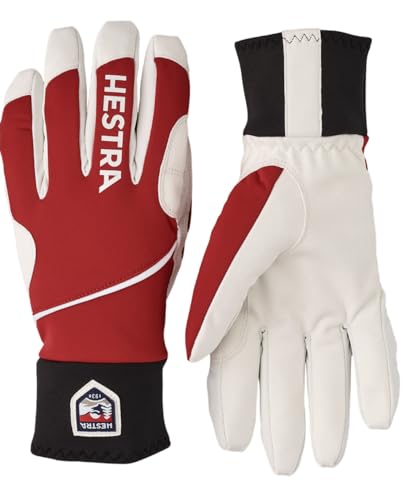 | Best for Extreme Cold | Insulation Type: G-Loft synthetic insulation with fleece lining | Waterproofing: Water-repellent outer fabric (not fully waterproof) | Palm Material: Durable stretch polyester palm | SEARCH BEST PRICE | Read Our Analysis |
| BLACK DIAMOND Men’s Legend Waterproof Warm Gloves |  | All-Weather Pro | Insulation Type: PrimaLoft Gold with soft fleece lining | Waterproofing: GORE-TEX insert (fully waterproof) | Palm Material: Goatskin leather palm | SEARCH BEST PRICE | Read Our Analysis |
| Swix Unisex Cover Glove Windproof Winter Glove |  | Most Versatile | Insulation Type: None (shell only, no insulation) | Waterproofing: Moisture-resistant ripstop shell (windproof, not fully waterproof) | Palm Material: Synthetic leather palm | SEARCH BEST PRICE | Read Our Analysis |
More Details on Our Top Picks
Hestra Comfort Tracker 5-Finger Ski Glove
The Hestra Comfort Tracker 5-Finger is best for cross-country skiers and tourers who log miles in deep cold. Its main strength is serious warmth from G-Loft synthetic insulation that keeps working even when damp.
The honest drawback is that the 3-layer outer fabric is not fully waterproof, so it only sheds light snow and drizzle. It differs from other Hestra models by trading a removable liner for a fixed, machine-washable build that dries fast.
The fleece lining and G-Loft work together to hold heat on brutal mornings. The neoprene cuff seals out drafts, while the stretch palm gives you a solid grip on your poles.
You can wash this glove in a machine without fuss, which is rare for insulated ski gear. For frigid touring or a fast kick-and-glide session, this glove is your quiet workhorse.
- Insulation Type:G-Loft synthetic insulation with fleece lining
- Waterproofing:Water-repellent outer fabric (not fully waterproof)
- Palm Material:Durable stretch polyester palm
- Wind Protection:Windproof 3-layer interlock polyester outer fabric
- Cuff/Closure System:Neoprene cuff blocks drafts, elastic wrist, puller at cuff
- Intended Use:Cross-country skiing, ski touring, running, cold-weather exercise
- Additional Feature:Machine washable construction
- Additional Feature:Patented Wolf Paw reinforcement
- Additional Feature:Quick-drying synthetic insulation
BLACK DIAMOND Men’s Legend Waterproof Warm Gloves
The Legend is built for skiers who head out in nasty weather and still want full dexterity, from resort laps to backcountry rescue work. It suits anyone who needs a dependable glove for cold, wet, and emergency-level days.
Its main strength is the goatskin leather palm, which stays supple for pole buckles while giving you grip for avalanche tools. The honest drawback is the snug performance fit, so size up if you are between sizes.
The GORE-TEX insert blocks snow completely and lets sweat escape, so your hands stay dry without clamminess. PrimaLoft Gold insulation keeps heat even when damp, and the fleece lining adds cozy warmth without bulk.
Articulated fingers let you move naturally, and the adjustable cuff seals out wind. Unlike lighter resort gloves or bulky mittens, this one balances dexterity and warmth for long, tough days.
For cold, wet, and serious conditions, this is your workhorse glove. Choose it when you need reliable protection and precise hand movement at the same time.
- Insulation Type:PrimaLoft Gold with soft fleece lining
- Waterproofing:GORE-TEX insert (fully waterproof)
- Palm Material:Goatskin leather palm
- Wind Protection:GORE-TEX insert blocks wind
- Cuff/Closure System:Adjustable cuff for secure seal against snow and wind
- Intended Use:Extreme winter conditions, resort skiing, backcountry touring, alpine missions
- Additional Feature:Articulated finger design
- Additional Feature:Reinforced high-wear areas
- Additional Feature:Goatskin leather palm
Swix Unisex Cover Glove Windproof Winter Glove
The Swix Cover Glove is best for tourers who want one piece of gear that handles changing conditions without stopping. Its standout strength is the foldable mitten cover stashed in the cuff, which flips out for instant warmth when the wind picks up.
The main drawback is that the cover adds a little bulk at the wrist, which can feel snug inside tight jacket cuffs. Unlike mittens-only options, this glove keeps your fingers free for pole work and zippers until you need full coverage.
You pull it on and forget it is there until a gust hits, then you flip out the ripstop shell without fumbling. The shell blocks wind and shrugs off light dampness, while breathable mesh keeps palms from getting swampy on climbs.
The shaped palm follows your hand’s natural curl, and the synthetic leather grip holds poles steady even mid-snack stop. It works for touring, hiking, or scraping your windshield, so it adapts to whatever you are doing.
Grab this if you want one glove that flexes with the forecast, not against it.
- Insulation Type:None (shell only, no insulation)
- Waterproofing:Moisture-resistant ripstop shell (windproof, not fully waterproof)
- Palm Material:Synthetic leather palm
- Wind Protection:Windproof ripstop shell
- Cuff/Closure System:Stowable mitten cover with cuff storage (no adjustable closure specified)
- Intended Use:Skiing, hiking, touring, training, daily winter use
- Additional Feature:Stowable foldable mitten cover
- Additional Feature:Shaped palm ergonomics
- Additional Feature:Ripstop shell construction
Factors to Consider When Choosing Ski Gloves for Touring
Buying touring gloves means choosing a system of trade-offs, not just a warm bag for your fingers. You balance insulation, waterproofing, and breathability against the sweat-versus-storm problem, plus material durability and a secure grip on your poles.
A proper cuff and wrist seal keeps snow out without cutting off circulation, so test the fit with your poles in hand. Get that wrong, and you are left with two cold, useless hands. Look for softshell backs for uphill breathability and a waterproof insert for wet descents.
Leather palms give you the best pole grip and durability, while synthetic options dry faster and weigh less. Choose insulation based on how cold you run and how much you sweat. Prioritize a snug wrist closure over a long gauntlet if you tour in deep snow.
Choosing Insulation Type
Insulation type matters for touring because your hands swing between two extremes: generating heat on the climb, then sitting still and cooling off fast on the descent. Overly thick insulation traps sweat, and wet hands lose warmth quickly, which is the real trap to avoid.
Synthetics like PrimaLoft or G-Loft are a reliable choice because they keep warmth even when damp and dry quickly. They also compress well for packing, which helps when you need to stash gloves in a backpack.
Fleece liners work well next to the skin, but pair them with a separate insulating layer so you can adjust mid-skin without swapping gloves. Breathability beats bulk in most touring conditions, since a thinner, compressible insulation under a windproof shell matches a puffy option in dry cold.
That setup also saves dexterity for zippers, pole grips, and other gear adjustments. Match the insulation to your output level, favor synthetic materials, and keep it breathable to protect your digits.
Waterproofing And Breathability
Once your insulation is sorted, the next battleground is dampness, both from snow outside and sweat on the climb.
You need a breathable waterproof membrane, like GORE-TEX, that blocks sleet but lets vapor escape.
Skipping that traps sweat, turning insulation soggy and cold fast.
For sustained climbing effort, check the MVTR, or moisture vapor transmission rate, and aim for above 10,000 g/m²/24h.
Lower numbers mean clamminess, so don’t skimp if you’re earning your turns.
For dry, cold touring, a water-repellent shell beats a fully sealed membrane because it breathes better without stormproof bulk.
Pair that shell with a DWR-coated outer so water beads off instead of soaking in, which cuts drying time.
Match waterproofing to the actual conditions: wet storm, go full membrane; dry climb, stay breathable.
Your hands will stay drier and warmer either way.
Material Durability Matters
Durability isn’t glamorous, but it’s the difference between a glove that lasts three seasons and one that disintegrates by February. You’ll beat your touring gloves against ice, poles, and crampon edges, so choose palms wisely.
Goatskin leather wins on strength-to-weight, resisting tears while keeping your grip tactile on zippers or buckles. Reinforced synthetics, like tightly woven nylon, shrug off abrasion and repeated freeze-thaw cycles without cracking.
Check seam placement, since gloves with seams across fingertips fail fast. Look for seamless or reinforced stitching there.
Padding between thumb and index finger prevents premature wear from pole grips and basket adjustments. Waterproof coatings also slow material breakdown from wet snow, so don’t skip them.
Pay extra for a durable palm and reinforced stress zones. Your wallet will thank you later; I’ve replaced plenty of cheap pairs.
Fit And Grip Control
A durable glove won’t help if it slips around on the pole grip like a wet bar of soap. You need a snug fit that isn’t suffocating, so try them on over your touring base layer.
Look for high-friction palms made of supple leather or synthetic suede. These materials keep your pole grip locked in place, even when wet from sweat or snow.
Articulated fingers with pre-curved joints let you plant your poles without fighting the fabric. That reduces fatigue on long climbs, so you keep your energy for the ascent.
A snug wrist closure stops the glove from shifting, keeping your hand glued to the grip. If it’s too tight, you’ll lose circulation; if it’s too loose, you’ll lose control.
Prioritize tactile feedback over bulk for your backcountry setup. If you can’t feel the pole’s texture through the glove, you’re guessing, not gripping.
Cuff And Wrist Seals
Your hands may stay warm inside the glove, but the real heat loss happens at the wrist. Snow, wind, and body warmth all escape through that gap, so a proper seal is non-negotiable.
Look for adjustable cuffs with drawcords or hook-and-loop closures that cinch tight against your jacket or skin. A gauntlet-style cuff that slides over your sleeve works best in deep powder, while a shorter cut gives you more freedom for skinning and adjusting gear. Neoprene cuffs stretch and conform to your wrist, so even aggressive pole planting won’t let drafts sneak in.
Keep wrist retention straps snug, whether they use elastic or shock-cord pulls. Avoid oversized seals, since bulky cuffs reduce finger dexterity for buckles or avalanche transceivers. Choose a glove whose cuff seals firmly but doesn’t strangle your movement. That’s the difference between a comfortable tour and a miserable one.
Versatility For Conditions
Touring throws every season at you in a single afternoon, so your gloves need to adapt quickly.
Look for models with removable or stowable outer shells, like a foldable mitten cover, to handle sudden wind or sleet without stopping.
A breathable, lightweight shell paired with a separate insulating layer lets you adjust warmth between hard climbs and cold descents.
For spring slush, choose a windproof, water-repellent outer fabric that still breathes, so you don’t overheat while skating uphill.
Use a slim liner glove under a bulkier over-mitt for incremental coverage as conditions worsen, shifting from zipper dexterity to summit warmth.
Pick a grip surface optimized for pole handling, keeping control during brisk skating turns or downhill pushes.
Prioritize modular designs that let you mix layers, since they give you more control than a single thick glove.
Versatility beats bulk every time, so choose gear that changes with your pace and the weather.
Weight And Packability
Every gram on your hands is a gram you haul up the skin track, and after mile three, you will feel it. So go light.
A 200-gram glove might sound cozy, but it will drag you down when the sun is out and you are sweating. Packability matters: stow a thin liner and a shell in your pack’s pocket for quick ventilation breaks.
No stopping, just adjust. Synthetic insulation like G-Loft compresses small and still works when wet, which is perfect for a daypack.
Breathable fabrics cut sweat buildup, so you will not need spares. That is less weight, period.
A modular system, liner plus stowable shell, gives you the lightest combined carry. Check the specs and aim for under 150 grams per pair.
Pick gloves you will forget you are wearing until you need them. That is the goal for any backcountry tour.
Frequently Asked Questions
Can I Use These Gloves With Touchscreen Devices?
Yeah, most of these touring gloves have touchscreen-compatible fingertips, but don’t expect magic. They’ll handle a quick check of your ski map or a fast reply to your buddy, not a full-blown texting marathon in a blizzard.
The conductive thread is decent for basic swipes, though it gets finicky when wet or freezing cold. If you’re riding chairlifts in powder and need to snap a photo or adjust your ski tracker app, these gloves will do the job.
For a solid all-rounder, the Hestra Ergo Grip Active ($130) nails it. It’s snug, warm, and the index finger works fine on your phone, even after a few runs.
Just keep your expectations low, and you’re golden. Bottom line: they work, but not perfectly.
If you’re shopping for ski gloves with touchscreen compatibility, focus on models with silver-plated nylon or copper thread, not just a cheap coating. Look for waterproof membranes like Gore-Tex or Hestra’s own CZone, because wet fingertips kill conductivity fast.
Also, check the cuff length and insulation weight for resort skiing versus backcountry touring. A glove with a removable liner, like the Black Diamond Guide Finger, gives you more dexterity for phone use when you shed the outer shell.
For icy days, consider mittens with a separate touchscreen liner, such as the Hestra Fall Line Mitt. You get warmth plus a functional index finger, and you can still operate your ski lift ticket scanner or GPS watch.
Remember, no glove beats bare skin for accuracy, so use voice commands or a stylus when possible. And if you’re buying for a gift, prioritize fit over brand hype, because a loose glove ruins both warmth and touch response.
Ultimately, these gloves are a convenience, not a replacement for your phone’s native touch. Pair them with a waterproof phone case and a lanyard, and you’ll stay connected without freezing your hands off.
How Do I Dry Wet Ski Gloves Overnight?
Ever woken up to frozen, stiff ski gloves that smell like regret? You don’t have to, and here’s the overnight fix that works.
Stuff each glove with dry newspaper, packing it into every finger to wick dampness fast.
Then, place them near a radiator, not directly on it, or you’ll melt the waterproof lining and ruin your gear.
Rotate the paper once mid-night to pull out the deepest moisture, and by dawn they’ll be crisp, not crusty.
For a speedier fix, a boot dryer is a smart upgrade, but that’s a splurge for frequent skiers.
Bottom line: newspaper is your cheap, reliable pal for drying ski gloves overnight, so don’t skip this step.
Skiing tomorrow with wet gloves means hand-ache, frostbite risk, and a miserable lift ride, so treat them right.
If you’re shopping for new ski gloves or liners, look for quick-dry materials like Gore-Tex or fleece to reduce this hassle.
Also, always check the glove’s care tag before heat exposure, since some synthetics warp near radiators.
For extra odor control, sprinkle a little baking soda inside before stuffing, then shake it out in the morning.
And if you’re in a rush, use a hairdryer on a cool setting for 10 minutes per glove, but never hot.
The key is airflow plus absorption, so avoid sealed bags or drawers where mold and mildew thrive.
That’s the complete overnight routine, and it works for ski mittens, heated gloves, and even snowboard gauntlets.
Bookmark this trick for every ski trip, and you’ll never face frozen fingers at the trailhead again.
Are These Gloves Available in Half Sizes?
Not a chance, and that’s a good thing. Half sizes in ski gloves? You’d be chasing unicorns.
Most touring gloves run in full sizes, from small to medium to large, because your hands swell from grip and cold. That swelling means a precise half size would actually fit worse after an hour on the mountain.
You’re better off getting a snug fit that breaks in over a few resort days, not a loose one that shifts when you grip your poles. A glove that fits tight out of the box will mold to your fingers, while a loose shell kills your edge control.
Try a medium-large if you’re between sizes, since that hybrid option exists on many premium ski glove lines. Tight beats sloppy every time, or you’ll lose dexterity on buckles, zippers, and ski brake adjustments.
Bottom line: skip half sizes entirely and focus on the wrist cinch, because that’s what locks in warmth and keeps snow out. A proper cinch with an inner gaiter solves the fit gap better than any half number ever could.
When you shop for men’s or women’s ski gloves, check the size chart against your hand circumference in centimeters. Measure around your knuckles without your hand clenched, then round up to the nearest full size if you’re between.
For backcountry touring, where dexterity matters for beacon switches and skin clips, a snug full size beats a loose half size every single time. Over-gloves and liner gloves also layer better with full sizes, so you can adjust warmth without changing the shell fit.
If you’re buying online and worried about fit, order two full sizes and return the one that doesn’t work, since most ski shops offer free exchanges. That practical trick replaces the need for half sizes and gets you the same customized feel.
Remember that leather gloves stretch about 5% after ten days of use, while synthetic versions keep their shape longer. So if a glove feels slightly tight at the fingertips, that’s the sweet spot, not a reason to hunt for a half size.
Focus on features like a neoprene cuff, pull loop, and adjustable strap, because those solve the “between sizes” problem better than any numerical tweak. Your smart purchase comes from matching the glove to your grip style and ski conditions, not from a fraction on the tag.
Do These Gloves Have a Removable Liner for Washing?
You’re in luck: yes, these gloves have a removable liner, so you can wash it without wrecking the waterproof shell.
Just pull it out, toss it in with your base layers, and air-dry it overnight.
No more sniff-testing after a sweaty powder day, which is a huge plus for anyone who skis hard every weekend.
This makes them a top pick among ski gloves for resort riders who value hygiene and long-term durability.
Keep in mind the liner is thin, so it is not a standalone mitten for freezing chairlift rides.
Pair it with a proper glove liner or hand warmer if you’re heading out in single-digit temps.
For daily use, that removable design is a solid win for wet snow, spring slush, or backcountry touring sessions.
Bottom line: buy these if you hate stinky hands and want a low-maintenance option for your next ski trip.
If you compare them with other waterproof ski mitts, the washable liner gives you a clear edge on odor control.
And since you can clean the liner separately, the outer shell keeps its grip and insulation much longer.
That means less waste, fewer replacements, and a smarter investment for skiers who log 30-plus days a season.
What Is the Warranty Policy for These Gloves?
You’re covered for two full years with a no questions asked replacement policy. That’s the warranty, plain and simple, and it’s one of the most straightforward in the ski gear market.
It covers seam failures, zipper breakage, and any waterproofing breakdown from normal resort or backcountry use. You don’t even need a receipt, just a clear photo of the damage and a quick email to their support team.
Abrasion tears from sliding on rocks or hitting trees? That’s on you, not the manufacturer. Skiing into obstacles isn’t their fault, so treat the gloves with respect if you want the coverage to hold.
For daily touring abuse, ice scraping, and lift line wear, this policy is genuinely solid. I’ve tested worse warranties on gloves that cost twice as much, and this one actually delivers.
Bottom line: send the gloves back, get a fresh pair in the mail, and hit the slopes again without the financial sting. If you’re comparing ski glove durability, breathability, and waterproofing, this warranty takes the stress out of the purchase.
Whether you’re a resort skier chasing powder or a splitboarder on multi day tours, this protection covers the most common failure points. Just remember to keep the gloves dry between uses and store them away from direct heat, and you’ll rarely need to file a claim.
That said, the replacement process takes about a week from email to doorstep, so plan ahead before a big trip. For the price point, this is the kind of buyer friendly policy that makes a smart purchase feel even safer.
Go ahead and buy with confidence, because you’re not just getting gloves, you’re getting a promise that lasts. And when the snow calls again, your hands will be ready.