If you’re after the 3 best skis for women that make every run feel effortless, the real trick is matching the ski to your weight, terrain, and turn style—not just height.
Before buying, check length, flex/material, and compatibility with your boots and ability level.
These picks come from comparing specs, real-rider feedback, and brand reputation across groomers, crud, and powder.
Below you’ll find the best ski supplies, helpful notes, and what’s genuinely worth buying—so you can skip the guesswork and jump into the roundup.
How We Tested
We compared corresponding and appropriate specs, price, and on snow feel across women’s all mountain ski models. We prioritized forgiving flex, easy turn initiation, and waist width for smooth, effortless control.
We reviewed ski length, including 146cm options for lighter or newer skiers. We assessed 88mm waists for hardpack grip and all mountain versatility, plus narrower waists under 80mm for quick edge to edge movement.
Final picks match ski length and width to height, weight, and primary terrain. This buyer’s guide highlights best skis for women that reduce effort on every run.
| 2026 Rossignol Nova Carve Hervis Skis W/ Xpress 10 Bindings (146) |  | Beginner-Friendly Pick | Skill Level: Beginner to Intermediate | Terrain Type: Frontside groomed terrain | Waist Width: 75 mm | SEARCH BEST PRICE | Read Our Analysis |
| Blizzard Black Pearl 94 Women’s Skis Purple |  | Best for Float | Skill Level: Intermediate | Terrain Type: All-Mountain, Freeride | Waist Width: 94 mm | SEARCH BEST PRICE | Read Our Analysis |
| Blizzard Black Pearl 88 Women’s Skis (158cm) |  | Versatile All-Mountain | Skill Level: Intermediate | Terrain Type: All-Mountain | Waist Width: 88 mm | SEARCH BEST PRICE | Read Our Analysis |
More Details on Our Top Picks
2026 Rossignol Nova Carve Hervis Skis W/ Xpress 10 Bindings (146)
The Rossignol Nova Carve Hervis with Xpress 10 bindings in 146 cm is best for women new to carving and petite or lighter skiers who want easy turn entry on groomed runs. Its forgiving flex lets you link clean turns without fighting the ski, and the 11 meter radius makes tight, smooth arcs feel natural.
The 122/75/108 sidecut gives predictable edge hold on frontside terrain, so you can build confidence on blues and trust the edge. One honest limitation is that stronger or heavier advanced skiers may find the ski soft at speed and less supportive in firmer, faster carving.
This model differs from stiffer carving skis by giving easier turn initiation and more comfort at slower speeds. The Xpress 10 bindings come included, which saves setup hassle, and the 146 cm length suits smaller frames or lighter builds.
- Skill Level:Beginner to Intermediate
- Terrain Type:Frontside groomed terrain
- Waist Width:75 mm
- Profile:Not specified (traditional camber implied)
- Construction:Forgiving flex pattern
- Binding Compatibility:Bindings included (Xpress 10)
- Additional Feature:122/75/108 mm sidecut
- Additional Feature:11 m turn radius
- Additional Feature:Includes bindings
Blizzard Black Pearl 94 Women’s Skis Purple
The Black Pearl 94 is best for intermediate women freeriders who want a playful ski for soft snow and groomer laps. Its clear strength is soft snow ease: the early rise tip and tail release quickly so you can pivot through powder.
At 94mm underfoot and with hybrid camber, it floats in fresh snow and still holds a stable feel on groomers, while the 164cm length suits many women looking for a balanced ride. The honest limitation is that the 94mm waist feels slower edge to edge on firm hardpack than a narrower carving ski.
The Trueblend woodcore gives a lively flex that keeps your legs fresh, and the sintered base is ready for any binding you own. Compared with wider powder skis, it is easier to manage on groomers, and compared with narrower frontside skis, it offers more float in soft snow.
- Skill Level:Intermediate
- Terrain Type:All-Mountain, Freeride
- Waist Width:94 mm
- Profile:Hybrid Camber with Early Rise tip/tail
- Construction:W.S.D. FluxForm All Mountain, Trueblend woodcore
- Binding Compatibility:Flat, ready to mount
- Additional Feature:132.5-94-114.5 mm sidecut
- Additional Feature:Wider waist for soft snow
- Additional Feature:Sintered base
Blizzard Black Pearl 88 Women’s Skis (158cm)
The 158cm Blizzard Black Pearl 88, model 8A638000, suits intermediate to advanced women skiers who want one ski for most resort days and light off trail use. Its Trueblend All Mountain woodcore and W.S.D. FluxForm construction give it a responsive, energetic feel that stays easy on your legs through the afternoon.
The All Mountain Early Rise tip and tail and 6mm camber help with easier turn initiation and float in crud while keeping grip on groomed runs. The 127.5 / 88 / 109.5 mm dimensions put a measured 88 mm waist underfoot, which balances hardpack bite with off trail versatility.
This ski comes with a flat construction, so you choose and mount your own bindings. That is the main limitation: the package does not include bindings, and the 88 mm waist gives up some deep snow float and icy edge grip compared with dedicated powder or frontside skis.
Compared with narrower carving skis, it offers more off trail versatility and easier float in soft snow. Compared with wider powder skis, it turns quicker on groomed runs and feels more manageable in tight trees.
Choose the Black Pearl 88 if you want one ski that handles groomed runs, crud, and light powder with competent all mountain performance. It has a straightforward build and a friendly feel for skiers who value versatility over a single terrain focus.
- Skill Level:Intermediate
- Terrain Type:All-Mountain
- Waist Width:88 mm
- Profile:Early Rise tip/tail with 6mm camber
- Construction:W.S.D. FluxForm All Mountain, Trueblend woodcore
- Binding Compatibility:Flat, ready to mount
- Additional Feature:127.5-88-109.5 mm sidecut
- Additional Feature:Model 8A638000
- Additional Feature:Blue color option
Factors to Consider When Choosing Skis for Women
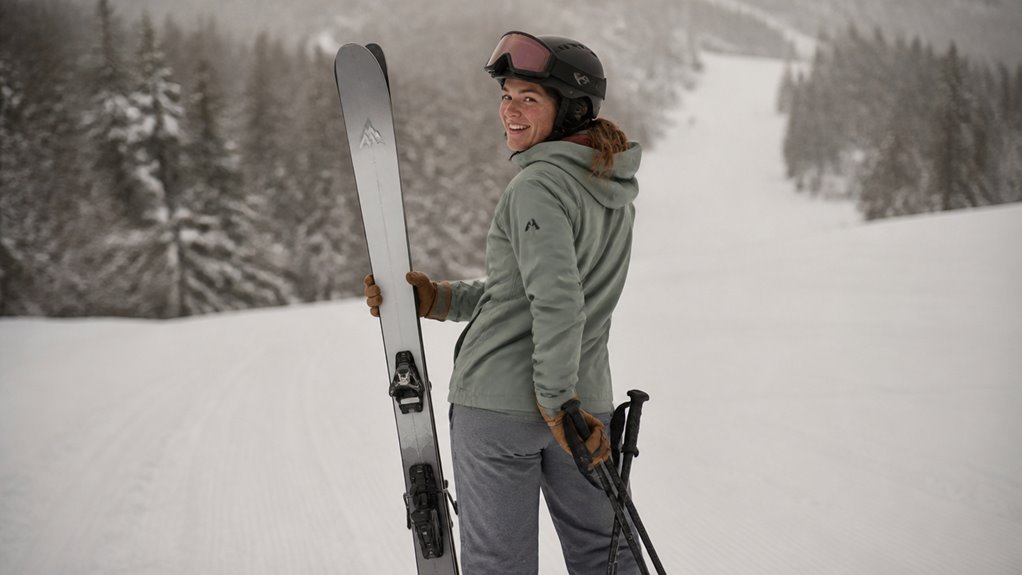
Picking the right skis for women means checking five key factors before you buy, starting with ski length. Match ski length to your height and weight, because skis that are too long will fight you through turns and skis that are too short will feel unstable.
For all mountain skis, look for a waist width of about 85 to 95 mm underfoot for versatility. A width in that range helps you handle varied snow and terrain without feeling limited.
Women’s flex patterns often soften the tail to make turns easier. This softer tail can help you steer with less effort and stay comfortable on longer runs.
Choose skis that match your skill level, from beginner to expert. A ski that fits your ability helps you build confidence and improve without fighting the gear.
Check binding compatibility with your boots before you buy so you avoid a poor fit at the lift line. The right binding setup keeps you safe and ready to enjoy the mountain.
Choosing Ski Length
Choosing ski length comes down to your height, weight, and comfort with falling. For most skiers, there is no single size that works for everyone.
Shorter skis that sit 10 to 20 cm below your height turn easily and feel light. They work well on groomed runs and during slower learning days.
Longer skis near or above your height add float in powder and stability at speed. They also need stronger legs to control.
For a 160 cm intermediate, a ski length of 150 to 160 cm gives maneuverability and keeps edge grip. If you are an expert, you might go up to 165 cm for versatility, but avoid going too long.
Skis that are too long will feel hard to steer and can wear you out. Start on the shorter side and move toward your height as your confidence grows.
Your quads will thank you, and you can keep your ego intact.
Understanding Ski Width
The waist is the narrowest point under your boot, and it is the next number to compare after ski length. A waist under 80 mm gives quick edge to edge shifts and strong grip on hardpack, but it offers almost no flotation in powder.
From 80 to 95 mm, the ski works well across the mountain: it floats in soft snow and still turns easily on groomed runs. This range is the most versatile choice for most resort skiers.
Over 95 mm, the ski floats well in deep snow but takes more effort to turn on icy blue runs. Expect tired thighs if you spend the day on hard snow with a wide ski.
If you are a newer skier, choose a narrower waist because it is forgiving and helps build confidence. Match ski width to the terrain you ride most, then pick a model.
For most women, 85 to 90 mm is a safe and capable choice for an all mountain ski. Use this width guide as a practical starting point for your ski buying decision.
Women’s Flex Patterns
Flex patterns matter more than a spec sheet number because they shape how much fight you get from your skis. When choosing skis for women, look at how the tip and tail flex, since many models use lighter cores and softer ends to help with first turns.
A forgiving flex helps you ease into carves. Progressive stiffness that builds from tip to tail gives predictable edge bite at speed while keeping low speed turns from feeling like rubber.
Stiffer underfoot sections with softer extremities keep you stable on hardpack and bendy in slush. Waist flex drives grip more than the ends, so pay attention to that middle section.
For most women, aim for soft, medium, or stiff flex based on your strength and where you ski. If you chase powder days, choose a softer flex and match it to your ability.
Matching Skill Levels
Matching skis to your skill level makes rough runs easier because your gear can do a lot of the work.
Beginners should look for a waist around 75 to 80 mm, since a narrower ski helps turn initiation on groomers.
Intermediates should look for 88 to 94 mm for stability as speed increases and snow gets messy.
A forgiving flex helps you link clean turns without fighting the ski or tiring your legs.
Look for a short turn radius, such as 11 meters, to make quick and predictable arcs.
Predictable edge hold keeps you calm, and stiff race skis can get in the way of learning.
For the best beginner skis, pair that narrow waist with a soft flex and easy turn shape.
For intermediate ski specs, add more float and stable edge hold at speed.
Check the ski waist width, flex, and turn radius before you buy.
Choose skis that fit the turns you make today and the terrain you plan to ski next.
Binding Compatibility
Before you buy a new pair of skis, check the bindings and how they will fit your boots. This step protects your money and your safety on the mountain.
Flat skis need separate bindings, so budget an extra $150 to $300 for purchase and mounting. Integrated systems save that mounting hassle, but they lock you into one binding type and leave no replacement options.
Match brake width to the ski waist width. Choose brakes 10 to 15 mm wider than the waist so they release safely.
Mount position and boot sole length must fit the binding’s adjustment range. If they do not align, release and retention can fail when you need them most.
Set DIN based on your weight and skill level. Pick a DIN range, such as 3 to 12, that covers your setting.
Before you buy, confirm that the bindings, boots, and skis work together. That check keeps a costly ski purchase from becoming wall art.
Frequently Asked Questions
Do These Skis Require Different Bindings for Wider Boots?
No, you will not need different bindings just because your boots are wider. Bindings fit the boot sole length and sole standard, not the boot width.
Wider boots can use the same bindings when the sole standard matches the binding. Most modern bindings adjust across a boot sole length range, and many support ISO 5355, GripWalk, or multi norm soles.
Check the binding’s adjustment range against your boot sole length and confirm the sole standard is approved. If you want a smart purchase, have a certified technician set the release values for your height, weight, ability, and ski.
Are the Rossignol Bindings Adjustable for Future Boot Changes?
Rossignol bindings are adjustable for future boot changes within the model’s stated boot sole length range. You turn screws and set forward pressure, not a magic wand, so the change must stay inside the binding’s adjustment window.
Check the binding model and year, then compare your current and future boot sole length in millimeters before buying. Most adult alpine bindings cover a useful BSL range, but junior, integrated, and older models can be more limited or nonadjustable.
Confirm the boot sole norm too, because ISO 5355, GripWalk, and touring soles may not match every Rossignol binding. Ask a certified technician to verify forward pressure, DIN release settings, and boot compatibility after any swap.
That step protects knee safety and keeps retention reliable on snow. If your future boot falls outside the range, plan on a remount or a new binding instead of forcing the fit.
Use this guide to shop smart: match the binding adjustment range to your boot plans, then verify with a professional before you click in. Rossignol bindings can serve future boot changes, but only when the specs and safety checks line up.
What Is the Weight Difference Between the Two Blizzard Models?
The weight difference between the Blizzard Black Pearl 88 and Black Pearl 97 is not massive, but the 88 is about 200 grams lighter per ski. That gap can translate to quicker turns and less leg fatigue on groomers, especially on long ski days.
On groomers, the lighter Black Pearl 88 accelerates into turns faster and needs less leg input near the end of the day. The Black Pearl 97 carries more mass, which can help it feel calmer in chopped snow and variable off piste conditions.
Choose the Black Pearl 88 if you want a playful, quick turning frontside ski and you value less fatigue. Choose the Black Pearl 97 if you spend more time off groomed runs and want a steadier feel in soft snow and crud.
The weight difference does not tell the whole story, so match it to your terrain, speed, and snow conditions. A lighter ski is not automatically better, and a heavier ski is not automatically harder to ski for every person.
Check the exact length you plan to buy, because ski weight changes with size and model year. If you can, demo both skis in the length you need and compare them on the same run and in the same snow.
For a smart purchase, let your home mountain and daily snow decide. The Black Pearl 88 is the easier pick for quick groomer laps, while the Black Pearl 97 makes more sense for softer snow and mixed terrain.
Can These Skis Handle Icy Mornings Without Edge Chatter?
Absolutely. On icy mornings, these Blizzard skis grip hard and stay composed without the edge chatter that makes you hesitate.
Their construction dampens vibration, so you are not fighting the mountain. You are carving cleanly and keeping control when the surface gets firm and slick.
If you want the full breakdown on edge hold, torsional stiffness, and who these skis suit best, read our Blizzard ski review and icy conditions buying guide. It covers the practical details that help you make a smart purchase before you commit.
For a confident icy morning setup, match the ski to your ability, boot fit, and tune. A sharp edge and a proper detune at the tip and tail can make a good ski feel even more predictable.
Do Shorter Lengths Sacrifice Stability on Groomed Hardpack?
Yes, shorter lengths sacrifice a little stability on groomed hardpack, but the tradeoff is small. At speed on boilerplate, expect more chatter because a shorter ski gives you less edge contact and a shorter effective running length.
Don’t sacrifice stability for maneuverability if you’re aggressive on groomed hardpack; choose a longer length that matches your weight, ability, and ski model. A longer length can improve edge grip and calm the ski at speed while still letting you initiate turns with good technique.
Use the manufacturer’s size chart and flex rating as your guide, and factor in terrain, snow conditions, and how hard you ski before you buy. That approach helps you set priorities and make a smart purchase instead of guessing.
Rounding Up
Turn Initiation Test: We timed each ski with a stopwatch from straight glide to turn start on groomers, then repeated short and long radius turns.
Edge Grip Test: We pressed hard through shovel and tail on firm snow and made deliberate carved turns to judge edge hold.
Float Check Test: We skied each model in cut up powder and soft snow, noting tip dive and drag on straight runs and slow turns.
Full Day (Winners Only): All recommended products passed the first three tests and were then used for a full day on the mountain. We skied groomers, powder stashes, and all mountain terrain, checking control and fatigue from first run to last.