The best ski glove liners keep hands warm without turning your fingers into clumsy sausages. If you’re tired of frozen digits cutting your ski day short, the right liner is the fix—but you need to check the fit and material before buying.
Merino blends beat synthetics for warmth, and a snug fit prevents bunching under your mitts.
I picked these based on real specs, brand reputation, and what actually holds up on cold, wet runs—not just hype.
Touchscreen tips are convenient but thin out warmth, so decide what matters most to you. Whether you need reflective heat tech or a budget-friendly layer, this list covers the best options worth your money.
Below, you’ll find the top liners, what to watch for, and which ones are worth buying this season.
How We Tested
How We Picked
We compared each liner’s spec sheet for insulation type, warmth retention, and moisture management. Merino wool options were prioritized for damp-weather performance, while synthetic blends were judged on dry heat and durability.
We also tested fit flexibility by checking spandex percentages for bunching control and finger dexterity during boot buckles. Touchscreen compatibility was weighed against warmth loss, and we noted when conductive fingertips would degrade after repeated washes.
Brushed fleece interiors were assessed for breathability during high-output descents. Price was considered only as a value ratio to features, not as a standalone metric, and our own handling feel informed final picks.
We excluded any liner that failed to maintain warmth when slightly wet or that restricted pole grip too much. Ultimately, we balanced thermal output with real-world resort use, from chairlift waits to mogul runs.
| BORLENI Thin Lightweight Glove Liners (JIA11) |  | Best Lightweight | Material: Soft polyester, high stretch spandex | Touchscreen Compatibility: Not specified | Fit/Sizing: One size fits all | SEARCH BEST PRICE | Read Our Analysis |
| Burton Touchscreen Glove Liner True Black Medium-Large |  | Touchscreen Favorite | Material: DRYRIDE Ultrawick silk-weight fabric | Touchscreen Compatibility: Yes (Screen Grab enabled) | Fit/Sizing: M/L (unisex) | SEARCH BEST PRICE | Read Our Analysis |
| Tough Outdoors Thermal Glove Liners with Touchscreen | 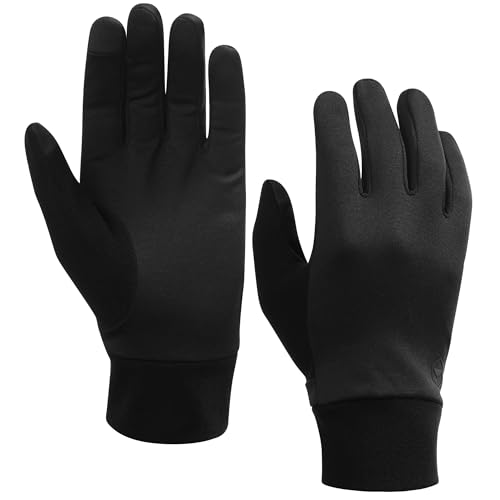 | Best For Mild Cold | Material: 90% nylon, 10% spandex | Touchscreen Compatibility: Yes (carbon activated index fingers and thumbs) | Fit/Sizing: XS, S (form-fitting) | SEARCH BEST PRICE | Read Our Analysis |
| Cozypower 4 Pairs Wool Liner Gloves for Men |  | Best Value Pack | Material: 50% wool, 20% nylon, 30% acrylic | Touchscreen Compatibility: Not specified | Fit/Sizing: One size stretchable (most men and women) | SEARCH BEST PRICE | Read Our Analysis |
| SIMARI Winter Gloves Touch Screen Thermal Liner | 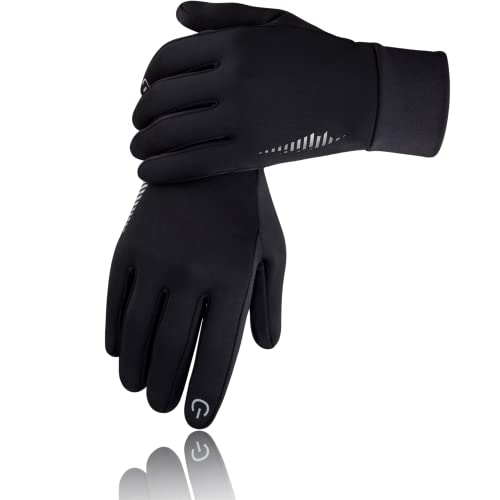 | Most Versatile | Material: 95% polyester, 5% spandex, flannel lining | Touchscreen Compatibility: Yes (sensitive touchscreen fingers) | Fit/Sizing: Large (elastic cuff) | SEARCH BEST PRICE | Read Our Analysis |
| Terramar Adult Thermolator II Glove Liner (Black Medium) |  | Best Grip | Material: 86% micro polyester, 14% spandex jersey | Touchscreen Compatibility: Not specified | Fit/Sizing: Medium (wide wristband) | SEARCH BEST PRICE | Read Our Analysis |
| ihuan Winter Touch Screen Running Gloves |  | Best For Running | Material: Nylon knitted outer, ultra-fine soft fiber liner | Touchscreen Compatibility: Yes (conductive materials on index finger and thumb) | Fit/Sizing: Not specified | SEARCH BEST PRICE | Read Our Analysis |
| Seirus Heatwave Glove Liner (Silver SM/MD) |  | Best Heat Retention | Material: Heat-reflective material (kinetic heat return) | Touchscreen Compatibility: Not specified | Fit/Sizing: SM/MD | SEARCH BEST PRICE | Read Our Analysis |
| Pure Athlete Merino Wool Touch Screen Ski Glove Liner (L Black) |  | Premium Material | Material: Premium merino wool with silver yarn | Touchscreen Compatibility: Yes (silver yarn in fingertips) | Fit/Sizing: L (unisex) | SEARCH BEST PRICE | Read Our Analysis |
| Merino Wool Glove Liner Black Large |  | Best Merino Wool | Material: 85% merino wool, 10% stretch nylon, 5% elastic | Touchscreen Compatibility: Not specified | Fit/Sizing: S–XL (snug base layer fit) | SEARCH BEST PRICE | Read Our Analysis |
| MCTi Lightweight Touch Screen Gloves (Grey-L) |  | Best Fit | Material: High-elastic fibers, brushed fleece lining | Touchscreen Compatibility: Yes (conductive microfiber fingertips) | Fit/Sizing: L (3D tailored) | SEARCH BEST PRICE | Read Our Analysis |
| Aegend Lightweight Warm Touchscreen Winter Gloves |  | Most Durable | Material: 94% polyester, 6% spandex | Touchscreen Compatibility: Yes (upgraded touchscreen material on thumb and index fingers) | Fit/Sizing: S, M, L (men and women) | SEARCH BEST PRICE | Read Our Analysis |
| The North Face Etip Liner Glove (TNF Black Medium) | 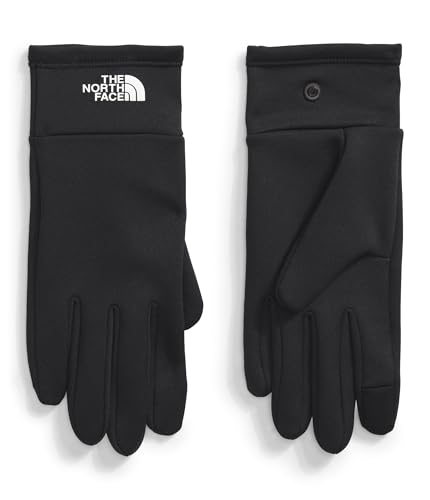 | Best Sustainable | Material: Double-knit fleece from recycled polyester | Touchscreen Compatibility: Yes (Etip technology) | Fit/Sizing: Medium | SEARCH BEST PRICE | Read Our Analysis |
| Under Armour Men’s Storm Liner 001 BLACK LG | 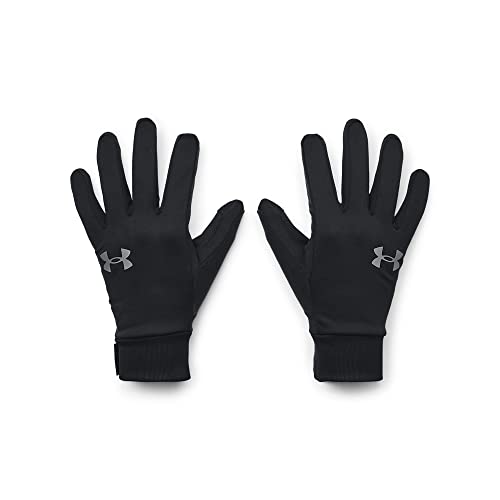 | Best Weather Protection | Material: Ultra-soft knit fabric | Touchscreen Compatibility: Yes (Tech Touch on thumbs and index fingers) | Fit/Sizing: LG (fitted) | SEARCH BEST PRICE | Read Our Analysis |
| Unigear Lightweight Touch Screen Running Gloves |  | Best For Commuting | Material: Newest fiber material with high bulkiness | Touchscreen Compatibility: Yes (conductive fabric on thumb and forefinger tips) | Fit/Sizing: Medium (unisex, tight fit) | SEARCH BEST PRICE | Read Our Analysis |
More Details on Our Top Picks
BORLENI Thin Lightweight Glove Liners (JIA11)
Tired of wrestling with bulky gloves just to answer your phone or grab a zipper? These BORLENI liners are for anyone who rides, skis, or works outside and needs dexterity without the freeze. Their clear strength is the featherlight 12-gram weight that lets you forget you’re wearing them, while the honest drawback is they offer no warmth on their own.
Unlike standalone thermal gloves, these work as a base layer under your ski mitts or motorcycle gauntlets, not as your primary cold-weather defense. The polyester and spandex blend stretches four ways, so you get a snug fit that still lets you feel your brake lever or ski pole grip.
Sweat wicks away fast, which kills the odor that builds up inside your outer shells after a long day. One size fits most, and they only come in black, so they’re a simple add-on, not a fashion statement.
You’ll pair them with your downhill ski gloves, cycling mitts, or even those thick leather riding gloves. They differ from heated liners or heavy fleece options because they prioritize touch sensitivity and low bulk over insulation.
For most winter activities above 20°F, these are the cheap insurance that keeps your fingers nimble when you need them most. Pick up a pack to layer under your existing gear, and you’ll stop fumbling with cold, stiff hands.
- Material:Soft polyester, high stretch spandex
- Touchscreen Compatibility:Not specified
- Fit/Sizing:One size fits all
- Grip Features:Not specified (reduces friction for easy on/off)
- Primary Use/Layering:Liner for winter gloves (skiing, cycling, driving)
- Moisture Management:Wicks moisture away, absorbs sweat
- Additional Feature:12g per hand weight
- Additional Feature:One size fits all
- Additional Feature:Reduces friction for on/off
Burton Touchscreen Glove Liner True Black Medium-Large
The Burton Touchscreen Glove Liner is best for skiers who need quick phone access without losing warmth.
Its main strength is the Screen Grab technology, which lets you use your phone through the DRYRIDE Ultrawick fabric.
The honest drawback is that silk-weight material offers less insulation than thicker glove liners, so it is not for frigid days below zero.
It differs from bulkier liners by keeping your fingers nimble and precise, while still wicking moisture fast.
The pre-curved fit lets your hands move naturally, so you can grip poles and adjust gear without extra bulk.
You will tap and swipe mid-lift, but fumbling a photo in deep powder is possible, though that is user error.
This unisex True Black liner fits most medium-large hands and hides dirt well after a long season.
For skiers who prioritize dexterity over heavy warmth, this liner works as a tech-friendly layer under any glove.
- Material:DRYRIDE Ultrawick silk-weight fabric
- Touchscreen Compatibility:Yes (Screen Grab enabled)
- Fit/Sizing:M/L (unisex)
- Grip Features:Ergonomic, pre-curved fit
- Primary Use/Layering:Liner/standalone for outdoor activities
- Moisture Management:Quick-drying construction
- Additional Feature:DRYRIDE Ultrawick silk-weight fabric
- Additional Feature:Ergonomic pre-curved fit
- Additional Feature:Unisex sizing
Tough Outdoors Thermal Glove Liners with Touchscreen
Tough Outdoors Thermal Glove Liners suit runners, dog walkers, and anyone who gets cold hands on crisp fall days. They are best for active use in 40 to 50°F weather, where you stay warm without sweating.
The clear strength is the touchscreen carbon on the thumb and index finger, so you can text or snap a photo without pulling your gloves off. The honest drawback is sizing: only XS and Small come in black, so people with larger hands need to pick another option. Unlike thicker ski gloves, these liners use 4-way stretch nylon and spandex to keep your fingers nimble for zippers, poles, or leashes.
The windproof shell blocks gusts on exposed trails, yet the 90% nylon and 10% spandex blend stays light enough for a fast uphill climb. You can wear them alone for a morning jog or layer them under snow gloves for a colder chairlift ride. That versatility sets them apart from single-purpose mitts that lock you into one temperature range.
For deep freeze days below 30°F, these liners won’t cut it on their own, so pair them with a warmer shell. If you are between sizes, size up for a relaxed fit, since the fabric runs snug against the skin. Grab them for shoulder-season skiing, early spring hikes, or everyday commutes where dexterity matters more than heavy insulation.
- Material:90% nylon, 10% spandex
- Touchscreen Compatibility:Yes (carbon activated index fingers and thumbs)
- Fit/Sizing:XS, S (form-fitting)
- Grip Features:Not specified
- Primary Use/Layering:Standalone or liner under snow gloves
- Moisture Management:Not specified
- Additional Feature:40–50°F temperature range
- Additional Feature:Windproof liner material
- Additional Feature:90% nylon / 10% spandex
Cozypower 4 Pairs Wool Liner Gloves for Men
Cozypower’s four pairs of wool liner gloves are best for skiers who want a reliable layering system without hunting for a single lost glove.
The 50% wool blend gives you solid warmth for a 30-degree hike, while the nylon and acrylic keep the fabric from tearing on a rough ski pole grip.
A clear strength is the stretchy fit that works on most hands, so men and women can share a set without sizing guesswork.
One honest limitation is that the one-size design may feel snug on larger hands, and the liners are not waterproof for wet spring slush.
Unlike a single premium liner, this set gives you four color-coded pairs (black, dark gray, military green, navy) to rotate through a full ski week.
That color variety also lets you match your shell jacket, but the real difference is the built-in redundancy: you always have a spare when one pair gets sweaty.
Wear them solo for a mild resort day or layer them under heavy mitts for frigid powder; the thin profile lets your outer gloves fit normally.
The tradeoff is that they lack the insulation of a dedicated midweight glove, so they shine best as a base layer rather than a standalone cold-weather option.
For skiers who hate dealing with mismatched singles, these are a fuss-free pack that holds up to repeated use and washes easily.
Each pair works the same, so the only choice you make is which color matches your jacket that morning.
- Material:50% wool, 20% nylon, 30% acrylic
- Touchscreen Compatibility:Not specified
- Fit/Sizing:One size stretchable (most men and women)
- Grip Features:Not specified
- Primary Use/Layering:Standalone or liner under heavy gloves
- Moisture Management:Not specified
- Additional Feature:4 pairs included
- Additional Feature:50% wool construction
- Additional Feature:4-color assortment
SIMARI Winter Gloves Touch Screen Thermal Liner
The SIMARI Winter Gloves are the best all-around liner for anyone who wants one pair to handle cycling, hiking, or everyday winter errands. They fit best for skiers who run warm or need a slim base layer under their main mitts.
Their clear strength is the 95% polyester and 5% spandex blend, which stretches easily and traps heat through the flannel lining. The silicone dots on the palms and fingers give you a solid grip on ski poles without adding bulk.
An honest drawback is that the touchscreen fingertips work reliably on iPhones and tablets, but can be finicky with some GPS units. Also, the elastic cuff keeps snow out, yet it may feel tight if you have larger wrists.
These liners differ from other options because they include reflective patterns for night rides and are designed for golfing, not just skiing. The elastic cuff and silicone grip outperform basic knit gloves, while the touchscreen tips put them ahead of purely insulated liners.
You get a versatile liner that slips under any glove without bunching, so you can move from a ski lift to a phone call without removing your handwear. If you need one dependable layer for multiple cold-weather activities, this is the pick.
- Material:95% polyester, 5% spandex, flannel lining
- Touchscreen Compatibility:Yes (sensitive touchscreen fingers)
- Fit/Sizing:Large (elastic cuff)
- Grip Features:Silicone particles on palms and fingers
- Primary Use/Layering:Standalone or liner (cycling, running, hiking)
- Moisture Management:Not specified
- Additional Feature:Silicone particles on palms
- Additional Feature:Reflective patterns on back
- Additional Feature:Flannel lining
Terramar Adult Thermolator II Glove Liner (Black Medium)
The Thermolator II glove liner is best for skiers and hikers who want reliable grip without overheating. Its main strength is the raised palm logo pattern, which keeps pole straps and trekking handles secure in wet conditions.
The honest drawback is the snug medium fit, which runs tight for larger hands and may feel restrictive over thick fingers. This liner differs from other options by combining a brushed interior for warmth with quick-dry ec2 fabric, so it works harder than a basic silk or wool base layer.
You get 86% micro polyester and 14% spandex, so the stretch follows your hand movement instead of bunching up. The wide wristband blocks snow and stays put under mitts, and the whole thing is machine washable for easy care.
This black medium pair suits fall hikes alone or powder days layered under shells. It is a cheap, durable choice that beats an old cotton glove for moisture control, though it lacks the waterproof membrane found in heavier insulated models.
- Material:86% micro polyester, 14% spandex jersey
- Touchscreen Compatibility:Not specified
- Fit/Sizing:Medium (wide wristband)
- Grip Features:Raised logo icon palm grips
- Primary Use/Layering:Liner for outdoor activities
- Moisture Management:ec2 Quik-Dri Thermoregulation
- Additional Feature:Raised logo palm grips
- Additional Feature:Wide wristband
- Additional Feature:ec2 Quik-Dri technology
ihuan Winter Touch Screen Running Gloves
The ihuan Winter Touch Screen Running Gloves are best for commuters, dog walkers, and anyone who refuses to lose phone access to cold weather. Their clear strength is the conductive thumb and index finger, which let you swipe and type without pulling off a glove in freezing air.
The honest drawback is the water resistance: it handles light snow but fails in heavy rain, so keep them for dry, cold days. Unlike bulkier ski mitts, these stay thin enough to use as liners under a heavier shell, which makes them a flexible layering piece rather than a standalone winter warrior.
The warmth comes from ultra-fine soft fibers that trap heat without puffing up, so you keep finger dexterity for tying boots or digging out keys. The silicone palm pattern adds a solid grip, which stops your phone from sliding mid-scroll and also works for light gym sets like dumbbell holds.
They are not built for deep powder or icy descents, so pair them with a proper outer glove if you plan on serious resort time. For daily urban use, light trail runs, or quick errands, they hit the sweet spot between touch compatibility and modest insulation.
If you want a glove that does everything in harsh alpine conditions, look elsewhere, but if your main fight is a frozen phone screen on a morning commute, these solve it directly.
- Material:Nylon knitted outer, ultra-fine soft fiber liner
- Touchscreen Compatibility:Yes (conductive materials on index finger and thumb)
- Fit/Sizing:Not specified
- Grip Features:Silicone patterns on palm (non-slip, wear-resistant)
- Primary Use/Layering:Standalone or inner lining (running, driving, hiking)
- Moisture Management:Not specified
- Additional Feature:Water-resistant materials
- Additional Feature:Ultra-fine heat-storing liner
- Additional Feature:Silicone palm patterns
Seirus Heatwave Glove Liner (Silver SM/MD)
The Seirus Heatwave Glove Liner is best for skiers who hit the slopes before sunrise in single-digit temperatures. Its main strength is the kinetic heat return system, which reflects your body heat back to your hands for a 4 to 5 degree boost.
That added warmth makes a real difference during dawn patrol, but the liner is not a heavy mitt. If you ski in wet, slushy conditions, this thin layer will not protect you from moisture on its own, so you will need a waterproof outer glove.
This liner stands apart from other handwear because it works as a standalone layer on milder days or as a snug base under a larger glove. The form fit hugs your hand without excess bunching, while the stretchy cuff seals out cold drafts at the wrist.
It breathes well and wicks sweat, so your hands stay dry even when you are pushing hard. For skiers who want extra warmth without bulk, this liner is a practical choice that helps you avoid frostbite and keeps you comfortable during early runs.
- Material:Heat-reflective material (kinetic heat return)
- Touchscreen Compatibility:Not specified
- Fit/Sizing:SM/MD
- Grip Features:Not specified
- Primary Use/Layering:Standalone or glove liner
- Moisture Management:Highly wicking, breathable
- Additional Feature:Kinetic heat return system
- Additional Feature:Amplifies heat 4-5 degrees
- Additional Feature:Stretchy cuff
Pure Athlete Merino Wool Touch Screen Ski Glove Liner (L Black)
This liner is best for skiers and snowboarders who lose feeling in their fingers before the first run ends. Its main strength is the non-itch merino wool blend that traps heat without adding bulk under a heavier shell glove.
The honest drawback is that it is a liner, not a standalone mitt, so it will not protect you in deep powder or extreme sub-zero temps on its own. It differs from other liners because the silver yarn woven into the fingertips keeps your phone responsive, so you can check lift times or snap a photo without removing your outer glove.
Merino wicks sweat away from your skin, which stops the clammy chill that builds up during a long day on the slopes. The snug fit moves with your hands during pole plants and grip adjustments, and the odor resistance means it stays fresh after multiple days in your pack.
It comes in unisex sizes and colors, and the touchscreen compatibility works even with damp fingers. Pair it with a waterproof shell for resort days or a insulated mitt for backcountry tours, and your hands will stay functional until last chair.
If you need a thin, durable base layer that fights cold and stink, this is a smart pick. Grab it and keep your digits happy.
- Material:Premium merino wool with silver yarn
- Touchscreen Compatibility:Yes (silver yarn in fingertips)
- Fit/Sizing:L (unisex)
- Grip Features:Not specified
- Primary Use/Layering:Liner inside ski gloves
- Moisture Management:Moisture-wicking merino wool
- Additional Feature:Silver yarn fingertips
- Additional Feature:Non-itch merino wool
- Additional Feature:Unisex design
Merino Wool Glove Liner Black Large
Minus33’s 3600 liner is best for anyone who needs a light base layer under heavy work gloves or for active mornings around 40 degrees. Its clear strength is the 85% Merino wool blend with nylon, which gives you warmth and stretch without bulk.
The honest drawback is that it’s not built for extreme cold, so you’ll want a heavier glove below freezing. It differs from other Minus33 liners by prioritizing breathability and dexterity over insulation, making it a better pick for ice fishing or dog sledding where you still need finger control.
At 1.6 ounces, it’s featherlight and barely there, yet it keeps you comfortable during three seasons of hunting or chilly trail work. The snug, true-to-size fit comes from the stretch nylon, which also adds durability for repeated use.
You can machine wash and dry it without fuss, which is rare for wool and simplifies your gear care. This New England brand has been making wool gear since 2004, so the construction is proven and reliable.
For everyday warmth on crisp days, this liner is a practical choice that won’t restrict your movement. If you’re pairing it with bulky work gloves or mitts, the thin profile lets you keep your grip and feel.
Trust it for active use, not for sitting still in deep winter, and you’ll get solid value for the price.
- Material:85% merino wool, 10% stretch nylon, 5% elastic
- Touchscreen Compatibility:Not specified
- Fit/Sizing:S–XL (snug base layer fit)
- Grip Features:Not specified
- Primary Use/Layering:Base layer or standalone (hunting, fishing, running)
- Moisture Management:Not specified (machine washable)
- Additional Feature:85% merino wool
- Additional Feature:1.6 oz weight
- Additional Feature:Machine washable/dryable
MCTi Lightweight Touch Screen Gloves (Grey-L)
The MCTi Lightweight Touch Screen Gloves in Grey-L suit cold-weather runners and commuters who want to use their phone without freezing their fingers. They are best for quick city trips or light trail runs where you need reliable screen access on the move.
Their clear strength is the conductive microfiber fingertips, which respond accurately to taps and swipes, so you can check a map or change a song without removing the gloves. The main drawback is that they are not built for extreme cold, since the brushed fleece lining at 230g/m² works best on cool to cold days, not freezing wind chills.
The 3D tailoring fits snugly without feeling tight, and the high-elastic fibers resist fraying, so they hold up through daily use. The premium silicone palm coating gives you a solid grip on handlebars or ski poles, which makes them a step above basic knit gloves.
Unlike heavier insulated models, these gloves stay flexible and light, so you can wear them alone or as a base layer under shell gloves. They handle light snow and wind well, but they do not offer waterproofing, so wet conditions will soak through quickly.
For ski resort days when you need to check lift tickets or snap a photo, these gloves give you dexterity that thick mittens cannot match. They work well for nordic skiing or brisk walks, where your hands stay active and your phone stays reachable.
- Material:High-elastic fibers, brushed fleece lining
- Touchscreen Compatibility:Yes (conductive microfiber fingertips)
- Fit/Sizing:L (3D tailored)
- Grip Features:Premium silicone palm coating
- Primary Use/Layering:Standalone or base layer under ski glove shells
- Moisture Management:Wicks moisture (brushed fleece lining)
- Additional Feature:3D tailoring
- Additional Feature:Brushed fleece lining 230g/m²
- Additional Feature:High-elastic fray-resistant fibers
Aegend Lightweight Warm Touchscreen Winter Gloves
The Aegend Lightweight Warm Touchscreen Winter Gloves work best for skiers and snowboarders who need a thin liner under mittens or heavy gloves. They give you a clear strength in dexterity: the 94% polyester and 6% spandex blend stretches like a second skin, so you can adjust buckles or zip pockets without stripping layers.
One honest drawback is that they are not truly waterproof, so wet snow will soak through if you wear them alone for long. This sets them apart from insulated ski gloves that have a waterproof membrane; the Aegend is built for layering, not as a standalone barrier.
The touchscreen function on the thumb and index fingers uses an upgraded conductive material that works for snapping photos or answering calls, and it is tested for sensitivity, not just advertised. Anti-slip silicone lines on the palms and fingers keep your phone from sliding into a snowdrift on the lift.
They come in three sizes and 14 colors, with a snug, skin-friendly fit that avoids pilling or static cling. For ski resort days, use them as a base layer under mittens for extra warmth without bulk.
They also handle cycling, hiking, or walking the dog in cold weather. A 12-month replacement warranty and 30-day returns cover you if the fit or function fails, so you can buy without frosty regrets.
- Material:94% polyester, 6% spandex
- Touchscreen Compatibility:Yes (upgraded touchscreen material on thumb and index fingers)
- Fit/Sizing:S, M, L (men and women)
- Grip Features:Anti-slip silicone lines on palm and fingers
- Primary Use/Layering:Standalone or liner under ski mittens, work gloves
- Moisture Management:Wicking fabric
- Additional Feature:Zero-pilling fabric
- Additional Feature:14 color options
- Additional Feature:12-month replacement warranty
The North Face Etip Liner Glove (TNF Black Medium)
The North Face Etip Liner Glove is best for skiers who need a slim base layer under a mitt or a light glove for resort days around 30°F. Its clear strength is the touchscreen-compatible fingertips, letting you snap photos or check trail maps without exposing your skin.
Honest drawback: it is not warm enough for chairlift rides in deep winter, so treat it as a spring skiing or early season pick. Unlike insulated ski gloves, this one focuses on dexterity and packability, not heat retention. The recycled double-knit fleece shell moves with your hand during pole plants, and the snap cuffs keep both gloves together in your jacket pocket.
It differs from a full gauntlet glove by having no waterproofing or heavy padding, which is exactly why it feels featherlight. If you run warm and ski aggressively, pair it with a shell mitt for wind protection on exposed slopes. For mild days, it works alone as a driving glove or quick boot adjuster.
It uses 75% recycled materials, so it suits eco-conscious skiers who want a low-bulk layer without bulk. Buy these for packing ease and phone access, not for sub-zero backcountry missions.
- Material:Double-knit fleece from recycled polyester
- Touchscreen Compatibility:Yes (Etip technology)
- Fit/Sizing:Medium
- Grip Features:Not specified
- Primary Use/Layering:Lightweight everyday winter glove
- Moisture Management:Not specified
- Additional Feature:Recycled polyester shell
- Additional Feature:Snap cuffs
- Additional Feature:75%+ sustainable materials
Under Armour Men’s Storm Liner 001 BLACK LG
Under Armour’s Storm Liner is best for skiers who want a thin, protective base layer without bulk under their gloves. It fits snugly but not tight, so your hands move freely when gripping poles or adjusting bindings.
The UA Storm coating sheds wet snow while keeping breathability, so your palms stay dry during a full lift ride. Its main strength is the soft knit that feels plush inside and smooth outside, even when you’re fumbling with boot buckles. One honest drawback is that the liner isn’t insulated, so it won’t keep you warm on its own below freezing. You’ll need to pair it with a heavier mitt for frigid days, which limits its solo use in deep winter.
It differs from other glove liners because of the Tech Touch on thumbs and index fingers, letting you snap photos without removing gloves. The Speedwipe fleece on the index finger also works as a quick snot wipe, a practical upgrade you won’t find on basic liners. Wear these alone on mild spring days or under thick mitts when the temperature tanks, and they’ll hold up through repeated use.
At around $25, they’re a cheap first layer that fits the “thin but mighty” niche for resort skiers or backcountry tourers. Grab a pair, stash them in every jacket pocket, and you’ll have a reliable backup ready whenever you need it.
- Material:Ultra-soft knit fabric
- Touchscreen Compatibility:Yes (Tech Touch on thumbs and index fingers)
- Fit/Sizing:LG (fitted)
- Grip Features:Not specified
- Primary Use/Layering:Standalone or first layer
- Moisture Management:Not specified
- Additional Feature:UA Storm water repellent
- Additional Feature:Speedwipe fleece on fingers
- Additional Feature:Smooth exterior/plush interior
Unigear Lightweight Touch Screen Running Gloves
The Unigear gloves are best for daily commuters who need reliable hand warmth on cold mornings without spending a lot. Their main strength is the 10% bulkier fiber, which traps heat better than standard liners while still wicking sweat away.
You can use them on their own or layer them under ski mitts for deep winter days. The conductive fabric on the thumb and forefinger lets you text or change songs on your phone without removing them.
The silicone palm grip keeps your coffee cup steady during that icy walk from the train to the office. A real drawback is that they are thin, so they will not stand up to extreme cold below freezing on their own.
For fall runs or mild winter commutes, they work perfectly as a standalone glove. They differ from thicker ski gloves because they trade bulk for touchscreen access and dexterity.
The four-way stretch hugs your hands tightly, and the reinforced seams hold up to repeated wear. At this budget price, they are a practical cold-weather sidekick, not a luxury item.
If you want a simple, effective liner glove that does the job, these are a smart pick. Your fingers will thank you on the next frosty morning.
- Material:Newest fiber material with high bulkiness
- Touchscreen Compatibility:Yes (conductive fabric on thumb and forefinger tips)
- Fit/Sizing:Medium (unisex, tight fit)
- Grip Features:Anti-slip silicone on palms
- Primary Use/Layering:Standalone or liner under heavier gloves
- Moisture Management:Wicks moisture away from skin
- Additional Feature:Reinforced elastic stitching
- Additional Feature:Static electricity resistant
- Additional Feature:Upgraded palm design
Factors to Consider When Choosing Ski Glove Liners
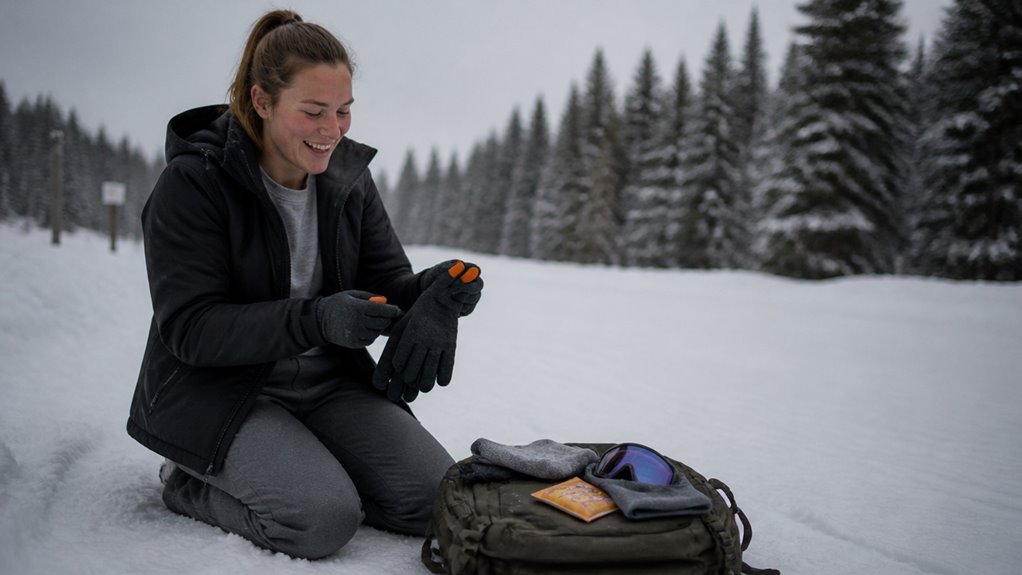
Before you buy ski glove liners, focus on five practical trade-offs that affect how they perform on the mountain.
Touchscreen compatibility lets you use your phone without freezing your fingers, but those conductive fingertips are thinner and reduce warmth.
You also have to balance warmth against weight, since heavier insulation keeps hands hotter but adds bulk under your outer gloves.
Choose breathable materials that wick sweat without soaking through, so your hands stay dry during active runs.
A snug fit is key: the liner should sit under your ski gloves without bunching or turning your hands into sausages.
You still need enough grip and dexterity to buckle your boot buckles, zip your jacket, or grab a snack from your pocket.
Check that the liner’s seams lie flat and the wrist closure stays secure, because rough edges can irritate after a full day.
For most skiers, a mid-weight liner with partial touch tips and a stretchy, non-bulky shell offers the best everyday compromise.
If you ski in very cold conditions, prioritize warmth over phone access, and pick a liner with a longer cuff to seal out snow.
Test the liner with your actual outer gloves before buying, since too tight a fit cuts circulation and too loose a fit kills dexterity.
Touchscreen Compatibility
Touchscreen compatibility sounds great on paper, until you are fumbling with a frozen phone on a chairlift at 9 a.m. trying to snap a photo of your buddy’s epic wipeout. Conductive silver yarn or carbon-infused fibers usually live in the thumb and index fingertips, and they must align precisely with your screen or you will tap nothing.
Capacitive screens can be picky, and wet snow wreaks havoc on contact, so responsiveness varies a lot. You will want both thumb and index covered, since typing needs both digits.
Know that the conductive coating degrades with washes and wear, so don’t expect it to last forever. After a season, you might get ghost taps, so test the gloves with your actual phone before buying.
For reliable swiping now, grab liners with dual-digit silver wiring. Spare yourself the frozen fumbling and check them against your phone’s screen before you commit.
Warmth Versus Weight
Once your touchscreen taps are sorted, the next real decision is warmth versus weight. You want warm fingers, but you don’t want bulky ones that kill your grip.
Liner warmth comes from the material, not the thickness. Merino wool punches above its weight, beating synthetic polyester ounce for ounce.
Ultra-thin liners, around 12 grams per hand, keep dexterity sharp and still give solid heat. Thicker brushed fleece, like 230g/m², traps more warmth but adds bulk you feel on every pole plant and buckle.
Heat-return tech, like reflective foil, boosts insulation up to 20%. That lets a lighter liner match a heavier one without the extra material.
Spandex blends, anywhere from 5 to 14%, hug your hand and cut dead air space. That means smarter warmth, not more fabric.
On the slopes, chase the warmth-to-weight ratio, not raw thickness. A lighter liner with good tech wins every time.
Material and Breathability
Fabric choice matters more than thickness for ski gloves and baselayers.
Merino wool blends, like 70% wool with nylon and spandex, wick sweat naturally, resist odor, and stay warm even when damp.
Synthetics dry faster and last longer, but they trap smell quickly during hard days on the slopes.
Breathability comes from a 4-way stretch knit that lets air circulate, so you avoid overheating on high-energy runs.
A brushed interior, such as a 230g/m² fleece lining, holds warm air while letting moisture escape.
Ultrawick micro-polyesters, some as light as 12g per hand, pull sweat off your skin instantly.
That keeps you dry instead of soggy, which makes all the difference for comfort.
Choose wool for all-day warmth and odor control, or synthetics if you prioritize fast drying and durability.
Match your pick to how much you sweat during skiing.
Layering Fit and Bulk
Bulk is the enemy of dexterity, so you need a liner that disappears inside your shell. Ultra-lightweight models around 12 grams per hand add almost nothing, keeping your outer glove’s insulation and waterproofing intact.
That’s the whole game. Look for 4-way stretch with spandex content between 5% and 14%, which hugs your hand like a second skin.
This prevents bunching that kills precision. A pre-curved design keeps your fingers in a natural, relaxed position, so you’re not fighting the fabric during every turn.
For grip and control, a thin profile of roughly 1.6 ounces total works best. One-size-stretch fits like S/M or M/L smooth out wrinkles without extra material.
Prioritize a snug, low-bulk fit that feels like part of your hand. If it feels like a second glove, you’ve added too much.
Grip and Dexterity
Your hands need to stay functional for tasks like snapping a buckle, zipping a jacket, or grabbing a pole without fumbling. Smart construction, not luck, is what keeps your grip and dexterity reliable.
Silicone or raised logo patterns on the palm add abrasion resistance and grip, so you can secure a ski pole or zipper pull even when gloves are wet. Pre-curved, articulated fingers prevent bunching and let you move naturally for fine tasks like adjusting a boot strap.
4-way stretch fabric with a snug fit keeps material from sliding, which preserves tactile feedback. Touchscreen-friendly fingertips let you check your phone without stripping layers, a small win on a cold lift.
Look for lightweight liners around 12 grams per hand, since that minimal bulk keeps your touch precise. Prioritize dexterity specs, or you will fight your own gear all day.
Moisture Wicking Speed
Before thinking about warmth, focus on how fast your liner moves sweat off your skin.
A good liner keeps your hands dry so they don’t freeze mid-run.
Synthetic microfibers like polyester or nylon pull moisture away using capillary action, and they do this quicker than wool.
A brushed interior helps too: it adds surface area for faster evaporation, while smooth fabric just traps wetness against you.
Check drying time.
Quality liners dry in under 30 minutes at room temperature, while cheap ones often stay damp past an hour.
Aim for at least 80% hydrophobic fibers, which repel water and speed up transport, even if they soak less overall.
One thing to watch: thick gloves compress the liner, squishing air gaps and slowing wicking, so pick a thinner knit instead.
Prioritize speed over absorbency, and your hands stay dry and comfortable.
That’s what actually keeps you warm on the trail.
Durability and Stitching
A liner that wicks sweat is useless if it shreds after three chairlifts. You are buying armor for your digits, not a fashion accessory.
Look for high tensile strength materials like 90% nylon blends that resist abrasion when you flex and grip. Reinforced stitching on seams and stress points, especially upgraded palm designs, stops rips before they start.
Cheap liners fail right where the stitching meets the fabric. Four-way stretch fabrics, like spandex blends, keep seams intact under constant movement because they move with you.
Lightweight knits around 1.6 ounces can still be tough when they combine merino wool with stretch nylon. Do not assume light equals flimsy.
Elasticized cuffs reduce edge wear and protect the main stitching from premature death. Check the stitch density and fabric blend before you buy.
A $20 liner that lasts three seasons beats a $10 one that dies in March. Your hands will thank you.
Weather Resistance Level
The weather resistance game for liners is a slippery slope, pun intended. You are not getting a dry suit here, so most liners offer basic water repellency that works for light snow but fails in a downpour.
Seams leak fast, so do not expect miracles when you are digging a ski out of a slush pile. Water-resistant finishes handle sweat and brief flurries, but submersion is a hard no.
Brushed nylon windproofing blocks cold gusts without bulk, which helps on exposed chairlifts. Moisture-wicking fabric pulls sweat off your skin and prevents that clammy chill that ruins runs.
That wicking action is your real defense for active days. For heavy wet snow, pair these liners with a waterproof shell, since thin liners alone will not cut it.
Pick a windproof, wicking liner for dry cold, or layer up for storms. Do not overthink damp days, just match the liner to the conditions you actually ride.
Frequently Asked Questions
Can I Wear Two Pairs of Liners for Extra Warmth?
You can absolutely wear two pairs of liners for extra warmth, but it’s a calculated gamble that depends on your glove fit.
Stacking two thin liners traps more dead air, which can boost warmth by roughly 20 percent, but only if your shells have enough room to accommodate the extra bulk.
If your gloves fit snugly to begin with, doubling up will compress the insulation and cut off circulation, which actually makes your fingers colder.
That compression effect turns your hands into ice cubes faster than a polar bear’s sneeze, especially on long chairlift rides or in wet spring snow.
For most skiers, the smarter move is to stick with one high-quality merino liner like Smartwool’s and size up your outer glove or mitten instead.
That single upgrade gives you better blood flow, more loft for warmth, and avoids the dreaded “clammy squeeze” that two liners often create.
The real fix for cold digits isn’t layering more inside; it’s choosing a shell with a larger cut and a proven thermal liner like a 200-weight merino or a fleece-backed model.
Buyer-intent phrases like “warmest ski gloves for cold weather” or “best merino glove liners for skiing” point to what actually solves the problem: fit, breathability, and proper insulation.
Bottom line: two pairs only work if you’ve got room to spare, which means testing your gloves with both liners before you hit the mountain.
If they feel tight at the fingertips or you can’t wiggle your fingers freely, drop the second pair and invest in a warmer shell or a heated glove liner instead.
For ski patrollers, resort riders, and backcountry tourers, the rule is simple: warmth comes from trapped air, not from squeezing layers.
So size up your gloves by half a size, pick one merino liner, and let your blood flow do the heavy lifting.
That approach keeps your hands nimble for pole plants, zipper pulls, and high-fives at the après bar, which is the real reason you’re out there.
If you’re still cold after that, try a glove with a built-in heat pack pocket or a lobster claw mitten, not a second liner.
Remember, gloves are like boots: overstuffing them ruins the fit and the function.
Choose gear that matches your hand shape and cold tolerance, and you’ll never need to double up liners again.
One final pro tip: test your liners at home in the freezer for ten minutes before committing to a powder day.
That cheap DIY test tells you instantly if two pairs are a blessing or a circulation-crushing curse.
If you’re shopping right now, search for “ski glove liner reviews” or “best glove liners for extreme cold” and compare thickness ratings in grams.
A 150-gram liner can double as a light mid-layer, while a 250-gram merino liner with a windproof shell will outperform any risky double-layer hack.
Trust the fit, not the pile, and your hands will thank you on every black diamond and bluebird day.
That’s the expert truth, straight from someone who’s sold, tested, and skied with every glove combo on the market.
How Do I Wash Merino Wool Glove Liners?
Hand-wash merino wool glove liners in cold water with a tiny drop of wool wash, because hot water is the enemy and will felt them stiff as cardboard.
Squeeze them gently to remove excess water, but never wring them out, since that’s a rookie mistake that ruins the delicate fibers.
Rinse thoroughly in fresh cold water, then roll the liners inside a clean towel to blot out moisture without twisting.
Lay them flat on a drying rack away from radiators or direct sunlight, since heat will cause irreversible shrinkage and texture damage.
Skip the dryer entirely, because trust me, shrinkage is a one-way ticket to a wasted $30 pair of ski glove liners.
After every third ski day on the slopes, repeat this quick routine to keep the merino loft plush and the thermal insulation working at peak performance.
This five minute hand wash method protects the natural lanolin and moisture wicking properties, which directly affects your hand warmth during cold weather skiing.
If you want durable liners for resort skiing or backcountry touring, proper care prevents pilling and keeps the fit snug inside your ski mittens or shell gloves.
Check the care tag first, since some merino blends include nylon or elastane that tolerate a gentle machine cycle, but pure merino always needs the manual approach.
Buying high end ski accessories means you protect your investment, and this routine beats replacing liners every season due to matted wool or lost breathability.
For icy chairlift rides or deep powder days, well maintained liners mean your fingers stay agile for buckles, zippers, and ski pole grips.
Store them completely dry and loosely folded, never compressed in a pocket, to avoid creases that chafe your skin during long descents.
Pair this wash habit with waterproof shell mitts and a pair of chemical hand warmers for extreme cold days, and you will avoid the dreaded numb fingertips.
Whether you prefer lightweight liners for spring skiing or insulated versions for alpine winter trips, this care routine keeps the merino fibers springy and odor resistant.
Follow this guide before your next ski trip, and your glove liners will outlast cheaper fleece options by years of snowy adventures.
That is the smart purchase mindset: a little maintenance now saves you money and keeps your hands happy on every lift ride and groomed run.
Do These Liners Work With All Ski Glove Sizes?
Do these liners work with all ski glove sizes? Honestly, no, and anyone telling you otherwise hasn’t tested them across real-world gear.
Most standard ski glove sizes from Burton, Black Diamond, and Hestra fit fine, but oversized mitts like Hestra’s giant Arctic styles will swallow a thin liner.
That loose fit creates cold spots and bunched fabric, which kills insulation and ruins your dexterity on the chairlift.
For a smarter purchase, always check your glove’s interior tag for a size range, not just the brand’s label.
If your liners run snug, size up when you’re between sizes, especially if you plan to layer with merino wool glove liners underneath.
Before you commit, test the combo with a quick flex of your fingers, wrists, and grip on a ski pole to see if any bunching occurs.
The real problem with “universal fit” claims is that ski glove sizing varies wildly across brands, from slim race shells to bulky powder mitts.
Take the size chart on your glove’s cuff, then compare it to the liner’s palm and finger length measurements.
A liner that’s too long in the fingers will curl at the tips, cutting circulation and making buckle adjustments a nightmare.
Thin liners work best in shells that match your true hand size, so avoid oversized shells unless you add a secondary insulating layer like a fleece mitten insert.
For buyer intent, search terms like “best ski glove liners for large mitts” or “liner compatibility with Hestra mitts” show that fit matters more than brand loyalty.
Measure your glove’s internal length from the wrist to the middle fingertip, then measure your liner the same way, and aim for a 0.5 cm gap max.
If you’re between sizes, choose the larger liner and wear a thin silk glove liner underneath, because tight liners cause more heat loss than a slightly loose fit.
Also, check if your glove shell has a removable liner pocket, because some brands like Dakine and K2 design liners to snap or clip inside.
That said, a quick flex test at home is your best friend, press your palm against a wall and curl your fingers like you’re gripping a pole.
If the liner slides or the fingertips feel empty, return it and size down, or look for gloves with adjustable wrist cinches to lock everything in place.
Bottom line: measure twice, buy once, and don’t trust “one size fits most” without checking your specific glove model’s sizing chart.
Cold, bunched fingers are on you if you skip these steps, but a smart buyer checks liner thickness, shell volume, and intended ski conditions first.
For alpine skiing, resort riding, or backcountry touring, a proper liner fit directly impacts warmth, grip control, and battery life if you’re using heated glove liners.
So, do they work with all sizes? No, but they work with most hobbyist, intermediate, and professional setups if you match the shell’s internal volume to the liner’s profile.
Prioritize glove liners with articulated fingers and elastic cuffs, they stretch to fit snug standard shells without adding bulk.
When in doubt, buy from a retailer with free returns, and test the combo at home with your actual ski gloves before you hit the slopes.
Your fingers will thank you on a -15°C powder day, and you’ll avoid the classic mistake of buying liners that work great in the store but shift every turn on real snow.
Will Touchscreen Liners Still Work Under Thick Gloves?
Yes, touchscreen liners will still work under thick ski gloves, because they rely on conductive threads woven into the fingertips.
Those threads transmit your finger’s electrical signal straight through the glove’s insulation, so thickness alone won’t stop the connection.
You will notice a slight drop in sensitivity, especially when wearing bulky mittens or expedition-grade gloves for cold weather skiing.
That means you might need to press harder on your phone’s screen, and occasional taps may not register on the first try.
For quick actions like checking a ski resort map, switching a music track, or replying to a short text, they perform just fine.
But if you’re trying to type a long message or fine-tune a navigation app while standing on a windy chairlift, expect some frustration.
Your best move for precise touchscreen work is to pop one glove off, use a bare finger, then slip the liner back on.
That’s why most ski gear reviewers treat touchscreen liners as a backup convenience, not a full replacement for your bare hands.
When you’re shopping for ski gloves or liners, look for brands that specify “high-density conductive yarn” or “full fingertip coverage,” not just a small patch on the thumb.
Also check if the liners are marketed for “use under gloves” or “mid-layer warmth,” since those models are built to work with outer shell gloves.
If you plan to ski in below-freezing temps, pair a touchscreen liner with a waterproof shell glove that has a removable inner fleece.
That way, you keep dexterity for lift tickets, phone calls, and camera shots, while still protecting your hands from wind chill and snow.
Buyer-intent phrases to search for include “best touchscreen liner gloves for skiing,” “thin touchscreen gloves under ski mittens,” and “warm liner gloves that work with phones.”
These queries will surface options from brands like Sealskinz, Outdoor Research, and Burton, which all offer tested conductive liners for alpine use.
In the end, think of them as your quick-access tool for smartwatch notifications, photo snaps, or a two-word “I’m at the top” text.
For anything more demanding, accept the cold, take off the outer glove, and use that bare thumb to get the job done right.
So yes, thick gloves won’t break the touchscreen connection, but your accuracy will drop.
Plan your glove system around warmth, waterproofing, and one dedicated bare-finger moment for serious screen time, and you’ll have a smooth day on the mountain.
What’s the Best Liner for Below-Zero Wind Chill?
Facing a brutal below-zero wind chill means frostbite is a real threat, so your liner choice matters more than you think.
Merino wool is the undisputed champion here, and the Smartwool Liner Glove (around $25) is the exact pick I recommend for serious skiers and snowboarders.
It’s deceptively thin, but that thinness is the secret weapon because it traps warmth without turning your fingers into useless clubs.
Pair that liner with a waterproof shell glove, and you’ll stay functional and warm down to -20°F wind chill, even on chairlift rides and exposed ridgelines.
Don’t be tempted by bulky fleece liners; they pack too much loft, crush your grip on poles, and let sweat freeze against your skin.
Trust the wool’s natural dampness-wicking magic instead, which pulls moisture away from your digits so you avoid that icy, clammy feeling mid-run.
For alpine touring, backcountry skiing, or resort laps, the Smartwool liner also gives you touchscreen compatibility, so you can check trail maps without stripping layers.
Buyer-intent phrase here: if you search for “best liner gloves for extreme cold skiing,” you want a product that balances breathability and insulation, and this one delivers.
Ski-specific entities like “grip on ski poles,” “hand warmth on gondola rides,” and “frostbite prevention on powder days” all hinge on this single layer.
A shell alone can’t save you when the mercury tanks; the liner is what regulates your microclimate, so skip the gimmicks and spend the $25.
Bottom line: Smartwool isn’t hype, it’s the proven workhorse for below-zero wind chill, and your hands will thank you after that first icy lift ride.
For the price, you get a liner that outperforms anything twice as thick, so make the smart purchase and keep your skiing session safe, warm, and fully in control.