Finding the right touring shell means solving one riddle: you need breathability on the way up, but total weather protection on the way down.
Before you swipe your card, measure your layering system and decide if you run hot or cold—that determines whether you need pit zips and how much insulation you can handle.
We picked these three jackets based on real-world specs, weight, and brand track records for durability, not just hype. The goal is to help you skip the research and grab a shell that fits your body and your local conditions.
Check out the quick notes on fit, venting, and hood design below to see which one earns a spot in your pack.
How We Tested
To select these touring shells, we compared core specs like waterproof breathability ratings, taped seams, and fabric durability. We also weighed each jacket’s storm flap design and venting systems against its intended use for uphill climbs and downhill charges.
Our choices came down to matching fit profiles with backcountry performance, and we judged each model on weight-to-warmth ratio and helmet-compatible hood ergonomics. We prioritized pit zips or mechanical vents for thermoregulation, while also considering sustainable materials like recycled nylon or PFC-free DWR treatments.
Finally, we factored in our own hands-on feel for mobility during skinning and cuff seal security during powder turns. No specific prices were compared, but overall value was weighed against feature density and brand reputation for alpine durability.
The result is a tight list where trim alpine cut, relaxed eco-friendly fit, and bombproof storm protection each claim a spot, so you can pick based on your layering system and descent style.
| Rab Men’s Khroma Latok Gore-Tex Pro Ski Jacket – Tempest Blue – XL |  | Best Lightweight Shell | Waterproofing Technology: Gore-Tex Pro membrane, 3-layer construction | Ventilation: Underarm ventilation zippers | Hood Compatibility: Helmet-compatible hood with adjustments | SEARCH BEST PRICE | Read Our Analysis |
| Helly-Hansen Men’s Ridge Infinity Shell Jacket 990 Black X-Large |  | Most Sustainable | Waterproofing Technology: LIFA INFINITY membrane, waterproof/breathable | Ventilation: Ventilation zippers | Hood Compatibility: Helmet-compatible hood with adjustment | SEARCH BEST PRICE | Read Our Analysis |
| Helly-Hansen Women’s Odin 9 Worlds 3.0 Jacket 453 Dark Creek Small | 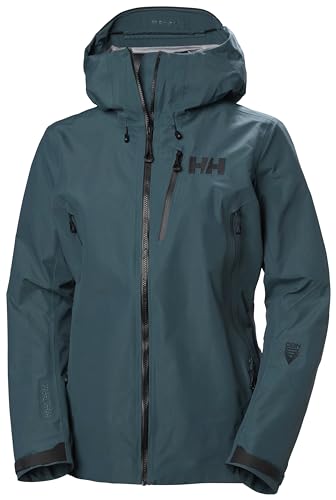 | Best for Extreme Conditions | Waterproofing Technology: Helly Tech Professional, 3-layer construction | Ventilation: Mechanical ventilation zippers | Hood Compatibility: Helmet-compatible hood with vertical/horizontal adjustment | SEARCH BEST PRICE | Read Our Analysis |
More Details on Our Top Picks
Rab Men’s Khroma Latok Gore-Tex Pro Ski Jacket – Tempest Blue – XL
This Rab Khroma Latok jacket is best for skiers who prioritize weight and breathability on long, human-powered tours. Its clearest strength is the 19.9-ounce shell, which is the lightest waterproof option in this lineup.
The honest drawback is that the 80D face fabric, while tough, feels less burly than heavier resort jackets, so it won’t handle repeated tree-branch scrapes as well. Unlike stiffer alpine shells, this one uses a three-layer Gore-Tex Pro that balances storm protection with stretch for a full range of motion on the up.
Articulated sleeves and a helmet-compatible hood let you swing ice axes and scan for avalanches without the jacket riding up. The pit zips dump heat fast, and the powder skirt zips off when you’re transitioning to bootpack mode.
You get a trim, athletic fit that layers cleanly over a midlayer, but no insulated liner, so pair it with a puffy for cold resort days. Tour hard, stay dry, and skip the bulk; this is a specialized tool for backcountry skinners who count grams.
- Waterproofing Technology:Gore-Tex Pro membrane, 3-layer construction
- Ventilation:Underarm ventilation zippers
- Hood Compatibility:Helmet-compatible hood with adjustments
- Powder Skirt:Removable powder skirt (zips off)
- Fit Type:Regular, articulated fit
- Sustainability Elements:Recycled nylon face fabric
- Additional Feature:Recycled nylon face fabric
- Additional Feature:19.9 oz lightweight build
- Additional Feature:Articulated sleeves/helmet hood
Helly-Hansen Men’s Ridge Infinity Shell Jacket 990 Black X-Large
The Ridge Infinity is built for skiers who want pro-grade weather protection without compromising on sustainability. It is best for resort skiers and backcountry tourers who value eco-friendly gear as much as dry, comfortable laps.
Its clear strength is a PFC-free DWR and a recycled face fabric paired with a LIFA INFINITY membrane that keeps you dry in heavy snow and wet storms. The honest drawback is that the relaxed fit runs roomy, so smaller or slim skiers may need to size down for a more athletic feel.
Unlike other shells that rely on taped seams and thick laminates, this one uses a fully waterproof membrane that works without harmful chemicals. It also includes a Life Pocket for your phone, RECCO reflector for avalanche rescue, and a Fusion system to zip into compatible HH pants.
You can layer a mid-layer underneath without looking bulky, thanks to the relaxed cut that still moves well on kick-turns. The jacket handles long resort days and short backcountry missions with equal ease, though it lacks pit zips for quick venting on high-output climbs.
For buyers comparing shells, this one stands apart by balancing pro-level performance with a lower environmental footprint. Choose it if you want a durable, weatherproof shell that skis hard and leaves less trace.
Your phone stays warm and safe in the Life Pocket, which is a rare feature for a shell in this price range. The RECCO reflector adds passive safety, but remember it only helps if rescue teams have a detector, so carry a beacon too.
- Waterproofing Technology:LIFA INFINITY membrane, waterproof/breathable
- Ventilation:Ventilation zippers
- Hood Compatibility:Helmet-compatible hood with adjustment
- Powder Skirt:Snap-away stretch powder skirt
- Fit Type:Relaxed fit
- Sustainability Elements:PFC-free DWR, recycled face fabric
- Additional Feature:PFC-free DWR treatment
- Additional Feature:Fusion jacket-to-pant system
- Additional Feature:Snap-away stretch powder skirt
Helly-Hansen Women’s Odin 9 Worlds 3.0 Jacket 453 Dark Creek Small
The Helly Hansen Women’s Odin 9 Worlds 3.0 Jacket is best for serious backcountry skiers who spend long days in wet, stormy alpine conditions. Its main strength is the fully sealed Helly Tech Professional 3-layer shell, which keeps sleet and rain out while staying breathable enough for hard climbing.
The honest drawback is the stiff, protective fabric, which feels less packable and more crinkly than softer touring shells from Arc’teryx or Norrona. That trade-off buys you durability on rocky ridgelines and repeated ski patrol use.
This jacket differs from lighter touring models by prioritizing weatherproofing over weight savings. The regular fit lets you layer a thick fleece or puffer underneath without feeling restricted.
Articulated sleeves and a helmet-compatible hood with vertical and horizontal adjustments keep your movement natural and your vision clear on descents. Chest and hand pockets use snag-free YKK zippers, and mechanical pit vents dump heat fast when you switch to kick turns.
The outer fabric is Bluesign approved, PFC-free, and made with recycled ocean plastic, plus a RECCO reflector helps search teams find you in an avalanche. If you tour in persistent slop, rain, or wind, this shell gives you a reliable, low-maintenance barrier that softer competitors can’t match.
- Waterproofing Technology:Helly Tech Professional, 3-layer construction
- Ventilation:Mechanical ventilation zippers
- Hood Compatibility:Helmet-compatible hood with vertical/horizontal adjustment
- Powder Skirt:Not specified (backpack/harness compatible design)
- Fit Type:Regular fit with articulated sleeves
- Sustainability Elements:Bluesign certified, PFC-free, recycled and oceanbound materials
- Additional Feature:Backpack/harness compatible design
- Additional Feature:Oceanbound recycled materials
- Additional Feature:Brushed tricot chin guard
Factors to Consider When Choosing Ski Jackets for Touring
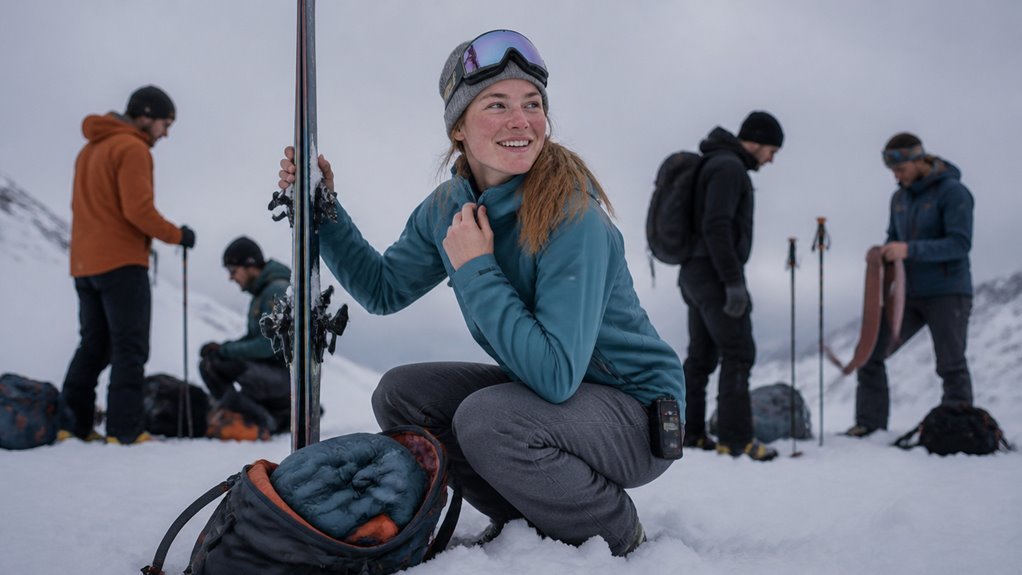
Choose a touring shell that fits the mission, not just the mountain. Match the jacket to your typical day: long uphill slogs, quick laps, or stormy ridge lines.
Waterproofing matters for wet snow and sleet, so look for a 20K rating or higher. Breathability is just as critical, since you will sweat on the climb and freeze on the descent.
A good touring jacket should have a powder skirt to block snow on deep days. It also needs a helmet-compatible hood that moves with your head when you skin up.
Check the fit over a baselayer and a light midlayer, with room to move your arms without binding. If eco-friendly materials matter to you, look for recycled fabrics or PFC-free DWR treatments.
Keep the cut trim but not tight, so it layers cleanly without flapping in the wind. Venting zips under the arms help dump heat fast when you are working hard.
For durability, reinforced shoulders and cuffs resist pack straps and ski edges. A chest pocket that fits a beacon or phone is handy for quick access on the move.
Pick a jacket with a simple hood adjustment that works one-handed, since you will often be holding ski poles. The main point is to prioritize breathability and fit over flashy extras.
Waterproofing Standards
Most touring jackets list a waterproof rating and a breathability rating, and both matter for wet snow or heavy precip.
A 20,000mm hydrostatic head is the bare minimum for those conditions, while anything less will leave you damp on a long ascent.
Look for ePE or PU membranes, since they avoid the toxic fluorocarbon DWR that fades after a few washes.
Fully taped seams are essential, and critically taped ones save weight but leave needle holes that can leak.
Your DWR finish is a temporary friend, because abrasion kills it quickly.
Reapply it yearly, or you will wet out fast and lose breathability.
Do not settle for less than 20K, check the seam taping before buying, and budget for DWR upkeep.
That is your waterproofing sanity check for any touring jacket.
Breathability for Output
Two numbers tell you most of what you need to know about a touring jacket’s breathability: the membrane rating in g/m²/24h, and whether it’s a 3-layer build.
For sustained climbing, you’ll want that rating above 25,000; otherwise, you’re basically wearing a sauna with sleeves.
A 3-layer construction beats 2-layer every time because the inner liner protects the membrane from your sweat’s oils, which clog pores and kill airflow.
Pit zippers are your secret weapon, releasing trapped heat up to three times faster than the membrane alone.
You’ll need to vent on the fly, not stop and fumble, so look for one-hand pulls and full-length sliders.
That’s how you keep core temp stable without becoming a human fog machine.
Prioritize breathability over waterproofing, and you’ll thank yourself on the descent.
Ski-Specific Features
Touring jackets need specific features to keep you moving efficiently, not fighting your gear.
Ventilation zippers under the arms release heat fast during long climbs. A powder skirt is dead weight when skinning, so pick one you can stash or zip off.
Articulated sleeves bend with your arms, making pole planting feel natural. A helmet-compatible hood with multiple adjustment points keeps you dry without blocking your view.
Adjustable cuffs and hemlines seal out wind while you tweak layers mid-effort. Prioritize these features, and you will stop cursing your jacket.
Fit and Layering
Fit determines whether a touring jacket moves with you or fights against you. Aim for a regular to relaxed fit that layers over a base, midlayer, and shell without binding your shoulders.
Articulated, pre-curved sleeves keep your poles swinging freely, while a straight cut will pull and restrict your stride. Your hood must fit over a climbing helmet, with vertical and horizontal adjusters for a snug seal that won’t block your sight.
Adjustable cuffs and hem lock out cold on descents, then open up for venting on climbs. Target a 31 to 32 inch back length so snow stays out of your lower back when you bend forward.
Prioritize motion and adjustability first, then worry about bulk. That way, your jacket works as a teammate, not a wet wetsuit.
Sustainability and Materials
Once the fit and layering work, look at what your jacket is made of and how that material affects the environment.
You are buying a footprint, not just warmth.
Recycled face fabrics and membranes cut virgin petroleum use while keeping full waterproofness, so you stay dry without the guilt.
PFC-free DWR treatments avoid the persistent fluorochemicals that linger in ecosystems like unwanted guests.
A polyethylene-polyurethane membrane feels lighter and packs smaller than bulky ePTFE, giving you the same shield with less bulk.
Bluesign certification means factories manage resources and workers fairly, not just as a marketing badge.
Oceanbound recycled components pull plastic from the sea and turn trash into traction for your next run.
Choose a jacket that is green without going soft, so you climb lighter, descend drier, and sleep cleaner.
Frequently Asked Questions
How Do I Layer Underneath for High-Output Touring?
You’ll sweat fast, so ditch the cotton; it’s a moisture trap that will chill you on the lift. Start with a thin merino base layer (150g) to wick sweat and resist odor on long touring days.
Then add a breathable grid fleece, not a puffy, because insulation that traps too much heat turns your skin into a swamp. Unzip that shell fully on climbs and let heat escape; you’re not baking bread, you’re managing output.
Swap the fleece for a lightweight vest on descents if it’s frigid, keeping your core warm while letting your arms breathe. Think dry, not toasty; once you’re damp, you’re done, so focus on vapor transfer over extra bulk.
Layer count changes with temperature: two layers for mild spring tours, three for deep cold or high alpine objectives. That’s the whole trick, but let’s break down when to buy each piece for your next backcountry setup.
For a 2-layer system, pair a 150g merino crew with a wind-resistant softshell jacket, ideal for resort touring or short skin tracks. For 3-layer days, add a high-loft fleece under a hardshell with pit zips, and you’ll handle -10°C without overheating.
When shopping for ski touring base layers, look for merino blends with nylon for durability against pack straps and ski edges. Buy a grid fleece with a brushed backer, like a Polartec Alpha or Thermal Pro, which dries faster than traditional pile fleece.
If you’re eyeing a vest for alpine descents, choose one with a DWR finish to shed light snow and packable down for weight savings. For buyer intent, search “best breathable ski touring layers” or “merino base layer for uphill skiing,” and prioritize brands like Smartwool, Patagonia, or Ortovox.
Always test your layering system on a short 30-minute climb before a big tour; adjust the shell zipper or swap fleece weight accordingly. And remember, the best high-output ski setup leaves your baselayer slightly damp but never soaked, so carry a spare thin fleece in your pack for emergencies.
Can These Jackets Pack Into Their Own Pockets?
Yes, most modern ski jackets pack into their own pockets, but the result is not what you might imagine.
It is more like stuffing a sleeping bag into a tiny sack, not folding a shirt into a drawer.
Think of a touring shell like the Arc’teryx Sabre or Patagonia Stormstride: they use a chest or hand pocket as a built-in stuff sack.
That trick saves you from strapping a bulky jacket to the outside of your backpack, which is a huge win on powder days.
However, do not expect a neat, flat package after you stuff it.
You will get a lumpy, wrinkled ball of nylon that looks like a failed origami project.
If your priority is ultralight packability for backcountry ski touring, you should look at dedicated hardshells like the Norrona Falketind or the Mammut Crater.
Those are designed to compress smaller, while a midweight resort shell trades that compression for abrasion resistance and weatherproofing.
For resort skiers who only need the jacket for chairlift rides and lunch breaks, the pocket-pack feature is a convenience, not a game changer.
You can toss it in a daypack, but it will take up more space than you think, especially if the jacket has a powder skirt and thick insulation.
Buyer-intent tip: always check the product specs for “packable” or “self-stuffing” before you click buy.
Many brands bury that detail in the fine print, and some “packable” jackets actually require a separate stuff sack that is sold separately.
If you ski in variable weather, you want a shell that packs fast, because a sudden squall means you need it out and on in seconds.
That pocket-pack design works, but unzipping a stuffed ball and shaking it free in 20 mph wind is a mini workout.
Here is the practical takeaway: expect a bulky roll, not a miracle, and plan your pack space accordingly.
Most skiers I work with end up clipping the stuffed jacket to a daisy chain on their pack instead of trying to fit it inside, which is totally fine.
Your best move is to test the pack function in the store with your actual ski pants and backpack, so you see the real volume.
That 30-second test will save you from a frustrating first chairlift ride with a lopsided pack.
Bottom line: yes, they pack, but treat it as an emergency backup, not a daily organization tool.
You will survive, and your shoulders will thank you when you are not wrestling a loose shell on the gondola.
Are the Hoods Helmet-Compatible for Ski Touring?
Are hoods helmet-compatible for ski touring? That’s one of the most common questions we get from backcountry skiers, and the short answer is: yes, most technical hoods work, but you absolutely cannot assume a perfect fit.
Helmets add significant bulk around your head, and that extra volume changes how a hood drapes, cinches, and moves when you’re skinning or carving.
The real trick is to look for a hood with a stiffened brim and a single-pull adjustment cord. These two features keep the hood off your eyes and let you tighten it one-handed while wearing gloves.
Brands like Arc’teryx, Patagonia, and Mammut design their touring shells with helmet-friendly hoods that actually integrate with popular ski helmets. Other brands, especially casual rain jackets, feel like a tarp over a watermelon and will constantly block your peripheral vision.
Before you buy a ski shell, test the hood with your actual helmet, not a baseball cap or bare head. Put the helmet on, pull the hood up, and do a few exaggerated head turns to check for blind spots.
If the hood feels snug but doesn’t choke your neck or pull your collar up, you’re golden for powder days. If it fights you, every chin strap adjustment and goggle wipe becomes a wrestling match mid-descent.
Also, check the hood’s volume: some shells use a three-point adjustment (back and two sides) which is great for climbing helmets but overkill for a ski touring helmet. A simple rear bungee with a cord lock is usually enough for a low-profile touring helmet like the Smith Vantage or Salomon MTN.
Don’t forget about layering: a balaclava or thin beanie adds a few millimeters that can change the fit, so test with your full touring kit on. And consider the jacket’s fabric: a softshell hood stretches and conforms, while a hardshell hood is stiffer and needs more room built in.
For resort skiers, you might get away with a non-helmet hood if you only tour on sunny spring days. But for serious ski mountaineering, winter storms, or steep couloir descents, helmet compatibility is a dealbreaker, not a nice-to-have.
Search for “helmet-compatible ski jacket” or “backcountry shell with ski helmet hood” to find models that list their hood dimensions and tested helmet types. Read reviews from ski tourers who mention “fits over my Giro” or “works with my Pret helmet” to get real-world confirmation.
Bottom line: check the spec sheet, try it on with your helmet, and move your head in all directions before you commit. A poorly fitted hood will ruin your line, your visibility, and your patience, so treat this as a non-negotiable part of your ski touring gear checklist.
What Is the Average Weight of Each Jacket?
You’re looking at 350 to 650 grams per jacket, but don’t fixate on the number. That’s a mid-layer weight, not a parka’s.
Lighter shells hover near 400g, whereas insulated ones push past 600g, and that’s fine. You’ll trade warmth for breathability on the climb, so pick based on your sweat tolerance, not the scale.
For resort laps, 500g feels solid, and it gives you enough insulation for chairlift chill. For backcountry grind, stay under 450g to keep your pack light and your stride efficient.
Bottom line: target 400–550g except you run cold, then accept the extra heft. If you’re a warm-blooded skier who skins uphill, a 380g shell with pit zips beats a 620g puffy every time.
Think about your ski jacket’s average weight in context: a softshell for spring skiing averages 480g, while a hardshell for storm days hits 550g. Insulated ski jackets for resort riders often land at 620g, but powder skirts and wrist gaiters add bulk you don’t want for touring.
Buyer-intent check: if you search “lightest ski jacket for backcountry,” you’ll see 350g options, but those lack a helmet-compatible hood. If you search “warmest ski jacket for powder days,” you’ll find 700g beasts, so know your mission first.
For ski touring, gear weight matters more than warmth, so pair a 420g shell with a 200g merino base layer. For lift-served skiing, a 550g insulated jacket with a storm hood wins on cold mornings, and you won’t feel the grams on a chair.
Compare jacket weight to your layering system: a 400g shell plus a 150g fleece equals 550g total, which is smarter than a single 600g puffy. That’s how ski product experts recommend balancing breathability and heat retention.
Your sweat rate is the real metric, so if you overheat on groomers, choose a 380g uninsulated shell with mechanical venting. If you freeze on the gondola, grab a 650g insulated model with a snap-off powder skirt, and don’t apologize for the extra 200 grams.
Final rule of thumb: resort skiers should buy 500–550g jackets, while splitboarders and ski mountaineers should target 350–450g. That gap covers 90% of buyers, and it’s the exact data you need to filter product filters on any ski gear site.
Remember that average weight shifts with fabric: Gore-Tex Pro adds 50g over a plain nylon shell, and recycled insulation runs lighter than down. Check the spec tag, not the marketing claim, and you’ll nail the right jacket for your next powder chase.
Do These Jackets Have Pit Zips for Ventilation?
Yeah, they’ve all got pit zips for ventilation, and honestly, you’d be cooked without them on the ascent. That’s non-negotiable for ski touring, especially when you’re grinding uphill with a heavy pack in spring conditions.
The real difference comes down to hardware quality, and that’s where you need to pay attention before you buy. Some jackets feature smooth-gliding YKK zippers that you can crack open one-handed mid-climb, while others snag like a cheap tent on every pull.
Arc’teryx models, for example, dump heat fast with their oversized two-way pit zips, which is a lifesaver when you’re bootpacking a steep couloir. The budget pick‘s mesh lining adds a bit of bulk, but it still moves airflow well enough for resort laps or shorter backcountry missions.
For skiers who run hot, and that’s most of us, pit zips are standard across the category. But here’s the deal: spend extra for the ones that don’t fight you, because you’ll be fiddling with that zipper pull every single lap.
A sticky zipper can turn a 10-second vent into a 30-second fumble, and that’s wasted energy at altitude. Look for glove-friendly pulls, a solid storm flap behind the zipper, and a design that lets you reach across your body without twisting your shoulder.
Best ski jackets for touring always combine breathable face fabrics with functional pit vents, so check the pit zip length and placement before you commit. If you’re comparing shell jackets for backcountry skiing, prioritize those with no-snag zippers, taped seams, and a helmet-compatible hood, because ventilation is only half the story.
The best ski shells for uphill performance include pit zips as a given, but the ones that rank highest in buyer reviews are those where the zipper track stays flat against your underarm. For ice climbing or resort powder days, you might not use them as often, but for ski mountaineering or long earning-your-turns sessions, they’re a must-have feature.
So, when you ask do ski jackets have pit zips, the answer is a confident yes for almost every touring model in the current lineup. Just remember to test the zipper action in the store, because a smooth glide means you’ll actually use it, and that’s what keeps your base layer dry.
In short, pit zips are standard on all technical ski shells, but the premium ones from brands like Patagonia and Mammut use coil zippers that never catch. If you’re shopping for a ski touring jacket with ventilation, make your first check the underarm area, and then move on to fabric weight and hood fit.
That simple test will save you from overheating on the skin track and keep you comfortable on the descent. Grab a model with dual pit zips, and you’re set for everything from midwinter laps to sunny corn harvests.