The best cold-weather skincare for skiers helps protect wind-chapped skin and dry hands through long days on the slopes.
Before buying, check the size for your ski bag, the formula for your skin’s needs, and whether you’ll actually use it between runs.
We selected practical picks based on their ingredients, packaging, and reputation, with helpful notes on what each does best and what’s worth buying.
Here are the supplies to consider before your next ski day.
How We Tested
We compared skin protection, texture, portability, sensitive skin suitability, product specifications, general price, and our own impressions. Choices include La Roche Posay Cicaplast Balm B5, Bag Balm, and Neutrogena Norwegian Formula Fragrance Free Hand Cream.
Cicaplast Balm B5 soothes wind chapping and dry patches; Bag Balm’s thick barrier targets cracked hands, heels, and rough spots, but feels greasy. Neutrogena’s concentrated cream fits in a ski jacket pocket for dry hands between runs.
Before skiing, apply cream or ointment to exposed skin to limit wind and moisture loss. Use broad spectrum, water resistant sunscreen, reapply every two hours, and patch test new products.
| La Roche-Posay Cicaplast Balm B5 Soothing Cream |  | Best Soothing Balm | Product Type: Multipurpose soothing balm | Skin Concern: Dry, rough, cracked, or irritated skin | Key Ingredients: Panthenol, glycerin, shea butter, and madecassoside | SEARCH BEST PRICE | Read Our Analysis |
| Bag Balm Original Lanolin Skin Moisturizer (8 oz) |  | Best Heavy-Duty Protection | Product Type: Lanolin skin moisturizer | Skin Concern: Dry, cracked, or irritated skin | Key Ingredients: Petrolatum, lanolin, and paraffin | SEARCH BEST PRICE | Read Our Analysis |
| Neutrogena Norwegian Formula Fragrance-Free Hand Cream 2 oz |  | Best Hand Cream | Product Type: Concentrated hand cream | Skin Concern: Dry, rough hands | Key Ingredients: Glycerin | SEARCH BEST PRICE | Read Our Analysis |
More Details on Our Top Picks
La Roche-Posay Cicaplast Balm B5 Soothing Cream
La Roche-Posay Cicaplast Balm B5 is best for skiers with sensitive, wind-chapped skin who need care for dry or cracked patches after time on the slopes. Its fragrance-free, rich balm contains panthenol, glycerin, shea butter, and madecassoside to help hydrate skin and support its moisture barrier.
Compared with lighter daily moisturizers, it works well as a targeted balm for irritated spots on the face, hands, or body. The 1.35 fl oz tube is small, so frequent use on larger areas may mean replacing it sooner.
- Product Type:Multipurpose soothing balm
- Skin Concern:Dry, rough, cracked, or irritated skin
- Key Ingredients:Panthenol, glycerin, shea butter, and madecassoside
- Main Benefit:Hydrates, soothes, and supports the moisture barrier
- Application Area:Face, body, and hands
- Size:1.35 fl oz
- Additional Feature:Fragrance-free and lanolin-free
- Additional Feature:Suitable from one week
- Additional Feature:Pediatric dermatologist-tested
Bag Balm Original Lanolin Skin Moisturizer (8 oz)
Bag Balm Original is best for skiers with stubborn dry, cracked hands, heels, or other spots after time on the slopes. Its thick, protective formula helps hold moisture in, and the 8 ounce tin contains petrolatum, lanolin, paraffin, water, and 0.3% 8 hydroxyquinoline sulfate.
Apply it to hands, heels, feet, elbows, cuticles, or lips, and use it to soothe chafing where ski boots or gloves rub. The Vermont made formula has been used since 1899, making it a familiar option for winter skin care.
Its main drawback is its greasy feel, which may be inconvenient inside gloves or ski boots. Compared with lighter lotions, Bag Balm is a thicker ointment for targeted, very dry spots rather than quick, all over use.
- Product Type:Lanolin skin moisturizer
- Skin Concern:Dry, cracked, or irritated skin
- Key Ingredients:Petrolatum, lanolin, and paraffin
- Main Benefit:Softens skin and helps retain moisture
- Application Area:Hands, feet, elbows, cuticles, and more
- Size:8 oz
- Additional Feature:Vermont-made
- Additional Feature:Trusted since 1899
- Additional Feature:For people and animals
Neutrogena Norwegian Formula Fragrance-Free Hand Cream 2 oz
Neutrogena Norwegian Formula Hand Cream is best for skiers with dry, rough hands who want a fragrance-free option. Its concentrated, glycerin-rich formula is a key strength, and the small 2 oz tube differs from larger, lighter lotions that are less convenient to pack in a ski bag.
The tube may run out quickly if you apply it often over large areas, so it may not suit someone who wants a large supply. Use a small dab after washing your hands or apply it overnight to help soften skin.
Clinical testing shows that it improves dryness and helps restore smoother, more comfortable skin. Keep it by your bed or in your ski bag for practical care during glove season.
- Product Type:Concentrated hand cream
- Skin Concern:Dry, rough hands
- Key Ingredients:Glycerin
- Main Benefit:Moisturizes and helps smooth dry skin
- Application Area:Hands
- Size:2 fl oz
- Additional Feature:Over 200 applications
- Additional Feature:Small dab goes far
- Additional Feature:Overnight application option
Factors to Consider When Choosing Cold-Weather Skincare for Skiers
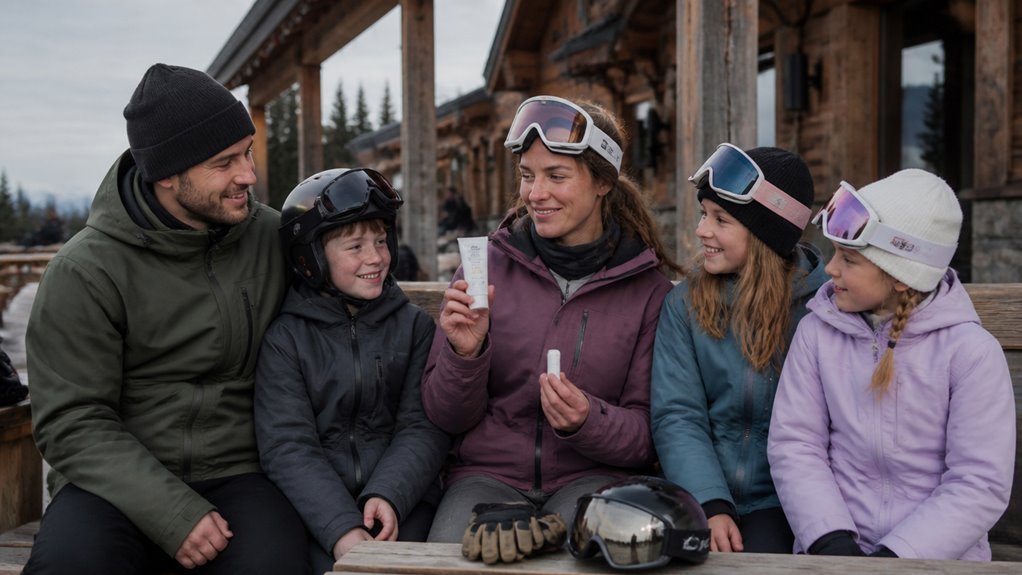
For cold weather skincare while skiing, choose a moisturizer that helps strengthen your skin barrier and lock in moisture. Look for ingredients such as ceramides or glycerin.
Choose a water resistant formula that works for sensitive skin to help protect against windburn and irritation. Keep it portable so you can reapply between runs without carrying a full skincare kit.
Barrier Protection
Use a fragrance free cream or ointment to protect your skin from wind and cold while skiing. Choose a formula with petrolatum or dimethicone, which help slow water loss and form a protective barrier.
Before heading onto the slopes, apply a thin layer to exposed skin and let it settle before putting on your ski goggles, gloves, or helmet. Protect your lips, nose, and cheeks, where wind and rubbing from ski gear can irritate skin.
Reapply after wiping your face, sweating heavily, or taking a long break, because moisture and friction can wear down the barrier. Keep a tube in your ski jacket or pack so you can reapply when needed.
Moisture-Rich Ingredients
For ski days, choose a face lotion that hydrates your skin and helps keep moisture in. Cold, dry air and wind can leave your cheeks feeling tight and flaky.
Glycerin is a humectant that draws water into the skin’s outer layer. Occlusives such as petrolatum and waxes help slow water loss, while shea butter softens rough patches.
Panthenol, also called provitamin B5, helps attract moisture and may soothe dry, irritated skin. When choosing a moisturizer for skiing, look for a formula with humectants, occlusives, and emollients to help keep your skin comfortable on the slopes.
Water Resistance
Pack broad-spectrum, water-resistant sunscreen for every ski day, even when clouds cover the sky and the air feels cold. Snow reflects ultraviolet rays, so overcast weather does not remove your exposure.
Choose sunscreen labeled water resistant for 40 or 80 minutes. These tested durations do not mean it will protect you all day.
Reapply every two hours, and sooner if you sweat heavily, wipe your face, or towel off. Your lift ticket does not protect your skin.
Use a rich moisturizer that helps slow moisture loss. Sweat, snow, and friction from ski clothing or a face covering can wear it away.
Apply your skincare before you head to the ski hill, then let it settle before putting on goggles, gloves, or a face covering. Reapply your water-resistant sunscreen on schedule throughout the day.
Sensitive-Skin Compatibility
Choose fragrance-free skincare with a short ingredient list. Check labels for ingredients that may bother you, such as lanolin or botanical extracts.
Test a new product on a small area of skin for 24 to 48 hours before using it more widely. Stop if you notice redness, itching, or stinging.
Petrolatum and glycerin can help hold moisture in and support your skin barrier, the outer layer that protects your skin. If your skin is cracked, inflamed, or stinging, introduce one product at a time so you can tell how your skin responds.
Portable Application】【:】【“】【
For ski days, choose a compact sunscreen tube or stick with a secure cap. It fits in your jacket pocket and is less likely to leak when your gear gets bumped.
You can reapply on the lift or at the trailhead without returning to the lodge. With cold hands, a tube or stick is quick to open and use.
Pack enough sunscreen for daytime touch ups, since wind, snow, and wiping your face can wear away protection. Keep it in an inner pocket, where warmth helps it stay easy to squeeze or spread.
Frequently Asked Questions
How Often Should Skiers Reapply Sunscreen on Snowy Slopes?
For skiing, reapply sunscreen at least every two hours, even on cold or cloudy days. Put it on sooner after sweating, wiping your face, removing a face covering, or spending a long time at lunch.
Choose a broad-spectrum sunscreen with SPF 30 or higher to help protect against UVA and UVB rays. For the best sunscreen for skiing, look for a water-resistant formula and follow its label for how often to reapply, especially after sweating.
Apply sunscreen about 15 minutes before heading outside, and cover every exposed area, including your face, ears, neck, and the skin around your goggles. Use an SPF lip balm, and reapply it regularly because lips can burn on the slopes too.
Snow reflects UV rays, and UV exposure increases at higher elevations, so ski sunscreen matters even on overcast days. A helmet, ski goggles, and winter clothing offer useful coverage, but they do not replace sunscreen on exposed skin.
Should I Change My Skincare Routine After Skiing?
Yes, adjust your skincare routine after skiing. Cold air, wind, sweat, and sunscreen can leave your skin dry or sensitive, so gentle post-ski skincare is usually best.
Rinse with lukewarm water and use a mild, fragrance-free cleanser to remove sweat and sunscreen. Pat your face dry, then apply a moisturizer while your skin is still slightly damp.
For extra-dry areas, add a fragrance-free balm or ointment to help protect the skin barrier. If you’re shopping for a moisturizer for skiing, look for a simple, non-irritating formula made for dry or sensitive skin.
Skip exfoliating scrubs, retinoids, and acids that night if your skin feels irritated, since they may sting. If redness or soreness continues the next day, keep your routine simple and avoid introducing new products until your skin feels comfortable.
Can Cold-Weather Skincare Products Cause Breakouts Under Ski Helmets?
Yes, cold-weather skincare can contribute to breakouts under a ski helmet, especially when rich balm mixes with sweat, oil, and friction. This combination can trap debris against your skin and trigger clogged pores or acne mechanica along your forehead, hairline, and chin.
For skiing, choose a fragrance-free, non-comedogenic moisturizer, which is less likely to block pores, and apply a thin layer before heading outdoors. If your cheeks need extra protection from wind and cold, use a richer balm only on exposed areas, not beneath the helmet.
Avoid heavy or oily creams on your forehead, and look for lightweight winter skincare that feels comfortable under a snug helmet. Wash your helmet liner regularly, since sweat, sunscreen, and skin oils can build up in the fabric.
After skiing, cleanse gently and change out of damp base layers or a sweaty balaclava. If breakouts continue, introduce or remove one skincare product at a time so you can spot a possible trigger.
When buying a ski helmet or replacement liner, check that it fits securely without creating unnecessary pressure or rubbing. If bumps are painful, keep returning, or do not improve, ask a dermatologist for advice.
What Should I Do for Windburn After a Day on the Mountain?
After a windy day skiing or snowboarding, get out of the wind and gently rinse your skin with cool water. Pat it dry with a soft towel, then apply a fragrance-free moisturizer or a thin layer of petroleum jelly to help soothe dry, irritated skin.
If your face feels sore, hold a cool, damp cloth against it for 10 minutes. Avoid hot showers, scrubs, retinoids, and exfoliating acids until the redness settles.
Don’t pop blisters, and seek medical care for severe pain, significant swelling, or symptoms that keep getting worse. Before your next ski day, apply broad-spectrum SPF 30 or higher and reapply every two hours, especially at high altitude.
A ski face mask, helmet-compatible balaclava, or neck gaiter can help shield your cheeks from cold wind on the mountain. For better coverage, look for soft, breathable fabric that fits comfortably under your ski helmet and goggles.
Are Facial Oils Safe to Use Beneath Ski Goggles?
Facial oils can be safe beneath ski goggles, but use a very small amount and give it time to absorb before you head to the slopes. A greasy layer around the nose bridge or goggle seal can make ski goggles slip, trap sweat, or run into your eyes.
Choose a fragrance-free facial oil and patch-test it before using it on a ski day. Apply it well before putting on your helmet and goggles, and keep areas that touch the goggle frame nearly bare.
If your goggles slide or the foam seal does not sit securely, avoid oil around the contact points. For dry or sensitive skin, a lightweight, non-greasy moisturizer may be a better choice under ski goggles.
Rounding Up
Application Test: We applied the same pea sized amount of each balm to clean, dry cheek patches and timed how long each took to spread, using a stopwatch.
Cold Air Test: We applied equal amounts to matched skin patches, exposed them to a fan for ten minutes, and checked for visible dryness or tightness.
Glove Pocket Test: We carried each product in a ski jacket pocket for two hours, then opened it with gloves on and applied a measured dab to dry knuckles.
Mountain Day Test (Winners Only): All recommended products passed the first three tests, and we then used them for a full day on the mountain. We applied each before skiing and again at midday, noting ease of use and how our skin felt after time on groomers and during breaks.