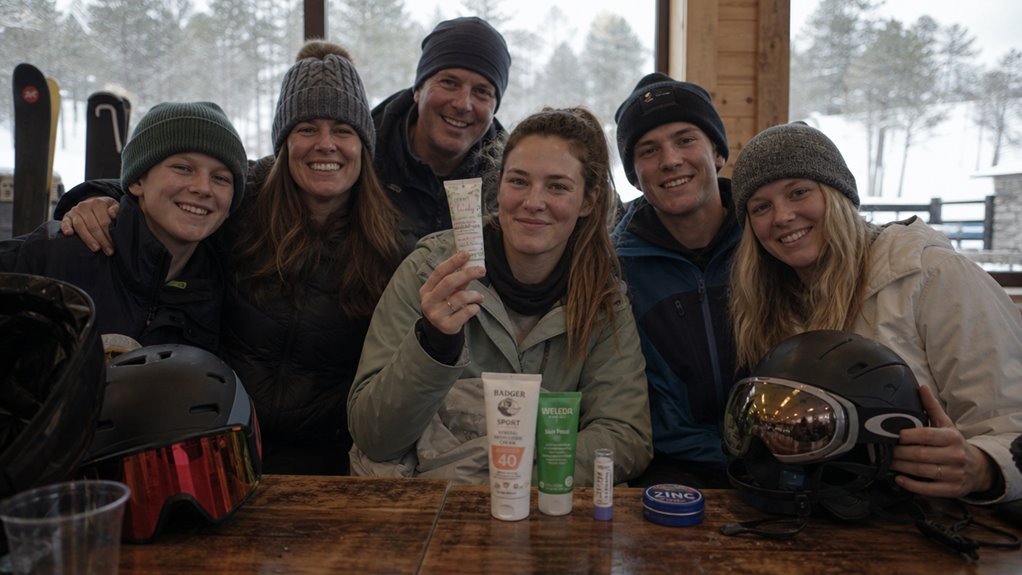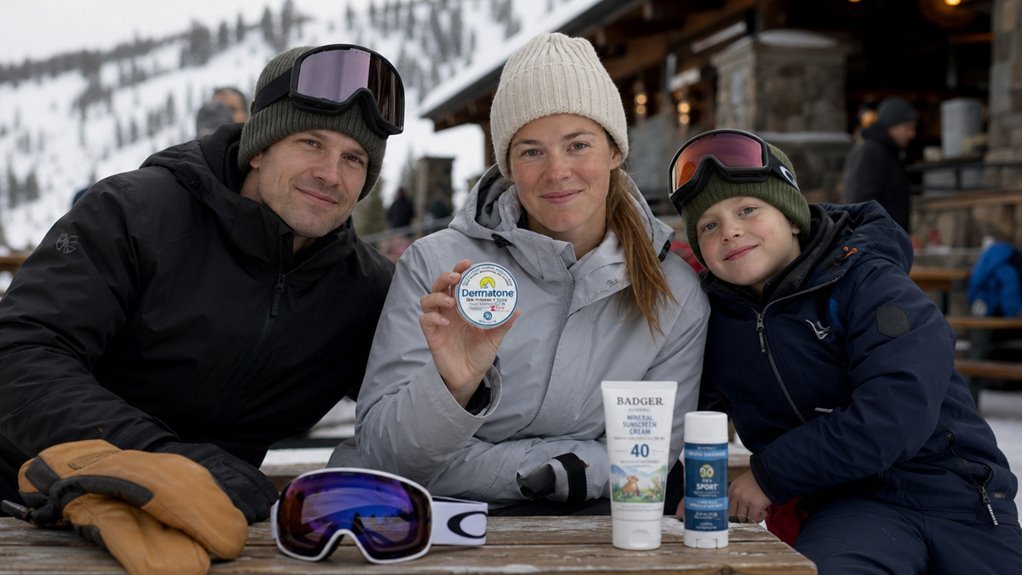
The best face creams for winter sports help protect exposed skin from cold, wind, and sun on the slopes.
Before buying, check the SPF, whether it’s made for facial use, and whether the size and format suit your day out.
These picks were chosen for their stated protection and practical use—not just brand hype.
Read on for the top options, helpful fit notes, and which one is worth packing for your next run.
How We Tested
We compared protection specs, intended use, label guidance, general price, and our own assessment. Our picks: Dermatone Skin Protector Zinc Balm SPF 30, Alba Botanica Sport Mineral Sunscreen, and Salty Britches Winter Ointment.
Dermatone protects exposed skin and lips from wind, with up to 80 minutes of water resistance. Alba is fragrance free and non comedogenic for face and body; verify the tube for its listed SPF of 45 or 50.
Salty Britches helps prevent chafing under ski gear on intact feet or thighs, not the face. Choose broad spectrum SPF 30 or higher for snow UV, reapply as labeled, and patch test sensitive skin.
| Dermatone Skin Protector Zinc Sunscreen Balm SPF 30 |  | Best Cold-Weather Shield | Protection Focus: Sun, wind, cold, and chapping protection | Water Resistance: Water- and sweat-resistant for up to 80 minutes | Product Form: Balm | SEARCH BEST PRICE | Read Our Analysis |
| Salty Britches Winter Ointment Waterproof Anti Chafe Berry Scented – 3pk |  | Best Anti-Chafe | Protection Focus: Chafing, blisters, and winter-skin protection | Water Resistance: Water-resistant barrier | Product Form: Ointment | SEARCH BEST PRICE | Read Our Analysis |
| Alba Botanica Sport Mineral Sunscreen SPF 45 (4-Pack) |  | Best Mineral Sun Protection | Protection Focus: Broad-spectrum sun protection | Water Resistance: Water-resistant sunscreen | Product Form: Mineral sunscreen lotion | SEARCH BEST PRICE | Read Our Analysis |
More Details on Our Top Picks
Dermatone Skin Protector Zinc Sunscreen Balm SPF 30
Dermatone Skin Protector Zinc Sunscreen Balm SPF 30 is best for skiers and other cold weather adventurers who want pocket size protection for exposed skin on the slopes. Its key strength is the zinc oxide broad spectrum SPF 30, paired with a balm that helps protect your face and lips from wind and dry air.
Unlike a standard sunscreen lotion, its balm format creates a protective layer against chapping, and aloe helps moisturize skin. The 0.5 ounce tin is easy to carry, but its small size may not be enough as your only sunscreen for frequent or full face use.
It is water and sweat resistant for up to 80 minutes, making it useful for skiing, hiking, and sailing. Reapply as directed, especially during a long day on the mountain.
- Protection Focus:Sun, wind, cold, and chapping protection
- Water Resistance:Water- and sweat-resistant for up to 80 minutes
- Product Form:Balm
- Application Areas:Face and lips
- Use Setting:Outdoor activities, including skiing, climbing, and sailing
- Packaging:0.5 oz tin, 1 pack
- Additional Feature:Aloe-formulated balm
- Additional Feature:Supports skin healing
- Additional Feature:Tested Death Valley-to-Everest
Salty Britches Winter Ointment Waterproof Anti Chafe Berry Scented – 3pk
Salty Britches Winter Ointment is best for skiers whose boots, base layers, or pack straps rub during long days on the slopes. Its key strength is a barrier that helps protect intact skin from chafing and blisters for hours in wet, windy, and cold conditions.
Apply it to your feet, thighs, or underarms before skiing. The berry scented ointment comes in three 2 ounce tubes, but it can soften in warmth, so chill it until firm if needed.
Unlike a light lotion, this ointment is made to form a lasting barrier on chafe prone areas. It is intended for intact skin and is not a face cream.
- Protection Focus:Chafing, blisters, and winter-skin protection
- Water Resistance:Water-resistant barrier
- Product Form:Ointment
- Application Areas:Feet, thighs, underarms, and other chafe-prone areas
- Use Setting:Activities involving rubbing gear or friction
- Packaging:2 oz squeeze tubes, 3-pack
- Additional Feature:Berry-scented formula
- Additional Feature:Won’t stain equipment
- Additional Feature:Non-greasy feel
Alba Botanica Sport Mineral Sunscreen SPF 45 (4-Pack)
This four-pack is best for skiers and snowboarders who want fragrance-free mineral sunscreen for their face and body. Its clear strength is broad-spectrum, water-resistant coverage for sunny days when snow reflects UV rays and wet weather may interrupt a day on the slopes.
The lotion is lightweight, hypoallergenic, and non-comedogenic, with niacinamide, squalane, and vitamin E. A possible drawback is that mineral sunscreen can leave a visible white cast, so test it on a small area before a ski trip.
Unlike single-tube options, this pack gives you four tubes to keep in your ski bag, jacket, or at home. The title lists SPF 45 while the product details say SPF 50, so check the tube for the confirmed rating before buying.
- Protection Focus:Broad-spectrum sun protection
- Water Resistance:Water-resistant sunscreen
- Product Form:Mineral sunscreen lotion
- Application Areas:Face and body
- Use Setting:Sport and beach use
- Packaging:4-pack of tubes; listed as 4 fl oz in the title and 3 oz in the details
- Additional Feature:Fragrance-free formula
- Additional Feature:Contains niacinamide and squalane
- Additional Feature:100% vegetarian ingredients
Factors to Consider When Choosing Face Creams for Winter Sports
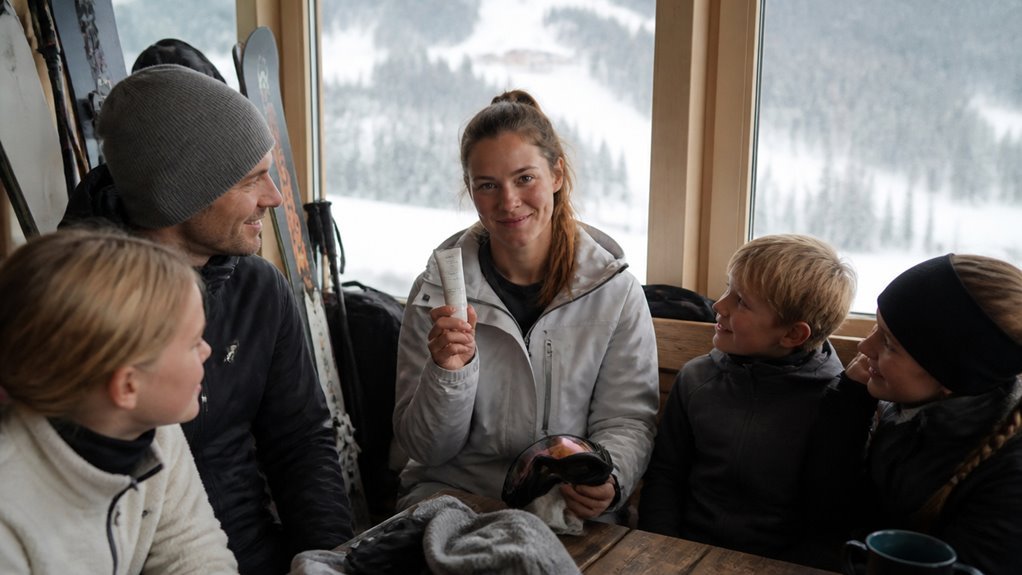
For skiing or snowboarding, choose a winter sports face cream with broad spectrum SPF to protect against UVA and UVB rays. Look for water resistant sunscreen that can stand up to sweat and snow.
Choose a cream with ingredients that help protect your skin from cold wind and keep it moisturized. If your skin is sensitive, check the label for irritants and test the cream before you hit the slopes.
Broad-Spectrum SPF
For skiing, snowboarding, and winter walks, choose a broad-spectrum face sunscreen with SPF 30 or higher. Snow reflects sunlight onto your face, so UV exposure can remain strong even when the air feels cold.
Broad-spectrum sunscreen protects against UVA rays, which contribute to skin aging, and UVB rays, which cause sunburn. Apply it to exposed areas, including your nose, cheeks, and ears, before heading outdoors.
Reapply every two hours, and sooner after heavy sweating, toweling off, or wiping your face. Choose a face cream you like using so you can protect your skin throughout the day.
Water Resistance
For skiing in wet snow or when you expect to sweat, choose a facial sunscreen labeled water resistant. Check the label before your ski day to make sure it suits your plans.
The label may state that the sunscreen was tested for 40 or 80 minutes in water. Use that time as a guide and follow the product’s directions.
Reapply as directed, especially after heavy sweating or wiping your face. Gloves and face coverings can rub sunscreen off, so pack your sunscreen for the slopes.
Wind and Cold Protection
For skiing in wind and cold, choose a rich, water resistant face balm to help protect exposed skin. Its thicker layer can shield your cheeks, nose, and lips from biting air and chill.
Before heading to the slopes, apply a generous layer to your cheeks, nose, and lips. Reapply after wiping your face or when wind, sweat, or clothing has worn away the coverage.
For long ski outings, look for a product labeled water and sweat resistant for up to 80 minutes, and follow its reapplication instructions. Keep the balm handy in your ski jacket so you can renew coverage during the day.
Moisturizing Ingredients
Choose a face moisturizer for skiing that combines humectants, emollients, and occlusives. These ingredients draw in water, soften skin, and slow moisture loss in cold, windy conditions.
Look for glycerin or hyaluronic acid to draw water into your skin, plus squalane or fatty acids to soften dry patches. Petrolatum or dimethicone can form a protective layer, while ceramides help support your skin barrier during long days on the slopes.
Check the label for all three ingredient types when choosing a ski face cream, especially if you spend time on chairlifts or in dry mountain air. A moisturizer with this combination can help keep your skin hydrated and comfortable through a day on the mountain.
Skin Sensitivity
If your skin reacts easily, choose a face cream without fragrance for skiing, since fragrance can irritate skin. The label “hypoallergenic” does not guarantee that a product will suit you.
Test a new cream on a small area of skin and wait 24 to 48 hours before applying it to your face. This can help you spot a reaction before you head to the slopes.
If sunscreen stings, consider a mineral formula with zinc oxide or titanium dioxide, and check the full ingredient list for known triggers. Avoid strong exfoliating acids and retinoids before skiing in cold, windy weather because they can make your skin more prone to irritation.
Stop using a cream if burning continues, swelling appears, or a rash develops. Seek medical advice if you have a severe reaction.
Lightweight Texture
For skiing and other winter sports, choose a lightweight face cream that absorbs quickly. It hydrates your skin without leaving a greasy film under a helmet or goggles.
Look for a non-comedogenic formula, which is less likely to clog pores during a long day on the slopes. The cream should leave your cheeks comfortable, not slick.
Check that it layers smoothly under ski sunscreen and does not pill when you reapply. Try it at home before taking it out in cold, windy weather, which can dry your skin.
Long-Lasting Coverage
For long days on the slopes, choose a broad spectrum sunscreen with SPF 30 or higher. Broad spectrum protection covers both UVA and UVB rays.
Choose a water resistant sunscreen for skiing, and check the label for its 40 or 80 minute water resistance period. This period applies during swimming or sweating, so plan to reapply throughout the day.
Check the reapplication instructions before your first lift, then reapply at the stated interval. Reapply sooner after heavy sweating, toweling off, or wiping your face.
Apply an even layer to all exposed skin, including your nose, cheeks, ears, and hairline. A wind resistant balm can help protect your lips and skin from cold air and chapping.
Portable Packaging
Portable Packaging
Choose a compact sunscreen tube, around 0.5 oz, that fits in a ski jacket pocket or small pack. You can reapply on the slopes without unpacking your gear.
Pick a tube with a secure cap to prevent leaks as your ski gear shifts in your pack. A squeeze tube helps you control the amount and apply sunscreen without scooping it out with cold fingers.
Check that you can open the cap while wearing gloves. Keep extra sunscreen at the lodge and carry a small tube on the mountain.
Frequently Asked Questions
How Often Should I Reapply Face Cream During a Full Day of Winter Sports?
For a full day of skiing or snowboarding, reapply face cream with sunscreen at least every two hours while you’re outdoors. Reapply sooner after sweating heavily, wiping your face, or toweling off.
Choose a broad-spectrum SPF 30 or higher that is water-resistant, and apply the amount recommended on the label before you head to the ski resort. Snow reflects UV rays, so your face can get sunburned on cloudy days and at high elevations.
A regular moisturizer without SPF does not replace sunscreen, so layer it under your sun protection if your skin gets dry in cold, windy weather. For sensitive skin, look for a fragrance-free mineral sunscreen with zinc oxide or titanium dioxide.
Keep your sunscreen in an easy-to-reach pocket and set a two-hour reminder between runs. Shopping for the best ski sunscreen or winter sports face cream? Choose a formula that feels comfortable under goggles and is easy to reapply.
Can I Wear Face Cream Under a Ski Mask or Helmet?
Yes, you can wear face cream under a ski mask or ski helmet, and a thin layer of non-greasy moisturizer can help protect skin from cold, dry mountain air. Let it absorb for 10 to 15 minutes before putting on your ski balaclava, helmet liner, or goggles.
Choose a fragrance-free, non-comedogenic face cream for skiing, and keep it off your goggle foam and helmet padding to reduce residue and preserve a comfortable fit. For exposed skin, apply broad-spectrum SPF 30 or higher sunscreen, since snow reflects UV rays even on cloudy days.
Reapply sunscreen as directed on the label, and add moisturizer after skiing if your skin feels dry. When buying a ski face moisturizer, look for a lightweight formula that feels comfortable beneath your winter gear.
Should I Apply Moisturizer Before or After Sunscreen on the Slopes?
On ski days, apply moisturizer before sunscreen: skincare goes first, and sunscreen should be the final step in your morning routine. Let the moisturizer absorb for a few minutes so your ski sunscreen spreads evenly and does not pill or slide.
Choose broad-spectrum SPF 30 or higher to protect against UVA and UVB rays, which can reach you intensely at high altitudes and reflect off snow. For skiing or snowboarding, look for water-resistant sunscreen, and consider a fragrance-free mineral sunscreen if you have sensitive skin.
Apply sunscreen generously to your face, nose, ears, neck, and any other exposed skin, then use an SPF lip balm on your lips. Reapply at least every two hours, and sooner after sweating or wiping your face.
Keep sunscreen accessible in a ski jacket pocket, and choose a formula that feels comfortable in cold, windy conditions. Snow reflects UV rays, so sunscreen still matters on cloudy days and during winter skiing.
Can Winter Sports Face Cream Help Prevent Windburn?
Yes, a rich winter sports face cream can help protect your skin from cold, dry air while skiing, but it cannot create a complete barrier against windburn. Look for a fragrance-free face balm with petrolatum or ceramides to help reduce moisture loss and support your skin’s protective barrier.
Apply a thin layer to exposed areas, especially your cheeks, nose, and chin, before heading onto the slopes. Reapply after wiping your face, sweating, or spending several hours outdoors, and choose a non-comedogenic formula if you’re prone to clogged pores.
For daytime skiing, use a broad-spectrum SPF 30 or higher because snow reflects UV rays and windburn cream does not provide sun protection. For a smart winter face cream purchase, check the label for fragrance-free ingredients, skin-barrier support, and a texture that feels comfortable under a ski helmet or balaclava.
How Should I Remove Waterproof Face Cream After Skiing?
After a day on the slopes, use an oil-based cleanser or cleansing balm to dissolve waterproof face cream, ski sunscreen, and water-resistant SPF without harsh scrubbing. Choose a gentle, fragrance-free formula if your skin feels dry or wind-chapped from cold weather and mountain conditions.
Apply the cleanser to dry skin and massage for 30 to 60 seconds, focusing on your hairline, nose, and other areas where sunscreen can linger. Add a little lukewarm water to emulsify the balm or cleanser, then rinse thoroughly.
If you still feel residue, follow with a mild face wash for a gentle double cleanse. Pat your skin dry and apply a soothing moisturizer to help restore moisture after skiing.
Avoid hot water, rough towels, and alcohol-based wipes, which can irritate skin already exposed to cold, wind, and sun. If you ski often, a cleansing balm for sensitive skin and a broad-spectrum ski sunscreen are useful additions to your winter skincare routine.
Rounding Up
Application Timing: We measured 0.5 grams of each face product, spread it over a 5 by 5 centimeter cheek area, and used a stopwatch to record application time.
Rub Test: We pressed a clean cloth against each treated patch ten times, then checked the cloth for transferred product and the skin for uneven coverage.
Water Exposure: We sprayed each treated patch with 10 milliliters of water, waited five minutes, and checked whether the product visibly shifted or washed away.
Mountain Day Test (Winners Only): All recommended products passed the first three tests, then we used each for a full day on the mountain. We noted reapplication needs and comfort during time on groomers and in changing weather.