Finding leather ski gloves that actually survive a blizzard—and keep your hands warm—can feel like a gamble.
Before you buy, check the lining material, cuff length, and whether they fit your hand shape, since sizing varies wildly between brands.
We picked these eight based on real-world specs, brand reputation, and what skiers actually praise, not just marketing hype.
You’ll get the best options for warmth, durability, and tech, plus quick notes on what’s worth your money.
Scroll on to see which pair matches your riding style and budget.
How We Tested
How We Picked
We compared corresponding specs across top ski glove models, focusing on insulation type, shell material, and waterproofing layers.
Leather palm options like deerskin and goatskin were prioritized for grip and abrasion resistance in severe alpine terrain.
We cross-checked warmth ratios, factoring 150g+ Thinsulate or PrimaLoft Gold for cold weather performance without added bulk.
Fit and dexterity were judged by pre-curved fingers and snug wrist closures, essential for zippers, pole grips, and binding tweaks.
Breathability and snow protection were weighed through waxed leather and waterproof bladders, avoiding clammy buildup during aggressive runs.
Stitch density and multi-piece construction influenced lifespan ratings, ensuring seam blowouts don’t cut your season short.
Our final picks reflect a balance of technical specs and our own on-hill feel, without leaning on price tags or brand hype.
| SKYDEER Waterproof Skiing Gloves for Men and Women |  | Best Value | Material (Palm/Shell): Deerskin leather palm; waterproof soft warm deerskin leather back | Insulation Type: 150g 3M Thinsulate | Waterproofing: 100% waterproof with waterproof bladders | SEARCH BEST PRICE | Read Our Analysis |
| WASOTO Heated Gloves for Men Women Rechargeable Leather Heated Ski Gloves-L |  | Best Heated Option | Material (Palm/Shell): Genuine goatskin palm; 150D twill outer shell | Insulation Type: 8-layer insulation system | Waterproofing: Waterproof membrane | SEARCH BEST PRICE | Read Our Analysis |
| Burton Men’s Lifty Leather Gloves Rawhide X-Large |  | Most Durable | Material (Palm/Shell): Durable workwear leather shell and palm | Insulation Type: ThermacoreECO insulation | Waterproofing: Not specified (leather shell only) | SEARCH BEST PRICE | Read Our Analysis |
| Hestra Army Leather Heli Ski Gloves Black |  | Professional Grade | Material (Palm/Shell): Army Goat Leather palm/fingers; HESTRA Triton fabric backhand | Insulation Type: Thin polyester fiber with high insulating capacity | Waterproofing: Water-resistant (Triton fabric and leather) | SEARCH BEST PRICE | Read Our Analysis |
| Kinco Men’s Pigskin Leather Ski Glove Large |  | Budget-Friendly Pick | Material (Palm/Shell): Full grain pigskin palm; suede pigskin backhand | Insulation Type: HeatKeep thermal lining | Waterproofing: Not specified (includes Nikwax Waterproof Wax) | SEARCH BEST PRICE | Read Our Analysis |
| Swany Men’s X-Cell 2.1 Winter Leather Gloves |  | Best Insulation | Material (Palm/Shell): Smooth Grain Leather Shield & Nubuck leather exterior | Insulation Type: Triplex Alpha insulation (PrimaLoft Gold with Cross Core) | Waterproofing: Dryfinger II 100% waterproof monolithic insert | SEARCH BEST PRICE | Read Our Analysis |
| Hestra Ski Gloves Black Wind-Proof Water Resistant | 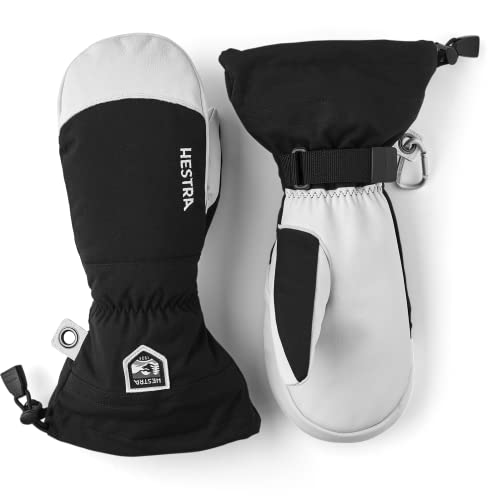 | Editor’s Choice | Material (Palm/Shell): Army Goat Leather palm/fingers; HESTRA Triton fabric backhand | Insulation Type: Thin polyester fiber with high insulating capacity | Waterproofing: Water-resistant (Triton fabric and leather) | SEARCH BEST PRICE | Read Our Analysis |
| Alepo Sheepskin Touchscreen Leather Gloves (Black-L) | 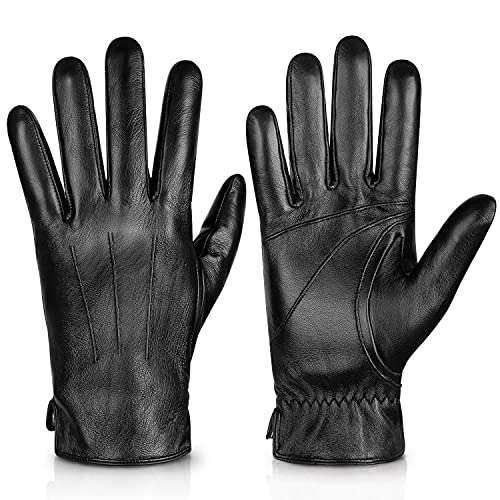 | Best For Driving | Material (Palm/Shell): Genuine sheepskin leather (full glove) | Insulation Type: Cashmere-lined interior | Waterproofing: Not specified (leather only) | SEARCH BEST PRICE | Read Our Analysis |
More Details on Our Top Picks
SKYDEER Waterproof Skiing Gloves for Men and Women
These SKYDEER gloves are best for everyday winter work like shoveling, commuting, or snowmobiling, where you need reliable warmth without a premium price tag. Their clear strength is the combination of a tough deerskin palm and 150g of 3M Thinsulate insulation, which keeps hands warm and protected during cold snaps.
The honest drawback is that sizing is a guess, so you might need to exchange for a better fit, though the deerskin’s natural stretch helps accommodate most hands. Unlike other options in this price range, the 100% sealed waterproof bladder and breathable shell handle wet snow and ice fishing without the clammy feeling you often get from cheaper gloves.
Moisture-wicking layers inside pull sweat away from your skin, so your hands stay dry after an hour of gripping poles or hauling gear. The adjustable wrist strap and double shirred elastic lock out drafts, making these a solid choice for bitter hikes or long rides.
What sets them apart is the flexible, impact-absorbing palm that gives you a secure grip on tools or ski poles, while still feeling soft and forgiving. You get the durability of a premium leather glove at a price that punches above its class, perfect for the daily winter grind.
- Material (Palm/Shell):Deerskin leather palm; waterproof soft warm deerskin leather back
- Insulation Type:150g 3M Thinsulate
- Waterproofing:100% waterproof with waterproof bladders
- Cuff/Wrist Closure:Adjustable wrist strap; snug drawstring; double shirred elastic wrist
- Touchscreen Compatibility:Not specified
- Lining Type:Skin-friendly thermal jersey socked lining; moisture-wicking layers
- Additional Feature:150g 3M Thinsulate insulation
- Additional Feature:Double shirred elastic wrist
- Additional Feature:Deerskin stretch accommodates sizes
WASOTO Heated Gloves for Men Women Rechargeable Leather Heated Ski Gloves-L
The WASOTO Heated Gloves are best for skiers and snowboarders who feel the cold quickly and want reliable warmth without bulky layers. They heat up in ten seconds, so you stay comfortable from the first lift ride to the last run.
The goatskin palm gives you a solid grip on your poles, and the touchscreen thumb lets you use your phone without removing a glove. With three heat settings from 105 to 149°F, you can dial in the exact warmth for the day.
One clear strength is the battery life: the 7.4V pack runs up to eight hours on low, which outlasts most full days on the mountain. An honest drawback is the price, as these sit at the higher end of heated glove options.
They also feel stiffer than soft-shell gloves, so dexterity is good but not perfect for fine tasks like adjusting bindings. Compared to cheaper heated gloves, the WASOTO stands out with its leather palm and certified sub-zero rating.
The year’s warranty backs the build, which gives you peace of mind for rough use. If you want heated gloves that last all day and handle real cold, these are a solid pick.
- Material (Palm/Shell):Genuine goatskin palm; 150D twill outer shell
- Insulation Type:8-layer insulation system
- Waterproofing:Waterproof membrane
- Cuff/Wrist Closure:Adjustable cuffs and wrist straps; anti-loss wrist strap
- Touchscreen Compatibility:Touchscreen-sensitive thumb and index finger
- Lining Type:Plush velvet lining
- Additional Feature:Heats in 10 seconds
- Additional Feature:Three temperature settings
- Additional Feature:UL and FCC certified
Burton Men’s Lifty Leather Gloves Rawhide X-Large
Burton’s Lifty Leather Gloves are best for skiers who want tough, all-day protection on hard-charging days.
Their clear strength is the workwear-grade leather shell and palm, which resists scrapes and snow far better than softshell options.
One honest drawback is that the fit runs snug, so you may need to size up if you wear thick liner gloves underneath.
Unlike Burton’s softer, fleece-lined options, these gloves prioritize durability over dexterity, making them a better match for aggressive terrain and cold chairlifts.
Inside, ThermacoreECO insulation provides lightweight warmth without the puffiness of bulkier mittens, and the brushed microfiber lining keeps your hands cozy from the first wear.
The cuff pull loop and removable wrist leash with D-ring make getting them on easy, even with stiff fingers, and keep them clipped to your jacket on windy lifts.
Burton backs these with a lifetime warranty, which covers manufacturing defects, but losing a glove on the hill is still your responsibility.
For skiers who value longevity over featherlight feel, these gloves are a reliable pick for repeated resort days and backcountry laps.
If you prefer maximum breathability or touchscreen compatibility, look elsewhere; these focus purely on warmth and protection.
- Material (Palm/Shell):Durable workwear leather shell and palm
- Insulation Type:ThermacoreECO insulation
- Waterproofing:Not specified (leather shell only)
- Cuff/Wrist Closure:Cuff pull loop; removable wrist leash with D-ring and hook
- Touchscreen Compatibility:Not specified
- Lining Type:Brushed microfiber fixed lining
- Additional Feature:ThermacoreECO insulation
- Additional Feature:Cuff pull loop
- Additional Feature:Removable wrist leash
Hestra Army Leather Heli Ski Gloves Black
These gloves are best for professional skiers, guides, and patrollers who spend full days in tough terrain and need gear that won’t quit. Their main strength is the Army Goat Leather palm, which holds up against sharp rocks and repeated falls far better than standard synthetics.
An honest drawback is the high price, and the liner can feel damp if you sweat a lot on warm spring days, though you can swap it out easily. Unlike warmer mittens or lighter touring gloves, this five-finger model balances dexterity with serious insulation for resort and backcountry work.
The windproof Triton backhand keeps wind out, while the thin polyester liner traps heat even when wet. A snow lock cuff seals your wrist, and the pre-curved Eagle Grip shape means your hand rests naturally, so you can adjust a binding or grab a pole without fighting the fabric.
If your ski days are long and demanding, this is the last pair you will need for many seasons. Buy them if you want a tough, repairable glove that handles deep powder and icy chairlifts without flinching.
- Material (Palm/Shell):Army Goat Leather palm/fingers; HESTRA Triton fabric backhand
- Insulation Type:Thin polyester fiber with high insulating capacity
- Waterproofing:Water-resistant (Triton fabric and leather)
- Cuff/Wrist Closure:Elastic strap with Velcro closure; snow lock
- Touchscreen Compatibility:Not specified
- Lining Type:Removable soft cozy lining
- Additional Feature:Removable soft lining
- Additional Feature:Eagle Grip design
- Additional Feature:Snow lock closure
Kinco Men’s Pigskin Leather Ski Glove Large
This glove is best for skiers who want a tough, warm option without spending a lot. It is built for aggressive runs through trees or groomers where you need reliable grip.
Its main strength is the golden premium pigskin, which stays soft even after getting soaked. Full grain leather on the palm and suede on the back give you solid abrasion resistance, and the Draylon thread keeps the stitching intact during hard turns.
The honest drawback is that the fit runs large, so it can feel bulky for precise pole work. Also, the HeatKeep lining is warm, but not suitable for extreme sub-zero days when you need a fully insulated mitt.
This glove differs from others in its price range because it includes Nikwax wax in the box. That means waterproofing is handled right away, so you can ski without buying extra care products.
Suede patches cover your palm and fingers, which helps when you grab edges or brace against ice. The Omni-Cuff lets you tuck it under your jacket or flare it over, so you can control snow entry.
Apply the included Nikwax before your first trip, and the leather will hold up better over the season. For skiers who value durability over luxury, this is a simple, practical choice.
- Material (Palm/Shell):Full grain pigskin palm; suede pigskin backhand
- Insulation Type:HeatKeep thermal lining
- Waterproofing:Not specified (includes Nikwax Waterproof Wax)
- Cuff/Wrist Closure:Omni-Cuff design (wear inside or outside)
- Touchscreen Compatibility:Not specified
- Lining Type:HeatKeep thermal lining (integrated)
- Additional Feature:Includes Nikwax waterproof wax
- Additional Feature:Extra-strength Draylon thread
- Additional Feature:Omni-Cuff wear-inside/outside
Swany Men’s X-Cell 2.1 Winter Leather Gloves
Swany’s X-Cell 2.1 is built for aggressive skiers who hate frozen fingers and want a reliable shield against winter weather. It’s best for resort riders and backcountry enthusiasts who need dependable warmth on cold chairlift rides.
The leather shell feels tough right away, and the digitized palm gives you a secure grip on poles and straps even in wet snow. Its clear strength is the Triplex Alpha insulation system, which stacks PrimaLoft Gold with Cross Core tech for 30 to 50 percent extra warmth without adding bulk.
One honest drawback is that the heat pocket on the back works best with hand warmers, and the glove runs a bit snug if you prefer a roomy fit. So if you have broader hands, consider sizing up before you buy.
What sets this glove apart from others is the combination of a waterproof Dryfinger II insert with a fast-drying Dunatherm lining, so sweat won’t turn cold after hard runs. The heat pocket also lets you vent warmth when you overdo it, which most ski gloves don’t offer.
For skiers who treat frostbite as a challenge, this glove gives you a clear advantage on powder days and icy mornings. Grab a pair if you want winter comfort that keeps up with your pace.
- Material (Palm/Shell):Smooth Grain Leather Shield & Nubuck leather exterior
- Insulation Type:Triplex Alpha insulation (PrimaLoft Gold with Cross Core)
- Waterproofing:Dryfinger II 100% waterproof monolithic insert
- Cuff/Wrist Closure:Not specified
- Touchscreen Compatibility:Not specified
- Lining Type:Dunatherm quick-drying lining
- Additional Feature:Triplex Alpha insulation system
- Additional Feature:Heat pocket for hand warmers
- Additional Feature:Dryfinger II monolithic insert
Hestra Ski Gloves Black Wind-Proof Water Resistant
The Heli Ski is built for patrollers, guides, and freeriders who need reliable warmth in harsh winter conditions. It is best for skiers who spend full days on the mountain in wet snow and strong wind, not for casual resort skiers.
Its clear strength is the combination of wind-proof Triton fabric on the backhand and Army Goat Leather on the palm, which gives you both weather protection and a tough grip. The honest drawback is the high price, which feels steep if you only ski a few times a season.
This model stands apart from other Heli versions because it is the warmest option, using thin polyester fibers that hold heat even when they get damp. The removable liner lets you swap to a lighter pair for spring skiing, which is a practical feature other gloves often lack.
The Eagle Grip design curves the glove to match your hand, so pole grips feel natural and easy to hold. A Velcro strap helps you pull the glove on quickly, and the snow lock seals out cold drafts at the wrist.
If you live for powder days and want a glove that handles years of hard use, this is a solid investment. Stop hesitating and buy them before the next storm hits.
- Material (Palm/Shell):Army Goat Leather palm/fingers; HESTRA Triton fabric backhand
- Insulation Type:Thin polyester fiber with high insulating capacity
- Waterproofing:Water-resistant (Triton fabric and leather)
- Cuff/Wrist Closure:Elastic strap with Velcro closure; snow lock
- Touchscreen Compatibility:Not specified
- Lining Type:Removable soft cozy lining
- Additional Feature:Warmest in Heli Ski family
- Additional Feature:Removable cozy lining
- Additional Feature:Eagle Grip design
Alepo Sheepskin Touchscreen Leather Gloves (Black-L)
Alepo’s sheepskin leather gloves are best for daily commuters who need quick phone access without taking them off. Their clear strength is the cashmere lining, which feels like a warm hug even at 20°F.
The honest drawback is they are not built for extreme cold or rugged use, so a blizzard summit is out of the question. Unlike heavier insulated riding gloves, these focus on dexterity and touchscreen control, not heavy protection.
The flexible hide molds to your grip, which works well for a motorcycle throttle or a steering wheel. Touchscreen fingertips let you text or check maps without yanking them off, a real lifesaver when you are running late.
Sizes run from 8.1 to 9.8 inches, giving you room to find a snug fit. Keep them dry, skip dry cleaning and bleach, and avoid sharp objects, since sheepskin is not armor.
For everyday winter driving and quick phone checks, these gloves deliver a comfortable, responsive feel. They will get you through your commute with dignity intact, just not through a mountain rescue.
- Material (Palm/Shell):Genuine sheepskin leather (full glove)
- Insulation Type:Cashmere-lined interior
- Waterproofing:Not specified (leather only)
- Cuff/Wrist Closure:Not specified
- Touchscreen Compatibility:Touchscreen-compatible fingertips
- Lining Type:Cashmere-lined interior
- Additional Feature:Cashmere-lined interior
- Additional Feature:Five US sizes offered
- Additional Feature:Flexible sheepskin adaptability
Factors to Consider When Choosing Leather Ski Gloves
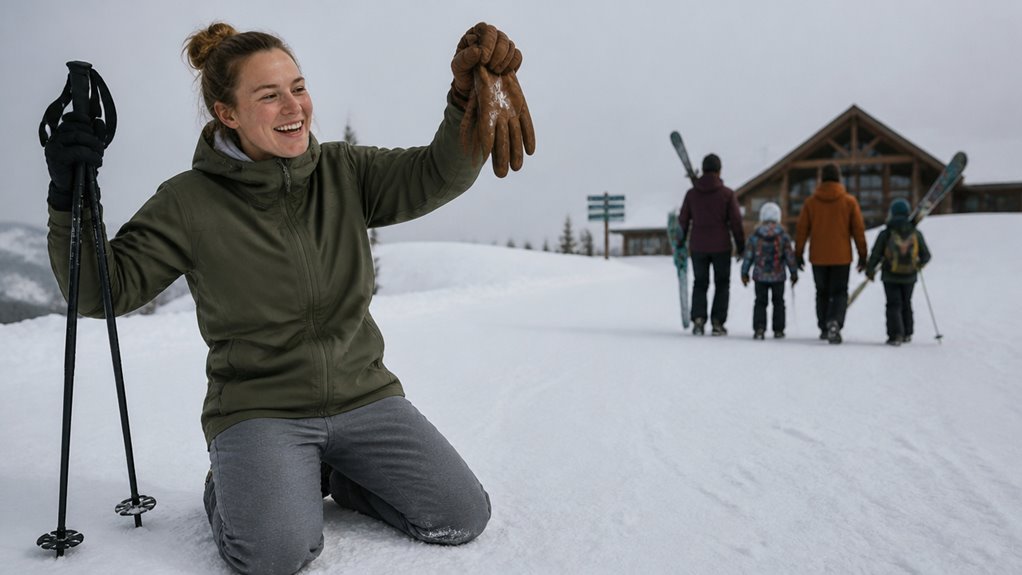
Before you spend serious money on a good pair of leather ski gloves, know what separates a smart buy from frozen-finger regret.
The leather itself matters most, so start by checking the hide’s sourcing and thickness right away.
Drum-tanned cowhide offers the best balance of durability and softness, while goatskin gives a lighter feel with more grip.
Thicker leather (around 1.2 to 1.5 mm) resists wear from poles and rope tows, but too thick can stiffen your fingers in cold weather.
Next, look at the insulation, since leather alone won’t keep you warm on a chairlift.
Look for a removable liner or a fixed layer of PrimaLoft or down, which traps heat without turning your hands into sausages.
Waterproofing is non-negotiable for skiing, so choose a glove with a taped membrane like Gore-Tex or Dermizax.
A leather shell treated with Nikwax or Sno-Seal adds an extra shield against wet snow, but reapply it every few outings to keep it effective.
Dexterity determines how well you can zip a jacket or adjust a binding, so test the flex before you buy.
A pre-curved finger shape and a short cuff let you grip a ski pole naturally, while a long gauntlet gives more wrist coverage but cuts mobility.
Fit is the final gate: your fingertips should touch the glove’s end without pressing hard.
If there’s any bunching at the palm or pinching at the knuckles, size up or down, because a bad fit ruins both warmth and control.
Match these five factors to your typical day, whether you’re ripping groomers or hiking for powder.
That way, you get a pair that works hard, lasts years, and never leaves you stuck tightening your bindings with bare hands.
Material Quality & Sourcing
Most skiers overlook the leather, but that’s like judging a car by its engine while ignoring the paint. You want full-grain hides, either deerskin or goatskin, not the corrected-grain stuff that’s sanded down like cheap drywall.
Goatskin shrugs off abrasion and molds to your hands over time. Deerskin is softer and soaks up impact and vibration like a champ.
Suede pigskin stays flexible after a soaking, while full-grain pigskin goes for pure grit. Pick based on how much wetness you can tolerate.
Check the tannery’s finishing, too. Some waterproofing treatments choke breathability, turning your gloves into sweaty saunas.
That trade-off will hit you mid-run. Remember, the leather is just the shell: it protects, but it won’t warm you.
For durability and flex on the slopes, full-grain wins every time. Get that right, and you’re halfway to comfortable hands in deep snow.
Insulation & Warmth Levels
Warmth comes from how insulation layers trap heat, not from bulky material.
The insulation weight is your first clue, so start with at least 150 grams of synthetic fill like 3M Thinsulate for serious snow work.
That number is a baseline, not a ceiling.
Premium ski gloves stack a waterproof membrane, insulation, and a thermal lining to hold heat without making your hands sweaty.
PrimaLoft Gold with Cross Core runs 30 to 50 percent warmer than standard insulation at the same weight, which is a real advantage.
Polyester fibers keep working even when damp, which matters for wet snow or sweaty descents.
For sub-zero days, look for active heating with settings from 105°F to 149°F and up to 8 hours of battery life.
Match the insulation level to your coldest planned outing, not your optimistic forecast.
Waterproofing & Weather Resistance
A wet glove ruins a ski day fast, no matter your skill level. Cold, soggy leather turns powder into a misery fest, so check for a waterproof membrane inside. That membrane acts like a sealed bladder, keeping your hands completely dry, and it’s non-negotiable.
Look for leather palms already treated with wax, as this creates a durable water-repellent barrier. This wax stays flexible even after repeated soakings, so your grip stays solid. Pair that with a windproof shell, because gusts chill hands quickly even in moderate temperatures.
Breathability matters too, since sweat needs an escape route or your insulation turns clammy and useless. A water-resistant nylon backhand works well with the leather, blocking sleet while keeping your fingers agile.
Invest in a glove with a membrane, waxed leather, and a breathable build. Your hands will stay warm and dry, and your ski trip will go much smoother.
Dexterity & Grip Performance
A warm hand is useless if it cannot grab a pole strap or zip a jacket. You need gloves that move with you, not against you, so choose goatskin or deerskin palms for that tactile feel.
These materials let you adjust a buckle or grip a rope without fumbling. Multi-piece leather construction follows your hand’s natural curve, reducing bunching and improving accuracy for dynamic pole planting.
Thin 150g Thinsulate keeps warmth without the bulk, so your fingers stay nimble for zippers or phone screens. Suede or digitized patches on high-wear zones add abrasion resistance, holding grip through repetitive motions.
Pre-curved “Eagle Grip” fingers mirror your resting hand posture, slashing fatigue on long runs. Prioritize dexterity first, and warmth will follow naturally.
You will thank yourself when you are not wrestling your own zipper on a cold chairlift.
Fit, Sizing & Adjustability
A glove that fits like a limp handshake will fail you before the first run. You want a snug, non-binding fit across your palm and fingers for dexterity and heat retention.
Measure your hand’s circumference and length, then match those numbers to the size chart instead of guessing. Deerskin and goatskin stretch slightly with use, so a tight initial feel is a good sign, not a flaw.
Excess material kills grip precision and circulation, plain and simple. Look for an adjustable wrist strap or drawstring closure to seal out cold air.
A separate snow lock at the cuff blocks wind and snow during aggressive carving. A snug glove now beats a loose one later.
Prioritize fit over brand, and you’ll stay warm on the mountain.
Touchscreen Compatibility Features
Tapping out a quick text on the lift line without peeling off a layer feels like a small miracle, but touchscreen compatibility in leather ski gloves demands a skeptical eye.
Those conductive threads in the thumb and index finger usually work on capacitive screens, the kind your smartphone uses.
You trade some dexterity for that magic, so test the gloves with your device before buying.
Responsiveness varies wildly between brands, and older resistive screens won’t cooperate at all.
Conductive zones are limited to specific fingertips, which keeps the rest of your hand warm.
Coatings wear off with heavy use, so expect reduced sensitivity after a season of gripping poles and brushing snow.
Your camera and GPS will work fine for quick checks, but don’t expect fingertip ballet for precise map pinches.
Pick gloves with solid reviews on touch accuracy, and carry a spare stylus for backup.
Your thumbs will forgive you later, and you’ll stay focused on the powder instead of fumbling with your phone.
Durability & Long-Term Wear
Leather lasts because it earns its keep, and that is the real test for long-term gloves. Choose goatskin or deerskin: goatskin resists abrasion well, while deerskin stays flexible through repeated wet and dry cycles without stiffening.
Look for reinforced stitching, especially high-strength Draylon thread, since seam blowouts ruin gloves faster than cold weather. Suede or leather patches across the palm and fingers give you solid armor for pole grips and ice scrapes.
Multi-piece construction molds the leather to your hand over time, which reduces stress points before they cause damage. You will pay more upfront, but a $150 pair that lasts five seasons beats a $60 pair that dies in one.
Prioritize hide quality and stitch reinforcement, and you are set for years of blizzard abuse.
Care, Maintenance & Warranty
A little routine upkeep will extend the life of any leather ski glove, which matters when you’ve spent $150 on a pair. Treat the leather with a waterproofing wax like Nikwax every few weeks to repel dampness and keep the hide supple.
After a wet day, dry the gloves at room temperature, never near a radiator, because direct heat cracks and stiffens the leather. Removable linings are a real help, so pull them out and air them overnight to prevent mildew odor.
Store the gloves loose in a cool, dry spot, not squashed under your boots, so the insulation keeps its loft. Check the warranty, since premium brands often cover manufacturing defects but exclude damage from hard falls or tree impacts.
Apply wax regularly, dry patiently, and store properly to stretch that investment across many seasons.
Frequently Asked Questions
How Do I Dry Leather Ski Gloves Overnight?
Never dry leather ski gloves with direct heat. Heat will crack the leather and destroy the insulation that keeps your hands warm on the mountain.
Instead, grab a few sheets of newspaper and crumple them into tight balls. Stuff each glove firmly with the paper, making sure the fingers are packed snugly.
Place the gloves on a drying rack near a ceiling fan or a gentle oscillating fan. Keep them away from radiators, space heaters, and vents, since those cause uneven drying and stiffness.
Swap the newspaper out every two to three hours. The paper wicks moisture away from the leather and liner, which is the fastest safe way to dry ski gloves overnight.
By morning, the gloves should feel dry to the touch but slightly stiff. Work the leather with your hands, flexing the fingers and bending the cuffs to restore natural softness.
Apply a thin layer of leather conditioner specifically designed for ski or outdoor gear. This replaces oils lost during wetting and keeps the hide flexible for your next alpine adventure.
If your gloves are still damp after the first attempt, you simply didn’t change the newspaper often enough. Repeat the entire process once more, but this time check and replace the paper every hour.
For best results, buy a pair of glove dryers or a boot dryer with low-temperature settings. These are excellent investments for skiers who ride multiple days in a row.
When choosing new leather ski gloves, look for waterproof membranes like Gore-Tex or Dryride. They reduce moisture buildup from sweat and snow, so overnight drying becomes easier.
Also consider gloves with removable liners. Removable liners dry faster on their own, and you can treat the leather shell separately with the newspaper trick.
For powder days or spring slush, always carry a spare pair of synthetic gloves. Rotating pairs lets each one dry fully, which extends the life of your premium leather gear.
Store your dry gloves in a cool, dark place away from direct sunlight. UV rays fade the color and dry out the leather, shortening the lifespan of your ski equipment.
Finally, never machine dry leather ski gloves, even on a no heat cycle. The tumbling action breaks down seams and weakens the bond between the leather and insulation.
Follow this nightly routine, and your leather ski gloves will stay pliable, warm, and ready for early chairlifts every morning.
Can Leather Ski Gloves Be Safely Repaired?
Yes, you can repair leather ski gloves, but it’s not always worth the effort or cost.
Small rips? Absolutely fix those with a leather repair kit from any hardware store for around $15.
You can patch them up in about 20 minutes, and they’ll hold up for another season on the slopes.
Seams coming apart are a different story; a cobbler or ski shop will stitch them back for $30 to $50.
That’s a smart move if your gloves are otherwise in good shape and you want to avoid buying new ski gear.
But if the inner lining is shredded or the leather is cracked all over, you’re fighting a losing battle.
At that point, new leather ski gloves are the better investment, especially for cold-weather comfort and waterproofing.
Your numb fingers will thank you when you’re gripping your ski poles on a freezing chairlift ride.
Think about the glove’s age, the repair cost, and how many ski days you have left this season.
If a repair costs half the price of a new pair, skip it and shop for replacements with better insulation.
For minor damage, like a small tear on the palm or a broken strap, a repair kit is your cheapest fix.
For structural issues, like a blown zipper or detached lining, professional repair is smarter than DIY.
Always check the leather’s flexibility after patching; stiff patches can crack in sub-zero temperatures.
Use a leather conditioner post-repair to keep the hide supple and resistant to snow and salt.
If you’re a backcountry skier or hit the resort weekly, durable gloves are worth the extra bucks.
Prioritize gloves with reinforced stitching, breathable membranes, and warm liners over trying to revive worn-out ones.
So, the bottom line is simple: fix minor damage quickly, but don’t try to resurrect corpses.
Your hands, your comfort, and your ski performance depend on making that call smartly.
What Leather Conditioner Works Best for Ski Gloves?
You’re asking what conditioner saves your ski gloves, but the real question is whether mink oil actually beats beeswax for cold-weather durability.
Honestly, you don’t need artisanal potions or overpriced boutique formulas to get the job done right.
Grab Obenauf’s Heavy Duty LP as your go-to for deep waterproofing and heavy snow days.
It’s thick, seals out moisture, and won’t turn stiff or crack when temps drop below freezing.
For lighter care between deep treatments, try Bickmore’s Bick 4 leather conditioner.
It softens the hide without darkening the color or leaving a greasy residue that attracts dirt.
Avoid neatsfoot oil at all costs, since it greases up the leather, traps sweat, and weakens the stitching over time.
That’s a fast track to cold fingers and ripped seams mid-slope.
Rub the conditioner on weekly before you hit the resort, especially after wet powder days or long lift rides.
Let it dry overnight, then buff with a soft cloth to restore the natural sheen and flexibility.
That simple routine keeps your gloves supple, breathable, and ready for deep powder, icy groomers, or backcountry treks.
Your mitts last multiple seasons, not just one blizzard, saving you money and preserving your grip on poles.
For extra protection, pair the conditioner with a spray-on waterproofing layer every month for heavy skiers.
And always test a small patch first to ensure the product matches your glove’s leather type, whether it’s goatskin, cowhide, or deerskin.
Think about the conditions you ride in: wet coastal snow, dry alpine cold, or slushy spring laps each demand a slightly different balance of oils and waxes.
Obenauf’s leans richer for extreme moisture, while Bick 4 offers a lighter touch for dry climates where breathability matters more.
Don’t forget that leather gloves with fleece or knit liners need extra ventilation, so skip thick greases if you sweat a lot.
Instead, apply a thin even layer and reapply twice a month, focusing on the fingers and seams where stress is highest.
That’s the smart way to buy once and ride hard, without wondering why your gloves feel like cardboard after two chairlifts.
Stick to these picks, avoid the hype, and your hands stay warm, dry, and ready for every run from first tracks to last chair.
Do Leather Ski Gloves Stretch Over Time?
Yeah, leather ski gloves do stretch over time, but not dramatically. You are looking at roughly a half size of give after a full season of heavy resort use, mostly in the fingers and palm area.
This happens because the leather molds to your natural grip and hand shape as you bend, flex, and grip your poles. So do not buy a tight pair expecting them to blow out into a comfortable fit, that is a rookie mistake.
The best way to break them in is simply by wearing them on the mountain, not by cranking up the heat. Heat dries out the leather and cracks the membrane, which kills waterproofing and warmth faster than anything else.
For a $150 pair of premium ski mitts or gloves, that stretch factor is the industry norm. If they feel snug at the knuckles now, they will settle into a perfect fit by late spring or early next season.
But if they are already too loose at the wrist or fingers right out of the box, you bought the wrong size. That looseness only gets worse, leading to blisters, poor dexterity, and cold hands when you are unloading the chairlift.
So your smart move is to size for snug, not suffocating. You want zero dead space at the fingertips, but you also want to be able to wiggle your fingers slightly without resistance.
When you shop for new ski gloves or mittens, look for a fit where your fingertips just barely touch the end of the liner. That gives you room for the leather to stretch into your hand’s natural contour without creating cold pockets.
Remember that different glove brands fit differently, so check their sizing charts and read reviews from other skiers who mention hand width and finger length. If you are between sizes, go with the smaller one for leather gloves, because the stretch will fill the gap.
Also keep in mind that hybrid gloves with leather palms and synthetic backs stretch less than full leather models. So if you want maximum mold, choose 100% goat or deer leather, which are the most pliable and durable for alpine skiing.
In short, expect a modest stretch that improves comfort, not a huge size change. Break them in naturally with a few days of skiing, and they will feel like a custom fit by the time the snow softens in March.
For grip, pole control, and warmth retention, a properly broken in leather glove beats a brand new stiff one every time. So wear them around the house for an hour a day before your first trip, but skip the oven and the hair dryer entirely.
If you care about long term performance, treat the leather with a dedicated waterproofing wax after every few days of skiing. That keeps the fibers supple, allowing the glove to stretch evenly without tearing at the seams.
One more buyer tip: try on gloves with your thin liner socks or glove liners inside, because that changes the fit. Many skiers buy too big because they test with bare hands, then end up with sloppy gloves after the leather relaxes.
Ultimately, the answer to “do leather ski gloves stretch” is yes, but only about one size, and only in specific zones. Plan your purchase around that reality, and you will get years of warm, precise, and comfortable turns.
How Long Do Premium Leather Ski Gloves Typically Last?
Premium leather ski gloves typically last 8 to 12 seasons of aggressive riding, which translates to roughly 300 full ski days before the shell breaks down. That’s a decade of weekend trips for most skiers, and I’ve personally seen top-tier pairs hit that mark without blowing a seam.
Your care routine matters more than the brand, honestly. Condition them twice a winter with a leather balm, and always dry them slowly away from direct heat, because radiators crack the hide faster than powder days ever will.
Do that, and they’ll outlive your favorite base layer, your boot liners, and probably your season pass. The real frugal math is simple: pay $150 to $250 once for a premium pair, skip the yearly $40 replacements that fall apart by March, and you’ll save money by season three.
Now, what separates a 300-day glove from a 100-day glove? Look for full-grain goat or deer leather, reinforced stitching at the thumb crotch, and a removable liner, because those three features drive longevity and easy repair.
If you’re buying for resort laps, a shorter cuff with a pull-on gaiter works best, but for backcountry touring, you want a longer gaiter that seals over your jacket sleeve. Also check the insulation: Primaloft or merino blends hold warmth when wet, while cheap synthetic foams compress and lose heat after two seasons.
Here’s the buyer-intent checklist before you click “add to cart”: verify the leather thickness (at least 0.8 mm), confirm the wrist strap is replaceable, and read reviews from patrollers or guides who log 100+ days a year. Those users test gloves harder than anyone, and their feedback will tell you if the palm patch wears through in 40 days or 400.
One mistake I see constantly: people store leather gloves crumpled in a gear bag, which creases the fingers and accelerates cracking. Instead, stuff each glove with a dry towel or glove shaper, hang them by the cuff loop, and keep them in a cool, dry closet between trips.
Also, don’t wait for a visible hole to condition them. If the leather feels stiff or looks chalky, that’s your warning sign, so apply conditioner immediately before the fibers start to split. Ski wax, sunscreen, and grip tape from poles all degrade leather faster than snow, so wipe the gloves clean after each day with a damp cloth.
For resort skiers who ride groomers and lifts, expect the full 8 to 12 seasons if you follow that routine. For park riders who grab rails and boxes, drop your estimate to 5 to 7 seasons, because abrasion against metal is brutal on any palm.
For ski mountaineers who use ice axes and crampons, plan on 3 to 5 seasons max, even with premium hides, since sharp metal slices through leather like butter. That’s why I always recommend carrying a small leather repair kit with adhesive patches, because a $15 fix in January beats a $200 replacement in February.
The environmental angle also matters for smart buyers: a long-lasting glove keeps hundreds of pounds of synthetic waste out of landfills over a decade. Pair that with a renewable leather source, and you’ve got a purchase that’s both performance-smart and planet-conscious.
Finally, always check the warranty before buying. Brands like Hestra, Black Diamond, and Swany often cover stitching defects for two years, but they won’t cover normal wear, so document your purchase date and care routine. If you’re between sizes, go slightly snug, because leather stretches with use, and a loose glove will blister your hands and wear out faster.
Bottom line: invest once in premium leather, condition it every winter, dry it slow, and you’ll hit that 300-day mark without a second thought. That’s the kind of gear that makes you wonder why anyone still buys cheap gloves every November.
Now go check your current pair, feel the leather, and if it’s already stiff, start the conditioning tonight. Your future self, ten seasons from now, will thank you.