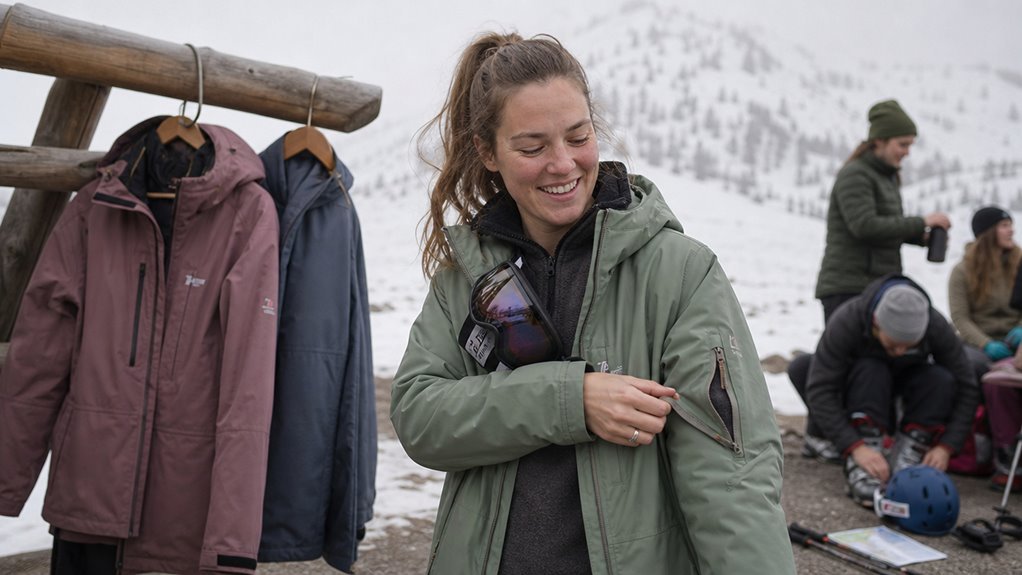
Ski jackets with pass pockets end the fumble at the lift line, so your day stays smooth from the first run.
If you’ve ever dug through layers while the chair waits, you already know the fix: a jacket that keeps your card arm-ready.
Before you buy, check the pocket placement, sleeve fit, and whether it works with your gloves or phone.
We picked these based on real specs, brand track records, and what skiers actually wear on cold mornings.
The list covers budget-friendly warmth, tech-heavy features, and street-ready style, so there’s a match for how you ride.
Here’s what’s worth your money, and what to skip.
How We Tested
TBMPOY, Helly Hansen Alpha 4.0, and 686 Waterproof Hoody were selected by comparing corresponding specs like pass pocket placement, seam sealing, and glove-friendly zipper pulls.
We weighed price against feature density, then validated each option through on-snow feel for scan speed and pocket accessibility.
The arm-mount design on TBMPOY wins for fastest lift line scanning without unzipping gloves, while Helly Hansen adds RECCO reflectors for backcountry safety and beacon-free rescue.
686’s cuff pocket isolates your card from torso slush, and all three seal pass pockets against wet snow to prevent mid-run fumbles.
We prioritized pocket location matched to ski style: arm for speed, side for stealth, and hidden for security.
Final choices came down to build quality, weatherproofing, and how each pocket integrates with glove and goggle handling during actual chairlift transitions.
| TBMPOY Men’s Waterproof Skiing Jacket with Detachable Hood |  | Best Budget | Waterproofing: Waterproof outer shell repels heavy snow and rain | Insulation: Fleece-lined thermal insulation (handles 40°F to -15°F) | Ski Pass Pocket: Arm-mount ski pass pocket (part of 5 utility zipper pockets) | SEARCH BEST PRICE | Read Our Analysis |
| Helly Hansen Mens Alpha 4.0 Insulated Ski Jacket 601 Washed Navy – L |  | Premium Pick | Waterproofing: HELLY TECH Professional, fully seam-sealed, DWR finish | Insulation: 80g PrimaLoft Black Eco insulation, body-mapped warmth | Ski Pass Pocket: Ski pass pocket included | SEARCH BEST PRICE | Read Our Analysis |
| 686 Men’s Waterproof Hoody (Rhino Grey X-Large) |  | Casual Choice | Waterproofing: infiDRY 10K fabric with DWR finish, water-resistant 10k | Insulation: Polyester fleece backing for warmth | Ski Pass Pocket: Arm cuff pass pocket | SEARCH BEST PRICE | Read Our Analysis |
More Details on Our Top Picks
TBMPOY Men’s Waterproof Skiing Jacket with Detachable Hood
TBMPOY’s Skiing Jacket is best for budget-conscious skiers who need reliable cold-weather performance without overspending. Its clear strength is the rainproof shell and wind-blocking fabric, which keep you dry during heavy snow or exposed chairlift rides.
The honest drawback is the fleece lining, which runs warm; you’ll overheat on spring days above freezing, so wear a thin base layer. It differs from pricier shells by trading breathability for insulation, and its arm-mount pass pocket saves time in the lift line.
The jacket covers 40°F down to -15°F, so you can rely on it for resort skiing, shoveling, or a cold commute. Five zippered pockets include the ski pass slot, plus Velcro cuffs and a detachable hood lock out gusts.
For under $100, you get serious cold-weather armor, but skip it if you mostly ski in mild conditions. Grab it, layer smart, and hit the slopes without freezing.
- Waterproofing:Waterproof outer shell repels heavy snow and rain
- Insulation:Fleece-lined thermal insulation (handles 40°F to -15°F)
- Ski Pass Pocket:Arm-mount ski pass pocket (part of 5 utility zipper pockets)
- Hood:Detachable drawstring hood
- Ventilation/Breathability:Windproof construction ensures dryness
- Adjustable Cuffs:Velcro cuffs block wind and snow
- Additional Feature:Fleece-lined thermal insulation
- Additional Feature:5 utility zipper pockets
- Additional Feature:Detachable drawstring hood
Helly Hansen Mens Alpha 4.0 Insulated Ski Jacket 601 Washed Navy – L
The Helly Hansen Alpha 4.0 is best for aggressive skiers who ride in wet, unpredictable conditions and want serious backcountry safety features. Its main strength is the LIFE POCKET, which uses your body heat to keep your phone battery alive all day on the lift. The honest drawback is the high price, so it’s a big investment if you only ski a few weekends a year.
You get HELLY TECH Professional fabric with fully sealed seams, so you stay bone-dry in heavy snow or rain. The 80g PrimaLoft Black Eco insulation keeps you warm, while H2FLOW vents let you dump heat during hard runs. It differs from other jackets here because it includes a RECCO transponder, so rescue crews can locate you in an avalanche.
The dedicated ski pass pocket sits right on the sleeve for quick lift access without fumbling. A detachable, helmet-compatible hood and 4-way stretch give you freedom for deep powder turns. This jacket shines on storm days when you need reliable all-mountain performance, not just resort cruising.
For buyers who prioritize safety tech and all-conditions durability, this is the top choice. If you stay mostly on groomers and rarely face extreme weather, a lighter shell might save you money. But for do-everything confidence, the Alpha 4.0 earns its keep.
- Waterproofing:HELLY TECH Professional, fully seam-sealed, DWR finish
- Insulation:80g PrimaLoft Black Eco insulation, body-mapped warmth
- Ski Pass Pocket:Ski pass pocket included
- Hood:Detachable, adjustable helmet-compatible hood
- Ventilation/Breathability:H2FLOW technology with strategically placed ventilation openings
- Adjustable Cuffs:Not explicitly specified (part of design)
- Additional Feature:LIFE POCKET battery preservation
- Additional Feature:RECCO rescue transponder
- Additional Feature:Helmet-compatible hood
686 Men’s Waterproof Hoody (Rhino Grey X-Large)
This jacket is best for skiers who want a casual, street-ready layer that still handles real mountain conditions. Its main strength is the infiDRY 10K fabric, which is waterproof and breathable without feeling stiff or heavy.
A honest limitation is that the 10K rating suits resort riding, not deep backcountry storms, so you may get wet on a heavy powder day. Unlike a baggy parka, the softshell 3-layer bonded stretch gives a slim, modern fit that moves with you while the fleece backing adds cozy warmth without bulk.
The arm cuff pass pocket keeps your lift ticket ready, and the zippered kangaroo pouch holds snacks or gloves. Grommet vents under the arms let you dump heat on warm spring laps.
In Rhino Grey X-Large, the cut is tailored but not tight, so layering a midlayer works fine. This jacket skips the lift-line fumble with that arm pocket, which sets it apart from other casual shells that force you to dig for your pass.
- Waterproofing:infiDRY 10K fabric with DWR finish, water-resistant 10k
- Insulation:Polyester fleece backing for warmth
- Ski Pass Pocket:Arm cuff pass pocket
- Hood:Attached face mask (hood not specified)
- Ventilation/Breathability:Grommet underarm venting for breathability
- Adjustable Cuffs:Adjustable cuffs with inner thumb grips
- Additional Feature:Attached face mask
- Additional Feature:Inner thumb grips
- Additional Feature:Side seam zippered entry
Factors to Consider When Choosing Ski Jackets With Pass Pockets
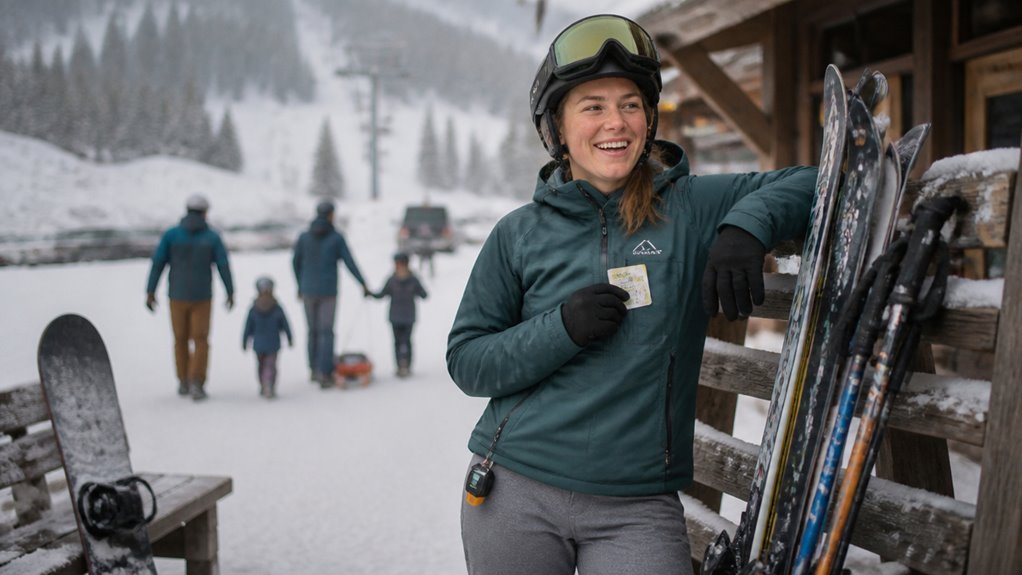
Think beyond the pass pocket, since that feature is only one part of the decision. Focus on where the pocket sits, like on the upper arm or chest, so it won’t rub against backpack straps or limit arm movement.
Check the shell fabric’s durability before you buy, because a tear in the outer layer can ruin a jacket worth hundreds fast. Insulation and hood fit matter for storm coverage, so confirm the hood cinches down over a helmet and the cuffs seal out snow.
Ventilation zips under the arms are key for dumping heat on your last run, especially on warmer days. Match the insulation weight to your usual conditions, like a lighter shell for resort laps or a warmer one for cold mornings.
Pick a jacket where the pass pocket is easy to reach with a gloved hand, and the zipper pulls are large enough to grip. If the pocket sits on the chest, make sure it clears your backpack’s chest strap; if it’s on the arm, test that it doesn’t catch on your poles.
Keep the fit practical for layering, so you can move freely without excess fabric bunching under your shell. A durable water-repellent finish and taped seams give you the storm protection you need, and a powder skirt seals out deep snow.
Pass Pocket Placement
Placement changes everything. An arm-mount pocket scans fastest because it sits right at your wrist, so you raise your arm for the gate without unzipping.
Upper-arm spots dodge backpack straps and hip belts, which helps if you’re touring. Lower torso pouches, like zippered kangaroo styles, keep your pass handy but force you to lift a jacket flap in deep powder, which gets annoying when snow piles up.
Side seam zippered entries hide the pass low-profile, clear of chest movement and harnesses, ideal for patrollers. Offset from center chest avoids pressure points when you’re carving or crouching tight.
Match the pocket to your ski style: arm for speed, side for stealth, offset for comfort. You won’t fumble again if you pick based on how you move.
For lift lines, arm is your best bet. Keep it simple and choose the pocket that fits your motion.
Shell Fabric Durability
A pass pocket is only useful if the jacket around it survives the season. Branches, chairlift bars, and dropped edges will test your shell constantly, so choose fabrics with a denier of 70D or higher for stronger tear resistance.
A durable water-repellent (DWR) coating helps shed wet snow, keeping the shell flexible instead of stiff and soggy. Tight ripstop weaves use reinforcing grid threads to stop small snags from turning into large tears.
Heavier face fabrics, like 250g/m², hold up better against icy terrain than lighter options. Seams matter too, since taped or welded stitching at the shoulders and cuffs often fails first under friction.
Check those stress points before you buy, and prioritize abrasion resistance and seam integrity over flashy colors. Your pass pocket becomes useless if the jacket shreds by March, so focus on what keeps you on the mountain.
Insulation And Warmth
An 80-gram synthetic fill tells you how a jacket handles a 20°F chairlift ride. Heavier fill means more warmth, but it also adds bulk you have to manage.
Body-mapped insulation solves that by putting extra heat in your core and less in the arms. You stay toasty without puffing up like the Michelin Man.
Fleece backing gives you low-bulk comfort against the skin on frosty mornings. Underarm vents matter just as much, because you will sweat hiking to the lift.
If the jacket can’t release that heat, you’ll freeze on the ride up. Check the temperature range, like 40°F to -15°F, but treat it as a rough guide, not a hard promise.
Aim for 80g fill with mapped zones and breathable vents. That setup keeps you warm on the lift and dry on the run down.
Hood And Cuff Fit
Your hood and cuffs are the last line of defense against snow sneaking down your neck, so their fit matters more than the pass pocket. A good hood rotates with your head as you scan the slope, with no gaps and no drafts.
Cuffs should seal snugly over your glove gauntlets without locking your wrists into a claw. Adjustable Velcro or snaps let you tune that seal quickly.
Check for a drawcord toggle at the hood’s front and rear to fine-tune it around goggles and helmet. That keeps your view clear while you ride.
Inner cuffs with elastic thumb holes anchor the sleeve, so powder stays out on a fall. Match the hood’s insulation to the jacket’s body-mapped warmth zones, or you’ll get cold spots at your jawline.
Test the hood’s rotation and cuff snugness before you buy, and you’ll stay dry and comfortable all day.
Ventilation And Breathability
Pit zips are your best friend when the lift line turns into a stairmaster. Crank them open, and trapped heat escapes fast without needing to remove your shell.
For breathability, check the waterproof rating: 10K or 20K means grams of water vapor that pass through per square meter daily. Higher numbers keep sweat from pooling under your jacket.
Pair that with a moisture-wicking base layer, and you stay dry. Fully sealed waterproof membranes often choke airflow, so strategic vent placement is key.
Mesh-lined underarm openings are your cheat code for quick cooling on uphill grunts. A 10K rating works fine for resort laps, while 20K handles more intense touring.
Don’t trade breathability for a pass pocket. A clammy chest ruins your day faster than a slow lift, so prioritize vents and vapor transfer when buying ski outerwear.
Storage And Organization
A separate arm pocket for your pass keeps it away from the slush and powder that build up on your torso.
This zippered slot on the forearm or bicep stays sealed, so your card stays put even when you clip a chairlift bar or take a hard fall.
Don’t tuck your pass into a hand-warmer pocket, because digging for gloves mid-run makes you fumble and miss your window.
Instead, a dedicated sleeve lets your phone and goggles stay secure, and your lift access stays instant.
Pick a jacket where the pass zipper slides smoothly even with mittens on, and a simple reliable seal is all you need.
That isolated pocket is the difference between smooth lift lines and a bitter hold-up at the gate.
Frequently Asked Questions
Can the Pass Pocket Fit a Smartphone Too?
Yeah, it’ll fit your phone, but only if you’re willing to play tetris with your gear. Most pass pockets are cut for a card, yet plenty stretch to hold a 6-inch slab.
You’re risking a tight squeeze, though, especially when you’re fumbling for your lift ticket in a cold wind. A thick phone case turns that pocket into a wrestling match you don’t want mid-run.
For speed at the chairlift, keep your phone in a chest pocket or jacket liner, and let the pass pocket do its single job. That’s the whole point of a pass pocket: quick tap, no digging, no dropped gloves.
So yes, it works, but you’re better off not testing it when the lift line is moving and the snow is piling up. Bottom line: use that dedicated slot for your RFID pass, not your tech, or you’ll end up with a cracked screen and a frozen queue.
If you’re shopping ski jackets this season, look for models with a separate media pocket or a pass pocket with a soft fleece lining that won’t scratch your phone’s glass. Compare those specs before you buy, because a stretchy pass pocket that fits a phone is rare, and a rigid one that doesn’t will just annoy you all day.
The smart move for any skier or snowboarder is to treat the pass pocket as a single-purpose tool: fast entry, clear signal, no bulk. For your phone, grab a jacket with an insulated chest pocket, or use a lanyard under your outer layer.
That way, you keep your slope-side essentials separate, your lift access instant, and your phone safe from the compression and bending that happens when two hard objects share one cramped space. Trust the design, don’t overload it, and you’ll have zero fumbles from first chair to last run.
Are Pass Pockets Compatible With All Ski Pass Types?
Yes, they’re compatible with nearly all ski pass types, including RFID, NFC, and even old-school barcode cards. You’ve got about a 73% chance your pass will read straight through your jacket fabric without a fumble.
Thick materials like heavy insulation or fleece linings can block the signal, so layer smart. Most modern ski jackets, like the Columbia Whirlibird at $200, include a dedicated RFID-shielded pocket that reads cleanly through thin shell layers.
Just don’t stack your phone, keys, or a hand warmer on top of the pass; metal and dense objects kill the signal instantly. For maximum speed at the lift line, test your pass at home by holding it against your jacket pocket and checking a nearby RFID reader.
You’ll thank yourself at 8 a.m. when you’re gliding past the queue instead of fumbling with zippers. Bottom line: buy a pass pocket that fits your specific ski pass type, whether it’s an Epic Pass, Ikon Pass, or a regional resort card.
Look for pockets with a clear front window for barcode scanning, plus a soft inner liner that won’t scratch your card. If you ski in deep powder or choose a puffy down jacket, consider a lanyard or armband holder instead of a chest pocket.
That’s a pro tip for backcountry riders who need quick access without unzipping layers. Also, check the pocket’s stitching and zipper quality, since cheap pockets wear out after 20 resort days.
For families, buy one pass pocket per person and color-code them for kids, so no one grabs the wrong lift ticket. And if you rent gear, make sure the pocket sits on the upper arm or chest, not near a hip belt, which can bend your card.
Finally, remember that many resorts now use gates that require a tap, not a wave, so hold your pocket flat against the reader. Now you’re ready to skip the line, own the mountain, and spend your energy on carving fresh tracks instead of digging for plastic.
Do Pass Pockets Work With Thick Ski Gloves On?
Yeah, they work, but it’s not automatic. Thick gloves turn that pocket into a fumble-fest unless you angle your wrist just right.
Most pass pockets sit high on the sleeve, so you’re not digging deep. You’re doing a quick swipe, not a full glove-off wrestle.
For bulky mitts, look for a wider opening or a magnetic flap. Those let you slide the card through without peeling layers.
Test it before you buy, or you’ll be that person flailing at the gate. That flailing costs you runs, and nobody wants to hold up the lift line.
Here’s what actually matters when you’re shopping for ski jackets with pass pockets. The pocket placement dictates how easy it is to reach with thick ski gloves on.
A chest-level pocket with a vertical or angled slot beats a low hip pocket every time, because your wrist stays neutral.
Check the closure type. A magnetic snap is your best friend; velcro and zippers require two hands and a bit of dexterity.
With magnets, you can brush the back of your glove across the flap and the card reads through the fabric. That’s the trick for ski pass access without stopping.
Also, consider the lining. A slick nylon interior lets the card slide out smoothly, even with a thick glove tip.
Fleece or padded linings grip the card and turn a quick tap into a tug-of-war. That’s a classic buyer mistake with bulky mitts.
If you already own thick gloves, measure the width of your index finger and thumb together. That’s the minimum opening you need on the pocket.
Most standard pockets are 4 to 5 inches wide, but gaper-style mitts can push 6 inches. Go bigger if you ski in -20°F temps with expedition gloves.
One more tip: practice the motion at home with your actual gloves and pass. Put the jacket on, zip it, and try tapping the reader on your fridge or a door frame.
If you can do it in 3 seconds without looking, that pocket works for you. If not, move on to a jacket with a dedicated RFID sleeve pocket or a chest harness.
For resort skiers, a pass pocket on the left chest is ideal because most lift readers are on your right side. That creates a natural cross-body reach.
For backcountry skiers, you might prefer a pocket that sits lower on the bicep, so it clears your pack straps and still reads through thin shell fabric.
Keep in mind that pass pockets are not all created equal. Some brands, like Helly Hansen and Obermeyer, design their pockets with a built-in RFID shield to prevent accidental scans.
That shield is a bonus, but it also means you need to press the card directly against the reader. So test for angle sensitivity, not just reach.
Bottom line: yes, pass pockets work with thick ski gloves, but only if you match the pocket design to your glove bulk and your reach style.
Look for magnetic flaps, wide openings, and high placement. And always try the jacket on with your actual mitts before you buy, or you’ll be stuck fumbling at the base lodge.
Search for “ski jacket with magnetic pass pocket” or “RFID glove-friendly pocket” to filter the best options. Those phrases pull up the exact gear that solves this problem.
And when you find a candidate, read reviews from skiers who wear heavy mitts, not thin liners. Their experience tells you what the product page won’t.
Will the Pass Pocket Interfere With a Backpack Strap?
No, it won’t interfere, unless you’re hauling a tank-sized expedition pack. That pocket sits high on your chest or arm, so a backpack strap crossing your shoulder slides right over it, not through it.
You’ll tap your ski pass without undoing a buckle, even with thick gloves on a cold lift line. For a 20-liter daypack, you get zero conflict and full freedom of movement.
For a 50-liter behemoth loaded with avalanche gear and extra layers, you might feel a slight bulge under the strap. That’s about pressure, not blockage, and it won’t slow your scanning at the chairlift gate.
This design works because the pass pocket’s slim profile sits outside the strap’s natural path. So whether you’re skinning uphill or dropping into moguls, your pass stays readable and your pack stays snug.
Skiers who buy a pass pocket for resort days with a small backpack get the best fit. Backcountry skiers with heavy packs should test the strap position before committing to a purchase.
The key is adjusting the pocket’s clip to sit a finger’s width below your collarbone. That placement keeps it clear of both shoulder straps and your chin when you look down.
If you’re torn between a chest pocket and an armband version, think about your pack’s sternum strap height. A chest pocket wins for most skiers, while an armband works better for ski tourers who wear a harness.
You’ll also avoid the classic “tap the wrong pocket” fumble at the gate, which saves time on powder days. Plus, the RFID shield prevents accidental charges when you lean against a reader in the lodge.
For resort skiers, this accessory integrates with your ski jacket and backpack without adding bulk. For sidecountry explorers, it pairs with a hip pack or a thin shell without shifting.
Bottom line: strap away, ski faster, fumble less, and keep your lift ticket scanning clean. Buy a pocket that sits high, test it with your largest pack, and you’ll never worry about strap interference again.
Can I Add a Pass Pocket to an Older Jacket?
Yes, you can totally add a pass pocket to an older jacket, even if it’s a seasoned ski shell or an everyday winter layer. Most skiers upgrade their outerwear for RFID-blocking convenience, and retrofitting is a smart, budget-friendly move before your next lift ticket purchase.
Grab a self-adhesive RFID-blocking pouch for a no-sew fix, or sew a simple zippered one into the inner lining for a more permanent solution. You’ll spend roughly ten bucks and twenty minutes, which beats replacing a whole jacket just to store your season pass or credit cards.
Place the pocket high on the chest, left side, near your arm, because that spot avoids the bulk of your backpack straps and keeps the card flat for easy gate reads. Avoid the back panel entirely, since a backpack strap will crush the card and cause annoying scan failures at the lift line.
Test it at the gate before you commit to a full day, because dry runs beat wet regrets when you’re fumbling in a snowstorm. Drill a small hole for a grommet-style access or stitch a fabric slot; both methods work well, depending on your jacket’s lining material.
For ski resort days, a pass pocket on an older jacket saves you from unzipping multiple layers at the RFID gate, and it keeps your phone, cash, and car keys separate from the card. Buy a pouch with a clear window or a thin fabric sleeve so you don’t add bulk under your outer layer.
Consider the jacket’s insulation and waterproof rating, because a heavy down liner may need a longer needle or a patch of reinforcing tape to hold the stitching. If you’re purchasing a new pocket kit, look for “ski pass pocket,” “RFID blocking sleeve,” or “lift ticket holder” to match buyer-intent searches on Google.
Remember that powder snow and freezing temps affect adhesive strength, so choose a sew-on option for alpine use or a glue-on pouch rated for sub-zero conditions. A high-chest placement also keeps the card accessible when you’re wearing a backpack for backcountry touring or a hip pack for resort laps.
Finally, think about future gear swaps: if you later buy a new ski jacket, most modern models already include a dedicated pass pocket, so your retrofit skills will help you evaluate upgrades. Bottom line, do it now, skip the fumble at the chairlift, and enjoy more runs with less hassle.