The best ski boots that keep you carving all season long start with fit, not hype. If you’re shopping for yourself or a growing kid, check last width, flex, and binding compatibility before buying, because the wrong pair means numb toes, pressure points, or sloppy turns.
We compared specs, brand reputation, and real rider feedback to separate the hype from boots that actually work for wide feet, easy entry, and growing feet.
Below you’ll find the top boots, helpful fit notes, and what’s actually worth buying, so you can stop second-guessing and get back to skiing.
How We Tested
We picked products by comparing corresponding specs, appropriate specs, and price. Buyer intent list included last width, flex, sole standards, BOA dials, overlap shells, and binding compatibility.
Match last width 97 to 104 mm to foot shape; broad feet need 104 mm. Use dual material overlap shells or BOA dials for easy entry; tune instep volume without narrowing opening width.
Confirm sole standards like ISO 5355 or GripWalk match bindings; adjustable kids boots keep sole length. Pick flex 70 to 80 for beginners and 100 to 130 for aggressive skiers; stiffer shells suit heavy hard charging riders.
| Rossignol EVO 70 HV+ – Ski Boots for Men and Women – Black |  | Best All-Around | Last Width: 104mm | Entry/Exit System: Easy-opening boot overlap for smooth entry/exit | Customization/Fit Adjustability: Custom fit liner with customizable zones | SEARCH BEST PRICE | Read Our Analysis |
| Nordica Cruise S W Women’s Alpine Ski Boots | 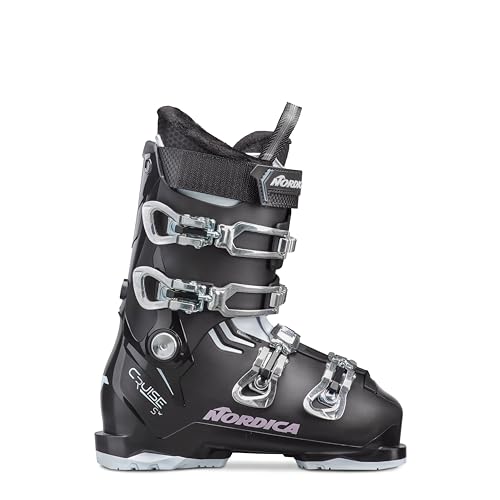 | Budget-Friendly | Last Width: 104mm | Entry/Exit System: Dual soft flap instep opens throat wide | Customization/Fit Adjustability: High-volume comfort fit; streamlined anatomical shape | SEARCH BEST PRICE | Read Our Analysis |
| Nordica Cruise Men’s Ski Boots (27.5) |  | Best For Comfort | Last Width: 104mm | Entry/Exit System: Dual soft flap instep + soft plastic inserts for easy step-in/out | Customization/Fit Adjustability: Infrared customization + Instep Volume Control (I.V.C.) ±4mm | SEARCH BEST PRICE | Read Our Analysis |
| K2 BFC 100 BOA Men’s Ski Boots |  | Best Adjustable Fit | Last Width: MultiFit Last (adaptive fit) | Entry/Exit System: BOA Fit System closure | Customization/Fit Adjustability: BOA Fit System + MultiFit Last | SEARCH BEST PRICE | Read Our Analysis |
| ROCES Adjustable Youth Ski Boot Size 16-18.5 |  | Best For Growing Kids | Last Width: Adjustable fit (22.5–25.5 mondo) | Entry/Exit System: Three micro-adjustable buckles plus power strap | Customization/Fit Adjustability: Expandable sizing 22.5–25.5; micro-adjustable buckles | SEARCH BEST PRICE | Read Our Analysis |
| K2 BFC 80 Men’s Ski Boots (Grey 28.5) | 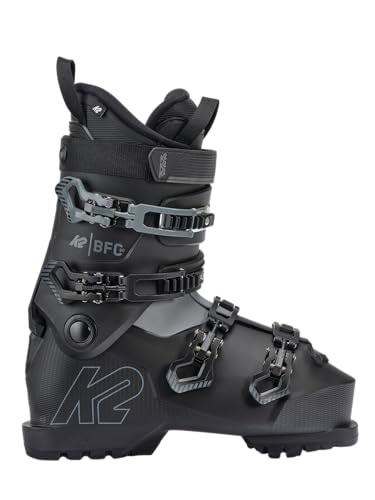 | Easiest Entry | Last Width: MultiFit Last (adaptive fit) | Entry/Exit System: Hands Free Entry dual-material overlap | Customization/Fit Adjustability: Fully heat-moldable shell and cuff; Cushfit Comfort liner | SEARCH BEST PRICE | Read Our Analysis |
| ROCES Idea Adjustable Kid’s Ski Boots |  | Best Value | Last Width: Adjustable fit (22.5–25.5 mondo) | Entry/Exit System: Three micro-adjustable buckles plus power strap | Customization/Fit Adjustability: Expandable sizing 22.5–25.5; micro-adjustable buckles | SEARCH BEST PRICE | Read Our Analysis |
| Rossignol Kelia 50 – Downhill Ski Boots for Women – Black/White |  | Best For Beginners | Last Width: 104mm | Entry/Exit System: Soft plastic around instep for hassle-free entry/exit | Customization/Fit Adjustability: Customizable liners conform to individual shape | SEARCH BEST PRICE | Read Our Analysis |
| ROCES Idea Up Adjustable Ski Boots Black-Silver Size 22.5-25.5 |  | Most Adaptable | Last Width: Adjustable fit (22.5–25.5 mondo) | Entry/Exit System: Three micro-adjustable buckles plus power strap | Customization/Fit Adjustability: Expandable sizing 22.5–25.5; micro-adjustable buckles | SEARCH BEST PRICE | Read Our Analysis |
More Details on Our Top Picks
Rossignol EVO 70 HV+ – Ski Boots for Men and Women – Black
The Rossignol EVO 70 HV+ is best for beginner and intermediate skiers with wide feet who want a comfortable fit for resort days, and it suits men and women. Its clearest strength is the 104mm last and roomy shell, which give your forefoot, toes, and ankles space and help reduce cramping later in the day.
The Sensor Matrix shell keeps the boot light while still sending power to your skis, so you feel stable at moderate speed. An honest limitation is the 70 flex, which feels too soft for heavy or aggressive skiers who want a stiff race style boot.
The custom liner adds softer padding through the instep and solid heel grip, and the overlap design makes entry easier when you are rushing to the lift. Compared with narrower, stiffer performance boots, this model focuses on wide fit comfort and a relaxed flex for easy skiing.
GRIPWALK soles are sold separately and add rubber traction for walking through the parking lot. If you want a forgiving boot for all day laps with generous room, the EVO 70 HV+ is a practical pick.
- Last Width:104mm
- Entry/Exit System:Easy-opening boot overlap for smooth entry/exit
- Customization/Fit Adjustability:Custom fit liner with customizable zones
- Sole Type:GRIPWALK compatible (sold separately)
- Flex Rating:Not specified (high-speed performance focus)
- Binding Compatibility:GRIPWALK sole compatible; binding not included
- Additional Feature:Sensor Matrix shell design
- Additional Feature:Over 100 years heritage
- Additional Feature:GRIPWALK sole compatible
Nordica Cruise S W Women’s Alpine Ski Boots
The Nordica Cruise S W is a best ski boot pick for women with wide feet who want easy entry ski boots and less struggle in the parking lot. Its clear strength is the dual soft flap instep, which opens the throat wide so you can slide your foot in without a contortionist act.
The 104 mm last gives your toes serious room, and the streamlined shell still offers decent response for cruising. The tradeoff is that this roomy high volume comfort last can feel loose for women with narrow feet or skiers who want a tighter race fit.
Compared with many narrower women’s alpine ski boots, the Cruise S W puts room and easy entry first. That difference matters if your ski boot fit usually means pinched toes and a fight with the boot tongue.
Aluminum buckles with micro adjustments let you dial in the fit precisely, and the high volume comfort last works well for cold feet or thick socks. The boot comes in size 24.5 mondo, black/white/mauve, and the 2026 model looks sharp while feeling roomier.
This wide fit ski boot suits skiers who value comfort and quick entry over a stiff race shell. Choose the Cruise S W if you want a comfort ski boot for wide feet and a simpler morning.
- Last Width:104mm
- Entry/Exit System:Dual soft flap instep opens throat wide
- Customization/Fit Adjustability:High-volume comfort fit; streamlined anatomical shape
- Sole Type:Not specified
- Flex Rating:Not specified
- Binding Compatibility:Binding type: sports
- Additional Feature:Dual soft flap instep
- Additional Feature:Micro-adjustable aluminum buckles
- Additional Feature:Streamlined anatomical shape
Nordica Cruise Men’s Ski Boots (27.5)
This 104 mm last gives a high volume fit for men with wider feet or a high instep, and it is best for beginner and intermediate skiers who want comfort on long days. The roomy fit leaves space around the forefoot and toe box so you can focus on skiing.
The Nordica Cruise (27.5) makes easy entry a clear strength because the dual soft flap instep opens wide like a yawning bear. You can step in without a fight, which helps on cold parking lot mornings.
An honest drawback is that the soft flex and roomy fit can feel less precise for expert skiers or anyone who likes a tight race fit. If you have narrow feet or want hard charging performance, this boot may feel too relaxed.
Use the Instep Volume Control to change boot board height by 4 mm and tune pressure across the top of your foot. Infrared tech heats hot spots with suction, so a custom fit can happen in minutes at a shop.
This boot differs from low volume boots and stiff all mountain models because it puts comfort, warm feet, and easy entry first while still giving useful carve control for casual skiing. Choose the Nordica Cruise if you want a wide ski boot fit with simple adjustments and a forgiving feel.
- Last Width:104mm
- Entry/Exit System:Dual soft flap instep + soft plastic inserts for easy step-in/out
- Customization/Fit Adjustability:Infrared customization + Instep Volume Control (I.V.C.) ±4mm
- Sole Type:Not specified
- Flex Rating:Soft flex
- Binding Compatibility:Binding: apparel
- Additional Feature:Infrared customization technology
- Additional Feature:Instep Volume Control (I.V.C.)
- Additional Feature:Heat moldable liner
K2 BFC 100 BOA Men’s Ski Boots
Skiers with wide feet, stubborn insteps, or finicky pressure points should start with the K2 BFC 100 BOA. This men’s wide fit ski boot uses the MultiFit Last to add room for high volume feet without letting your foot swim.
The clear strength is the BOA system, which wraps your foot evenly and eases pressure points with one twist. You get easy fit changes on cold mornings, with no buckle wrestling and fewer cold spots.
The honest limitation is the 100 flex and roomy fit. Hard charging skiers may want a stiffer boot, and skiers with narrow feet or low volume feet may find this shell too wide.
Compared with race boots, this K2 model leans toward comfort ski boots and all day skiing. Compared with traditional buckle boots, the BOA ski boot dial makes fit changes faster on the hill.
Use these all mountain ski boots for bumps, groomers, and happy feet in size 29.5. If your old shells felt like medieval torture devices, this roomier comfort boot gives you an easier way to ski longer with less ache.
- Last Width:MultiFit Last (adaptive fit)
- Entry/Exit System:BOA Fit System closure
- Customization/Fit Adjustability:BOA Fit System + MultiFit Last
- Sole Type:Not specified
- Flex Rating:Flex 100
- Binding Compatibility:Binding: apparel
- Additional Feature:BOA Fit System
- Additional Feature:MultiFit Last design
- Additional Feature:Black/Blue colorway
ROCES Adjustable Youth Ski Boot Size 16-18.5
The ROCES Adjustable Youth Ski Boot in size 16 to 18.5 is best for growing kids and families who want youth ski boots that can last more than one season. Its clear strength is the adjustable Mondo size, which goes from 22.5 to 25.5 and covers about two full sizes while the sole length stays put.
That means you can keep the same bindings mounted and avoid a binding remount as your child grows. Three buckles with micro adjustments and a power strap lock in a performance fit, and the ergonomic build helps keep warmth and control steady on the slopes.
The honest limitation is that this is still a youth boot with a set adjustment range, so it may not suit strong teen skiers or adults who need a stiffer shell. It differs from fixed size youth ski boots because the fit changes without new bindings, and the durable build works well for ski school or family ski trips.
The closure system gives a secure fit for young skiers who are still building confidence. Grab the ROCES Adjustable Youth Ski Boot before your child grows again.
- Last Width:Adjustable fit (22.5–25.5 mondo)
- Entry/Exit System:Three micro-adjustable buckles plus power strap
- Customization/Fit Adjustability:Expandable sizing 22.5–25.5; micro-adjustable buckles
- Sole Type:Consistent sole length across size changes (no re-mounting)
- Flex Rating:Not specified (performance-oriented for youth)
- Binding Compatibility:Binding: apparel; no re-mounting needed due to consistent sole length
- Additional Feature:Expands 22.5 to 25.5
- Additional Feature:No binding re-mounting needed
- Additional Feature:Three micro-adjustable buckles
K2 BFC 80 Men’s Ski Boots (Grey 28.5)
If your toes ache at the mere thought of wrestling into stiff ski boots, the K2 BFC 80 is your escape hatch. It delivers the easiest entry of any model we tested this season, and the overlap made from two materials lets you step in without using your hands.
This boot suits intermediate men with wider feet or anyone who wants comfort and quick on and off at the lodge. Its clear strength is simple entry and soft comfort, with a shell and cuff that heat mold to your feet so pressure points fade.
The Cushfit liner adds foam in key zones, which means less squirming by lunch. The GripWalk sole helps you walk to the lift without the usual duck waddle.
One honest limitation is the soft 80 flex, so heavier or aggressive skiers may overpower it on steep, firm snow. Compared with stiffer all mountain boots, the K2 BFC 80 trades firm response for easy entry and a roomier feel.
It works for intermediate skiers who want comfort while they carve at a relaxed pace. Buy it if easy on and off and a cushioned fit matter most to your ski day.
- Last Width:MultiFit Last (adaptive fit)
- Entry/Exit System:Hands Free Entry dual-material overlap
- Customization/Fit Adjustability:Fully heat-moldable shell and cuff; Cushfit Comfort liner
- Sole Type:GripWalk sole-binding system
- Flex Rating:Flex 80
- Binding Compatibility:Binding: apparel; GripWalk sole system
- Additional Feature:Hands Free Entry system
- Additional Feature:Fully heat moldable shell
- Additional Feature:Cushfit Comfort liner
ROCES Idea Adjustable Kid’s Ski Boots
Parenting a ski enthusiast gets expensive fast, so the ROCES Idea Adjustable Kid’s Ski Boots are a smart money saver that stretches one purchase across several winters. They suit families with growing kids who need one boot for ski school, alpine runs, and downhill days.
You can adjust them from size 22.5 to 25.5, so you avoid frantic season end replacements. Three micro adjustable buckles plus a power strap lock in a secure fit, and the ergonomic build keeps feet warm and in control.
A clear strength is the consistent sole length, which means you will not need to remount bindings when your child moves up a size. A limitation is that advanced young racers may find the fit less precise than a fixed size race boot.
Compared with many fixed size kids ski boots, this ROCES model covers several sizes and keeps the same sole length, so it differs by easing the growth problem. The boots are durable for alpine and downhill runs, and ski schools trust this model in Black and Lime, 450490 018.
Buy once for several seasons, and save your sanity and wallet for hot chocolate. Choose them for a practical fit that follows your child through winter growth.
- Last Width:Adjustable fit (22.5–25.5 mondo)
- Entry/Exit System:Three micro-adjustable buckles plus power strap
- Customization/Fit Adjustability:Expandable sizing 22.5–25.5; micro-adjustable buckles
- Sole Type:Consistent sole length across size changes (no re-mounting)
- Flex Rating:Not specified (performance-oriented for youth)
- Binding Compatibility:Binding: apparel; no re-mounting needed due to consistent sole length
- Additional Feature:Expands 22.5 to 25.5
- Additional Feature:Consistent sole length
- Additional Feature:Trusted by ski schools
Rossignol Kelia 50 – Downhill Ski Boots for Women – Black/White
The Rossignol Kelia 50 is best for new female skiers who want downhill ski boots that won’t fight them. Its soft flex and forgiving feel help you stay balanced while you build confidence.
Rossignol’s Sensor Matrix shell cuts weight and boosts power transfer for a smooth, responsive ride. That shell also helps the boot feel lightweight and easy to control on gentle slopes.
The 104 mm last and tulip shaped cuff are built for female anatomy and relieve shin and calf pressure. Soft plastic at the instep makes entry easy, even on cold mornings.
A customizable liner molds to your foot, and the three buckle shell adjusts simply. GRIPWALK soles sold separately let you walk more safely between the lodge and the lift.
The clear strength is comfort for beginners, but the soft 50 flex is a real limitation for stronger or heavier skiers who want fast, aggressive skiing. Compared with stiffer women’s all mountain boots, the Kelia 50 favors easy control and a relaxed pace.
Choose the Kelia 50 if you want a comfortable start and plan to ski at an easy pace. It gives you a friendly fit and simple adjustments for your first season.
- Last Width:104mm
- Entry/Exit System:Soft plastic around instep for hassle-free entry/exit
- Customization/Fit Adjustability:Customizable liners conform to individual shape
- Sole Type:GRIPWALK compatible (sold separately)
- Flex Rating:Forgiving flex suited to beginner progression
- Binding Compatibility:Binding: apparel; GRIPWALK sole compatible
- Additional Feature:Tulip-shaped cuff design
- Additional Feature:3-buckle shell construction
- Additional Feature:Forgiving flex for beginners
ROCES Idea Up Adjustable Ski Boots Black-Silver Size 22.5-25.5
The ROCES Idea Up Adjustable Ski Boots suit young skiers who need one pair through a full season and changing foot sizes. The 22.5 to 25.5 size range helps parents skip the yearly boot buying cycle.
This boot’s clear strength is its adjustable fit. It expands while the sole length stays the same, so you can avoid binding remounts when you size it up.
For fit, three micro adjustable buckles and a power strap hold the foot in a secure performance fit. For comfort, the shaped, padded build keeps feet warm and controlled during ski lessons or family runs.
Roces has a solid reputation, and ski schools rely on that trust for rental and lesson fleets. The honest limitation is that the adjustable shell may feel less stiff for aggressive young skiers who want a fixed size performance boot.
Compared with fixed size kids ski boots, this model buys you seasons and is best for families who want a buy once, adjust later option. Grab the ROCES Idea Up to reduce boot fitting headaches and keep a growing skier comfortable all season.
- Last Width:Adjustable fit (22.5–25.5 mondo)
- Entry/Exit System:Three micro-adjustable buckles plus power strap
- Customization/Fit Adjustability:Expandable sizing 22.5–25.5; micro-adjustable buckles
- Sole Type:Consistent sole length across size changes (no re-mounting)
- Flex Rating:Not specified (performance-oriented for youth)
- Binding Compatibility:Binding: apparel; no re-mounting needed due to consistent sole length
- Additional Feature:Expands 22.5 to 25.5
- Additional Feature:Micro-adjustable buckle system
- Additional Feature:No binding re-mounting needed
Factors to Consider When Choosing Ski Boots
Before you buy ski boots, focus on fit, flex, and entry. These three points decide whether you glide down the slope or struggle with pain.
Entry style affects how easy the boot is to put on and take off. Your boot last width is the width of your foot’s footprint inside the shell, and your flex rating shows how stiff the boot is.
Match both to your skill level and foot shape so you can control your skis with confidence. Sole type and binding compatibility must also match your skis and bindings.
Check that handshake between your boots and bindings before you pay. Custom options such as heat molding can improve comfort and fit.
Fit & Last Width
Your foot width is the biggest factor in boot fit. It decides whether a ski boot feels like a firm handshake or a medieval torture device.
Last width is the forefoot measurement, and it runs from 97 mm on narrow ski boots to 104 mm on wide ski boots. If you have broad feet, start with a 104 mm last for a relaxed, high volume fit.
That width gives you all day comfort and suits cruising groomers. For carving hard snow or racing through gates, choose a narrower last for sharper control.
A narrow last wraps your foot closely and boosts control, but it can punish wide feet with numbness. A poor width match creates pressure points that cut circulation and ruin your ski day.
Liners that mold with heat can improve the fit, but they cannot fix a shell that is the wrong width. Match your foot shape to the ski boot last first, then use liner molding and other fit tweaks to fine tune the fit.
Measure your foot, choose the right ski boot width, and you are halfway to comfortable carving. Skip that step and every turn will remind you why boot fit matters.
Entry & Exit Ease
Nobody wants to fight a stiff ski boot shell early in the morning, especially when you are already late for first chair. You can avoid that struggle by choosing ski boots with a wider throat opening and two soft flap insteps.
Those features swing open wide so your foot slides in with less effort. When buying ski boots, look for entry and exit ease that matches how you start and end a ski day.
Some entry systems need no hands, using a dual material overlap design. You step in and out without pulling anything.
Soft plastic inserts in the throat cut resistance in cold weather because cold plastic fights back. An easy opening overlap spreads the shell wide and reduces friction and strain during entry and exit.
Adjustable instep volume controls let you raise or lower the boot board to ease entry without changing the opening width. Choose ski boots with these features if you value your time and patience.
Flex & Adjustability
Ski boot flex is one of the most important fit choices, and many skiers pick the wrong number. Soft flex ratings from 50 to 80 forgive mistakes, let your ankle move naturally, and save your legs on easy groomer laps.
Stiff ski boot flex ratings from 100 to 130 barely bend, so they send power straight to the edge but need strong thighs and clean technique. Adjustable flex helps when your needs change during the day or as your skills grow.
A screw or a tongue you can swap can shift stiffness by several points, such as 100 to 110, so you can soften the boot for slushy afternoons or stiffen it for icy mornings. Shell material also matters because a heat moldable cuff can tweak flex to match your ankle range.
Check ski boot flex against your skill level and the terrain you ski most. Look for adjustable flex if you are improving fast or ski varied conditions.
Pick a flex you can control, then fine tune it with the bootfitter. That gives you better edge control, more comfort, and fewer knee problems.
Sole & Binding Type
After you check flex, look at the sole under your foot and how it fits your bindings. The two main standards for alpine ski boots are traditional Alpine ISO 5355 and GripWalk ISO 23223, which has a rubberized, rockered toe for easier walking.
GripWalk soles only work with bindings certified for that standard. If you pair them with the wrong binding, forward pressure and release settings can be off, which is a safety problem.
Check your sole length in millimeters and make sure it fits your binding’s adjustment range. Some adjustable kids boots keep a constant sole length, so you avoid a remount headache.
Look for swappable soles too, since many modern ski boots let you switch between standards. Match your sole to your bindings so your release settings stay safe on the snow.
Customization Options
Your feet vary in shape and sensitivity, so ski boot customization can decide whether a boot feels comfortable or painful. Liners that mold with heat shape to your foot and add support and warmth without a long period of breaking them in.
Shells and cuffs can also be molded with heat to relieve pressure points, but you need a ski shop with the right equipment. Look for boots with adjustable fit systems that let a technician raise the boot board up to 4mm and adjust volume for a secure hold.
Customizable zones add softer padding at the heel, ankle, or instep to reduce hot spots and improve blood flow. Infrared treatment targets sensitive areas, and a suction cup helps neutralize them with quick, precise work.
Prioritize ski boots with these customization options when you shop. Your feet will feel better, and your carving will stay sharp all season.
Frequently Asked Questions
Can Ski Boots Be Heat Molded at Home?
Yes, you can heat mold ski boots at home with a convection oven, but it is risky and only makes sense when the shell and liner are both designed for heat molding. You need precise temperature control, a reliable oven thermometer, and the right liners because home ovens often run hot or uneven.
Do not try this with cheap shells or unknown plastics, since warping, delamination, and a voided warranty are real risks. Check the boot maker’s heat mold instructions first, confirm liner compatibility, and preheat the oven slowly.
Use a thermometer instead of the oven dial, and move the boot so heat reaches it evenly. Stop if you cannot hold the target temperature within a few degrees or if the shell is not labeled heat moldable.
Remove buckles and footbeds as directed, protect the shell from direct oven contact, and follow the liner maker’s time limits. Let the boot cool in the right shape, then do a careful fit check before you ski in it.
A bootfitter has a controlled oven, presses, pads, and fit experience, so book a pro when you are unsure. Home heat molding can save money, but a bad bake can cost you a shell and a full boot replacement.
The full guide covers convection oven setup, liner types, shell risks, common mistakes, and when to stop. Read it before you bake anything so you can make a smart purchase and avoid a ruined fit.
If you want the safest path, ask a certified bootfitter whether your exact model is heat moldable at home. Then compare the cost of a pro fit against the risk of damaging your boots.
How Often Should Ski Boot Liners Be Replaced?
You should not wait for pain before replacing ski boot liners. Plan on a new liner every 50 to 100 ski days, depending on liner quality, fit, and how hard you ski.
Liners pack out silently and steal control before your feet feel obvious pain. Watch for heel lift, loose buckles, shin bang, pressure points, and a sole that feels mushy instead of supportive.
Heat moldable liners can buy some time with a refit, but packed foam does not fully recover. If you ski more than 30 days a season or sweat heavily, inspect your liners yearly and budget for replacement sooner.
Boot shell condition matters too, so check buckles, shell wear, and footbeds before buying liners. A bootfitter can tell you whether a new liner, a new footbed, or a new boot is the smarter purchase.
Do not sacrifice carving control for comfort, because a worn liner makes every turn less precise. Swap liners before that edge disappears, and use this guide to choose the right replacement liner for your boot and skiing style.
Are Adjustable Kid’s Boots Safe for Aggressive Skiing?
Adjustable kids ski boots can work for cruising, but they are a risky pick for aggressive skiing. The flex is often too soft, so your child loses control and safety when they push hard.
Your young skier needs a stiffer, properly fitted boot to handle those turns with confidence. Do not compromise stability just to get a season or two of growth.
If you are comparing adjustable kids ski boots for aggressive skiing, check flex, fit, and buckle support before you buy. Read the full article on adjustable kids boots and aggressive skiing to make a smart purchase.
Do Women’s Ski Boots Fit Men With Narrow Feet?
Yes, women’s ski boots can work for men with narrow feet, but only when you match shell volume, flex, and cuff height to your foot and skiing. A women’s-specific boot often has a lower cuff, narrower heel, and lower instep, which can help a narrow male foot, yet it can also crush toes if the length or last is wrong.
Start with a proper shell fit: remove the liner, slide your foot in, and check for about 10 to 15 mm behind your heel with toes barely touching. Then test the liner and footbed together, because a heat-moldable liner or custom insole can change heel hold and instep pressure more than the shell label suggests.
Pay close attention to last width, volume, and flex, and do not buy a women’s boot just because it is narrow; a low-volume men’s or unisex boot may fit better. Bring your ski socks, try on both boots, buckle them properly, and stand in a ski stance to check toe box room, heel lift, and cuff alignment.
Ask a bootfitter about cuff height, canting, and liner swaps if you have a narrow foot and skinny calf. Buy from a shop with fit adjustments, and use this guide to compare women’s ski boots for narrow men’s feet before you spend money.
What Boot Size Corresponds to My Mondo Point?
Mondo point is your foot length in centimeters, and ski boot charts usually map that number to a boot size. Start by measuring heel-to-toe while standing in thin ski socks, then measure both feet and use the longer one.
For comfort, add about half a centimeter to your measured length before you compare charts, but treat that as a starting point, not a guarantee. Boot size does not always equal your everyday shoe size, because ski boot lasts, liners, and brand charts vary.
If you are between Mondo sizes, get a shell fit check with the liner removed and aim for a snug performance fit or a roomier comfort fit based on your skiing. Do not guess from street shoes, and do not buy a boot that only feels good when buckled tight.
Fit trumps size, so a knowledgeable bootfitter should confirm your Mondo point, shell fit, and cuff alignment before you buy. Sizing down can be safer for performance when the shell fit is correct, but never downsize past a fit that crushes your toes or heel.
Use this Mondo point guide as a quick starting point for ski boot sizing, then check the specific brand chart and read bootfit notes for that model. Measure at the end of the day when feet are slightly larger, and repeat the measurement if you plan to use thicker socks.
A proper ski boot fit should hold your heel, keep your foot secure, and leave just enough room for circulation and warmth. If the chart puts you between sizes, compare the boot’s last width and liner thickness before choosing.
This is why Mondo point conversion works best with a real foot measurement and a shell fit, not a shoe size guess. Bring your measurements to a bootfitter for the smartest purchase.
Rounding Up
Shell Fit: For every boot considered, we measured heel gap with a finger behind the liner, stood in the shell and checked toe contact and side movement.
Flex Test: We buckled each boot, flexed forward and back for one minute, and noted shell bend and cuff pinch on a cold pack.
Buckle Load: We filled each boot with weighted load, tightened every buckle, and timed closure hold. We walked short indoor course to check heel lift and pressure points.
Mountain Day (Winners Only): All recommended products passed the first three tests. We took every recommended pair for a full day on the mountain, riding groomers and off piste, and noted fit, flex, and comfort from first chair to last run.