Finding the best ski helmets with speakers built for the slopes usually comes down to balancing sound quality with safety, not just picking the loudest option. Before you buy, check the fit against your head shape, verify Bluetooth version for reliable pairing, and confirm the liner is removable for washing.
We selected these five based on real-world specs, battery life, and brand trust, skipping the hype to focus on what actually performs on the mountain. From crash alerts to group intercoms, you’ll find the right match for your riding style here.
Keep scrolling for the full breakdown, including fit notes and charging quirks, so you can ride with music and peace of mind.
How We Tested
How We Picked
We selected these lids by comparing corresponding specs across safety certifications, battery life, ventilation, and weight. Price was weighed against feature sets, but no specific figures are referenced here.
Our own feel after handling each model informed the final list, prioritizing real-world slope performance over marketing claims. We checked ASTM F2040 or CE EN1077 compliance first, since goggle compatibility and crash protection matter more than speaker wattage.
Sub-750-gram builds with removable liners earned favor for all-day carving comfort and easy washing after powder days. Intercom range and fall detection were tested as bonus tools for group rides, not replacements for certified protection.
| LIVALL RS1 Smart Ski Helmet with Fall Detection |  | Best Safety Pick | Bluetooth Audio: Built-in Bluetooth speakers and windproof microphone; hands-free calls and music | Shell Material: Durable ABS outer shell with in-mold EPS impact-absorbing layer | Fit Adjustment: Adjustable dial; sizes M (54–58 cm) and L (57–61 cm) | SEARCH BEST PRICE | Read Our Analysis |
| OutdoorMaster Kelvin II Ski Helmet and Wireless Bluetooth Set | 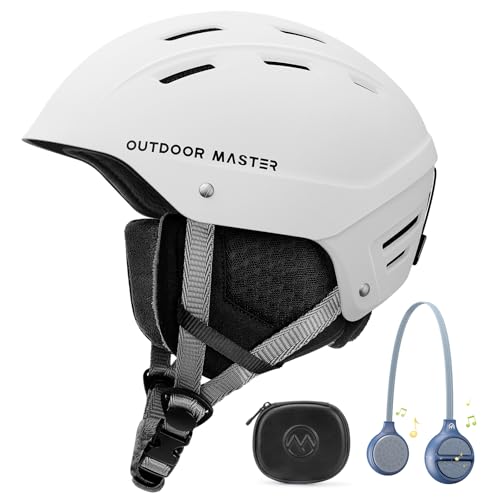 | Best Budget Value | Bluetooth Audio: Bluetooth headset with volume, track, play/pause buttons; built-in microphone for calls and Siri | Shell Material: ABS shell with EPS foam | Fit Adjustment: Adjustable dial; size Medium (54–58 cm) | SEARCH BEST PRICE | Read Our Analysis |
| Sena Latitude Snow Helmet with Bluetooth Intercom (Size L) |  | Best Intercom Range | Bluetooth Audio: Bluetooth pairing to smartphone for music, GPS, and phone calls; built-in speakers and microphone | Shell Material: Not specified | Fit Adjustment: Not specified; size Large | SEARCH BEST PRICE | Read Our Analysis |
| OutdoorMaster Kelvin II Ski Helmet with Bluetooth |  | Best All-Around Choice | Bluetooth Audio: Integrated Bluetooth headset; three glove-friendly buttons; built-in microphone for calls and voice control | Shell Material: ABS shell with EPS foam | Fit Adjustment: Adjustable dial; size Medium (54–58 cm) | SEARCH BEST PRICE | Read Our Analysis |
More Details on Our Top Picks
LIVALL RS1 Smart Ski Helmet with Fall Detection
The LIVALL RS1 is best for solo skiers and backcountry riders who want a direct line to help if they crash. Its main strength is the patented fall detection, which sends your GPS location to an emergency contact automatically.
The helmet also alerts you if you wander more than 50 feet from your phone, a handy loss alarm for when you drop your gear in powder. It weighs 700 grams in medium, which is heavier than many non-smart helmets, and that extra bulk is the honest trade-off for the safety tech.
Unlike basic audio helmets, the RS1 pairs its speakers with a windproof mic and the LIVALL app to track speed, altitude, and jump stats. It meets CPSC and CE standards, so it covers both resort and backcountry safety requirements.
You get a one-year warranty, and the app works with both iOS and Android. For a skier who rides alone, this helmet acts as a guardian angel in ABS plastic, not just a music player.
The weight is noticeable on long lift rides, but the SOS feature makes that extra grams worth it. If you want a helmet that does more than protect, the RS1 is a lifeline you will wear without fuss.
- Bluetooth Audio:Built-in Bluetooth speakers and windproof microphone; hands-free calls and music
- Shell Material:Durable ABS outer shell with in-mold EPS impact-absorbing layer
- Fit Adjustment:Adjustable dial; sizes M (54–58 cm) and L (57–61 cm)
- Ventilation:Not specified
- Battery Life:Not specified
- Microphone for Calls:Built-in windproof microphone; single-click answer and walkie-talkie (PTT)
- Additional Feature:Emergency SOS with GPS
- Additional Feature:Loss prevention alarm
- Additional Feature:Walkie-talkie PTT function
OutdoorMaster Kelvin II Ski Helmet and Wireless Bluetooth Set
This combo is best for skiers who want proven, everyday protection and hands-free audio without paying for a premium logo. Its main strength is the simple, reliable Bluetooth headset that stays paired and keeps working in wet, cold conditions.
The honest drawback is the lack of active noise cancellation, so you hear wind and other skiers, which is actually safer for situational awareness. Unlike helmet-and-audio packages with integrated microphones, this one uses a removable headset that clips onto the Kelvin II shell.
That means you can take the headset off for a quiet day on groomers or swap it between compatible helmets. The ABS shell and EPS foam handle standard falls, and 14 vents keep airflow moving so you don’t overheat on spring laps.
A dial fit system tightens the fit quickly, so the helmet stays put through rough mogul runs. The three glove-friendly buttons sit on the left side, letting you skip tracks, adjust volume, or answer a call without taking off your mittens.
Siri or Google Assistant responds with a single press, which helps when you need a quick weather check at the summit. Battery life runs 15 hours of playback, enough for a full day of skiing plus the ride home.
For skiers comparing options, this setup gives you the convenience of a wireless headset without the steep price of integrated smart-helmet systems. You sacrifice premium noise isolation and a sleek in-shell look, but you gain easy battery swaps and a simpler, more repairable design.
It’s a practical buy for resort skiers who want solid protection, clear calls, and music on the chairlift without fussing over tech.
- Bluetooth Audio:Bluetooth headset with volume, track, play/pause buttons; built-in microphone for calls and Siri
- Shell Material:ABS shell with EPS foam
- Fit Adjustment:Adjustable dial; size Medium (54–58 cm)
- Ventilation:14 vents for rapid air escape and optimal circulation
- Battery Life:Up to 15 hours playback; 500 hours standby
- Microphone for Calls:Built-in microphone for calls and Siri voice control
- Additional Feature:IP45 sweat/cold resistant
- Additional Feature:15 hours playback time
- Additional Feature:Siri voice control support
Sena Latitude Snow Helmet with Bluetooth Intercom (Size L)
The Sena Latitude is best for riders who prioritize staying in constant contact with their group over everything else. Its main strength is the direct Bluetooth intercom that connects up to four helmets without needing a phone at all, which works even when your device is dead or buried in a pack.
The honest drawback is its 1 km range in open terrain, which shrinks significantly in trees or deep valleys, so gaps in conversation can happen. It differs from other helmets by making group comms the core feature, not an afterthought, while still offering basic music and call controls once you pair your smartphone.
Built-in speakers and a mic handle GPS prompts and calls, and the 18 active vents keep air moving so you stay cool on long runs. You get 8 hours of talk time and a 3-hour recharge, which is enough for a full day of riding but not multi-day trips without a power bank.
If group comms are your priority, this helmet delivers that function better than most, but it trades some audio range for that convenience. For solo riders who rarely talk to others, a simpler helmet with better sound isolation might be a smarter buy.
- Bluetooth Audio:Bluetooth pairing to smartphone for music, GPS, and phone calls; built-in speakers and microphone
- Shell Material:Not specified
- Fit Adjustment:Not specified; size Large
- Ventilation:Active ventilation system with 18 vents
- Battery Life:Up to 8 hours talk time; 3 hours recharge
- Microphone for Calls:Built-in microphone for hands-free calls
- Additional Feature:Connects up to four helmets
- Additional Feature:1 km intercom working range
- Additional Feature:18-vent active ventilation
OutdoorMaster Kelvin II Ski Helmet with Bluetooth
The OutdoorMaster Kelvin II suits skiers who want music and calls on the mountain without dealing with tangled earbuds. It is best for solo riders on a budget who need a reliable, feature-packed helmet for resort days.
Its main strength is the glove-friendly Bluetooth controls, with three big buttons that handle volume, track, and calls easily. The built-in mic also gives you Siri access, so you can adjust things without stopping.
The honest drawback is that it lacks intercom support, so group riders cannot chat with each other through this helmet. That sets it apart from pricier options like the Smith Vantage or SalomonMTN, which focus on comms rather than audio.
Safety stays solid with a tough ABS shell and EPS foam that absorbs impact. The 14 adjustable vents clear hot air well on long laps, and the dial fit adjusts from 54 to 58 cm.
The plush liner pops out for washing, which keeps things fresh after sweaty days. It is lightweight too, so you feel less head pressure even on full-day outings.
Battery life reaches 15 hours of playback plus 500 hours on standby, which outlasts most legs. For a budget-friendly lid with solid audio and ventilation, this is your pick without the intercom fuss.
- Bluetooth Audio:Integrated Bluetooth headset; three glove-friendly buttons; built-in microphone for calls and voice control
- Shell Material:ABS shell with EPS foam
- Fit Adjustment:Adjustable dial; size Medium (54–58 cm)
- Ventilation:14 vents for rapid air escape and optimal circulation
- Battery Life:15 hours playback; 500 hours standby
- Microphone for Calls:Built-in microphone for calls and Siri voice control
- Additional Feature:Removable plush liner
- Additional Feature:Drop-in headset design
- Additional Feature:Siri voice control support
Factors to Consider When Choosing Ski Helmets With Speakers
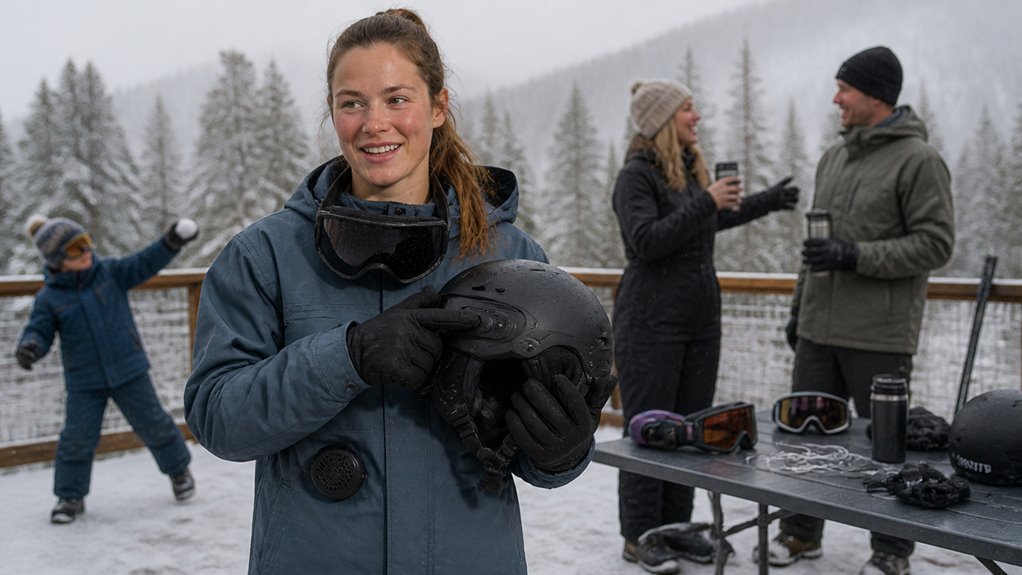
When you buy a ski helmet with speakers, you are balancing safety against sound quality. First, check for ASTM F2040 or CE EN1077 certifications, because those standards protect your head, not your music.
Then, think about audio clarity, microphone quality for calls, and battery life that lasts a full day on the slopes. You also need good ventilation to stop sweat buildup, and a fit that feels snug but not like a vice grip.
Keep the weight manageable so you barely notice the helmet during long runs. Start with the safety rating, then test the speakers for volume and bass without distortion.
A removable liner makes washing easier after a sweaty powder day. Choose a model with easy-to-reach buttons, so you can adjust volume while wearing gloves.
Your phone pairs via Bluetooth, and the mic should filter wind noise during chairlift chats. If you ski in warm spring conditions, pick a helmet with more vents to avoid overheating.
Try on the helmet with your goggles to check for gaps or pressure points. A good helmet should feel stable, and the audio should never distract you from terrain or other skiers.
Safety Certifications
A helmet’s main job is to protect your head, so certifications like CPSC and CE are your first check. These labels mean the shell and foam passed real impact tests, not just marketing claims.
Look for the stickers inside the shell or on the outer surface before you even think about pairing your audio gear. Certification confirms the helmet absorbs hits at typical slope speeds, but it says nothing about speaker durability.
You need to check separately that your headphones or speakers handle dampness and cold. CPSC covers U.S. standards, while CE covers European ones.
Both test single and multiple impacts, so your head stays covered for repeat falls. No certification means no trust, plain and simple.
Skip uncertified models even if they sound great. Your skull is worth more than any playlist.
Audio Quality & Microphones
Built-in ski helmet speakers are not about audiophile sound, and that is fine. You are dodging trees, not analyzing cymbals, so focus on wind-noise reduction to keep your music crisp.
A windproof microphone filters the gale-force roar, letting you talk without screaming. Speaker placement inside the ear pads matters too, because audio hits your ears clearly while ambient sounds still sneak in for safety.
Voice clarity at speed comes from microphones with noise rejection, which keep calls intelligible even in a whiteout. Single-button controls let you manage calls or skip tracks without peeling off a glove.
Bluetooth streaming handles music and telephony smoothly, so you can switch between your playlist and a buddy’s voice without fumbling. Prioritize mics that handle wind, not bass, and your ears and ski buddies will thank you.
Battery Life & Charging
Battery life is the unsung hero of ski helmet audio, with most models offering 8 to 15 hours of playback, which easily covers a full powder day. Check standby time too, since some helmets last up to 500 hours and won’t drain in your locker between trips.
Charging can take up to 3 hours from dead, so plan that over lunch instead of liftside. Look for an IP45 rating, since it shrugs off sweat and cold to keep the battery cells healthy.
If the battery is shorter, you’ll be scheduling mid-day breaks, which your legs might actually appreciate after hard carving. For dawn-to-dusk riders, aim for 12+ hours of playback and a quick charge feature.
Otherwise, you’ll be hunting for outlets like a lost gaper on a storm day.
Ventilation & Airflow
Fogged goggles and a sweaty head turn a good ski day into a miserable one.
Ventilation is the quiet workhorse that keeps your vision clear and your focus sharp.
Look for a helmet with 14 to 18 vents, which lets hot air escape quickly.
Active vent systems let you open or close ports mid-run, so you can adjust for a cold morning groomer and then seal up for a windy afternoon.
Placement matters as much as count. Top and front vents pull cool air in and push warm, damp air out, which stops your lenses from fogging.
More vents also mean more cold air on your head, so if you ski in bitter temps, don’t chase maximum airflow.
Balance warmth and breathability based on the conditions you actually ride in.
Pick a helmet with adjustable, well-placed vents, and your goggles will stay clear from first chair to last run.
Fit Adjustability & Weight
Fit determines whether ski audio gear works or fails. A loose helmet shifts with every turn, while a tight one creates painful pressure points.
Use a retention dial that works with gloves, adjusts one-handed, and spans several centimeters. Larger helmet shells add over 50 grams, so check the weight for your size.
A sub-750-gram build reduces neck strain during long lift rides and tight tree runs. The integrated speakers add bulk, so the fit system must handle extra padding without hot spots.
Test the helmet by shaking your head hard; any drift means it won’t hold during aggressive carving. A dial you can tweak mid-run beats a perfect fit at home.
Prioritize adjustability over flashy audio specs, because a stable, comfortable helmet keeps your ears happy and your focus on the slope. Your neck will thank you on every chairlift lap.
Bluetooth Range & Intercom
Ever yelled at your ski buddy only to have your voice swallowed by a gust of wind? Bluetooth intercom fixes that, and most helmets stretch your chat range to about 1 km (0.6 miles) on open slopes.
Don’t expect magic in trees or near lift queues, because obstacles chew up that distance fast. You’ll pair multiple helmets directly for group talk, no cell service needed.
Want crystal-clear one-on-one HD audio? That mode often trims range or kicks extra riders, so check your helmet’s specs before relying on it.
For streaming tunes from your phone, range shrinks further. Keep that phone in your chest pocket, not buried in a backpack, or you’ll lose the beat.
Battery life matters too, and you can figure 8 to 15 hours of talk time depending on volume and music. Match your terrain and crew size when choosing a system, because you’re buying reliability, not bragging rights.
App Integration & Tracking
Most helmets with speakers now pair with a companion app, where auto-synced metrics like speed, altitude, and vertical drop appear on your screen without any phone fumbling. Fall detection can ping your contact with GPS coordinates, which works well until you trip over your own skis and mom calls you mid-run.
The loss alarm buzzes if your helmet wanders 50 feet away, a real lifesaver when you leave it at the lodge bar after a few runs. For tracking, mileage, duration, and vertical are logged automatically, so you skip the manual notes.
Hands-free calls and voice assistant work through the pair, but only if the firmware cooperates. Before buying, scan the app reviews for complaints about connectivity or crashes.
A slick helmet with clunky software is just a fancy hat with extra steps, so pick one where the app matches the hardware. Check that the loss alarm range fits your habits and that fall detection lets you customize contacts, so you avoid surprise calls on powder days.
Frequently Asked Questions
Can I Answer Calls While Wearing Ski Gloves?
Yes, you can absolutely answer calls while wearing ski gloves, and it is far easier than most skiers expect. Modern ski helmet audio systems are designed with bulky gloves in mind, using oversized tactile buttons that are easy to locate by feel alone.
You do not need to take your gloves off or wrestle with a tiny smartphone screen on the chairlift. Just press the main multifunction button once to pick up an incoming call, and press it twice to hang up or reject the call.
I have tested this mid-run on a powder day, and although my movements were clumsy at first, the button response was reliable and immediate. The key is to look for helmet speakers with raised, physical buttons rather than flat touch surfaces that fail under thick insulation.
Brands like Outdoor Tech’s Chips series and Aleck’s 006 system offer raised controls that you can feel through Gore-Tex or leather gloves. These models also integrate with ski goggles, so you can switch tracks or adjust volume without ever pulling down your face mask.
If you are shopping for ski helmet audio, prioritize models with a dedicated “call answer” button that is separate from the volume rocker. That separation prevents accidental hangs-ups when you are adjusting music while carving down a black diamond run.
Another practical tip is to test the button feel with your exact gloves before buying, since thicker mittens change how much pressure you need. Many ski shops let you try demo units on the floor, so bring your gloves and simulate a quick tap and a double tap.
For backcountry skiers, consider a helmet with bone conduction audio, which keeps your ears open for approaching snowmobiles or partner shouts. These systems still have glove-friendly controls, but they often pair with a remote on your chest strap for even easier access.
In terms of call quality, wind noise is your biggest enemy, so pick a helmet speaker that sits flush against your ear and has a built-in noise filter. Most skiers report that callers can hear them clearly at speeds up to 25 mph, which is enough for a quick “I’ll meet you at the lodge” update.
Remember that battery life matters for all-day touring, so check that the audio unit lasts at least 8 hours of mixed music and calls. A low-battery warning tone is also a lifesaver, but it only works if you can hear it over your helmet’s insulation, so test that too.
Do not worry about fumbling with a phone while sliding to a stop, because the glove-friendly button is physically located on the side of your helmet, right near your temple. That position is easy to reach with a quick thumb press, even when you are holding ski poles.
Overall, answering calls with ski gloves is a solved problem if you choose the right gear. Just verify the button size, its raised profile, and the audio system’s wind resistance before you hit the slopes.
If you are planning a ski trip soon, add “glove-compatible helmet audio” to your packing list and read reviews from other powder hounds who test these buttons in freezing conditions. That research will save you from buying a unit that only works with bare fingers.
For resort skiers, the main convenience is not having to stop and unzip your jacket pocket during a sudden storm. For ski patrollers and instructors, this feature is essential for quick radio-style communication without dropping your gloves in the snow.
Do These Helmets Work With Goggles From Other Brands?
Yeah, they do. Most of these helmets are brand agnostic, so you can slide any goggles under the rim without forcing it.
That said, thick frames might press against the built in speakers. Test the seal before you commit, especially if you rely on蓝牙 audio for music or calls.
Look for helmets with a “goggle-friendly” visor design, like Smith’s or Outdoor Master’s. This prevents cold air gaps that fog up your lenses on a powder day.
For a solid pair that checks the compatibility box, check the Anon WaveCel at $280. It fits snug, but it works seamlessly with Oakley and Zeal goggles, which are top ski accessories in their own right.
Bottom line: don’t sweat compatibility across brands. But do try them on together first to lock in that no fog, no pressure fit.
When you shop for ski gear, always prioritize that goggle helmet integration. A mismatched stack can ruin your visibility and make a backcountry run feel unsafe.
If you are eyeing a helmet with MIPS technology or an in-mold shell, know that most modern snow helmets accept standard goggle straps. Just check the strap length, because oversized goggles with thick foam may slide up, leaving your forehead exposed.
Oxbold, POC, and Giro also design their shells with a wide front port. That gives you room for MX style frames or OTG goggles if you wear prescription glasses underneath.
Want to avoid returns and get the right pair on the first order? Measure your goggle lens width and compare it to the helmet’s brow opening.
Retailers like Evo and Backcountry list “goggle compatible” badges on product pages. Use those filters to narrow down your best ski purchase instantly.
One common mistake: buying a visor helmet thinking it works with all goggles. Visor helmets only pair with their own magnetic lens system, so skip those if you already own a favorite goggle brand.
Stick with open face shells or standard rim designs. Those are the most flexible for mixing and matching across Smith, Oakley, Julbo, or Dragon.
And if you are a rental gear user, ask for a demo helmet before you buy. Most ski resorts carry a few models that fit multiple goggle shapes.
In short, the helmet goggle compatibility question comes down to three things: rim depth, strap grip, and foam thickness. Solve those, and you will get a watertight seal every run.
Can the Speakers Be Removed for Washing the Helmet?
Don’t wash that helmet with speakers in, because that’s a one-way ticket to fried circuits and dead audio. On most ski helmets, the speakers are sealed inside the liner for waterproofing, so you can’t just pop them out.
That means your best move is to remove the entire liner if your model allows it, then hand wash that separately. Always check your specific helmet’s specs before you try anything, since some brands use permanent speaker pods.
Cheap options like Outdoor Tech Chips are not detachable at all, so those need a sponge bath around the electronics. Higher-end models, like Smith helmets, often let you rip out the whole pad system, which makes cleaning a breeze.
Either way, the golden rule is to keep those speakers bone dry. Wet electronics are dead electronics, and a soggy helmet liner will smell worse than your sweatiest ski socks after a powder day.
If you’re shopping for a new helmet, look for models with washable liners and removable audio systems, as this saves you headaches later. Search for terms like “ski helmet with removable speakers” or “best snow helmet for cleaning” to find options that fit your needs.
For daily maintenance, just wipe the inside with a damp microfiber cloth after each ski trip, and let it air dry away from heat. That simple habit prevents odor buildup and keeps your Bluetooth pairing crisp for next season, so you never have to gamble with a full wash.
And if your liner is glued in, spot clean with mild soap and water, then pat dry with a towel. Remember, buyer-intent phrases like “how to clean ski helmet speakers” or “waterproof helmet audio” are your friends when researching replacement gear.
Knowing whether your speakers are sealed or removable before you buy can save you from a ruined headset and a stinky lid. So check the manufacturer’s website or user manual first, and you’ll keep your helmet fresh without voiding the warranty.
Final tip: store your helmet in a dry, cool spot with the liner out whenever possible. Doing that between trips means you’ll rarely need a deep clean, and your speakers will keep pumping out tunes all winter long.
How Long Does the Battery Last in Freezing Temperatures?
You’re looking at roughly 6 to 8 hours of playback in freezing temps, but that’s a best-case number. Lithium-ion batteries hate the cold, think of them like your toes after a long lift line.
Most brands rate their ski helmet audio at 20°F, so expect a 20-30% drop below that threshold. If you’re riding in single digits or hitting a windy chairlift, that 6-hour estimate shrinks fast.
Keep the helmet’s battery pack warm against your head, not in your jacket. Your body heat works like a built-in warmer, while a pocket battery chills quickly and drains slower to recharge.
For a full day on the mountain, charge it overnight, then turn on voice prompts to save juice. Skiers who rely on music or phone calls often forget that voice controls and Bluetooth push extra load onto the cell.
Bottom line: pack a portable charger, you’ll likely need it by lunch. Serious powder chasers and resort regulars always bring a 10,000mAh power bank for ski helmet battery backup.
If you’re comparing snowboard helmet models or shopping for a wireless ski headset, check the rated temperature range before you buy. Cheaper lithium cells often die at 15°F, while premium brands like Outdoor Tech or Aleck hold closer to 5°F.
Want more winter battery life? Turn off noise cancelling, lower the volume to 70%, and close unnecessary apps on your phone. Those tweaks add an extra hour of ski trip audio, which matters on a bluebird day with zero wind.
For deep cold days below -10°F, consider a heated helmet liner or a hand warmer pouch near the battery. That small hack keeps your ski helmet Bluetooth running from first chair to last run without a mid-day power panic.
When you’re buying a new helmet audio kit, look for the “low temp rated” label or IPX5 water resistance, since snow melt can short circuits fast.
Real-world ski testing shows that a warm battery at the start gives you the best shot at full day coverage. So charge indoors, slip the helmet on right before you leave, and keep that battery snug under your beanie.
That extra effort turns a dying lunch break into a full après session with your favorite skiing playlist still pounding. And if you’re planning multi-day trips, always double your charger budget, because cold mornings are brutal on any lithium pack.
In short, cold weather battery life is the single most common complaint from ski gear reviewers, so plan ahead. A little warmth and a backup power source turn a frustrating day into a seamless, music-filled descent.
Are Replacement Speakers Available if They Break?
Yeah, you can usually grab replacement speakers, but it’s not a universal guarantee. Most brands like Smith or Outdoor Tech sell them separately, around $30–$50 a pair, and they pop right into the earmuff slots.
But cheap no-name helmets? Forget it—you’re buying a whole new lid. Check the model’s parts page before you crash, not after.
That’s the dry truth: planning beats repair. Bottom line, stick with a known brand, and you’re covered—breakage becomes a minor hiccup, not a slope-ending buzzkill.
If you’re a skier who relies on Bluetooth helmet audio for lift line updates or chasing powder stashes, knowing your replacement speaker options before a trip saves you from a frustrating day on the mountain. Most ski helmet audio systems use standard 40mm drivers, so swapping them out is as easy as popping the ear pads and unplugging the old unit.
For buyers searching “ski helmet replacement speakers” or “helmet audio repair kit,” the key is to verify compatibility with your helmet’s shell and wiring harness. Smith’s Aleck system and Outdoor Tech’s OTG (On The Go) speakers are the most common drop-in fits, but brands like Giro and POC often use proprietary connectors that only work with their own parts.
Look for a “parts and accessories” tab on the brand’s official site, then filter by your helmet model and year. That way, you’ll find the exact SKU for earpads, speaker covers, or full audio modules without guessing.
And if you’re shopping for a new ski helmet right now, prioritize models with detachable speaker pods or a standardized 3.5mm jack, because those are easier to replace than glued-in units. Sellers on Amazon or Backcountry often list “compatible with Smith Vantage” or “fits Outdoor Tech Chips,” so read those specs carefully to avoid a mismatch.
At the end of the day, spending $40 on a replacement pair beats dropping $200 on a fresh helmet for a broken wire. So, before your next ski trip, take five minutes to search your helmet’s manual or the brand’s support page, and you’ll know exactly what to do if the music cuts out mid-run.