The 4 best skis that prove you don’t need to break the bank—under $1,000—are out there, but the real trick is matching the ski to your terrain, ability, and binding setup before you buy. We picked them by weighing specs, real-world hype, and brand reputation, with quick notes on sizing, ski style, and compatibility.
Below you’ll find the best supplies, helpful buying notes, and what’s actually worth buying—so you can spend smart and still get a setup that rips.
Keep reading to nail the right pick.
How We Tested
We compared corresponding and appropriate specs, price, construction, design features, and terrain fit to choose four budget all mountain skis with strong value. This objective comparison focused on expert performance, buyer intent, and versatility for groomers, park, powder, trees, and mixed terrain.
Völkl Mantra 88 leads with stable carving and quick carbon tip response on groomers. Atomic Bent 100 brings park playfulness plus powder float for freestyle skiers.
K2 Mindbender 106C balances crud stability and tree agility for mixed terrain. Nordica Enforcer 99 delivers aggressive daily power through a full wood core and metal.
| Völkl Mantra 88 All-Mountain Skis 184cm |  | Precision All-Rounder | Skill Level: Advanced | Length: 184cm | Core Construction: Sandwich sidewall with wood core | SEARCH BEST PRICE | Read Our Analysis |
| Atomic Bent 100 Men’s Downhill Skis (179cm) |  | Freestyle Favorite | Skill Level: Advanced | Length: 179cm | Core Construction: Poplar wood core | SEARCH BEST PRICE | Read Our Analysis |
| K2 Mindbender 106C All-Mountain Skis 176cm | 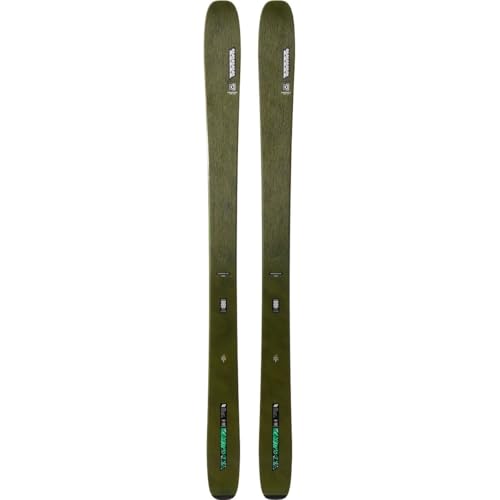 | Agile All-Mountain | Skill Level: Advanced | Length: 176cm | Core Construction: Uni-directional flax | SEARCH BEST PRICE | Read Our Analysis |
| Nordica Enforcer 99 Men’s All Mountain Skis 173cm |  | Powerhouse Charger | Skill Level: Advanced | Length: 173cm | Core Construction: Full wood core with titanal layers | SEARCH BEST PRICE | Read Our Analysis |
More Details on Our Top Picks
Völkl Mantra 88 All-Mountain Skis 184cm
The Völkl Mantra 88 in 184 cm is a strong pick for an advanced all mountain skier who wants one pair for groomers, bumps, and soft snow without spending too much. Its clearest strength is stable carving with quick tip response from the carbon tips, so you can push the ski hard and still correct messy turns.
The sandwich sidewall core uses wood layers around a flexible center, and the Tailored Titanal Frame adds high speed control while keeping the feel lively. One honest drawback is that an 88 mm waist and a strong frame give less float in deep powder than a wider freeride ski.
Compared with narrower frontside carvers, this Mantra 88 handles soft snow and chopped terrain with more ease. Compared with wide powder skis, it feels quicker edge to edge and more fun on hard groomers.
The 184 cm length skis smaller than it looks once you are moving, but it still suits a skier with solid technique. Freeski rocker helps on powder days, a sintered base keeps speed on flat runouts, and the sidecut is 134 / 88 / 114 mm for grip without a washy feel.
Pair it with Griffon X 13 bindings for a balanced setup. This ski will not babysit you, and it rewards a driver who stays centered and active.
For a buyer who wants a one ski quiver under a grand, the Mantra 88 is a practical choice for all mountain days. Grab it if you want a ski that carves with control, snaps into turns, and still gives you a little soft snow help.
- Skill Level:Advanced
- Length:184cm
- Core Construction:Sandwich sidewall with wood core
- Terrain Type:All-mountain freeride
- Brand:Volkl
- Color:Soft Blue
- Additional Feature:Titanal Frame reinforcement
- Additional Feature:Freeski rocker profile
- Additional Feature:Tailored Carbon Tips
Atomic Bent 100 Men’s Downhill Skis (179cm)
The Atomic Bent 100 in 179cm is best for park skiers and freestyle riders who also want a ski that handles powder days. Its clear strength is a light poplar woodcore that stays playful while still soaking up shocks.
The Resist Edge Park is thicker for rail abuse, and the Dura Cap sidewall adds rounded edge toughness that resists chipping. That build makes the Bent 100 a useful one ski quiver for jumps, laps through the park, and off piste exploring.
The HRZN 3D profile wraps the tip and tail for float in deep snow while keeping the ski loose and fun on hardpack. If you are shopping for a playful freestyle ski that can follow you into soft snow, this model fits that plan around $700.
The honest limitation is that the 100mm waist gives decent float for its size, but it is not a dedicated powder ski and it gives up some high speed stability on firm, rough snow. Compared with stiffer all mountain skis, the Bent 100 favors forgiveness and play over hard charging, and compared with narrower park skis it offers better soft snow float.
- Skill Level:Advanced
- Length:179cm
- Core Construction:Poplar wood core
- Terrain Type:All-mountain
- Brand:Atomic
- Color:Multi-color
- Additional Feature:HRZN 3D full wrap tip/tail
- Additional Feature:Resist Edge Park
- Additional Feature:Dura Cap Sidewall
K2 Mindbender 106C All-Mountain Skis 176cm
This K2 Mindbender 106C is best for advanced and strong intermediate skiers with average builds who want one quiver for crud, trees, and bumps.
Its main strength is the agile all mountain sweet spot: freeride power for charging crud and playful agility for slashing tree lines, thanks to a flax layup that boosts tracking and composure without adding much weight.
The honest limitation is that the 106mm waist gives up quick edge to edge snap on firm groomers compared with narrower carvers.
It feels lighter than many big mountain boards and wider than frontside carvers, so it handles mixed terrain with less effort than either type.
The 176cm length suits average builds and stays nimble in bumps.
The construction keeps you stable when the snow is ugly and forgiving when you ease off.
A multi color topsheet is a fun bonus, and you will be too busy grinning to care.
For under a grand, it is a strong value, so buy these and skip the next après round.
- Skill Level:Advanced
- Length:176cm
- Core Construction:Uni-directional flax
- Terrain Type:All-mountain
- Brand:K2
- Color:Multi-color
- Additional Feature:Uni-Directional Flax construction
- Additional Feature:Freeride power attributes
- Additional Feature:Playful agility
Nordica Enforcer 99 Men’s All Mountain Skis 173cm
If you want a ski that charges hard without draining your wallet, the Nordica Enforcer 99 in 173cm is a strong fit. It is best for aggressive skiers who want a daily driver for groomers, bumps, and mixed terrain.
Its clear strength is a planted power and control feel from the full wood core and two titanal sheets, so it stays stable at speed. True Tip Tech trims heavy plastic in the tip, which keeps it playful and maneuverable, while the refined rocker and freed tail give full edge control on any terrain.
The honest drawback is that the 99 mm waist and metal layers can feel slower and less forgiving for lighter skiers or people who mostly ski firm groomers. Compared with lighter all mountain skis, the Enforcer 99 uses metal to add a more damp and planted feel at speed.
The specs are 173cm length, Black/Red/Blue, and model 0A5482. It is a daily driver for aggressive skiers who want to charge without compromising their bank account.
- Skill Level:Advanced
- Length:173cm
- Core Construction:Full wood core with titanal layers
- Terrain Type:All-mountain
- Brand:Nordica
- Color:Black/Red/Blue
- Additional Feature:Energy 2 Ti Pulse Core
- Additional Feature:True Tip Tech
- Additional Feature:Unlocked tail shape
Factors to Consider When Choosing Skis Under $1,000
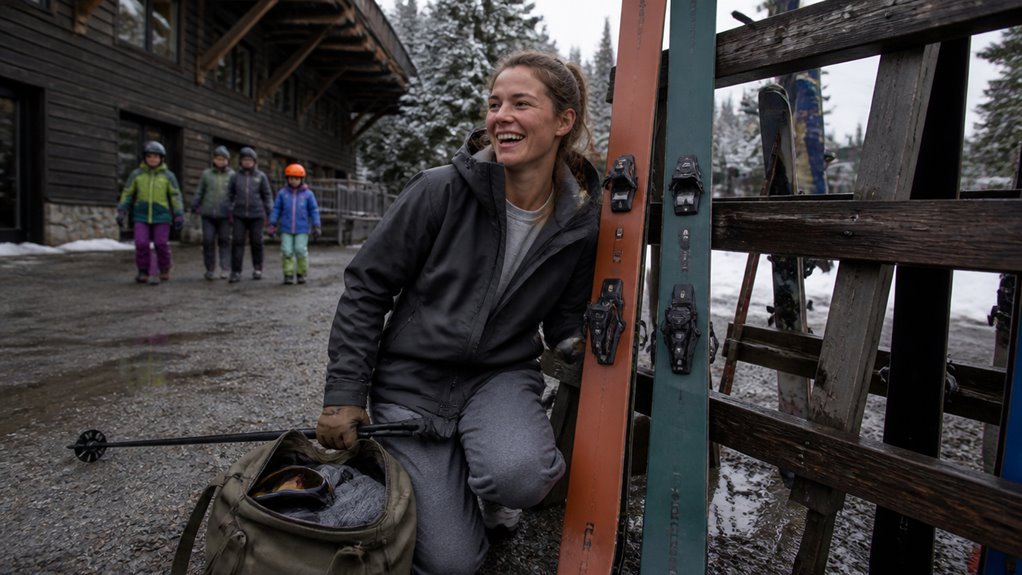
Before you buy skis under $1,000, make a spending plan. Set aside money for bindings and a proper boot fitting because good skis on poor gear will hold you back.
Match ski width and construction to your local snow and your skill level. That approach gives you more performance per dollar than chasing the highest sticker price.
Budget Allocation Strategy
Skip shiny topsheets and put your ski budget into core construction and sidewalls. Those parts take repeated flexing and hold up over time.
Set aside $100 to $150 right away for a tune-up and edge sharpening. Strong edge hold matters on cheap skis and helps them last longer.
If bindings come separately, budget $150 to $250 for a DIN setting that matches your skill. Accurate release is a safety must.
If a sintered base costs less than $50 more than an extruded base, choose the sintered base. It runs faster, takes wax better, and saves money over time.
Focus your spending on durability and release safety when you shop for skis. Good construction and a solid tune protect your investment.
Performance vs. Price
Shopping for ski performance under $1,000 means knowing where your money buys real muscle. You can get solid construction and reliable power transfer without flagship pricing.
Look for full wood cores and metal laminates for stability and edge control. Sintered bases are required because they glide faster and last longer than extruded plastic.
Tip and tail rocker adds float in soft snow, and the small loss of edge grip on hardpack is a reasonable trade. Aim to spend 5 to 15 percent below your cap to find titanal or carbon layups that dampen vibration without paying for marketing extras.
Skip binding upgrades you do not need. Spend with a clear plan, and your ski quiver will reward you.
Ski Width Selection
When you pick a ski under $1,000, focus on two numbers: waist width and your local snowpack. The waist width sets how the ski turns, floats, and holds an edge.
Before you buy, match that width to the snow you ride most often. If 80% of your days are on groomers, choose an 80 to 90mm waist so you can carve ice without fighting floppy edges.
If you chase powder stashes, a 105mm or wider waist floats more easily, but skating through tight trees will burn your legs. An 88 to 106mm waist is the all mountain sweet spot for mixed conditions because it balances grip and float.
A waist over 100mm takes more muscle on every turn, and your quads will remind you the next day. Check your snowpack honestly before you settle on a ski width.
For deep, consistent snow, push wider; for hardpack and icy days, stay narrow. Choose the width that fits your terrain and the way you actually ski.
Construction Quality Matters
Before you buy skis, check the ski construction. The core and sidewalls affect how the ski feels more than the topsheet graphic does.
A full wood core, such as poplar, gives you a quick turn start without extra weight that tires your arms. Foam cores can buzz like a cheap speaker on groomers.
Sandwich sidewalls give strong edge grip and hold firm when you push. Flimsy cap builds can fold under pressure, so check the sidewall specs before you buy.
If you ski fast, a titanal layer can soak up chatter and help stability. It also adds weight that can tax your legs.
Look for elastomer strips in the core when you compare ski layup specs. These strips smooth out chunder while keeping the ski lively and responsive.
A $700 ski with a proper wood core can outperform a $900 foam ski any day. Read the layup specs before you decide which ski to buy.
Skill Level Matching
Matching ski flex and shape to your skill level is crucial when you shop for skis under $1,000. Most people skip this step, yet it decides how the ski feels on the snow.
If you are linking turns, choose a forgiving flex with soft wood cores and shallow rocker to save your legs. Shorter lengths from chin to nose keep you nimble, so you can recover from wobbles without drama.
Advanced skiers need stiffer torsional rigidity for edge grip under pressure and deeper sidecuts for hardpack. Longer skis at forehead height and up give you stability at high speed.
Construction matters too: cap builds flex more easily for beginners, while sandwich sidewalls dampen chatter for experts. Use this ski buying guide to compare beginner skis and expert skis by flex, shape, and length.
Match flex to your confidence and ability, and be honest about how you ski. Choose the wrong ski and that $800 deal feels like a rental, and you will know within three runs.
Terrain Type Compatibility
Where you ski matters most when choosing skis under $1,000, and terrain type is the tie breaker. If you stick to groomed runs and hardpack, choose a ski with an 80 to 100mm waist and camber underfoot.
That setup gives solid edge grip, predictable turns, and no hooking for carving laps without fighting the ski. If you chase powder, look for a 105mm or wider waist and a full rocker profile.
It floats well in soft snow, but expect to work harder on icy mornings. Mixed terrain with groomers and off piste calls for an 88 to 95mm waist with tip and tail rocker.
That shape gives forgiving turn initiation, enough flotation for soft snow, and stability on packed trails. For most resort skiers, that range is the best fit, so match the ski waist to the terrain you ride most.
Bindings and Setup Costs
Bindings and setup costs can push the price of skis well past the sticker price. Budget for bindings, installation, and tuning before you choose a ski.
Terrain compatibility helps, but you still need to afford getting those skis on your boots. Bindings often cost $200 to $400 on their own.
Flat mount installation at a shop usually adds $50 to $80. Demo bindings often cost extra.
To save money when buying skis, look for skis with system bindings built right in. You can save $50 to $150 compared with buying separate bindings.
Check the brake width before you buy. A 100mm waist needs brakes in the 100 to 110mm range, or you may need to pay for sizing fixes.
Set aside $100 to $200 for mounting, tuning, and taxes. A $700 ski can realistically total $900 to $1,000 once you add those costs.
Plan for the full cost so the register total does not surprise you. Factor in binding costs first, then pick your ride.
Frequently Asked Questions
Are Ski Bindings Included in the Under-$1000 Price?
Most skis priced under $1000 do not include bindings, and the listing usually says skis only. Budget separately for bindings and mounting, because those added costs can turn a cheap ski into a poor value.
Check the product title and fine print for terms like flat ski, system ski, or ski package, since those words show whether bindings are included. A flat ski needs bindings, a system ski often includes a matching binding, and a package should list the exact binding model.
If bindings are included, confirm brake width, boot sole compatibility, and whether mounting is included or extra. Compare the total ski plus binding plus mounting cost before checkout, not just the ski price.
Read the full guide on ski bindings included in the under $1000 price to spot real package deals and avoid surprise fees. That quick check helps you buy a smart setup and skip listings that hide the true cost.
Can I Mount These Skis With My Existing Boots?
Yes, you can mount these skis with your existing boots if your bindings fit your boot sole length and boot sole standard, and if the brake width matches the ski waist. Treat compatibility like a key meeting its lock: verify it before you commit, or you risk a costly mismatch.
Check the boot sole length in millimeters on the boot heel and confirm it falls inside the binding’s adjustment range. Confirm the boot sole standard too, because ISO 5355 alpine, GripWalk, and touring soles do not all work in every binding.
Match the brake width to the ski waist so the brakes can deploy fully and hold securely. Also check the binding DIN range against your ability, weight, and skiing style, then have a certified tech confirm release settings.
Look at the ski’s mounting pattern and existing holes before you drill, since reused holes can weaken the core or void a warranty. If the bindings, boots, and skis all line up, the mount is smart; if not, stop before you commit.
Read the full compatibility guide before you buy to confirm boot sole length, sole type, brake width, DIN range, and mounting pattern. That quick check protects your boots, your skis, and your budget.
Do Shorter Lengths Suit Beginners Better Than Advanced Skiers?
Shorter ski lengths do not automatically suit beginners better, and they are not automatically worse for advanced skiers. The real answer depends on terrain, speed, snow conditions, and how you want to ski.
For beginners, shorter skis can feel easier to turn and less tiring at low speed, which helps build confidence on gentle groomers. They also respond quickly, so new skiers can practice balance and edge control without fighting a long ski.
Shorter skis can punish speed because they lose stability and float as you go faster or hit variable snow. Advanced skiers often choose longer skis for more edge grip, smoother tracking, and confidence at high speed.
If you are learning, pick a shorter ski within your height and weight range, but do not go so short that the ski feels nervous. If you charge hard, ski deep snow, or want all mountain stability, go longer and match the ski to your ability and terrain.
Use this guide as a smart buying shortcut: shorter for learning and slower speeds, longer for stability and charging. Check the manufacturer size chart, talk to a ski shop expert, and choose based on your real skiing, not just your beginner or advanced label.
How Often Should I Wax These Skis in a Season?
For a typical season, wax your skis every five to seven ski days, or as soon as the base looks dry and white. That simple rhythm protects glide and keeps you from feeling slow and sticky on the snow.
If you wait too long, the base can burn and drag, so check it after every outing. Match the wax to snow temperature and ski type, and use a dedicated ski waxing iron for clean results.
Do not overthink it: keep the glide smooth with a quick scrape and brush after each wax. If you ride hard or ski in wet, abrasive snow, wax closer to every five days.
Buying your own wax, iron, scraper, and brush pays off if you ski often and want consistent performance. For occasional skiers, a shop wax every seven ski days is a smart, low hassle purchase.
Are These Skis Suitable for Icy East Coast Conditions?
They will grip on icy East Coast conditions, but you are not getting a carve machine. Edge bite is decent, though not great on boilerplate.
Sharpen them often and you will survive the slick stuff. For hardpack days, size down or rent something stiffer so you can trust the ski.
If your goal is confidence on icy East Coast groomers, treat these as a budget friendly option and plan on regular tuning. Demo a stiffer, narrower ski before you buy if boilerplate edge hold is your top priority.
Check the ski waist width, turn radius, and torsional stiffness against your local hill, then match the tune to the conditions. A sharp edge and a snug boot fit will do more for icy East Coast grip than a flashy ski name.
Rounding Up
Edge Grip Check: We ran every ski through carved groomer turns and noted how quickly edges engaged and held. We counted skids.
Flex Feel Test: We pressed each ski at tip, middle, and tail, then recorded flex force and return. We repeated this for every pair.
Powder Float Trial: We skied each pair in cut up powder and tracked tip float and steering effort. We noted nose dive and recovery.
Real World Day (Winners Only): Every recommended ski passed the first three tests, then we used all of them for a full day on the mountain. We rotated through groomers, trees, and powder and noted comfort, control, and fatigue.